
Slugs are Scotland’s defining garden problem. They are damp, persistent, and active through most of the growing season. Below is what they look like, how to tell if they’re the ones eating your plants, and, most importantly, which controls have been tested and which ones are just repeated folklore.
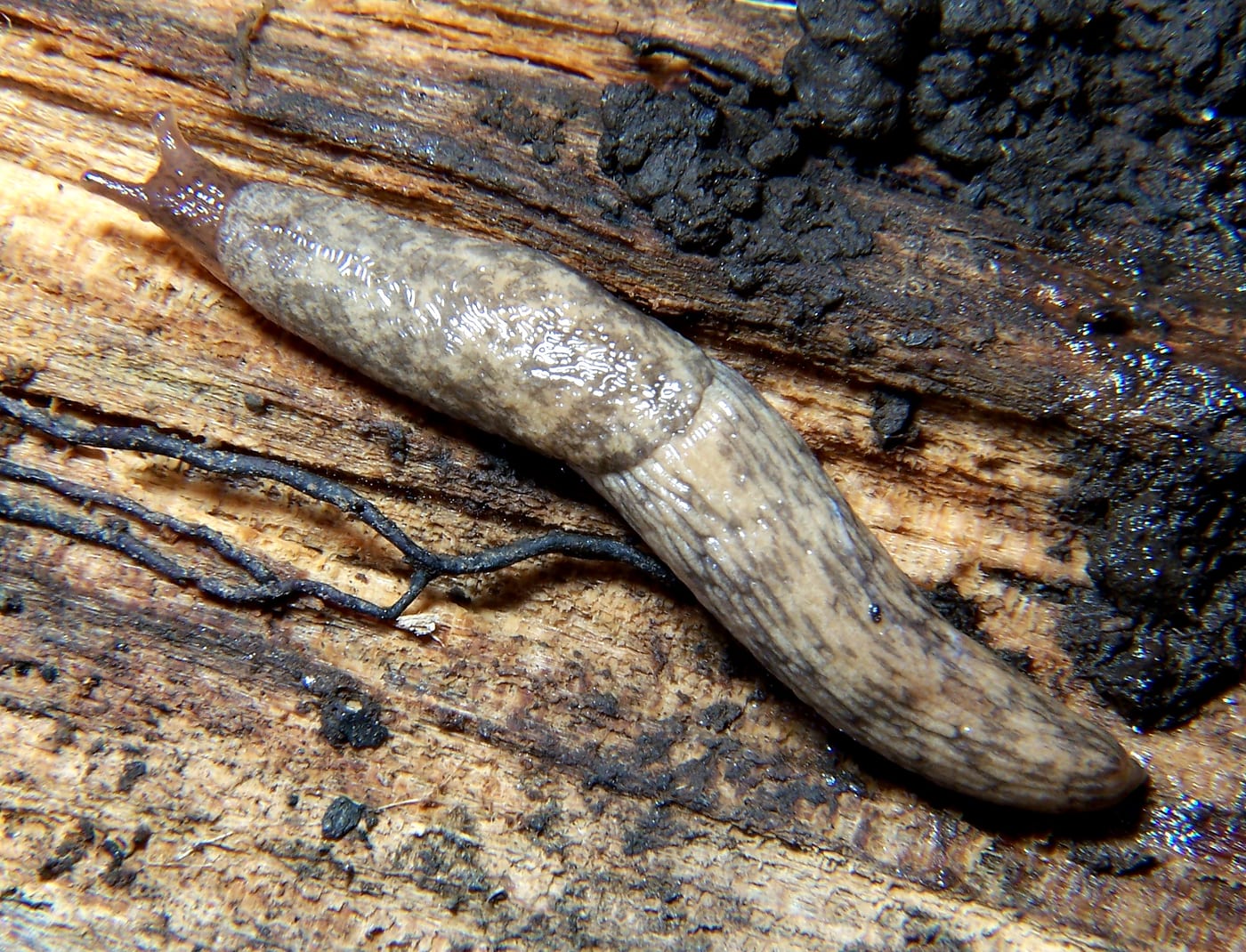
What does it look like?
Soft-bodied, mucus-covered invertebrates. Snails can retreat entirely into a coiled shell; slugs mostly can't, though many species carry a much-reduced shell hidden under the skin rather than having none at all. Both have four retractable tentacles, the top pair carrying tiny eyes. Over 44 slug species and 90 snail species live in the UK, so telling one species from another needs a close look at shell shape, sole colour and mucus colour, more detail than matters for garden control.
What causes it
Damp, mild conditions are what bring them out: most feeding happens on mild, moist evenings, which is also when a torchlight search finds the most. Evening watering makes conditions more favourable for them overnight, which is the reasoning behind watering in the early morning instead.
🌱 Plants at risk
Slugs and Snails also affects these crops:
- Potatoes
- Kale
- Beetroot
- Courgettes
- French Beans
- Peas
- Lettuce
- Spinach
- Broccoli
- Cabbage
- Strawberries
- Swede
- Turnip
- Cauliflower
- Kohlrabi
- Calabrese
- Pak Choi
- Celeriac
- Shallots
- Spring Onions
- Radish
- Jerusalem Artichoke
- Runner Beans
- Chard
- Rocket
- Endive
- Celery
- Cucumbers
- Sweetcorn
- Squash
- Pumpkins
- Asparagus
- Rhubarb
- Fennel Bulb
- Thyme
- Dill
- Coriander
- Lovage
- Sorrel
- Borage
- Angelica
- Globe Artichoke
- Sea Kale
Symptoms
Ragged holes rasped into leaves, with slime trails left behind as the giveaway sign. Seedlings and soft-leaved plants such as hostas are hit hardest, since they offer the least resistance to rasping mouthparts.
Controls: what actually works
Not every method here works equally well: some are backed by real evidence, some are simply traditional, and a few have been tested and shown not to help despite how often they get repeated.
Biological control: nematodes watered into the soil
The only slug control RHS and Garden Organic both endorse.
Nematodes affect all slug species, including the beneficial ones, which sits awkwardly against the case for tolerating slugs as wildlife.
Effectiveness varies by crop: good control on daffodils, only intermediate on lettuces, and less effective on hostas and beans when combined with mulchA layer of material spread over the soil around plants to suppress weeds, retain moisture, and improve soil structure as it breaks down. Full definition →.
The cost is a genuine downside worth knowing before buying: it isn't cheap.
Conditions: Needs moist soil at 5-20C, from spring to early autumn. One application stays effective for at least six weeks. Follow the soil-temperature and watering instructions carefully.
Cultural controls: hand-picking on torchlit evening searches, transplanting sturdy plants rather than seedlings, choosing resistant plants, encouraging natural predators
The primary recommendation now that pellets are advised against. Costs nothing and harms nothing.
Barriers: crushed eggshells, bark mulch, wool pellets
Tested in garden conditions, none of these produced a measurable reduction in slug damage. The trials found that 'many of these do not have any scientific evidence to prove they are effective.'
These are among the most repeated pieces of gardening advice in Britain. The trial ran and they did not work.
Barriers: copper tape and sharp grit / gravel
RHS and Garden Organic directly contradict each other on the most popular slug barrier in Britain.
These two positions aren't equally weighted: one ran a trial and reported a negative result, the other asserts effectiveness without citing one. Garden Organic's claim is also specifically about containers, which may explain the gap, since a sealed copper band on a pot rim is a genuinely different proposition from tape around an open bed, though neither source states that reconciliation directly.
Slug pellets containing ferric phosphate
Earlier position: RHS trials found organic (ferric phosphate) slug pellets performed as well as those containing metaldehyde. Garden Organic still cites those RHS trials.
Current position: RHS now advises against slug pellets altogether: 'No – slug pellets (even organic ones) have been shown to have negative effects on wildlife.'
Both can be true. The earlier trials measured efficacy against slugs; the current advice is about harm to wildlife. A pellet can work and still be a bad idea, which is exactly why most gardening sites still recommend organic pellets: they're answering the efficacy question, not the wildlife one.
Beer traps
Beer traps appear on most lists of trapping options, but no evidence that they actually work has been found, and no trial data exists either way.
Natural predators of slugs and snails
These 3 creatures eat slugs and snails, and each has its own page here on how to get more of them in your garden: what to plant, or what to order and when.
Scottish grower notes
Slugs are a persistent problem in Scotland's damp climate. Choose ground with low slug populations for anything left standing through the winter, since overwinteredKeeping a plant alive and intact through the cold months, whether left outdoors, moved under cover, or stored dormant. Full definition → crops are especially at risk.
Frequently asked questions
What should I do first if I find slugs and snails in my garden?
Start with biological control. After that, cultural controls. Work through the rest in order of how well-evidenced they are if the first two aren’t enough on their own.
Will slugs and snails kill my plants?
They can cause serious damage if left unchecked. Start with the research-supported controls above and you will get a crop.
Are there any common slugs and snails remedies that do not work?
Yes. Barriers have been tested and found not to reduce damage. See the “tested, does not work” entries above for the studies.
Should I just leave slugs and snails alone?
In most gardens, yes. slugs and snails are food for birds, wasps and predatory insects, and a healthy garden carries some without trouble. Tolerance is also RHS's official position now, for that same reason.
Sources
5 sources, recorded with what each was used for
- RHS1: biodiversity reframing, own research debunking barrier methods, advice against all pellets, nematode endorsement and conditions, cultural methods
- Garden Organic8: copper tape and gravel as container barriers
- Garden Organic8: nematode effectiveness, duration, crop variation, cost
- Garden Organic8: RHS's EARLIER position on organic pellet efficacy, cited to document the stance change
- SAC/SRUC13: overwintered crops are at high slug risk in Scotland; choose low-slug ground for them