
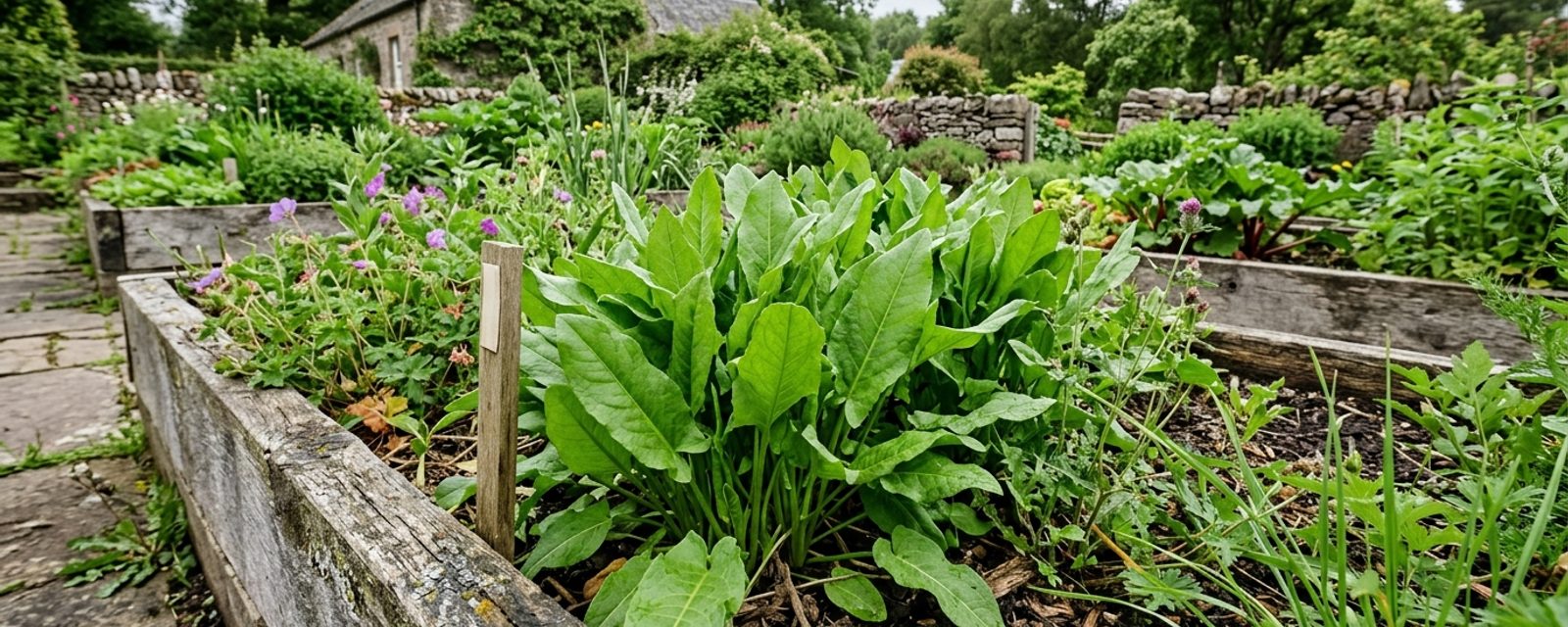
Rumex acetosa
Sorrel carries an H7 hardiness ratingThe RHS's H1a–H7 scale for how much cold a plant can survive outdoors, H1a being tender indoor-only and H7 hardy anywhere in the UK. Full definition →, one of the toughest of any herb, comes with a real safety note about how much of it to actually eat, and wants watering rather than neglect.
It's an easy-to-grow perennial with a sharp, citrusy tang, preferring moisture-retentive soil rather than the free drainageSoil that lets water pass through quickly rather than pooling, so roots aren't sitting in wet ground after rain. Full definition → Mediterranean herbs like thyme, sage and rosemary demand, so the site prep is almost the reverse of what those crops need.
Site and soil
Choose a spot in full sun or partial shade. Sorrel tolerates most soil types but performs best in fertile, moisture-retentive ground; weed thoroughly and work in well-rotted organic matter if the soil is poor or free-draining. Space plants 20-30cm apart, though mature size varies by type: French sorrel spreads to about 1m, common sorrel reaches around 50cm tall and wide with flower spikes over 1m, and red-veined sorrel stays more compact at 40-60cm tall and about 30cm wide. For containers, use a minimum 30cm wide and 20cm deep pot.
Sowing and planting
Sow indoors in spring, 1cm deep, germinatingA seed sprouting: breaking dormancy and putting out its first root and shoot, given the right warmth and moisture. Full definition → in one to two weeks at around 15C; transplant to individual pots once seedlings have several leaves, and harden offGradually getting young plants raised indoors used to outdoor conditions over 7–14 days before planting out, so cold, wind and direct sun don't shock or damage them. Full definition → before planting outdoors. Direct-sowing outdoors, also 1cm deep, works from mid-spring to early summer, thinned to 20-30cm apart.
Care through the year
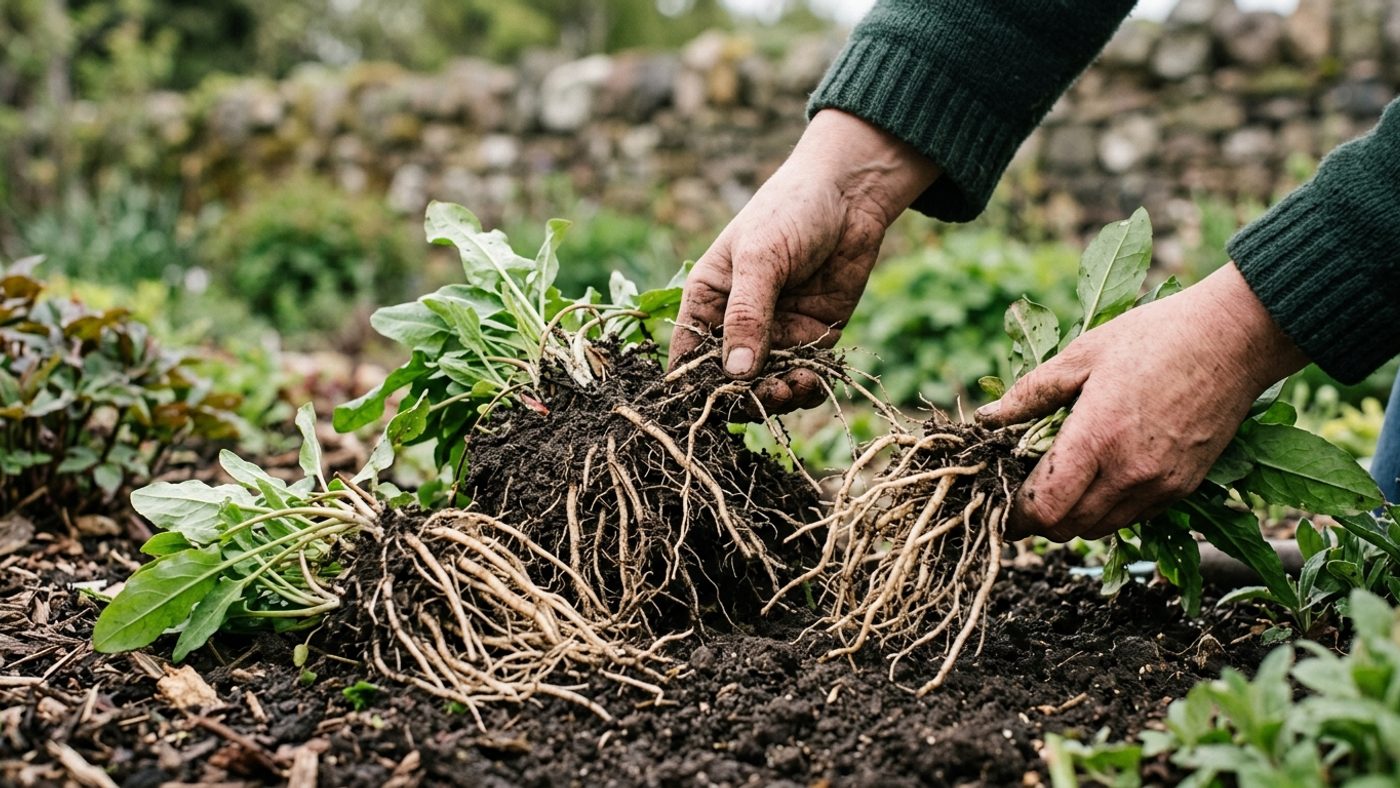
Water new plants through dry spells until established; after that, established ground plants need little extra watering except in prolonged dry spells, though dry weather is itself a trigger for sorrel to bolt, so don't let it dry out for long. Container plants need keeping evenly moist, without waterlogging, and moved to shade during a heatwave. MulchA layer of material spread over the soil around plants to suppress weeds, retain moisture, and improve soil structure as it breaks down. Full definition → with well-rotted organic matter in late winter or early spring. Pick regularly to encourage tender new leaves, and remove old, bitter ones to stimulate fresh growth. DividingPropagating a clump-forming perennial by digging it up and splitting it into several smaller pieces, each with roots and shoots attached. Full definition → established clumps every four to five years in spring or autumn keeps plants productive; sorrel also self-seeds readily if allowed to flower.
Winter
No protection is needed for sorrel growing in the ground. Container plants are the only real consideration, and even then the risk is waterlogging causing root rot rather than cold, so move pots somewhere sheltered from rain over winter.
Harvesting
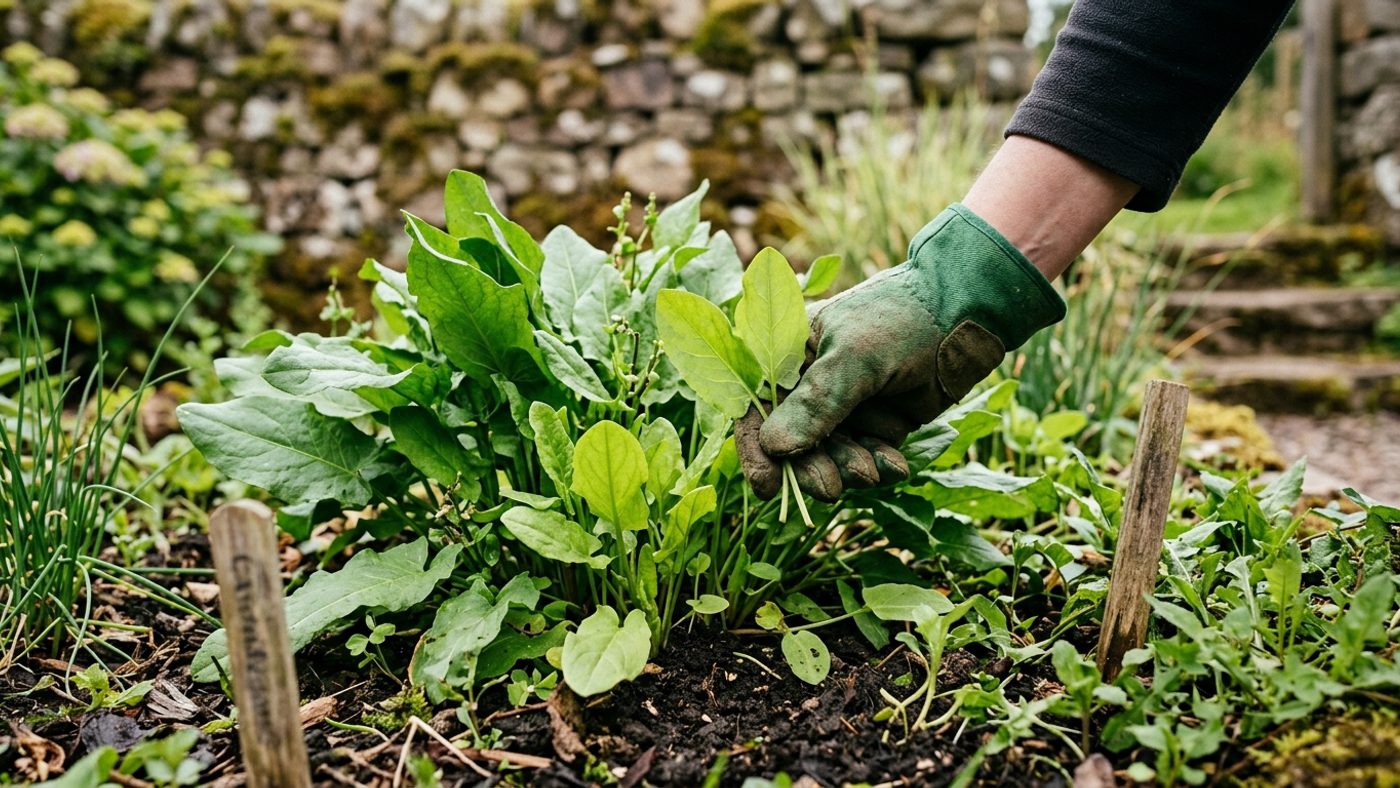
Harvest young leaves from spring through autumn, from when new growth starts. Regular picking keeps leaves tender; remove old, bitter leaves rather than letting them sit on the plant.
Varieties
Four types exist (French, Silver Shield, common, red-veined). None carries AGMThe RHS's Award of Garden Merit: a UK-wide trials award for reliable performance, not a Scotland-specific recommendation. Full definition →; common sorrel's H7 hardiness rating is the real distinguishing fact instead. Silver Shield, a silvery-leaved French cultivarA plant variety that arose or was bred under cultivation and is kept true by deliberate propagation, rather than a naturally occurring wild species. Full definition →, and red-veined sorrel, grown for its decorative leaf veins, are both grown more for looks than flavour.
★ Our pick for Scotland
Common sorrel
UK native · sharp lemony flavour · H7 hardy
Rated H7, the severest European continental winter rating, well beyond anything this crop needs in a Scottish garden.
Why this one: No AGM award exists for any sorrel. French sorrel's milder flavour is the only real alternative; common sorrel's sharper tang is what most cooks actually want.
Also worth considering
French sorrel
Grey-green, shield-shaped leaves · milder flavour
A gentler, less acidic alternative to common sorrel's sharper tang, useful for a gardener who finds the native type too strong.
Best Sorrel Varieties for Scotland → compares all named sorrel varieties head-to-head, with the practical detail that doesn't fit in a summary card.
Common problems
- Aphids may target soft new growth, though treatment is rarely necessary.
- Slugs and snails can damage seedlings and young leaves.
- Root rot is mainly a container risk: waterlogging over winter, not cold, is the real danger, so move pots somewhere sheltered from prolonged rain.
Common questions
Is it safe to eat as much sorrel as I like?
No: sorrel is harmful if eaten in large amounts, so treat it as a flavouring or accent leaf in soups, sauces and small salad portions rather than a bulk salad green. Full sourced breakdown: <a href="/tools/garden-myths/sorrel/">Sorrel Myths →</a>
Does sorrel need protecting over a Scottish winter?
No: all three sorrel types are hardy throughout the UK, and common sorrel carries an H7 rating; only container plants need shelter, and even then the risk is waterlogging, not cold. Full sourced breakdown: <a href="/tools/garden-myths/sorrel/">Sorrel Myths →</a>
Is sorrel drought-tolerant like thyme or rosemary?
No, the opposite: dry weather is itself a trigger for sorrel boltingA plant switching early into flowering and seed production, usually triggered by stress, after which leaves, roots or bulbs turn bitter or unusable. Full page →, so keep it well watered rather than leaving it to fend for itself once established. Full sourced breakdown: <a href="/tools/garden-myths/sorrel/">Sorrel Myths →</a>
Sources
3 sources, and what each was used for
- RHS: perennial habit, site/soil, spacing across three types, sowing method and months, propagation, harvesting, watering, mulching, hardiness, winter care, named varieties, common problems
- RHS: H7 hardiness rating for common sorrel; 'harmful if eaten in large amounts' safety note
- gardenersworld.com: moisture-retentive soil confirmation, dry-weather bolting risk, propagation by cutting/division, cut-and-come-again harvesting