
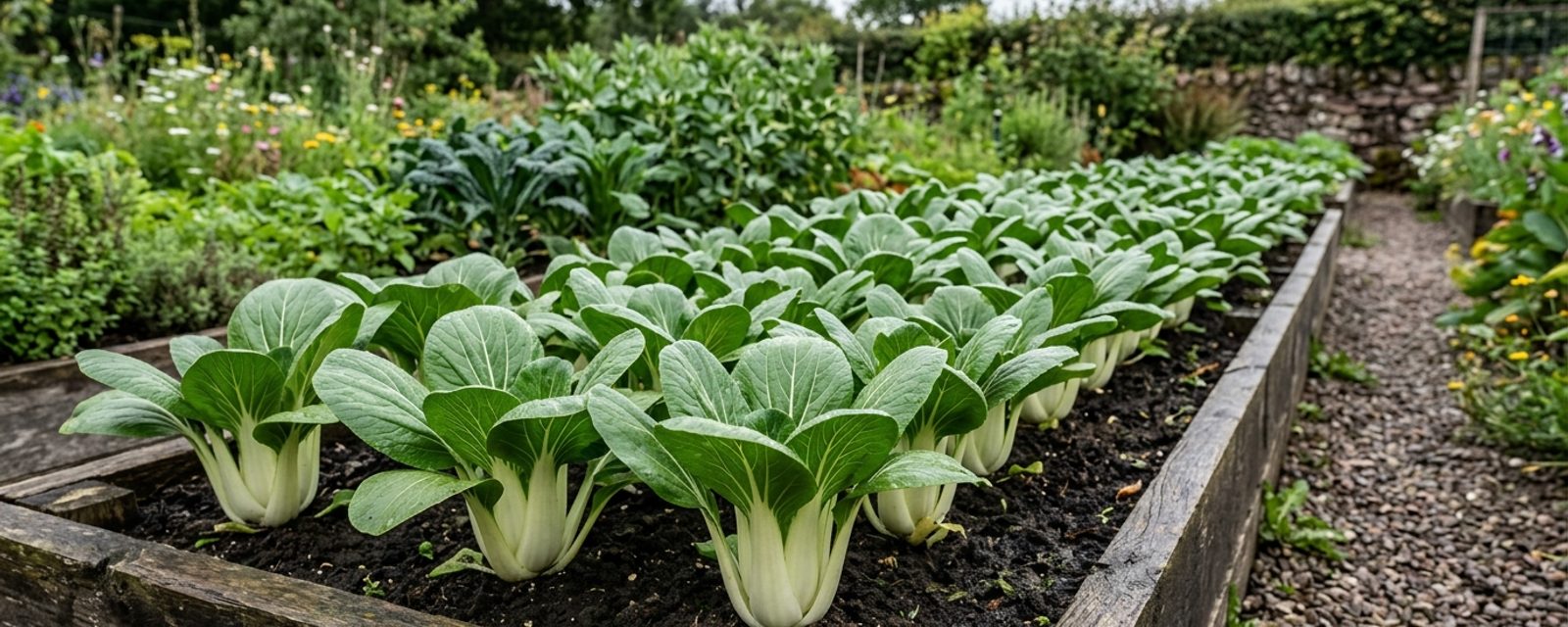
Brassica rapa (Chinensis Group)
Pak choi is a fast, forgiving oriental brassicaThe cabbage family: cabbage, kale, broccoli, cauliflower, Brussels sprouts, kohlrabi, swede, turnip and more, sharing the same pests, diseases and rotation rules. Full definition →, and its one real weakness happens to be a risk our climate rarely supplies.
It's ready in as little as 30 days for baby leaves, or 45 to 75 days for a full, compact head, which makes it one of the fastest crops you can grow. Its main failure mode is boltingA plant switching early into flowering and seed production, usually triggered by stress, after which leaves, roots or bulbs turn bitter or unusable. Full page → in hot, dry weather, and that's a threshold a Scottish summer rarely reaches, which puts this crop's biggest weakness largely out of reach here. It also handles cold better than most fast leaf crops, so a late sowing under cover can keep going well past the point most quick salads have finished.
Sowing and raising plants
Sow February to October, in successive small batches rather than one big row, about 2cm deep, in rows at least 30cm apart.
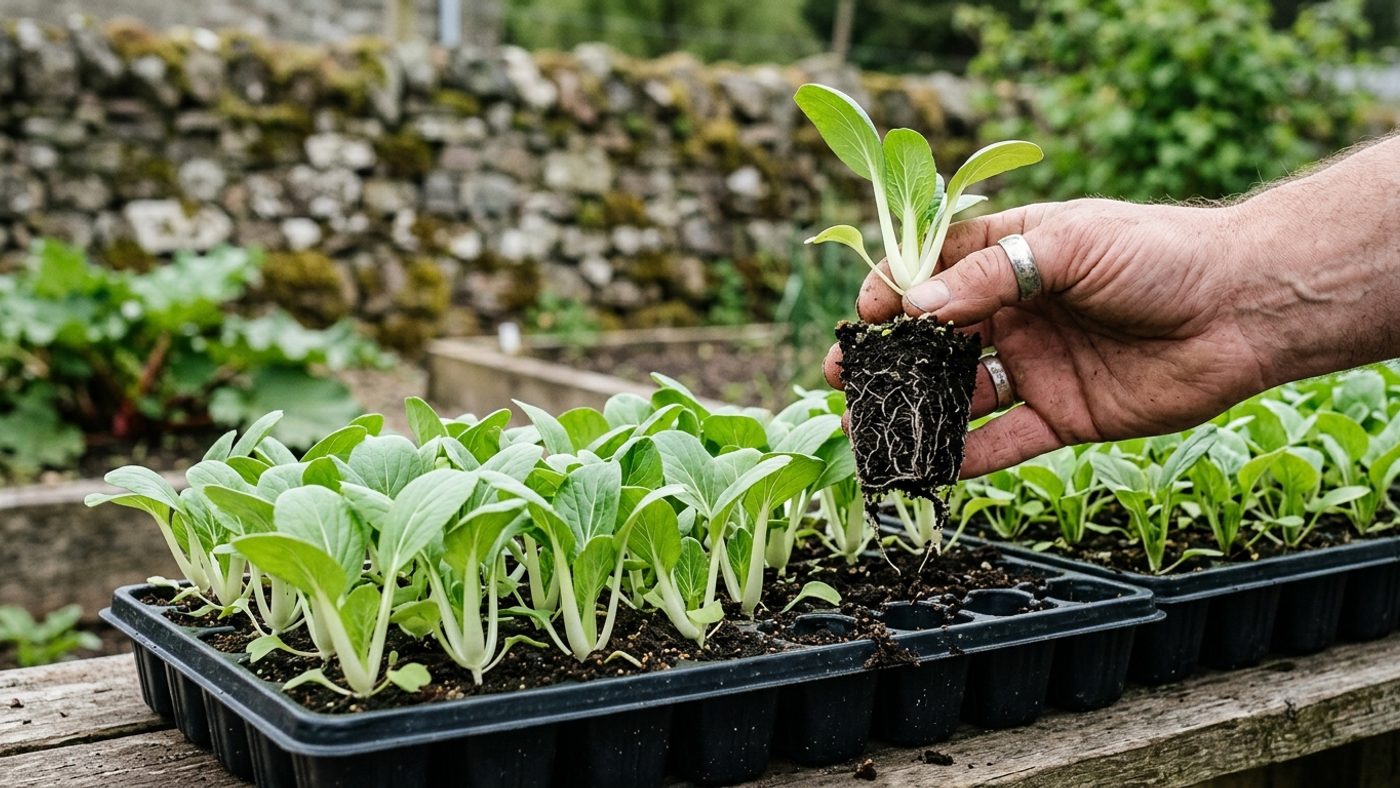
Raise it in modulesA tray divided into small individual cells, each sown with its own seed or seedling, so each plant grows undisturbed roots until it's ready to plant out. Full definition → rather than a seedbed. Pak choi dislikes root disturbance, so direct-sowing and thinning it the way you would lettuce or rocket sets it back more than the same treatment would on a less sensitive crop.
Move plants out once they're established, hardening offGradually getting young plants raised indoors used to outdoor conditions over 7–14 days before planting out, so cold, wind and direct sun don't shock or damage them. Full definition → first.
Bolting: the one thing to watch, and why it matters less here
Hot, dry weather is what triggers bolting on this crop, which is why spring and autumn sowings are the safer default and summer sowings want a bolt-resistant variety. Partial shade and consistent watering help further on the rare properly warm spell.
Varieties
RHS also lists 'Choko F1The first-generation offspring of two specific, deliberately chosen parent plants, bred for a predictable, uniform result but not worth saving seed from. Full definition →' (warm-weather tolerant) and 'Red Choi' (purple-red leaves) with AGMThe RHS's Award of Garden Merit: a UK-wide trials award for reliable performance, not a Scotland-specific recommendation. Full definition →. The award is UK-wide, not a Scottish one.
★ Our pick for Scotland
GlacierAGM
Cold and heat tolerant
Tolerant of both cold and heat.
Why this one: Glacier covers both ends of pak choi's temperature story: cold tolerance helps a late, protected autumn sowing keep going, and heat tolerance is useful insurance for the rare genuinely warm Scottish spell. Most varieties are bred for one end of that range or the other, which makes a dual-tolerant pick worth having.
Also worth considering
Summer BreezeAGM
Bolt-resistant
Bolt-resistant and heat-tolerant, the safer choice for a summer sowing.
Best Pak Choi Varieties for Scotland → compares all named pak choi varieties head-to-head, with the practical detail that doesn't fit in a summary card.
Spacing and watering
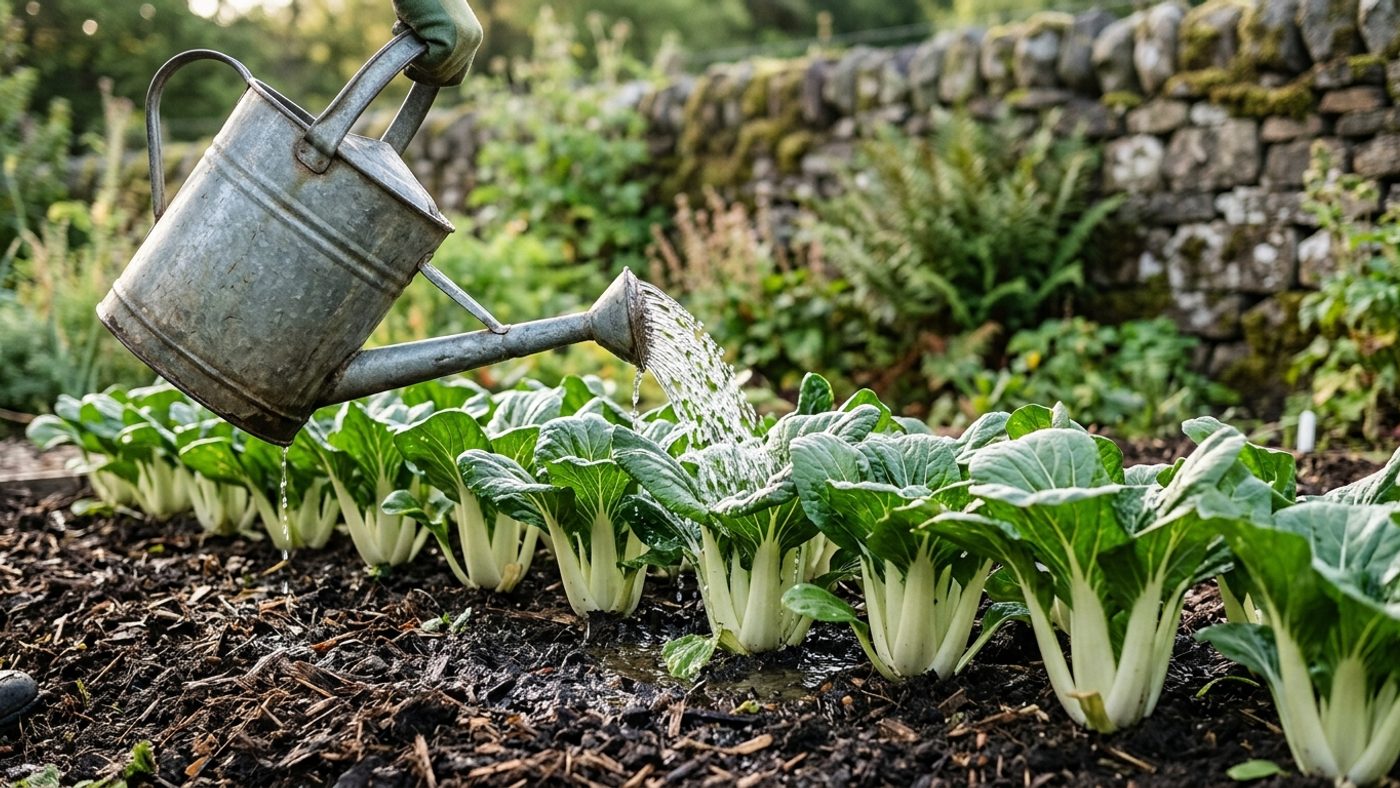
Space 8-10cm apart for baby leaves, 20cm for semi-mature, or 25-30cm for full-sized plants. Keep the soil consistently moist, and water in the morning rather than the evening: damp soil left overnight is exactly what draws slugs and snails, the biggest pest risk to this crop.
Harvesting
Baby leaves are ready as a cut-and-come-again crop in about 30 days. Semi-mature or full-sized heads take 45 to 75 days, harvested while still compact and firm. Late sowings, given a little protection from a clocheA small, portable clear cover placed over an individual plant or short row to trap warmth and keep off wind, rain and pests. Full definition → or fleeceA lightweight, breathable fabric laid or draped over plants to trap a little warmth and keep off frost, wind and some flying pests. Full definition →, can keep cropping into autumn and even winter.
Common problems
- Slugs and snails are the main risk to this crop, especially direct-sown seedlings. Water in the morning rather than the evening, and raise plants in modules.
- Bolting is triggered by hot, dry weather. Favour spring and autumn sowings, and use a bolt-resistant variety for a summer one.
- Cabbage caterpillars can strip a plant fast. Cover with insect-proof mesh from sowing.
See more problems
- Flea beetles leave small holes in the leaves, but the damage is cosmetic on this crop. Mesh over seedlings is cheap insurance, though established plants shrug it off.
- Cabbage root fly is less of a problem here than on slower brassicas, since pak choi is out of the ground before the fly's damage has time to matter much.
- Pigeons will strip young plants. Netting from the day you sow or transplant.
Common questions
Can I sow pak choi all through summer?
Better to favour spring and autumn: pak choi is prone to bolting in hot, dry weather, so a summer sowing needs a bolt-resistant variety like Summer Breeze, consistent watering and some shade. Full sourced breakdown: <a href="/tools/garden-myths/pak-choi/">Pak Choi Myths →</a>
Does pak choi need protecting from cold?
Less than you'd expect: it's notably hardy for a fast leaf crop, and a late sowing under a cloche or fleece can keep cropping into autumn and winter, since its real weakness is heat, not cold. Full sourced breakdown: <a href="/tools/garden-myths/pak-choi/">Pak Choi Myths →</a>
Should I direct-sow pak choi like lettuce or rocket?
No: pak choi resents root disturbance and does better raised in modules and transplanted, unlike lettuce or rocket, which tolerate direct-sowing fine. Full sourced breakdown: <a href="/tools/garden-myths/pak-choi/">Pak Choi Myths →</a>
Is flea beetle damage a serious problem for pak choi?
Not really: the damage is rated cosmetic only on this crop, so mesh over seedlings is still cheap insurance but a few scattered holes on an established plant aren't a reason to worry. Full sourced breakdown: <a href="/tools/garden-myths/pak-choi/">Pak Choi Myths →</a>
Sources
3 sources, and what each was used for
- RHS: sowing Feb-Oct, 2cm depth, spacing by size (baby/semi-mature/full), transplant trigger, harvest timing (30 days baby, 45-75 days mature), heat-triggered bolting, AGM varieties, pest and disease list — notably no club rootA soil-borne fungal disease of the brassica family that swells and distorts roots, and survives in soil for years. Full definition → listed for this crop, unlike most brassicas
- Garden Organic: pak choi resents root disturbance and is best raised in module trays only — a nuance RHS doesn't emphasise this way
- gardenersworld.com: corroborates harvest timing (30 days baby, 45 days mature) and slug risk to direct-sown seedlings independently of RHS; partial shade recommended against bolting; late sowings crop into autumn/winter under cloche or fleece