
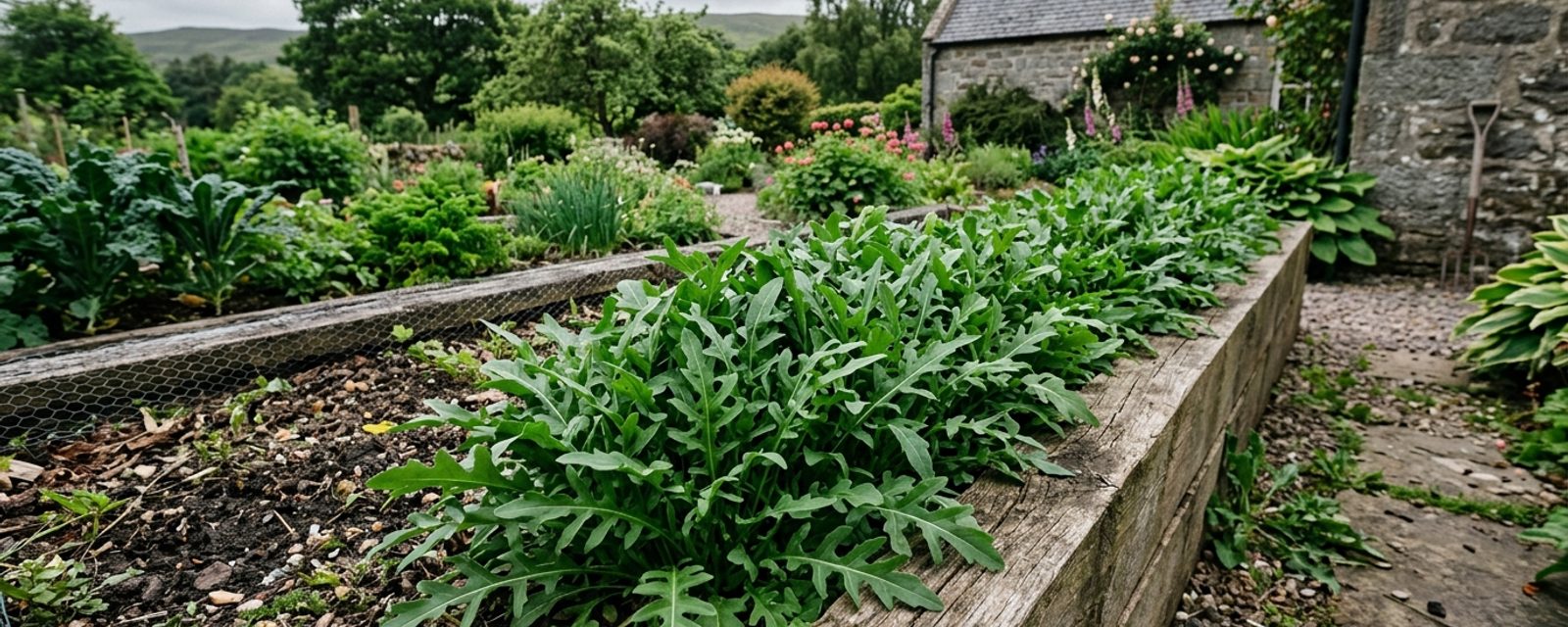
Eruca vesicaria subsp. sativa (salad rocket); Diplotaxis tenuifolia (wild rocket)
"Rocket" is really two genuinely different plants sharing one name, a fast annual and a hardy perennial, each suiting a Scottish garden for its own reason.
Salad rocket is quick, mild when young, and done for the year once it flowers. Wild rocket is slower, hotter-flavoured, and keeps producing for years, tolerating poorer soil along the way. They're worth treating as two different crops that happen to share a name, not one plant grown two ways.
Preparing the ground
Salad rocket wants fertile soil that holds some moisture: fork in garden compost beforehand, or mulchA layer of material spread over the soil around plants to suppress weeds, retain moisture, and improve soil structure as it breaks down. Full definition → over the top for a no-digA growing method that avoids turning the soil over, building fertility instead by adding organic matter on the surface. Full definition → bed. Wild rocket is genuinely more forgiving and grows well even in poorer, drier ground, so it's worth putting in a spare corner rather than giving it the same soil-prep effort as the annual type.
Sowing
Sow outdoors April to early September, extending a further month with clochesA small, portable clear cover placed over an individual plant or short row to trap warmth and keep off wind, rain and pests. Full definition → or fleeceA lightweight, breathable fabric laid or draped over plants to trap a little warmth and keep off frost, wind and some flying pests. Full definition →. An indoor sowing in February or March gives an earlier crop, moved outdoors once seedlings reach about 10cm tall and have been hardened offGradually getting young plants raised indoors used to outdoor conditions over 7–14 days before planting out, so cold, wind and direct sun don't shock or damage them. Full definition →; sowing under cover in August or September gives a winter one instead. Sow 1cm deep, and every two weeks if you want a continuous supply rather than one glut. Thin to 15cm apart, in rows 15cm apart, and use the thinnings in salads.
Growing in containers
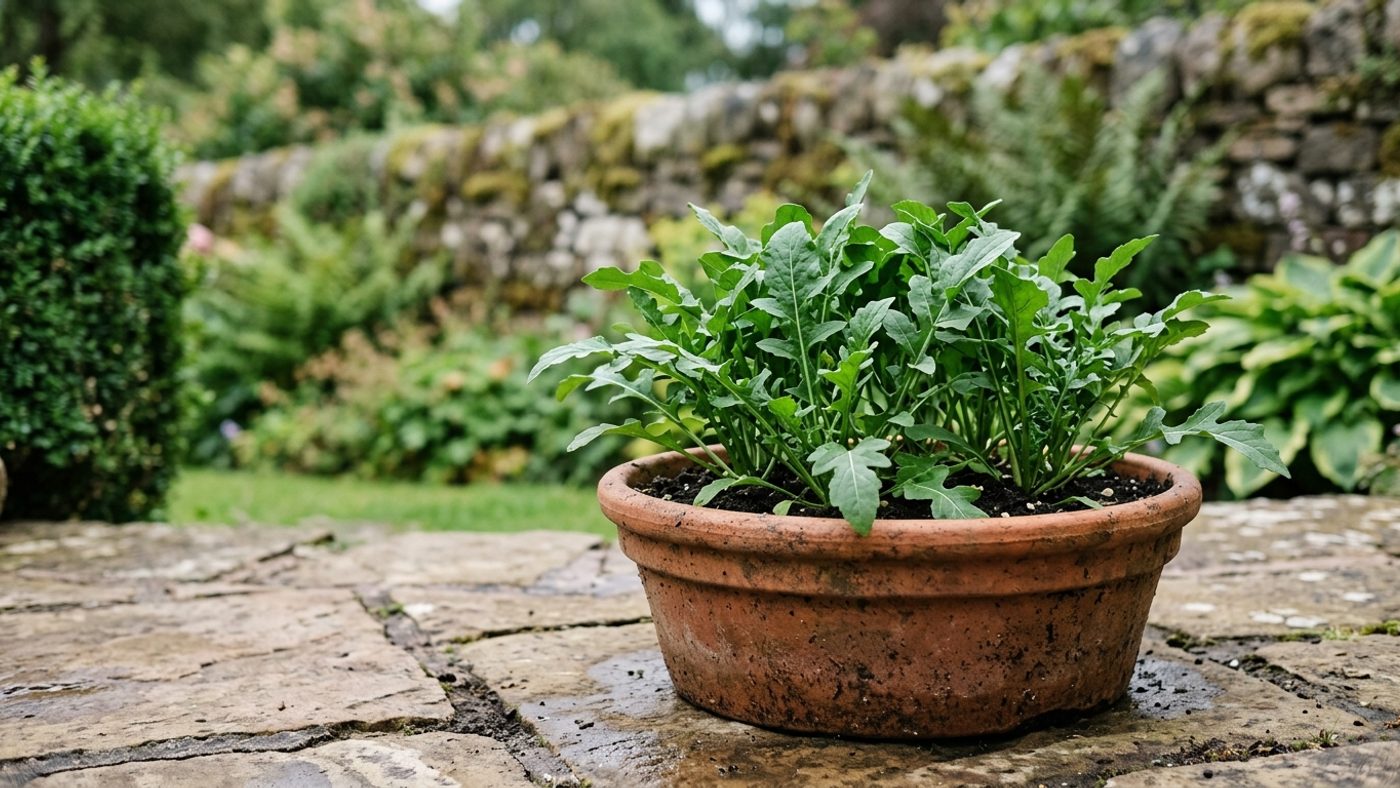
Rocket does just as well in a container as in the ground, provided the compost stays evenly moist. Use a pot at least 30cm wide, filled with peat-freeCompost made without peat, which is harvested from a slow-forming, carbon-storing wetland habitat that peat extraction damages. Full definition → multi-purpose compost. In hot weather, move pots into light shade to delay boltingA plant switching early into flowering and seed production, usually triggered by stress, after which leaves, roots or bulbs turn bitter or unusable. Full page → and keep the compost from drying out too fast.
Varieties
Neither RHS nor Gardener's World lists an AGMThe RHS's Award of Garden Merit: a UK-wide trials award for reliable performance, not a Scotland-specific recommendation. Full definition → rocket variety at all, so the picks here rest on named traits rather than an award. RHS also lists 'Victoria' (dark green, rounded leaves, strong peppery flavour) and 'Runway' (fast growing, deeply serrated). Gardener's World separately names 'Wasabi' (hot, spicy, vigorous).
★ Our pick for Scotland
Sky Rocket
Upright, serrated leaves, wild rocket flavour with faster growth
Wild rocket flavour without wild rocket's slow growth.
Why this one: RHS names Sky Rocket specifically for combining wild rocket's stronger, hotter flavour with faster growth than true wild rocket, which is genuinely useful in a shorter season without giving up the flavour that's usually the reason to grow wild rocket at all.
Also worth considering
Dragon's Tongue
Purplish-veined leaves, good bolt resistance
Named for bolt resistance specifically, useful insurance for succession sowing through a changeable summer even though the heat that usually triggers bolting is less of a risk here to begin with.
Best Rocket Varieties for Scotland → compares all named rocket varieties head-to-head, with the practical detail that doesn't fit in a summary card.
Care
Keep the soil consistently moist: watering too little brings on bolting, and watering too heavily dilutes the peppery flavour rocket is grown for, so aim for even rather than generous. Weed regularly to reduce competition for water. On salad rocket, removing flower stems as they appear buys a little extra cropping time, though it's only a temporary fix before the plant finishes for good. Wild rocket needs no such intervention: trim it back if it gets too large and sprawling, rather than cutting flowers to extend its life.
Harvesting
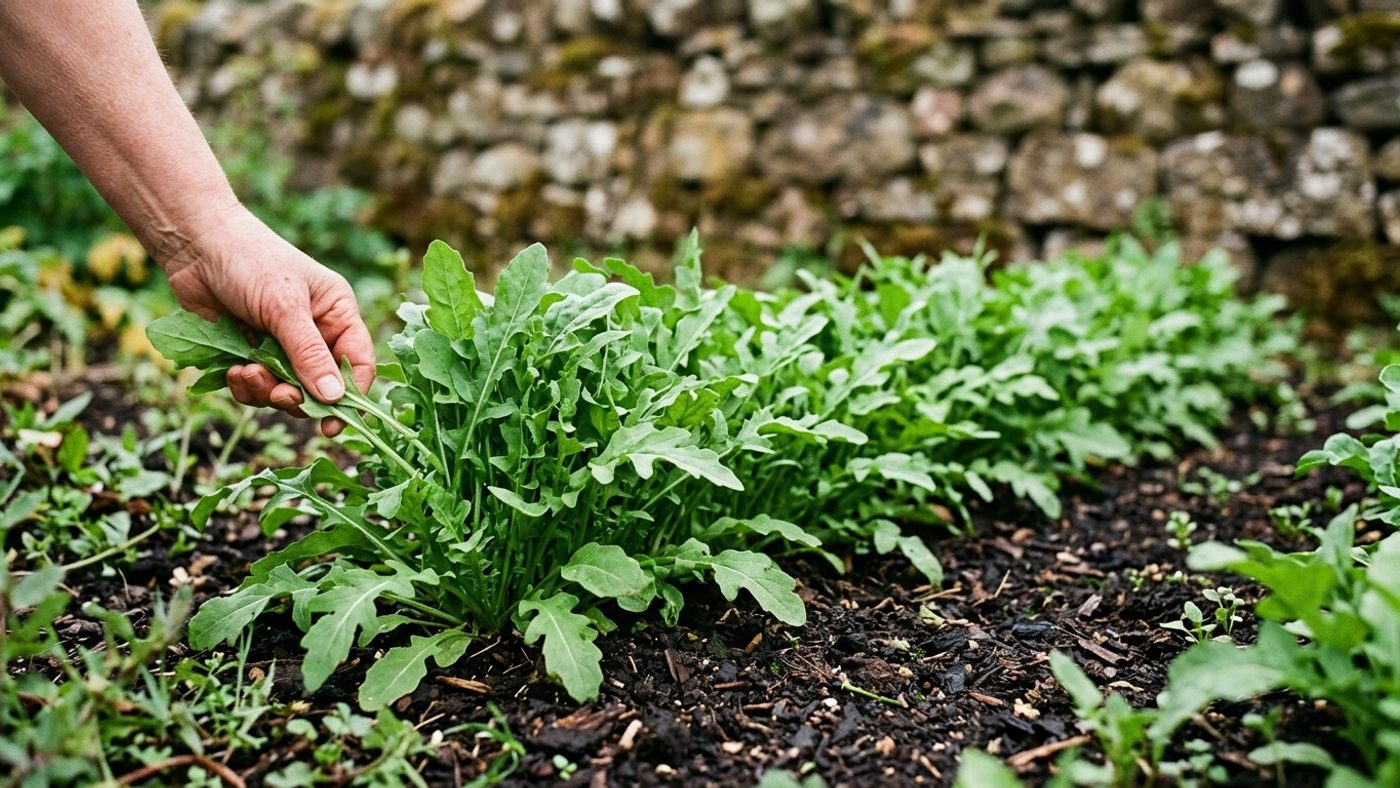
Start picking 4-6 weeks after sowing, taking a few leaves from each plant rather than stripping one plant bare before moving to the next: heavy picking from a single plant slows its recovery. Salad rocket gives a month or two of harvests before flowering ends it, and the whole plant should then come out. Wild rocket keeps producing after it flowers, and with protection can carry on cropping into winter before starting again in spring.
Storing
Rocket is best eaten fresh, but leftover leaves keep for a few days refrigerated in a sealed container. For longer storage, blanch for a minute and plunge into cold water before freezing.
Common problems
- Slugs and snails damage seedlings and young plants.
- Flea beetles leave small holes in the leaves, but the damage is cosmetic on this crop, the same as on pak choi and radish.
- Self-seeding isn't a pest, but it's worth knowing about: rocket seeds itself readily if left to flower and set seed, so volunteer plants can turn up in beds you didn't sow. Harmless if you don't mind them, easy to remove if you do.
See more problems
- Bolting is triggered by hot, dry weather on salad rocket, and worse in overcrowded rows. A Scottish summer rarely supplies enough heat to trigger it heavily, though consistent watering and light shade in summer still help.
Common questions
Are wild rocket and salad rocket the same plant?
No: they're genuinely different species: salad rocket is an annual that dies after flowering, while wild rocket is a perennial that keeps producing for years, including after flowering, and tolerates poorer soil. Full sourced breakdown: <a href='/tools/garden-myths/rocket/'>Rocket Myths →</a>
Does watering more give rocket a stronger flavour?
No, the opposite: excess water dilutes the peppery flavour rocket is grown for, so keep the soil consistently moist rather than heavily watered. Full sourced breakdown: <a href='/tools/garden-myths/rocket/'>Rocket Myths →</a>
Does the harvest end once a rocket plant flowers?
It depends on the type: true for salad rocket, which should come out once it flowers, but wild rocket keeps producing edible leaves, and flowers, after flowering too. Full sourced breakdown: <a href='/tools/garden-myths/rocket/'>Rocket Myths →</a>
How should I pick leaves to keep the plants producing?
Take a few leaves from each plant across the row rather than stripping one plant bare: heavy picking from a single plant slows its recovery. Full sourced breakdown: <a href='/tools/garden-myths/rocket/'>Rocket Myths →</a>
Sources
2 sources, and what each was used for
- RHS: the wild-vs-salad rocket distinction, soil prep, sowing depth and timing for indoor/outdoor/container routes, spacing, watering, bolting cause and fix, flower removal as a temporary extension, harvesting method for both types, three named varieties, pest and disease list
- gardenersworld.com: corroborates depth and sowing window independently; adds that overwatering dilutes rocket's peppery flavour, a nuance RHS doesn't make; covers storage (RHS's page has no storage section at all) and self-seeding behaviour; names two additional varieties, Dragon's Tongue (bolt-resistant) and Wasabi (hot, spicy), not on RHS's list