
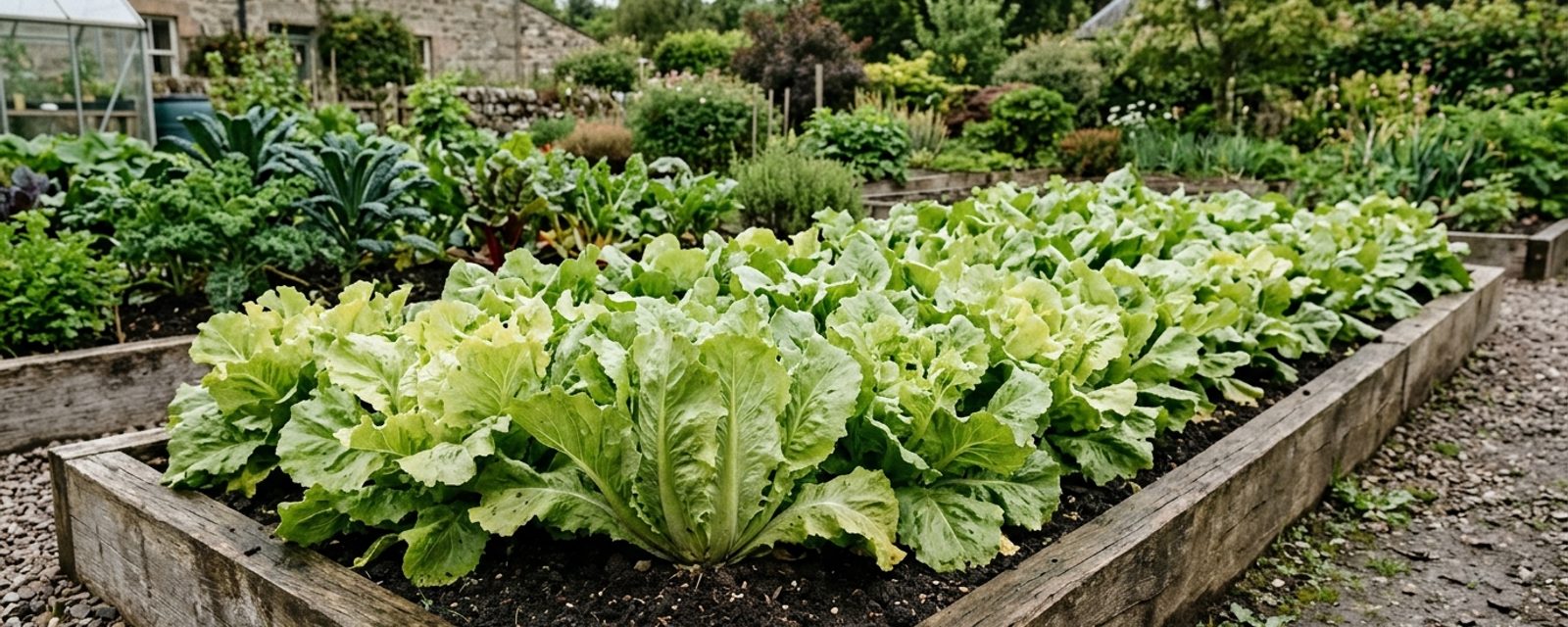
Cichorium endivia
Endive is sold as two genuinely different types: one for summer, one that stands into winter, and both share the same blanchingExcluding light from part of a growing plant, usually by earthing up, wrapping or covering, so it grows pale, tender and less bitter. Full definition → step to soften their bitterness.
Endive's bitterness is the whole point, and blanching is how you soften it without losing it. Beyond that, the type you choose settles almost everything else: which season it suits, how tough it is, and how it should be sown.
Choosing a type
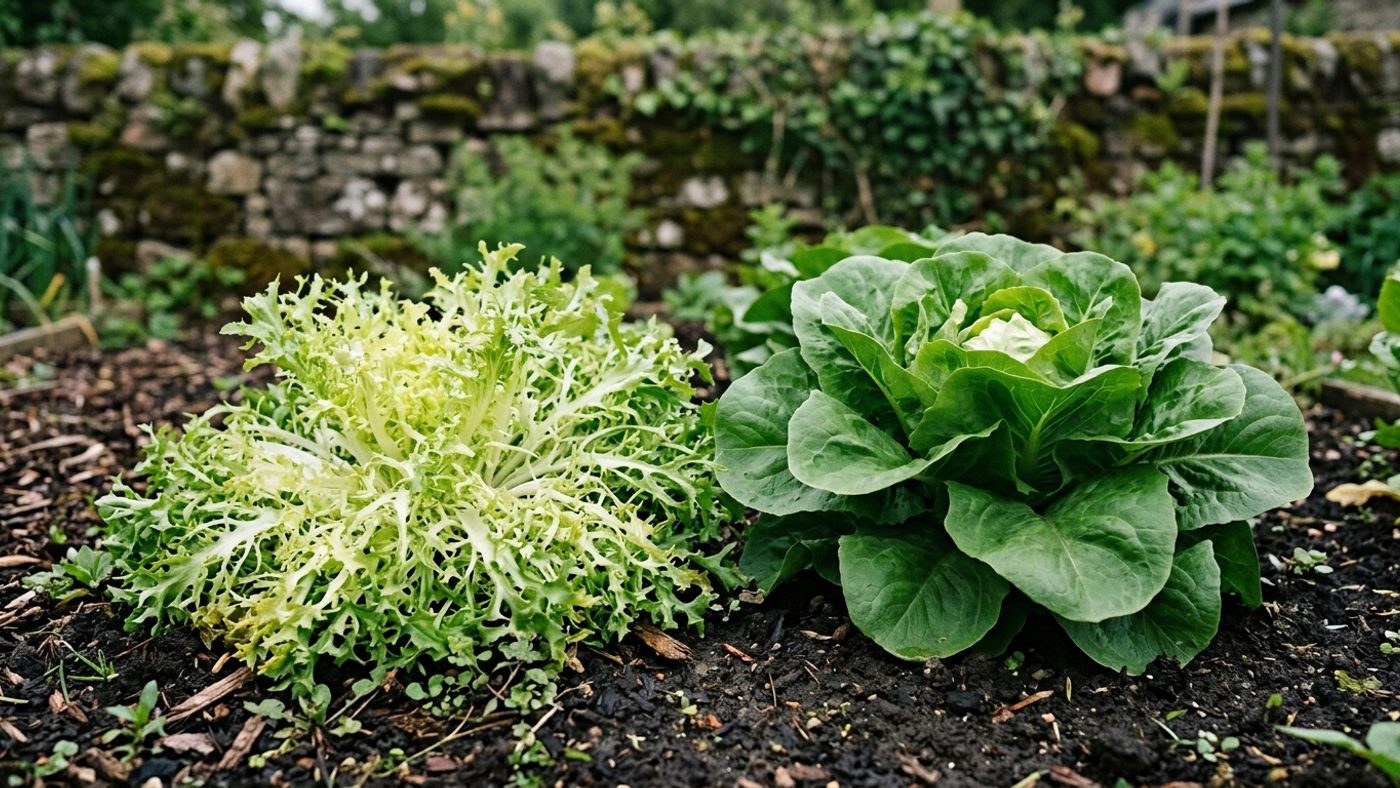
Frisée forms a loose rosette of thin, frilly leaves and is the type suited to summer salads. Batavian, also sold as escarole, has large, flat, broad leaves and is the more robust choice, genuinely useful for winter harvesting rather than just a season-neutral alternative.
Preparing the ground
Endive wants a sunny spot but tolerates partial shade through summer, which is worth using deliberately on the later sowings: a touch of afternoon shade takes some of the heat out of exactly the conditions that trigger boltingA plant switching early into flowering and seed production, usually triggered by stress, after which leaves, roots or bulbs turn bitter or unusable. Full page →. The soil should hold moisture without waterlogging or drying out, so dig in plenty of garden compost or well-rotted manure a few weeks ahead of sowing, or mulchA layer of material spread over the soil around plants to suppress weeds, retain moisture, and improve soil structure as it breaks down. Full definition → over the top for a no-digA growing method that avoids turning the soil over, building fertility instead by adding organic matter on the surface. Full definition → bed.
Sowing little and often through the summer works better than one big batch, so it's worth preparing a bed long enough to take several small sowings in succession rather than a single block planted all at once.
Sowing
Endive seed needs real warmth to germinateA seed sprouting: breaking dormancy and putting out its first root and shoot, given the right warmth and moisture. Full definition →: a minimum of 15°C, ideally 20-22°C. Sow outdoors from late May to August, once the soil has reached that temperature, in drills 1cm deep with 30cm between rows. Thin gradually to a final spacing of 23-38cm apart, or 5cm if you're growing baby salad leaves instead. For a winter crop, sow a Batavian variety mid-to-late August.
For an earlier start, sow indoors from February, 1cm deep in modulesA tray divided into small individual cells, each sown with its own seed or seedling, so each plant grows undisturbed roots until it's ready to plant out. Full definition → or trays on a warm windowsill or heated propagator, using a bolt-resistant variety and keeping plants under cover until spring temperatures settle. In containers, use pots at least 40cm wide: one will hold up to three full-sized plants or six smaller cut-and-come-again ones.
Planting out
Move seedlings to their final positions once local temperatures are reliably well above 5°C: from late April in milder areas to early June in colder ones, after hardening offGradually getting young plants raised indoors used to outdoor conditions over 7–14 days before planting out, so cold, wind and direct sun don't shock or damage them. Full definition → gradually over a week or two so plants aren't checked by the move. Set them at the same 23-38cm spacing used for direct-sown plants, or 5cm for a baby-leaf row, in ground prepared the same way whether it's an open bed or a container. Water thoroughly both before and after planting, and watch for slugs and snails straight away, especially in damp conditions: newly moved seedlings are at their most vulnerable in the first week or two before they establish.
Varieties
All three named RHS varieties carry the Award of Garden Merit, a UK-wide award rather than a Scottish one.
RHS also lists 'Wallone' AGMThe RHS's Award of Garden Merit: a UK-wide trials award for reliable performance, not a Scotland-specific recommendation. Full definition → (frisée, vigorous, good for cut-and-come-again cropping), not singled out below only because Pancalieri and Natacha between them already cover this guide's summer-and-winter split.
★ Our pick for Scotland
NatachaAGM
Batavian/escarole, hardy and bolt-resistant
The robust winter type, hardy and slow to bolt.
Why this one: Batavian types are the more robust type for winter harvesting, and bolt resistance matters most on the earliest, most bolt-prone sowings of the year: the two traits this crop most needs in Scotland lining up on a single AGM variety.
Also worth considering
PancalieriAGM
Frisée, finely serrated leaves
The frisée pick for summer cropping, worth growing alongside a Batavian type rather than instead of one, so the two AGM picks between them cover both ends of the season.
Best Endive Varieties for Scotland → compares all named endive varieties head-to-head, with the practical detail that doesn't fit in a summary card.
Care
Water regularly, particularly in free-drainingSoil that lets water pass through quickly rather than pooling, so roots aren't sitting in wet ground after rain. Full definition → soil and warm weather: dry conditions are what trigger bolting. Container plants need particular attention, since compost dries out fast. Once plants establish, a thick mulch of compost or well-rotted manure between rows helps hold moisture and keeps weeds down. Feeding usually isn't needed, though light soils or containers benefit from a fortnightly organic liquid feed through summer.
For the winter crop, cover Batavian plants with clochesA small, portable clear cover placed over an individual plant or short row to trap warmth and keep off wind, rain and pests. Full definition → or plastic-free fleeceA lightweight, breathable fabric laid or draped over plants to trap a little warmth and keep off frost, wind and some flying pests. Full definition → from October onwards.
Blanching
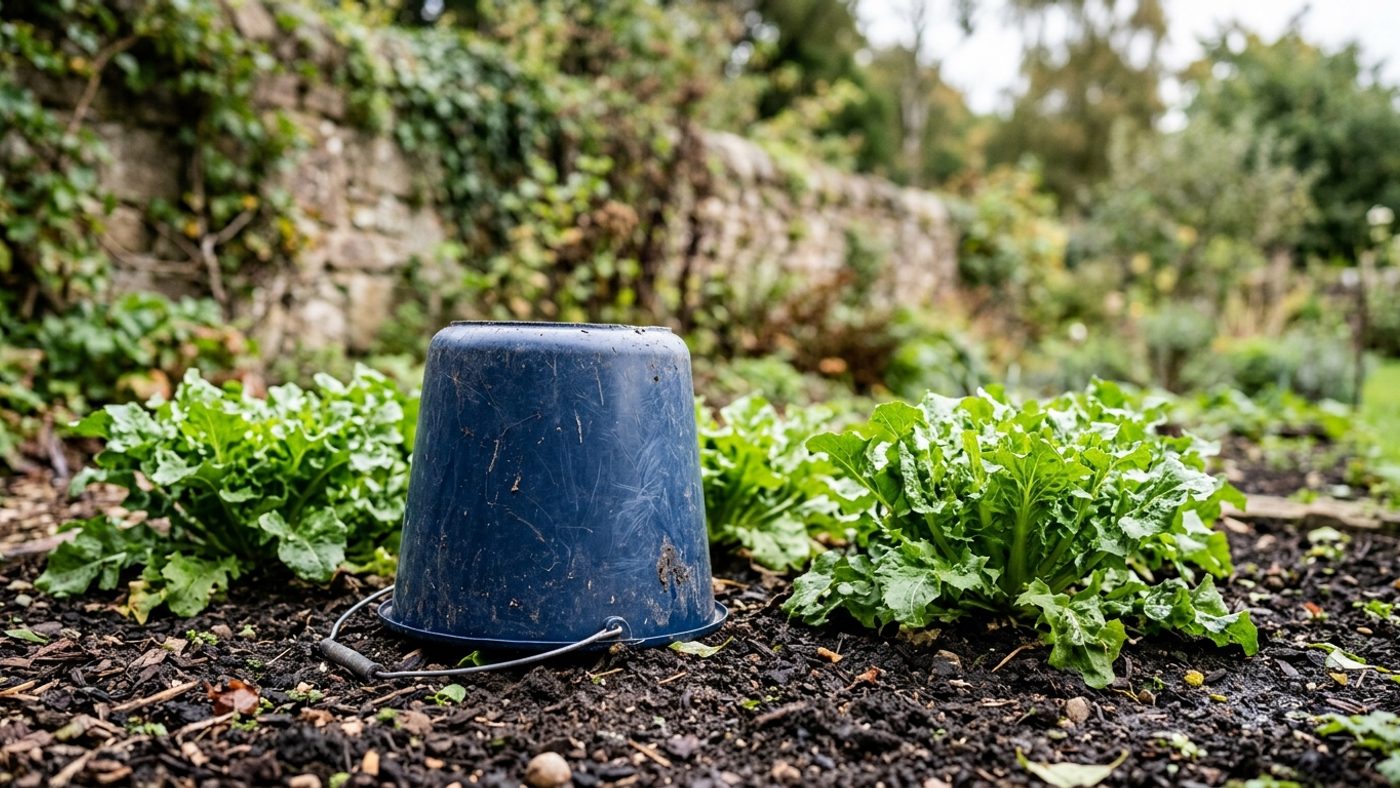
Blanching is what makes endive's bitter leaves milder and more tender, and it only works once a plant is mature. Make sure leaves are dry first, then exclude light: tie the head loosely with raffia or twine, set a tile or plate over the centre, or invert a bucket or pot over the whole plant (with any drainage holes sealed). It normally takes about two weeks, though cool autumn weather can slow it down, so budget more time for a late-season crop rather than assume the same timetable holds. Blanched plants deteriorate quickly, especially in warm or wet weather, so blanch a few plants at a time in succession rather than the whole row at once, and check regularly for slugs sheltering underneath.
Harvesting
Whole heads are ready around three months after sowing: cut the stem with a sharp knife, strip off the tough outer leaves, and keep the pale, milder centre, which carries the best flavour and texture on the plant. Grown as cut-and-come-again instead, the first picking comes about a month after sowing, with at least two pickings to follow from the same plants.
Which method suits you depends on how you sowed: a May sowing thinned to full spacing gives whole heads by August, while a row grown thickly for baby leaves starts coming ready within weeks and keeps producing through summer. Batavian plants sown for winter follow the same three-month clock from their mid-to-late August sowing, cropping from around November onwards under cover as the season's last harvest.
Common problems
- Slugs and snails are a genuine risk, particularly to seedlings and to leaves under a blanching cover. One source claims endive's bitterness deters them; two others name it directly as a pest, so protect the crop rather than rely on flavour alone.
- Aphids can reduce plant vigour and cause distortion.
- Bolting is triggered by hot, dry weather, or by cold exposure while plants are young. A Scottish summer rarely supplies enough heat to trigger it heavily, though consistent watering and a bolt-resistant variety for early sowings still help.
Common questions
Are frisée and Batavian endive the same plant?
No: frisée is a loose rosette of thin, frilly leaves suited to summer salads, while Batavian (escarole) has large, flat leaves and is the more robust choice for winter harvesting. Full sourced breakdown: <a href='/tools/garden-myths/endive/'>Endive Myths →</a>
Do bitter, aromatic leaves keep slugs off endive?
Not reliably: one source suggests the bitterness puts slugs off, but two others name slugs and snails as a genuine risk, particularly to seedlings and leaves under a blanching cover, so protect the crop rather than rely on flavour. Full sourced breakdown: <a href='/tools/garden-myths/endive/'>Endive Myths →</a>
Can I sow endive outdoors in spring?
No: endive seed needs at least 15C of soil warmth to germinate, ideally 20-22C, which puts the outdoor window at late May to August; sow indoors from February with a bolt-resistant variety for an earlier crop. Full sourced breakdown: <a href='/tools/garden-myths/endive/'>Endive Myths →</a>
Does endive survive a Scottish winter?
Yes: a Batavian variety sown mid-to-late August and covered with cloches or fleece from October is a genuine winter crop; frisée is the summer-only type. Full sourced breakdown: <a href='/tools/garden-myths/endive/'>Endive Myths →</a>
Sources
3 sources, and what each was used for
- RHS: the frisée vs Batavian distinction, soil prep, sowing temperature and timing for indoor/outdoor/container routes, spacing, watering, mulching, blanching method and duration, winter protection, two harvesting methods, three named varieties with AGM status, bolting cause and fix, slug/snail and aphid risk
- Garden Organic: independently corroborates blanching duration (two weeks), whole-head harvest timing (three months), slug and snail risk to seedlings, and bolting in hot weather; supplies the Latin name and family; recommends sowing little and often for a continuous supply to the end of August
- Garden Organic: independently corroborates late-August sowing for the winter/Batavian crop