
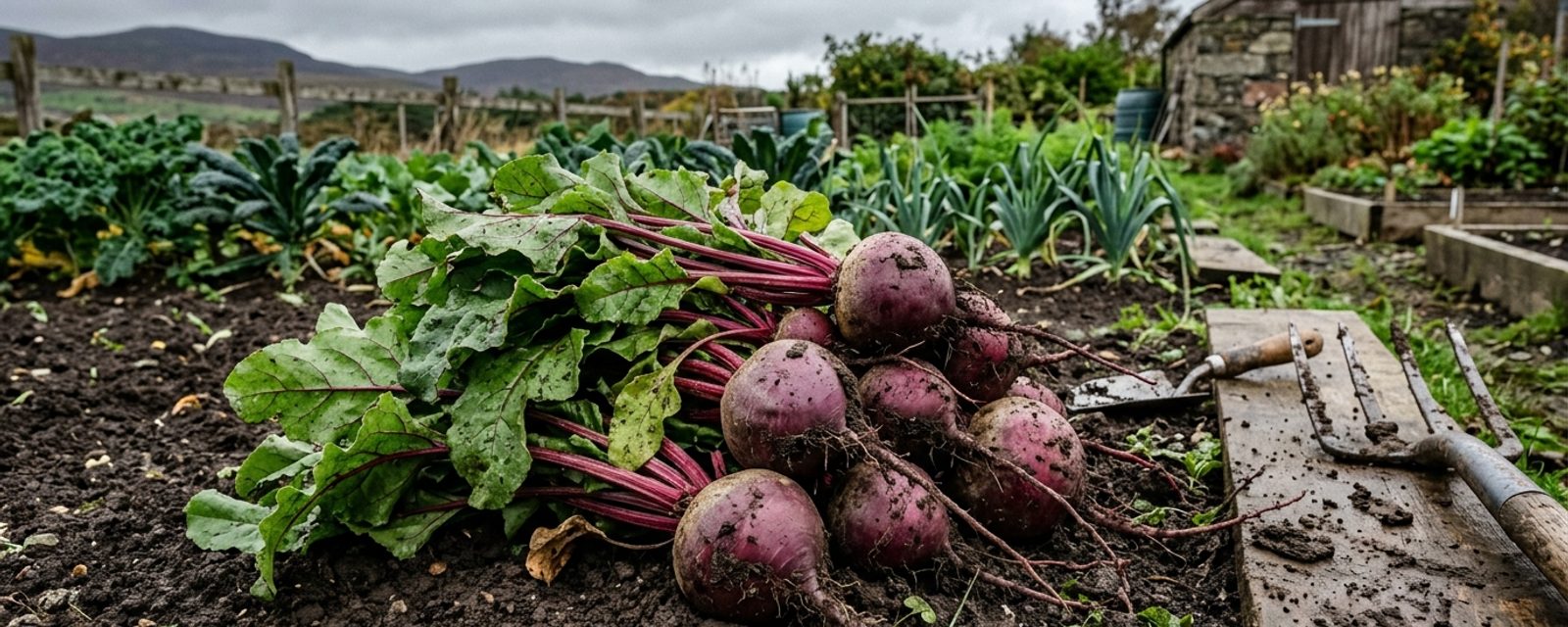
Beta vulgaris
Sow beetroot under fleeceA lightweight, breathable fabric laid or draped over plants to trap a little warmth and keep off frost, wind and some flying pests. Full definition → as early as March and you're storing roots in sand by winter — a full-season crop with almost no wasted ground along the way.
Beetroot earns its place in a Scottish garden by giving you two crops from one plant: sweet, earthy roots and leaves that cook like spinach. It takes up very little room, grows well in containers, and is ready in 50 to 60 days. The one thing that catches people out is bolting. A cold snap after an early sowing sends the plant to flower instead of swelling the root. The answer is a bolt-resistantA plant switching early into flowering and seed production, usually triggered by stress, after which leaves, roots or bulbs turn bitter or unusable. Full page → variety, and in Scotland that matters from the very first sowing.
Why bolt resistance matters in Scotland
Beetroot bolts when it gets a cold check after sowing. A Scottish spring delivers those checks as reliably as rain. An early sowing in late February or March, which the seed packet says is fine, can run straight into a cold snap and trigger flowering instead of root growth. Once a beetroot has bolted, the root stops developing and the plant is done.
The fix is straightforward: choose a bolt-resistant variety for anything sown before May. Boltardy and Forono are the two AGMThe RHS's Award of Garden Merit: a UK-wide trials award for reliable performance, not a Scotland-specific recommendation. Full definition → varieties with bolt resistance specifically noted. For later sowings from May through July, the risk drops and any variety will do. The first row of the year wants a variety bred for exactly this problem.
Varieties
Boltardy and Forono are the two varieties with bolt resistance specifically noted, earning them a place in a Scottish spring sowing. Both carry the RHS Award of Garden Merit, a UK-wide award, not a Scottish one — nobody trials beetroot for our conditions specifically.
★ Our pick for Scotland
BoltardyAGM
Round
The bolt-resistant standard, the one that makes early sowings viable in Scotland.
Why this one: Bolting is the main failure with beetroot, and a Scottish spring is the trigger. A cold snap after sowing sends the plant to flower instead of swelling the root. Boltardy's name is the trait, and for early sowings in Scotland it is the single most useful characteristic a beetroot can have.
Also worth considering
ForonoAGM
Cylindrical
Sweet, easy-to-peel elongated root. Resistant to bolting. Young leaves also edible.
WodanAGM
Round
Early maturing, bright red, round roots. Perfect for pickling.
Show other recommended varieties (2)
PabloAGM
Round
A widely available round variety.
Cheltenham Green TopAGM
Long
A traditional long-rooted type.
Soil and site
Beetroot wants a sunny site with fertile, free-drainingSoil that lets water pass through quickly rather than pooling, so roots aren't sitting in wet ground after rain. Full definition → soil. On heavy clay in early spring, warm the ground with clochesA small, portable clear cover placed over an individual plant or short row to trap warmth and keep off wind, rain and pests. Full definition → for a couple of weeks before sowing. Light sandy soil warms up faster and should not need it. Weed thoroughly and dig in plenty of garden compost or well-rotted manure.
Beetroot seeds can be slow to germinateA seed sprouting: breaking dormancy and putting out its first root and shoot, given the right warmth and moisture. Full definition →. Soaking them in warm water for an hour before sowing gives them a head start and produces more consistent results.
Sowing
Sow outdoors from late March to July, once the soil reaches about 7°C. Sow about 2.5cm deep, spaced 10cm apart, with rows about 30cm apart. If you want clusters of smaller roots, ideal for baby beetroot, sow two or three seeds together, spacing each group 15cm apart.
You can push the season earlier, from late February, if you choose a bolt-resistant variety and cover the row with fleece or cloches. That buys you the earliest beetroot of the year, but it only works with a variety bred to handle the cold. Sow short rows every few weeks for a continuous harvest from early summer into mid-autumn.
Indoors: for an early start in colder areas, sow into modular trays indoors. Sow one seed cluster per moduleA tray divided into small individual cells, each sown with its own seed or seedling, so each plant grows undisturbed roots until it's ready to plant out. Full definition → at 2.5cm deep. If more than one seedling appears, thin to the strongest. To grow clumps of small roots, sow up to four seeds per module and plant them out as a cluster without splitting.
Containers: beetroot grows well in pots. Use a container at least 40cm wide, filled with peat-freeCompost made without peat, which is harvested from a slow-forming, carbon-storing wetland habitat that peat extraction damages. Full definition → multipurpose compost, positioned in a sunny spot. Space the seeds 10cm apart. Choose round-rooted varieties. Long-rooted types need depth that a pot cannot provide.
There is usually no need to thin seedlings if you are harvesting the roots small, about the size of a golf ball. If you want larger roots, up to cricket-ball size, thin to 10cm apart once the seedlings are about 2.5cm tall. The thinnings go straight into a salad.
Planting out
Young plants raised indoors or bought as plugs go out once they are at least 5cm tall and well rooted. Harden them off first. Space single plants 10cm apart. If the modules contain several plants, plant each clump 15cm apart without splitting them up. Firm in gently and water well. Take care not to disturb the roots. Beetroot resents root disturbance, and a checked plant is more likely to bolt.
Watering and care
Water seedlings regularly until they are well rooted and growing strongly. Once established, beetroot does not usually need much watering, though the roots will be more tender if the soil is kept fairly moist. In dry spells or on free-draining soil, water every 10 to 14 days.
Dry soil makes the roots woody. Uneven watering, a drought followed by a heavy soak, makes them split. Too much water pushes leafy growth at the expense of the root. In a Scottish summer you may not need to water at all, but a prolonged dry spell is worth reaching for the watering can. Container plants need regular watering throughout. Compost dries out faster than soil.
Feeding is rarely needed. If plants are not growing strongly, an organic high-nitrogen liquid feed will give them a boost. Weed regularly, especially when the plants are young, and hand-weed close to the roots. A hoe blade can damage the top of the swelling root.
Harvesting
Beetroot is ready in as little as 40 days, usually between 50 and 60. Harvest from early summer through to mid-autumn depending on sowing time. Loosen the soil with a hand fork and lift alternate plants once the roots reach golf-ball size, leaving the rest to grow on. Harvest these when no larger than a cricket ball. Leave them too long and they turn woody.
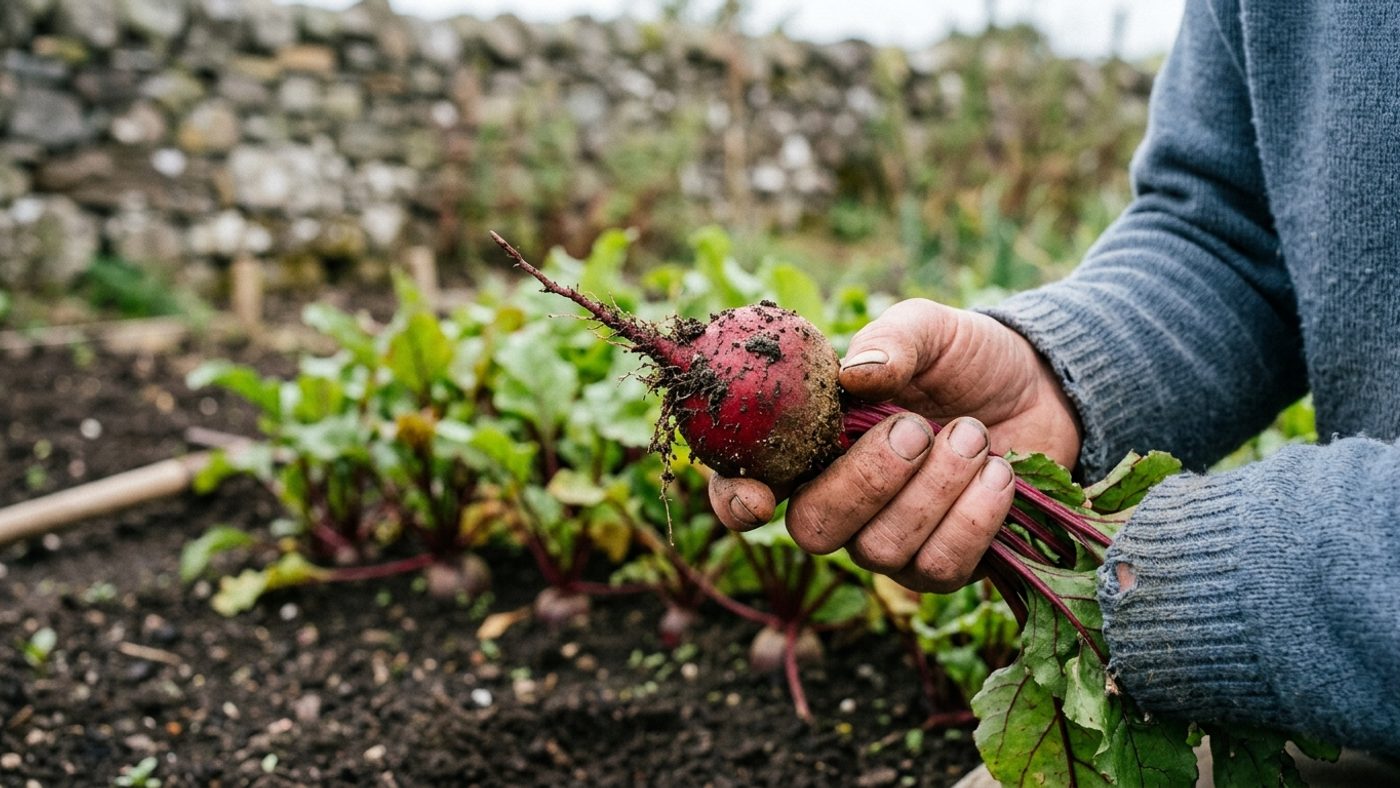
The leaves are a bonus crop. Cook them like spinach, or eat young leaves raw in salads. You can take a few leaves from each plant through the season without harming the root. Just leave at least four or five on the plant so it keeps growing. Red varieties will stain your hands, so wear gloves if that matters.
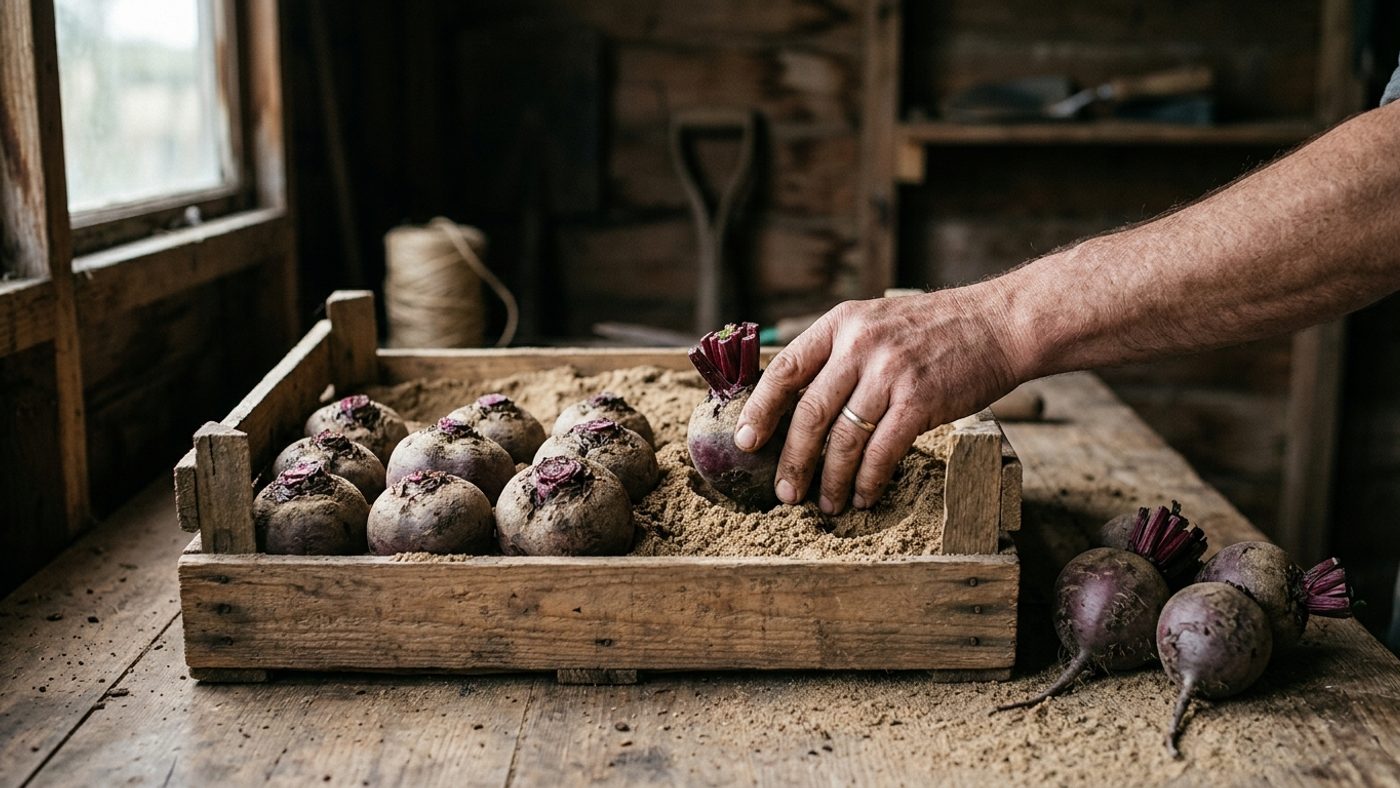
Storing: sowings from June onwards produce roots for autumn harvest that will store through winter. Lift carefully, brush off the soil, and cut the leaves off about 2.5cm from the base. Pack the roots in a container of dry sand, potting compost or coir and keep in a garage or shed. They should last at least a couple of months. In mild locations where the ground does not freeze, you can leave late crops in the soil and lift them as you need them.
How to Store Beetroot for Winter → covers the full method step by step, plus how cold a Scottish shed actually needs to be to beat that couple-of-months minimum.
Common problems
- Slugs and snails. Go for seedlings and young leaves. Protect transplants until they're established and growing away strongly.
- Bolting. The plant runs to flower and the root stops developing. Triggered by a cold snap after early sowing. Bolt-resistant varieties largely avoid it. Once it has happened, pull the plant and compost it.
- Woody roots. The soil was too dry during the growing period. Water every 10 to 14 days in dry spells.
See more problems
- Split roots. Uneven watering: a drought followed by a heavy soak. Keep the soil consistently moist.
- Beet leaf miner. A fly whose larvae tunnel inside the leaves, creating large irregular blotches. Remove affected leaves and destroy them.
- Downy mildew. Yellow patches on the upper leaf surface with grey mould underneath. Good spacing and watering the soil rather than the leaves reduce the risk.
- Poor germination. Beetroot seeds can be slow. Soak them in warm water for an hour before sowing.
Common questions
Is beetroot easy to grow in Scotland?
It is one of the more straightforward crops, and it earns its space by giving you two harvests: roots and leaves. The roots are ready in as little as 40 days, usually 50 to 60. The leaves can be cooked like spinach or eaten raw when young, and you can pick a few from each plant without harming the root. It also takes up very little room and grows well in containers.
When should I sow beetroot in Scotland?
Sow outdoors from late March or April through to July, once the soil reaches about 7°C. You can push the early end to late February if you choose a bolt-resistant variety and cover the row with fleece or cloches. A cold snap after sowing is the main bolting trigger, so Boltardy is the variety to use for the earliest sowings. Sow short rows every few weeks for a steady supply from early summer into autumn.
Why has my beetroot bolted instead of swelling?
Not from cold alone: bolting is really a response to a check in growth, which a cold snap can trigger but usually only in a plant that was already stressed or sown too early, so sow from mid-March and choose a bolt-resistant variety like Boltardy. Full sourced breakdown: <a href="/tools/garden-myths/beetroot/">Beetroot Myths →</a>
Why are my beetroot roots woody or split?
Woody roots come from letting the soil dry out; split roots come from doing that and then soaking it heavily, so keep the moisture steady with a proper soak every fortnight rather than rescuing a dry bed all at once. Full sourced breakdown: <a href="/tools/garden-myths/beetroot/">Beetroot Myths →</a>
How do I store beetroot for winter?
Sow from June onwards for autumn harvests that will store through winter. Larger roots store better than small ones. Lift them carefully to avoid damage, brush off the soil, and cut the leaves off about 2.5cm from the base. Pack them in a container of dry sand, potting compost, or coir and keep them in a garage or shed. They should last at least a couple of months. In mild locations where the soil does not freeze, you can leave late crops in the ground until you need them.
Sources
1 sources, and what each was used for
- RHS: sowing window, 2.5cm depth, spacing 10cm (15cm clusters), rows 30cm, harvest 40-60 days, optimal size 4-7cm, AGM varieties