
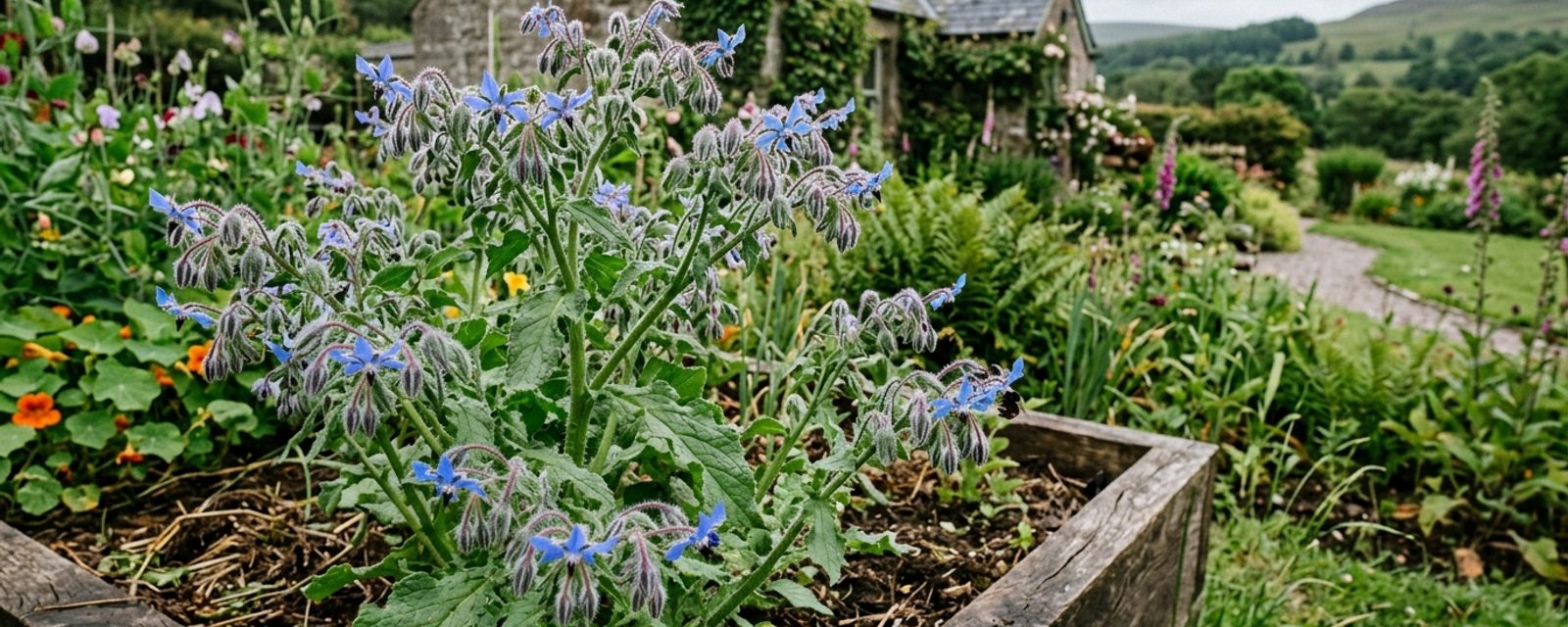
Borago officinalis
Borage comes with a real disagreement over whether to transplant it at all, a contact-dermatitis caution worth knowing before you handle it bare-handed, and a self-seeding habit worth expecting rather than being surprised by.
It's an easily-grown annual with edible, sky-blue, star-shaped flowers and a cucumber-like fragrance, tolerating most soil short of waterlogging, without the strict drainage many Mediterranean herbs need.
Site and soil
Choose a spot in full sun, though light shade is tolerated. Almost any soil works except waterlogged ground; moist soil through summer gives the best growth, though plants tolerate dry soil too, just shorter. Space plants around 30-50cm apart: sources give different figures here, so this range reflects both rather than picking one. For containers, use a large pot, at least 25cm deep and over 30cm wide, filled two-thirds with peat-freeCompost made without peat, which is harvested from a slow-forming, carbon-storing wetland habitat that peat extraction damages. Full definition → compost and one-third coarse grit, though borage isn't ideally suited to container growing in the first place.
Sowing
Direct-sowing is the safer route: borage forms a deep root and doesn't do well if transplanted, so sow the large seeds where the plant is to flower, about 5cm deep, from mid-spring after the last frost, at around 15C. Planting seedlings is also a standard option, which works but carries more transplant risk. A second sowing in late spring extends the display.
Care through the year
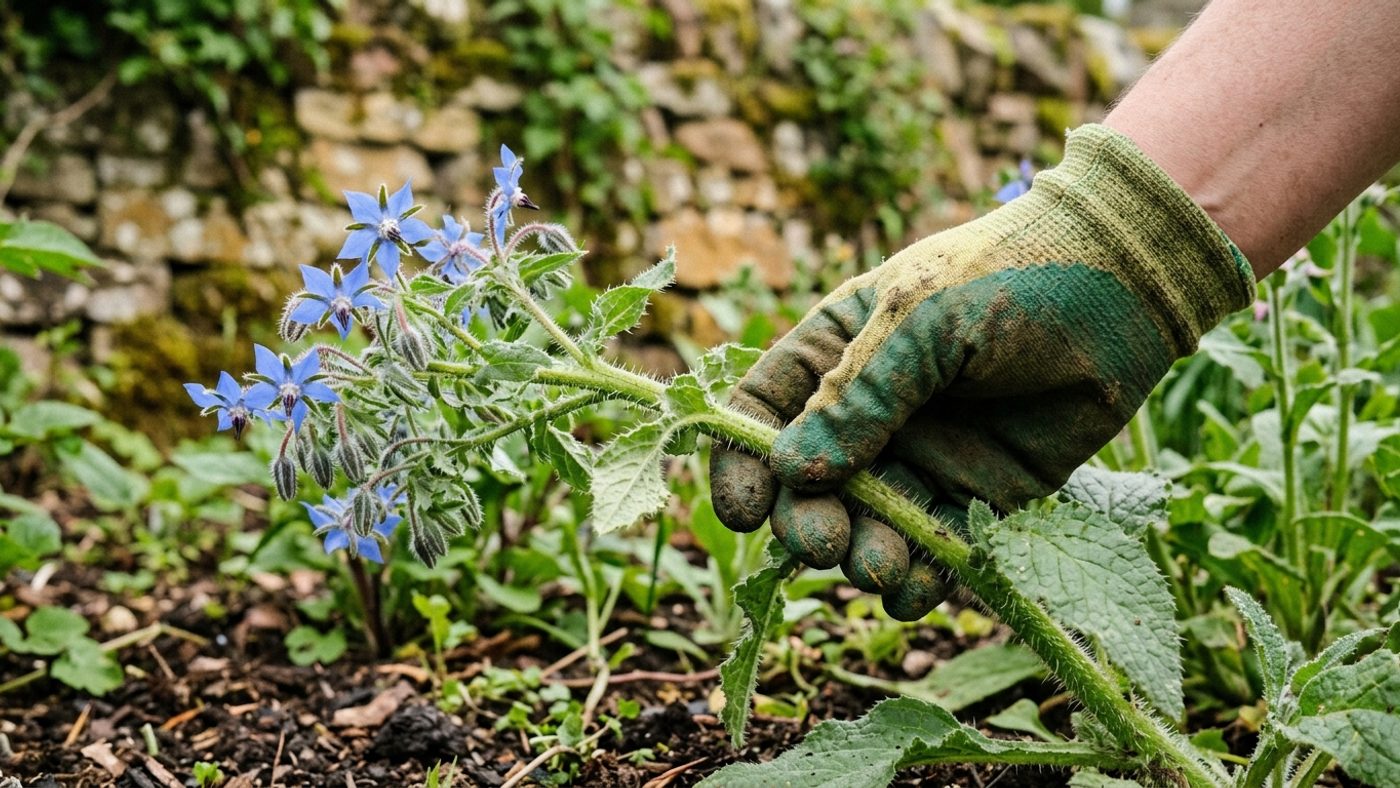
Ground-grown plants tolerate dry periods once established, though moist soil through summer produces bigger plants; container plants need regular watering, potentially daily in summer. Feeding isn't usually needed, though poor or sandy soil benefits from a general fertiliser in spring. DeadheadRemoving spent flowers before they set seed, which redirects a plant's energy into further flowering rather than seed production. Full definition → faded flowers to encourage more blooms and to control self-seeding, since borage drops seed readily and will spread on its own if left unchecked. Wear gloves when handling plants: the hairy leaves can cause contact dermatitis in people with sensitive skin.
Harvesting
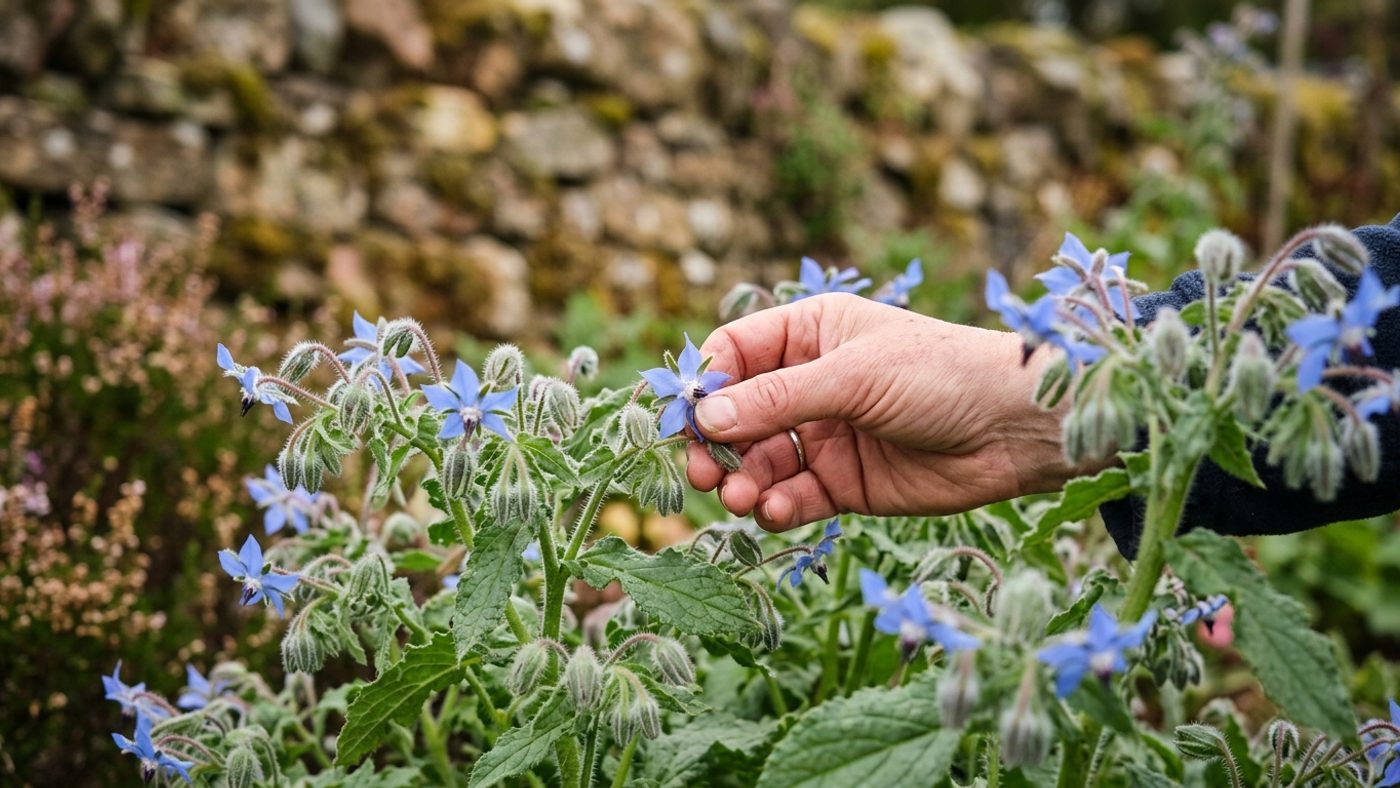
Pick the sky-blue flowers through summer, edible and best used to garnish drinks and salads, with a genuine cucumber-like fragrance. Young leaves are also usable while tender.
Varieties
There are four varieties of borage (standard blue Borago officinalis, Alba, Bill Archer, and the perennial Borago pygmaea), none carrying AGMThe RHS's Award of Garden Merit: a UK-wide trials award for reliable performance, not a Scotland-specific recommendation. Full definition → — standard blue is the plain default. Alba (white flowers) and Bill Archer (cream variegated leaves) are colour variants, unlike the distinct perennial form.
★ Our pick for Scotland
Borage (the species)
Borago officinalis · sky-blue star-shaped flowers · H5The RHS's H1a–H7 scale for how much cold a plant can survive outdoors, H1a being tender indoor-only and H7 hardy anywhere in the UK. Full definition →
The standard form most closely tied to borage's usual culinary and pollinator use, with genuine H5 hardiness.
Why this one: No AGM award exists for borage. Its edible, cucumber-scented flowers and readiness to self-seed make it a genuinely low-effort choice once established.
Also worth considering
Borago pygmaea
Hardy perennial · creeping habitA plant's characteristic shape and manner of growth, such as upright, spreading, creeping or bushy. Full definition →
A genuinely different plant, not just a colour variant: a hardy perennial with a low, creeping habit, in contrast with the standard annual species, for a permanent bed plant rather than a self-seeding annual.
Best Borage Varieties for Scotland → compares all named borage varieties head-to-head, with the practical detail that doesn't fit in a summary card.
Common problems
- Powdery mildew can appear in late summer; pull and compost affected plants.
- Slugs can damage foliage.
- Leaf-mining flies can also damage foliage, named separately from allium-specific leaf miners.
Common questions
Should I sow borage direct or start seedlings and transplant them?
Sources disagree: RHS gives planting seedlings as a standard spring option, but a second source says borage forms a deep root and doesn't transplant well, recommending direct sowing instead. Full sourced breakdown: <a href="/tools/garden-myths/borage/">Borage Myths →</a>
Is it safe to handle borage plants with bare hands?
No: borage's hairy leaves can cause contact dermatitis in people with sensitive skin, so gloves are worth wearing, particularly when weeding around a self-seeded patch. Full sourced breakdown: <a href="/tools/garden-myths/borage/">Borage Myths →</a>
Will borage take over my garden through self-seeding?
Not always: borage self-seeds readily unless faded flowers are removed before seed sets, so deadhead promptly if you don't want it spreading. Full sourced breakdown: <a href="/tools/garden-myths/borage/">Borage Myths →</a>
Sources
3 sources, and what each was used for
- RHS: annual/perennial habit, site/soil, spacing, sowing method and months, self-seeding, harvesting flowers/leaves, watering, feeding, varieties, powdery mildew
- RHS: H5 hardiness rating; slugs and leaf-mining flies as additional named problems
- gardenersworld.com: deep-root/transplant-sensitivity caution, alternative spacing figure, deadheading to control self-seeding, container growing advice, contact-dermatitis handling caution