
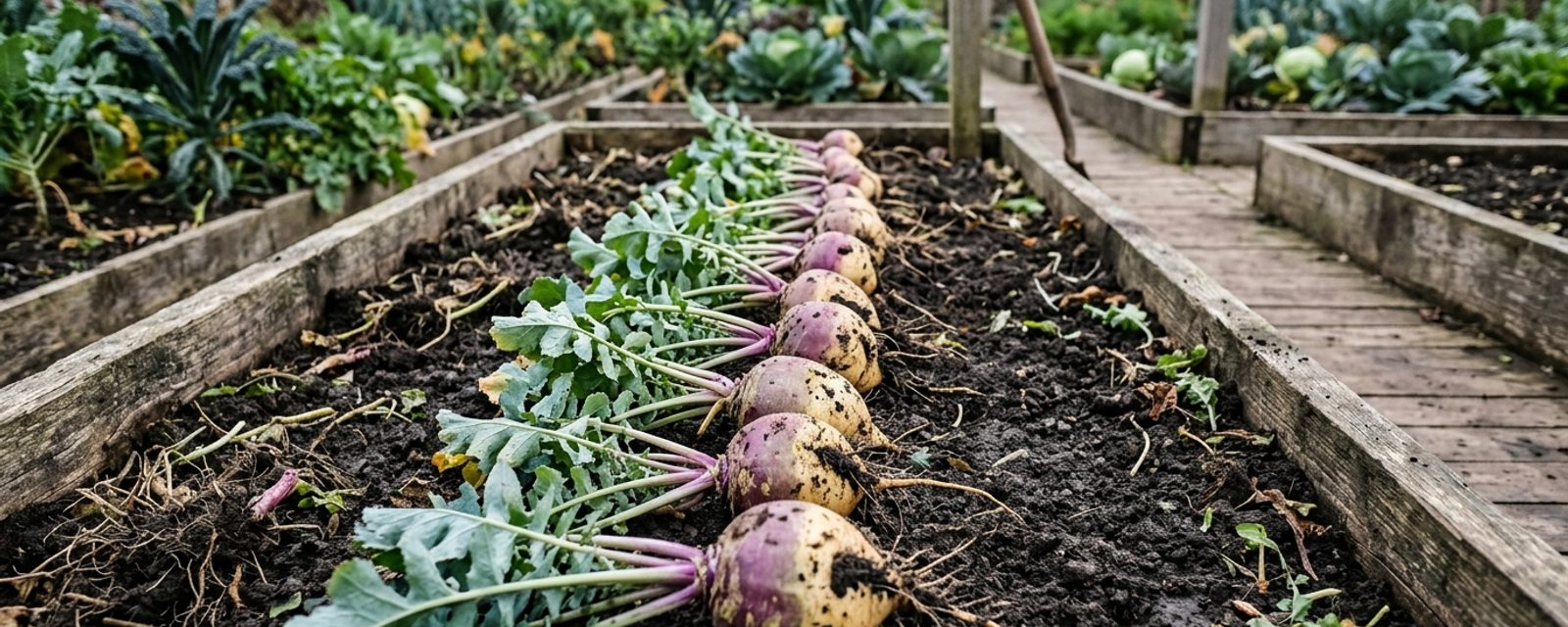
Brassica napus (Napobrassica Group)
Swede is the vegetable behind neeps and tatties, and one of the more forgiving crops you can grow.
Swede, the vegetable we call a neep, is a brassicaThe cabbage family: cabbage, kale, broccoli, cauliflower, Brussels sprouts, kohlrabi, swede, turnip and more, sharing the same pests, diseases and rotation rules. Full definition → that asks for very little through the growing season and pays it back with a root that stands in the ground into winter, when the rest of the plot has long since gone over. It shares the brassica family's pest list and its liking for a cool, steady summer, and it needs the ground for up to six months, sown once in late spring, lifted from early autumn right through to the depths of winter.
Why swede suits Scotland
Swede belongs to the brassica group, and Scotland's cool, even summers are exactly what that group prefers. The same cool conditions that keep cabbage aphid and cabbage root fly less troublesome here than further south apply just as much to swede, which shares that pest list. It matures more slowly in a Scottish summer than a warmer one further south, but it matures steadily, and a root crop that takes up to six months to bulk up has plenty of season to use.
The bigger advantage is winter. Swede is genuinely hardy, and it earns its place in a Scottish rotationMoving each crop family to different ground each year, on a multi-year cycle, so pests and diseases that build up in soil don't get a repeat host. Full definition → by standing when little else is available on the plot, right through the gap between autumn and spring, the hardest stretch of the year to fill.
Varieties
All three RHS Award of Garden Merit varieties are close in character: the differences are mostly flesh colour, mildew resistance and how long they'll stand. The award is UK-wide, not a Scottish one.
★ Our pick for Scotland
GowrieAGM
MaincropThe main, usually latest-sown and longest-growing type of a crop, grown for bulk and storage rather than an early harvest. Full definition →
Good flesh colour and texture. Can be harvested through to January.
Why this one: Swede earns its ground by standing through the part of the year everything else has finished, and Gowrie is the AGMThe RHS's Award of Garden Merit: a UK-wide trials award for reliable performance, not a Scotland-specific recommendation. Full definition → variety RHS names as holding into January, which is the trait that matters for a crop meant to fill the winter gap. Its name, referencing the Carse of Gowrie in Perthshire, is a naming curiosity worth knowing rather than evidence of Scottish suitability. No source separately tests these varieties for Scottish gardens.
Also worth considering
BroraAGM
Maincrop
Reddish-purple skin, creamy-yellow flesh with no bitterness.
MagresAGM
Maincrop
Good flavour. Mildew-resistant foliage and very hardy.
Best Swede Varieties for Scotland → compares all named swede varieties head-to-head, with the practical detail that doesn't fit in a summary card.
Soil and site
Swede wants an open, sunny site with moist, free-drainingSoil that lets water pass through quickly rather than pooling, so roots aren't sitting in wet ground after rain. Full definition →, fertile soil. Dig in plenty of garden compost or well-rotted manure, ideally well ahead of sowing, so the ground has settled by the time seed goes in. If your soil is acidic, as much of Scotland's naturally is, apply lime to raise the pH, in the same way as for other brassicas. Weed thoroughly, then firm the soil by treading it and rake it level before sowing.
If potatoes share your rotation, lime this bed the year you grow swede in it and leave the potato bed unlimed: raising the pH helps swede but raises the risk of scab on potatoes, so the two crops want opposite treatment from the same bag of lime.
Sowing and thinning
Sow from late spring to early summer (May to June), direct into the ground, about 2cm deep, in rows 38cm apart. Unlike faster crops, swede has one sowing window rather than a spread of batches: the six-month run to maturity is what it needs, not a succession of pickings.
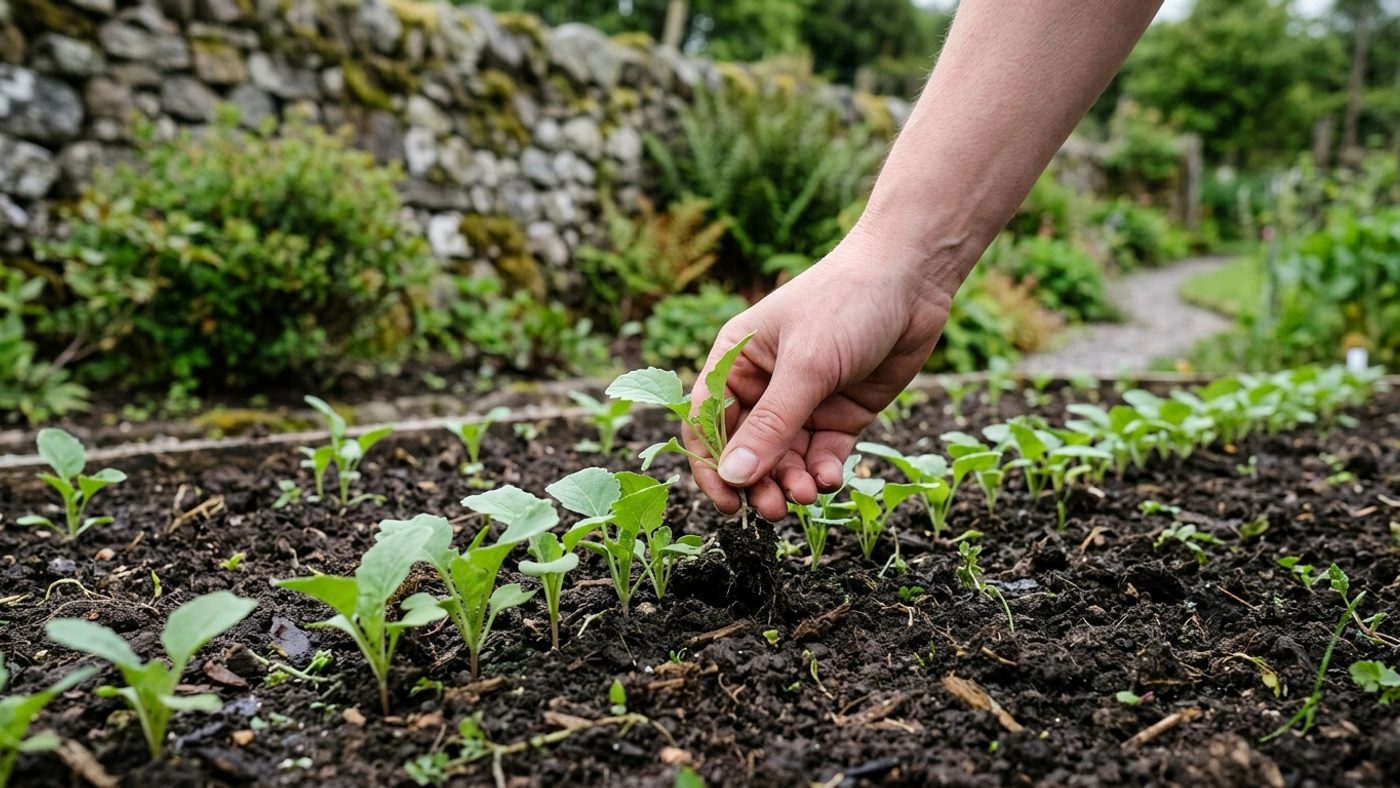
Thin the seedlings once they're large enough to handle, to a final spacing of 23cm apart for full-size roots, or 8-10cm for baby veg lifted young. Sowing thinly helps, but it rarely removes the need to thin: direct-sown seed is not even enough to reliably land on the right spacing by itself, and a crowded row competes for the room a swede root actually needs to bulk up.
Watering and care
Water young plants regularly until they're well rooted, then keep the soil evenly moist through dry spells. Swede roots that dry out and are then watered heavily grow unevenly and can split or turn bitter, and that is the actual cause, not disease. A thick mulchA layer of material spread over the soil around plants to suppress weeds, retain moisture, and improve soil structure as it breaks down. Full definition → of well-rotted manure or garden compost helps hold moisture steady and suppress weeds, and matters most on sandy, free-draining soil.
Weed regularly, taking care not to damage the roots when hoeing close to the plants.
Harvesting
Swede is ready from September onwards, and takes up to six months from sowing to mature. Lift roots as baby veg after a few weeks, at around 5cm across, or leave them to full size, 10-15cm across, for the main winter crop.
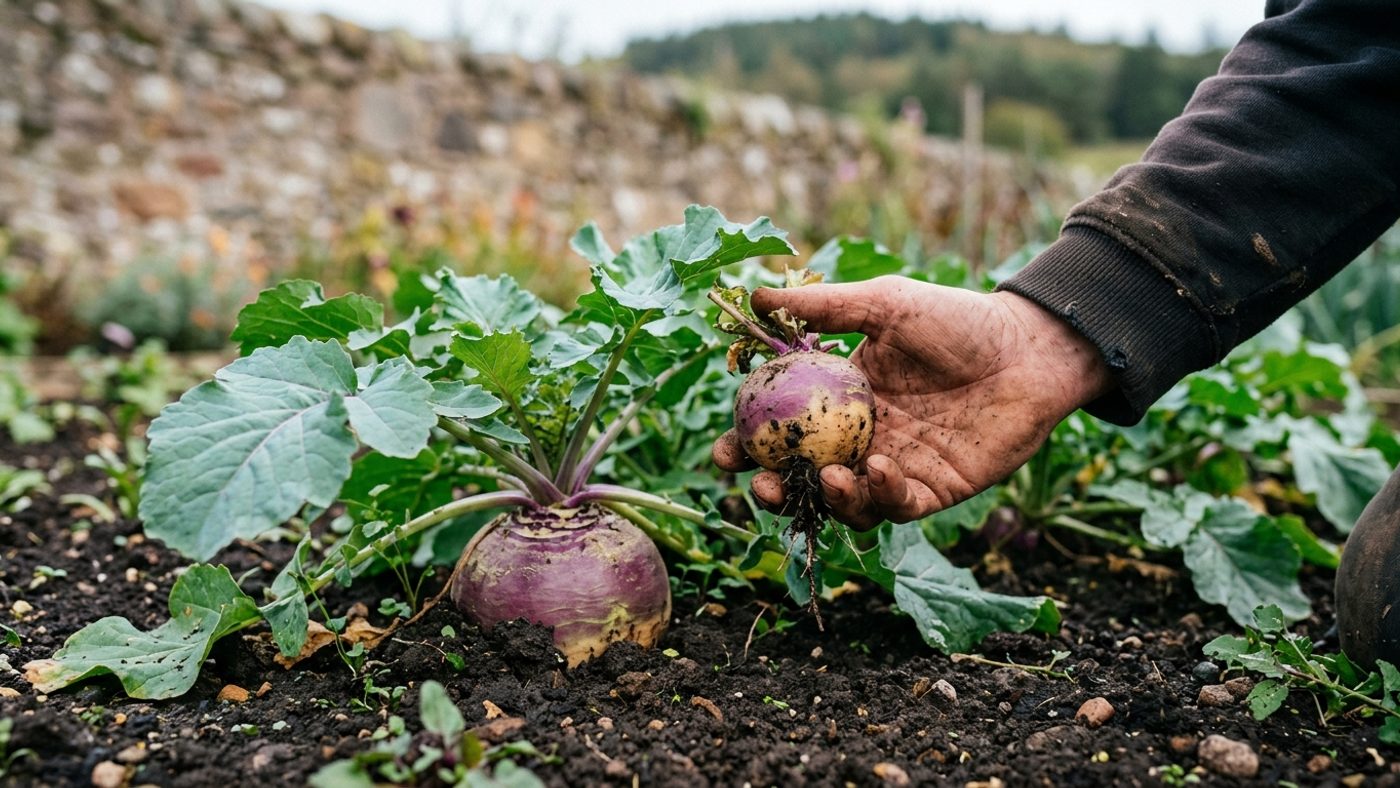
Swede is genuinely hardy and can often be left standing through a Scottish winter, covered with straw, clochesA small, portable clear cover placed over an individual plant or short row to trap warmth and keep off wind, rain and pests. Full definition → or plastic-free fleeceA lightweight, breathable fabric laid or draped over plants to trap a little warmth and keep off frost, wind and some flying pests. Full definition →, and lifted as needed. But that has a limit: where soil sits wet over winter, or on an exposed upland plot, lift the roots in late autumn instead and store them in a box of moist sand or peat-freeCompost made without peat, which is harvested from a slow-forming, carbon-storing wetland habitat that peat extraction damages. Full definition → compost in a frost-free shed or garage.
Common problems
- Cabbage caterpillars can strip foliage in days. Cover with insect-proof mesh from sowing.
- Flea beetles riddle young leaves with small holes, worst in warm, dry spells. Less trouble in Scotland's cooler summers, but mesh over seedlings is cheap insurance.
- Slugs and snails and pigeons will both take young plants. Protect seedlings with mesh or barriers until established.
See more problems
- Club root causes swollen, distorted roots and wilting in dry weather. Lime the soil and rotate brassicas. No chemical treatment exists.
- Cabbage root fly maggots eat directly into the root, which matters more here than on a leafy brassica: this is the part of the plant you're growing swede for. Mesh pinned down at sowing, before the flies find the row, is the defence. It's less troublesome in Scotland's cool summers than further south, but not worth skipping.
- Powdery mildew shows as a white coating on leaves, especially in dry conditions. Keep soil evenly moist and space plants well for airflow.
- Split or bitter roots mean irregular watering, not disease. Keep the soil evenly moist rather than letting it dry out between waterings.
Common questions
Is swede the same thing as a neep?
Yes, neep is simply the Scots word for swede: but swede itself is a different species from turnip (Brassica napus vs Brassica rapa), and mixing up the seed packet costs real time, since swede takes roughly twice as long to mature. Full sourced breakdown: <a href="/tools/garden-myths/swede/">Swede Myths →</a>
Why did my swede roots split or turn bitter?
It's irregular watering, not disease: roots that dry out and are then drenched grow unevenly and split or turn bitter, so keeping the soil evenly moist through dry spells is the fix. Full sourced breakdown: <a href="/tools/garden-myths/swede/">Swede Myths →</a>
Do I need to thin swede seedlings?
Yes: sowing thinly doesn't substitute for thinning, since swede still needs thinning to 20-25cm apart for full-size roots (8-10cm for baby veg) to bulk up properly. Full sourced breakdown: <a href="/tools/garden-myths/swede/">Swede Myths →</a>
Can I leave swede in the ground over a Scottish winter?
Often, yes: swede is hardy and stands well under straw, cloches or fleece through a sheltered lowland winter, but on wet or exposed upland ground it's safer to lift the roots in late autumn and store them in a frost-free shed. Full sourced breakdown: <a href="/tools/garden-myths/swede/">Swede Myths →</a>
Sources
2 sources, and what each was used for
- RHS: sowing May-June, 2cm depth, 20-25cm spacing, 38cm rows, liming advice, harvest Sept onwards, up to 6 months to mature, storage in sand/compost over winter, AGM varieties, pest and disease list
- SAC/SRUC: lower incidence of the difficult brassica pests (cabbage aphid, cabbage root fly) in Scotland, and slower, steadier maturing of the brassica group in cool summers — applies to swede as a Brassica napus crop sharing the same pest set