
Rove Beetles can't be bought. The way to get more in the garden is to create the right conditions, and here's how.
What does it look like?
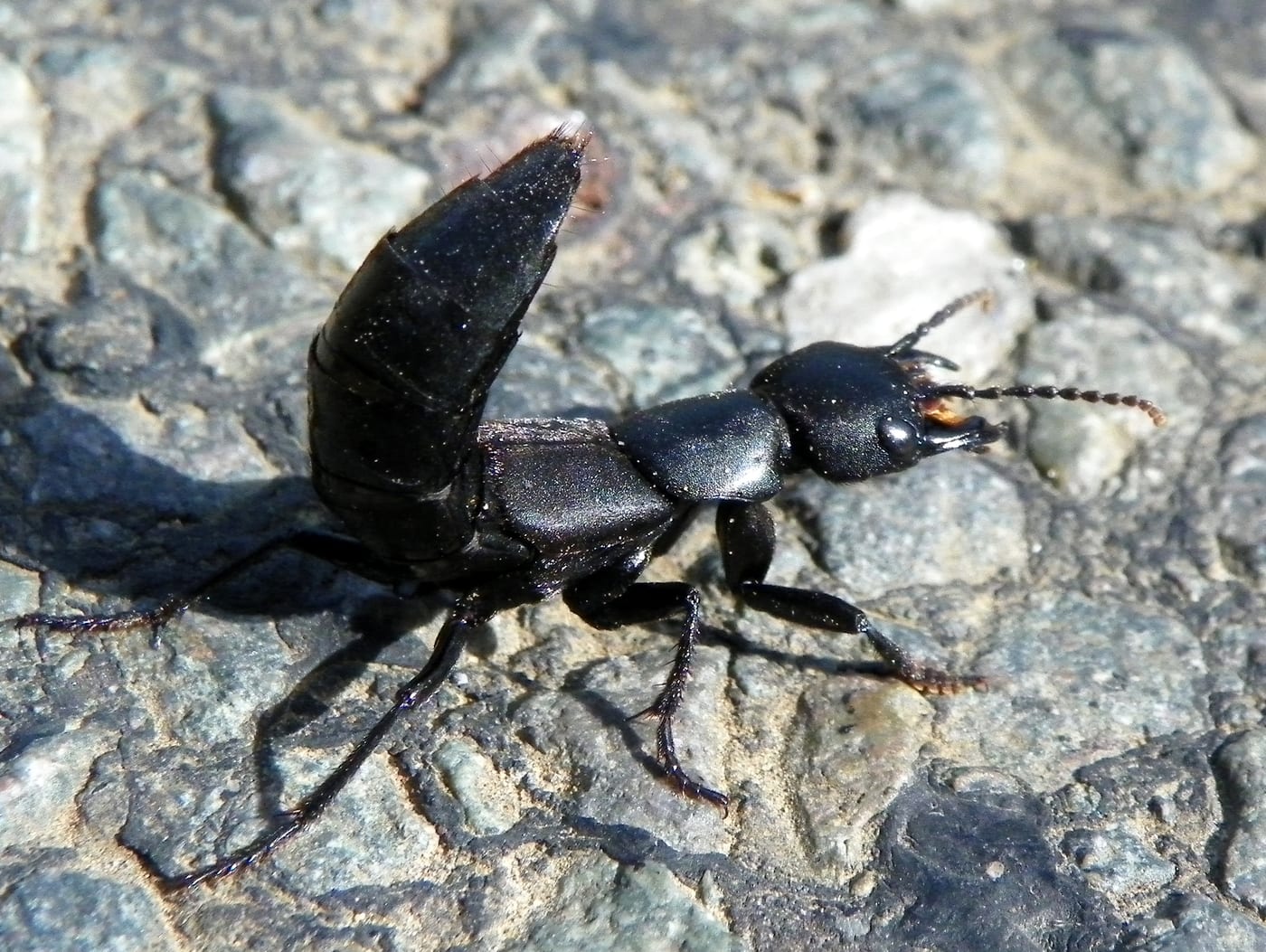
Rove beetles (family Staphylinidae) are 2 to 30mm long, with elongated bodies and short wing cases that leave most of the abdomen exposed. Most are black or brown, though some have red wing cases and markings, and with over 1,000 species in Britain, it's the country's biggest beetle family by far. The devil's coach horse (Ocypus olens), pictured here, is Britain's largest rove beetle at 20 to 30mm, matt black, and hunts other invertebrates after dark, crushing them with its pincer-like jaws. When threatened it curls its abdomen up like a scorpion's tail and releases a foul-smelling substance, and it can deliver a painful bite if handled, though it has no sting and poses no real danger. Larvae are elongated and soft-bodied, with three pairs of legs near the head; the head, thorax and part of the abdomen are usually brown or black, with a creamy-white underside.
Life cycle
Eggs are laid in the soil or in accumulations of organic matter. Larvae generally stay in the soil or leaf litter, where they feed on other invertebrates and their eggs. Adults are active on the soil surface, most often from March to October.
How to encourage it
Rove beetles are ground-dwelling, so habitat matters more than planting. Wood piles, compost heaps and leaf litter left in borders give them somewhere to shelter and hunt.
Slug pellets, even organic ones, have been shown to harm other wildlife in the garden: reaching for pellets to deal with slugs undoes the very predator you're trying to attract.
Why this matters in Scotland
The devil's coach horse has 234 recorded sightings on NBN Atlas Scotland, the national biodiversity records database, as of 2026-08-04.
That's a real but modest number of sightings, not the kind of everyday encounter some other garden insects are.
What it helps control
The same wood-pile and leaf-litter habitat also supports ground beetles, another leek moth predator. Beyond leek moth and slugs, rove beetles more broadly take worms, spiders, woodlice and other invertebrates, and will also scavenge carrion. The devil's coach horse's threat display and painful bite make it a common casualty of mistaken pest-squashing, but it's a beneficial predator worth leaving alone.
Frequently asked questions
Can I buy rove beetles?
Not usefully: rove beetles released into a garden with nothing to hold them there simply leave. Creating the right habitat and food source is what actually keeps a population around; see "How to encourage it" above.
How do I know if rove beetles are actually helping?
Watch the pest population, not the predator count: fewer leek moth, slugs and snails over a few weeks is the real sign, not how many rove beetles you can spot on a given day.
Do rove beetles only deal with the pests listed above?
No, also worms, spiders, woodlice and other invertebrates; will scavenge carrion too. The list above is what they're best known for, not the full extent of what they take.
When will I actually see rove beetles in the garden?
It depends on the stage in their life cycle — see "Life cycle" above for when they're active and what to expect through the year.
Sources
6 sources, recorded with what each was used for
- RHS: For Leek Moth: Encourage natural predators including ground and rove beetles.
- Buglife: For Slugs and Snails: Buglife's own devil's coach horse page names slugs specifically among its prey, alongside worms, spiders, woodlice and other invertebrates.
- RHS: RHS's dedicated ground beetles and rove beetles page: identification (size, elongate shape, short wing-cases, colouring, the devil's coach horse as Britain's largest rove beetle, species count), life cycle (eggs in soil or organic matter, legless larvae with three pairs of legs near the head), diet (largely predatory, active on the soil surface), and habitat advice (wood piles, compost heaps, leaf litter).
- Wildlife Trusts: The devil's coach horse hunts other invertebrates after dark, curls its abdomen like a scorpion's tail and releases a foul-smelling substance when threatened, and can deliver a painful bite if handled, though it has no sting.
- NBN Atlas Scotland: NBN Atlas Scotland's devil's coach horse species page recorded 234 sightings in Scotland as of 2026-08-04.
- RHS: RHS's slugs and snails page: slug pellets, even organic ones, have negative effects on wildlife in the garden.