
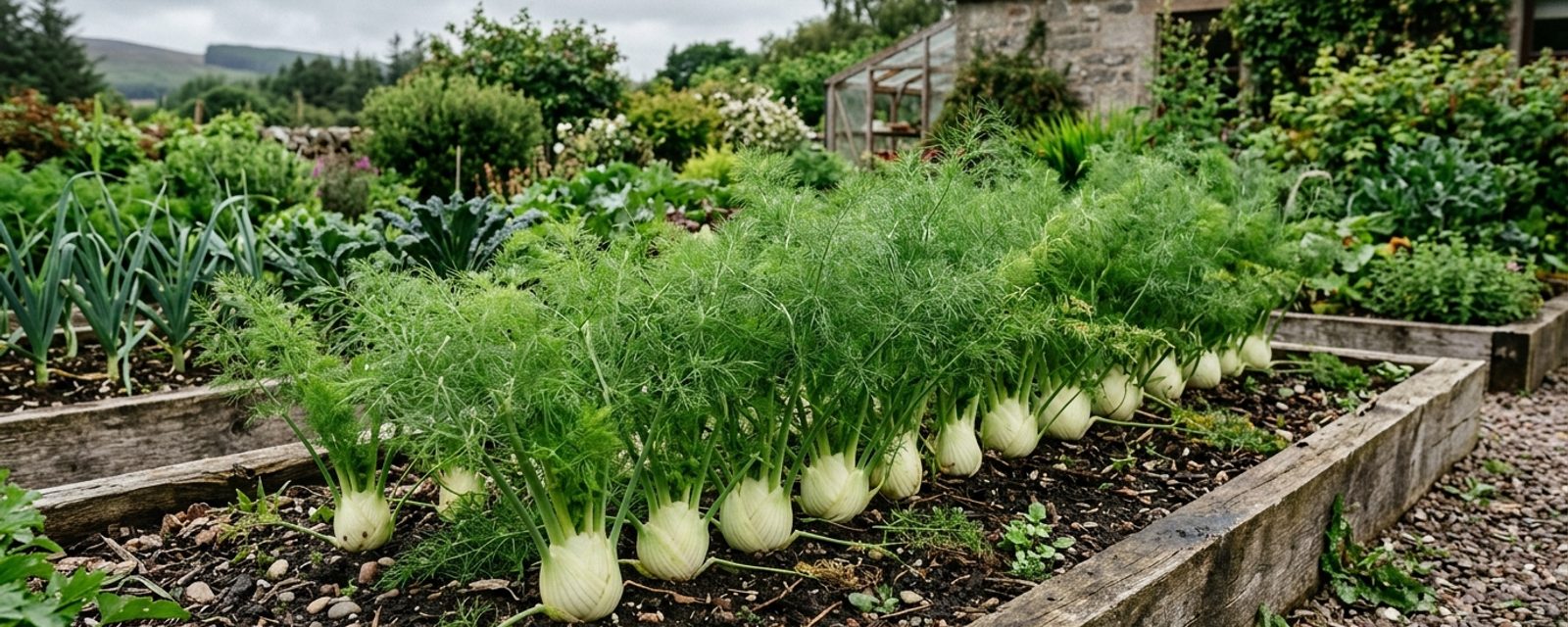
Foeniculum vulgare var. azoricum
Florence fennel has a reputation for being tricky, and it's earned — but every reason it fails is avoidable once you know what to watch for.
Cold, disturbed roots and dry soil are each, alone, enough to make the plant bolt instead of forming a bulb, and none of the three is a rare event in Scotland. Treat every precaution below as necessary rather than optional; skip one and it usually shows.
Preparing the ground
Choose a warm, sheltered, sunny site with fertile, free-drainingSoil that lets water pass through quickly rather than pooling, so roots aren't sitting in wet ground after rain. Full definition → soil; Florence fennel dislikes heavy clay and waterlogged ground just as much as it dislikes drying out, so the aim is soil that holds moisture evenly rather than swinging between wet and dry. Shelter matters too: an exposed, windy spot dries the ground out faster and adds another route to the same boltingA plant switching early into flowering and seed production, usually triggered by stress, after which leaves, roots or bulbs turn bitter or unusable. Full page → risk. Add well-rotted manure or garden compost in autumn, winter or early spring to build up that moisture-holding capacity ahead of sowing, or mulchA layer of material spread over the soil around plants to suppress weeds, retain moisture, and improve soil structure as it breaks down. Full definition → the surface for a no-digA growing method that avoids turning the soil over, building fertility instead by adding organic matter on the surface. Full definition → bed instead.
Sowing
This crop dislikes root disturbance, so sow either direct outdoors or singly in modulesA tray divided into small individual cells, each sown with its own seed or seedling, so each plant grows undisturbed roots until it's ready to plant out. Full definition →, never in a shared seedbed or tray.
Sow indoors from late spring, keeping seedlings in good light and watering regularly, ready to transplant outdoors from early May. Don't sow too early: cold temperatures are one of the three main bolting triggers.
Direct sow outdoors in June or July, once the soil has properly warmed, in a shallow drillA shallow, straight groove made in prepared soil for sowing seed into, at a set depth so germination and rows are even. Full definition → 15mm deep, watered along the base first. Thin to 30cm apart for full-sized bulbs, taking care not to disturb the roots of the plants left behind, or 10-15cm if you want to harvest as mini veg at around 5cm wide.
Planting
Transplant module-raised seedlings outdoors from early May, once the last frost has passed and plants are hardened offGradually getting young plants raised indoors used to outdoor conditions over 7–14 days before planting out, so cold, wind and direct sun don't shock or damage them. Full definition →. Handle the roots as little as possible, and set plants at the same depth they were previously growing. Space as for direct sowing: 30cm apart for full bulbs, or 10-15cm for mini veg, and protect young plants from slugs and snails straight away.
In containers, use a pot at least 40cm wide for up to three mature plants, or space plants 10-15cm apart for baby veg. Containers dry out fast, which is a genuine bolting risk in itself, so check them more often than you would ground-grown plants.
Varieties
Dragon and Rondo both carry the RHS Award of Garden Merit, a UK-wide award rather than a Scottish one. Zefa Fino doesn't, but it's RHS's third and final named variety.
RHS names exactly three Florence fennel varieties, all named here. Gardener's World separately names Sirio, Perfection, Cantino, Colossal and 'Amigo' — but Amigo's claimed RHS AGMThe RHS's Award of Garden Merit: a UK-wide trials award for reliable performance, not a Scotland-specific recommendation. Full definition → status doesn't appear anywhere on RHS's own page, so that claim isn't used.
★ Our pick for Scotland
DragonAGM
Compact, excellent resistance to bolting and yellowing
The bolt-resistant pick for a crop where that trait matters most.
Why this one: Bolt resistance is the single trait that matters most for this crop, and Dragon is the AGM bred specifically for it.
Also worth considering
RondoAGM
Quick-growing, uniform bulbs, early cropper, can be grown under cover
Explicitly suited to growing under cover, which sidesteps the cold-triggered bolting risk directly rather than just tolerating it, and its early-cropping habit gets a bulb in before an uncertain late-summer cold snap can trigger the same problem.
Zefa Fino
Quick maturing, medium-to-large, slightly flattened bulbs
Quick-maturing, a genuine short-season advantage, but unlike Dragon and Rondo it carries no stated bolt-resistance, so it's the higher-risk pick of the three here.
Best Florence Fennel Varieties for Scotland → compares all named florence fennel varieties head-to-head, with the practical detail that doesn't fit in a summary card.
Care
Keep the soil or compost consistently moist: this is the single most important thing you can do for this crop, since dry conditions are a direct bolting trigger, not just a stress that slows growth. Water early in the morning where you can, ideally with collected rainwater. Mulch thickly once plants are growing well, to hold moisture and suppress weeds. Weed by hand close to the plants rather than hoeing, so you don't damage the developing bulb, and keep the ground clear generally, since dense weeds also give slugs and snails somewhere to hide.
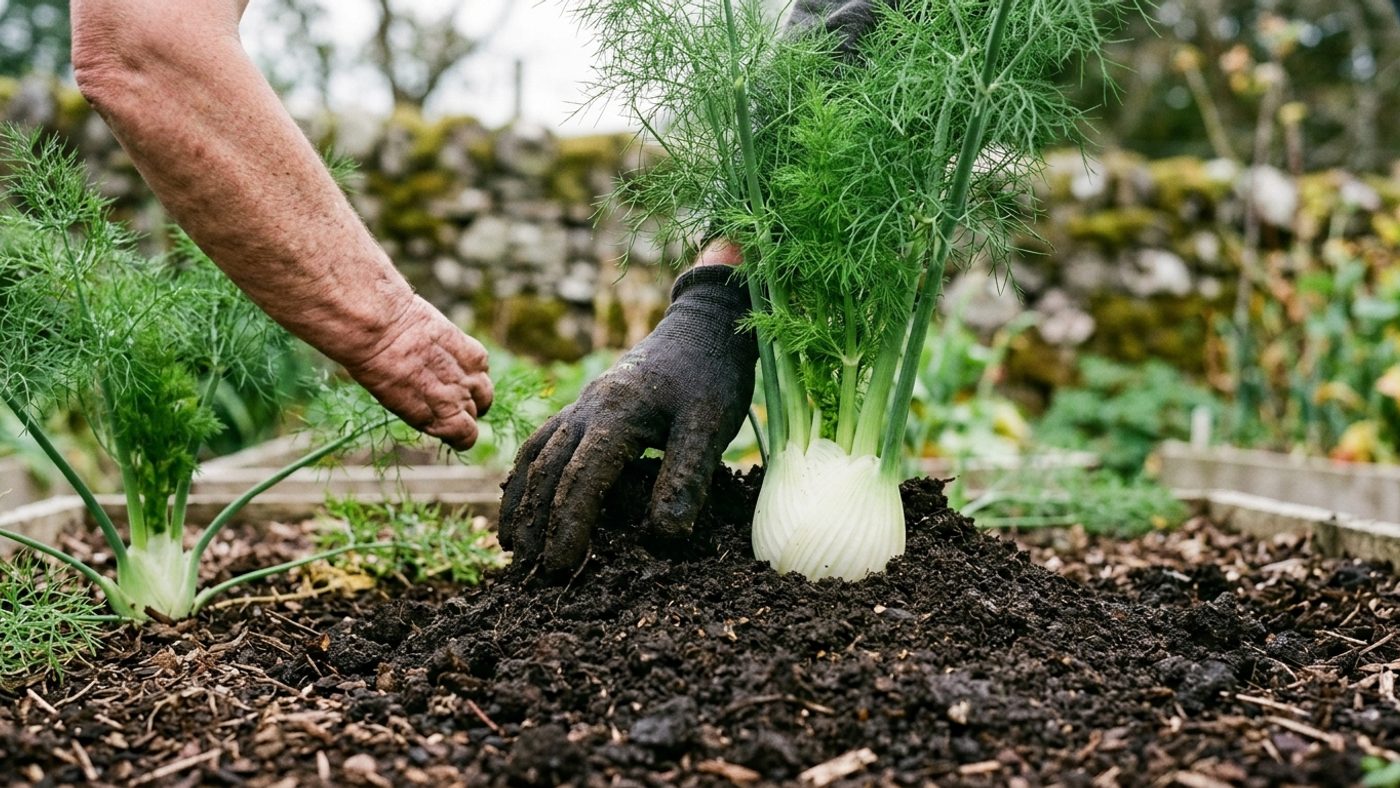
Once the stem bases start to swell, mound soil around them to blanch the bulb, making it whiter and sweeter and helping stabilise the plant against early frosts; it isn't strictly necessary, but it's a genuine improvement if you have the time.
Harvesting
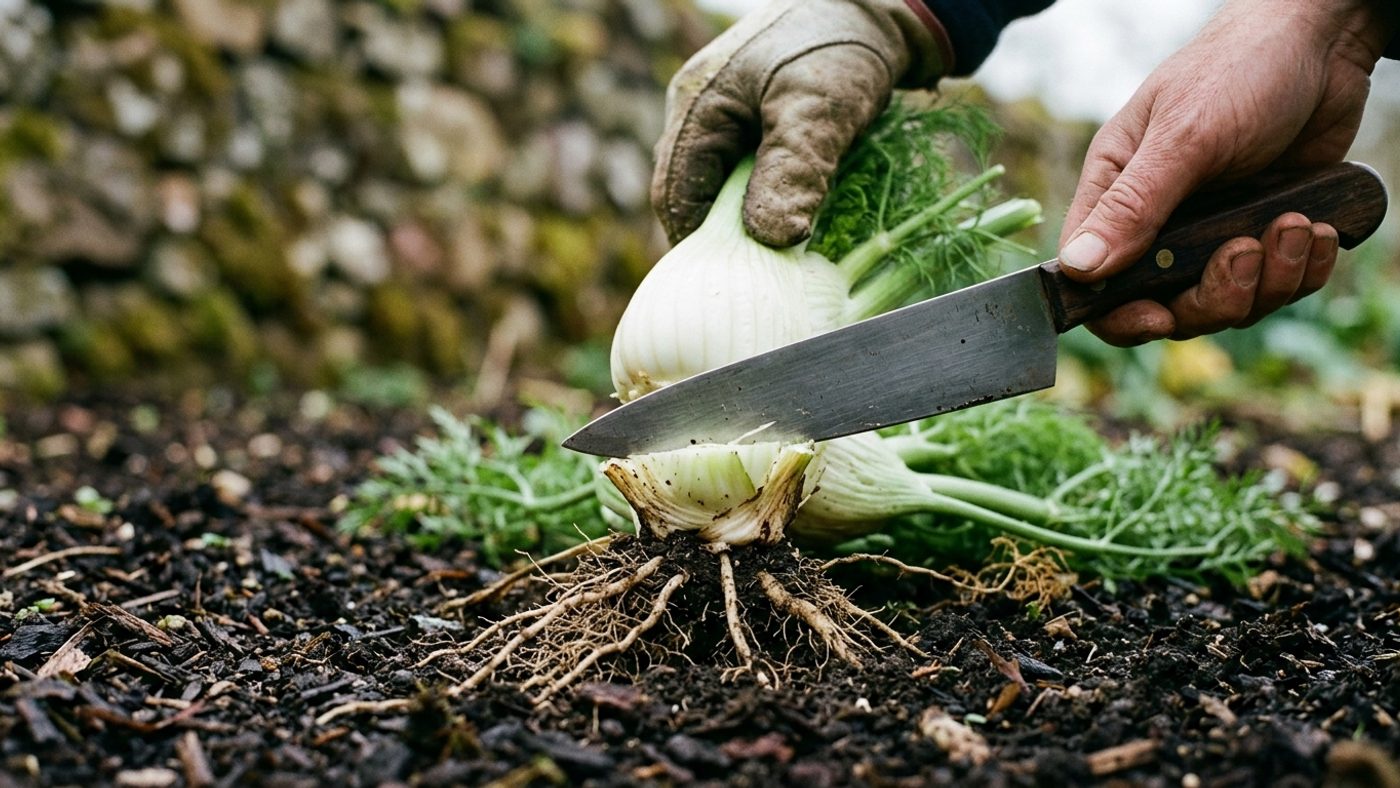
Ready in late summer and autumn, depending on sowing time, roughly 14 weeks after sowing. Harvest once the bulb reaches 10-15cm across, though it can be cut from 5cm upwards if you'd rather take it smaller. Harvest before the bulb starts to elongate and send up a flower stem, at which point it turns woody and inedible. Either dig up the whole plant, or cut just below the swollen bulb with a sharp knife, leaving the base and roots in the ground: left in place, they'll send up small leafy shoots usable in salads, even though a second bulb won't follow.
Common problems
- Bolting is this crop's dominant problem, covered in full above: cold, disturbed roots and dry soil are the three named triggers, and any one of them on its own can undo the bulb.
- Slugs and snails target seedlings and young plants.
Common questions
Why does Florence fennel keep bolting instead of forming a bulb?
Usually one of three triggers: cold temperatures, disturbed roots at transplanting, or dry soil. A later sowing date, module-raised seedlings and consistent watering address each one directly. Full sourced breakdown: <a href='/tools/garden-myths/fennel-bulb/'>Florence Fennel Myths →</a>
Is it worth sowing Florence fennel early to get a head start?
No: early sowings are very liable to bolt rather than form a usable bulb, so wait until early summer to sow outdoors, or late spring at the earliest indoors. Full sourced breakdown: <a href='/tools/garden-myths/fennel-bulb/'>Florence Fennel Myths →</a>
Do I have to earth up Florence fennel bulbs?
No: earthing up makes the bulb whiter, sweeter and helps stabilise the plant, but it isn't required for the bulb to be edible; an unblanched bulb is still a genuine harvest. Full sourced breakdown: <a href='/tools/garden-myths/fennel-bulb/'>Florence Fennel Myths →</a>
Can I get more than one harvest from a Florence fennel plant?
Not a second bulb, but yes to something: cut the bulb rather than pulling the whole plant, and the roots left behind will send up small leafy shoots usable in salads. Full sourced breakdown: <a href='/tools/garden-myths/fennel-bulb/'>Florence Fennel Myths →</a>
Sources
2 sources, and what each was used for
- RHS: soil prep, sowing method and the root-disturbance-dislike that shapes it, timing and the three named bolting triggers (cold, root disturbance, dryness), spacing for full-size and mini-veg routes, container growing, watering as the central care requirement, mulching, weeding by hand near the bulb, earthing up to blanch, harvesting method and timing, three named varieties (two AGM), slugs
- gardenersworld.com: independently corroborates spacing (30cm), the bolting risk and recommendation of bolt-resistant varieties, and that earthing up isn't strictly necessary; adds a rough 14-week sowing-to-harvest figure and a bi-weekly high-potash feeding regime that RHS doesn't state; names further varieties including one AGM claim ('Amigo') that could not be verified against RHS's own page and was not used