
Brassica oleracea (Italica Group)
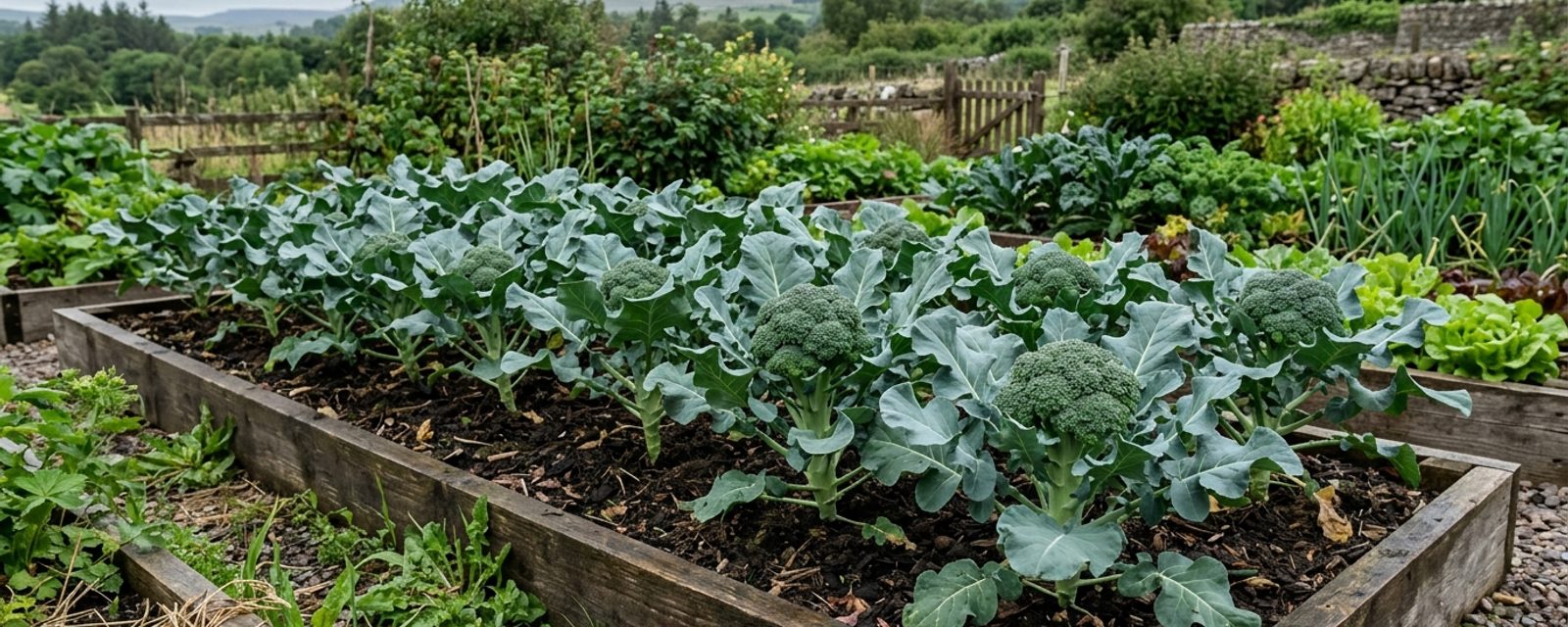
Calabrese is the vegetable behind the "broccoli" on every supermarket shelf — a genuinely different crop from purple sprouting broccoli, not just another name for it.
Calabrese produces one large, tightly-packed green head, cut in a single main harvest, unlike sprouting broccoli's many small spears picked over months. It fills the gap between spring greens finishing and the winter brassicasThe cabbage family: cabbage, kale, broccoli, cauliflower, Brussels sprouts, kohlrabi, swede, turnip and more, sharing the same pests, diseases and rotation rules. Full definition → taking over, cropping through late summer and autumn from a spring sowing. Its main weakness is heat: a hot spell can push it to bolt before the head ever forms, which is exactly the risk a Scottish summer is least likely to supply.
Sowing and transplanting
Sow March to June, indoors in modulesA tray divided into small individual cells, each sown with its own seed or seedling, so each plant grows undisturbed roots until it's ready to plant out. Full definition → during March and April, or direct outdoors from April to June, about 2cm deep. Move plants to their final position at 10-15cm tall, once they have an established root system.
Get the transplant done before hot weather arrives, ideally not after April. That timing is the single most useful thing you control: boltingA plant switching early into flowering and seed production, usually triggered by stress, after which leaves, roots or bulbs turn bitter or unusable. Full page → is triggered by heat, and a plant checked by a late, hot transplant is the one most likely to run to flower instead of forming a head.
Site and soil
Calabrese wants a genuinely fertile bed in the warmest, most sheltered spot available, and soil on the alkaline side: a minimum pH of 6.8, stricter than most other brassicas. Test before sowing, and if the soil is very acidic, lime it the previous winter to give the lime time to work through.
Space plants 30cm apart, or 45cm for larger varieties, with rows 45cm apart. Give it more room rather than less if you're unsure. Firm the soil well when planting, since a top-heavy calabrese plant can rock loose in wind.
Varieties
'Kabuki', a compact variety suited to close spacing, is also worth knowing about: like Green Magic, RHS's general variety list names it AGMThe RHS's Award of Garden Merit: a UK-wide trials award for reliable performance, not a Scotland-specific recommendation. Full definition → but its own individual plant page doesn't show the badge.
★ Our pick for Scotland
MarathonAGM
MaincropThe main, usually latest-sown and longest-growing type of a crop, grown for bulk and storage rather than an early harvest. Full definition →
A reliable, widely grown maincrop calabrese.
Why this one: Marathon is a well-established AGM maincrop, a solid default choice rather than a specialist pick for one narrow problem.
Also worth considering
Green Magic
Early
Early-maturing with dense heads; named resistance to white rust.
Best Calabrese Varieties for Scotland → compares all named calabrese varieties head-to-head, with the practical detail that doesn't fit in a summary card.
Harvesting: one head, then a second crop
Ready July through October, about three to four months from sowing. Cut the main head at 10-15cm across while it's still firm and in bud, before the small yellow flowers begin to open.
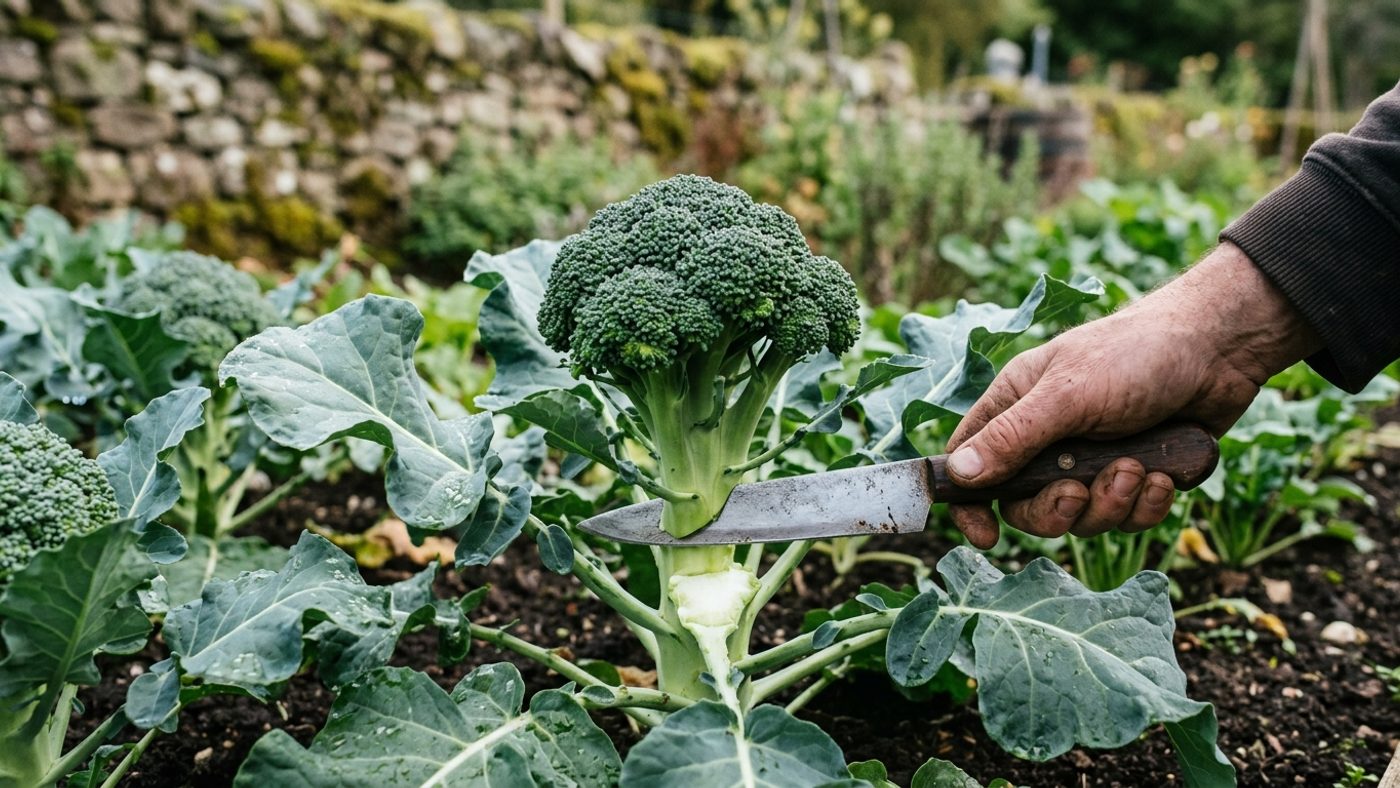
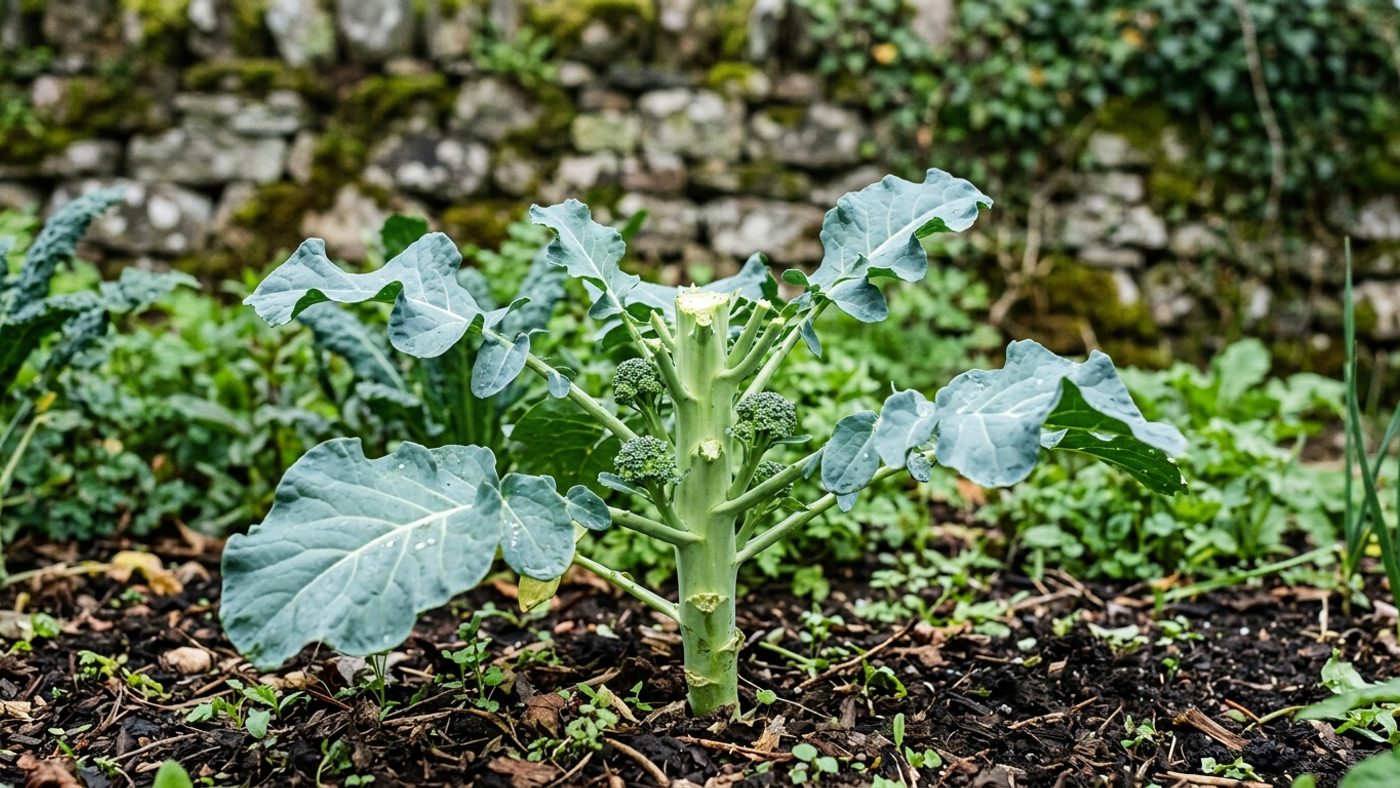
Leave the plant standing once the main head is cut. Side-shoots follow for up to another eight weeks, giving a real second crop from the same plant rather than one harvest and done.
Common problems
- Bolting is triggered by hot weather, especially a late transplant. Get plants in before heat sets in, ideally not after April.
- Cabbage caterpillars can strip a plant fast. Cover with insect-proof mesh from transplanting.
- Pigeons will strip a young plant. Netting from the day you transplant.
See more problems
- Club root causes swollen, distorted roots. Lime acidic soil and rotate brassicasMoving each crop family to different ground each year, on a multi-year cycle, so pests and diseases that build up in soil don't get a repeat host. Full definition →. No chemical treatment exists.
- Flea beetles riddle young leaves with small holes, worst in warm, dry spells. Mesh over seedlings is cheap insurance.
- Cabbage root fly maggots damage roots. Mesh is the defence, and it's less troublesome in Scotland's cool summers than further south.
- Slugs and snails target young transplants especially. Mesh and hand-picking after dark do more than a barrier of crushed shell around the stem, which is a traditional tip without trial evidence behind it.
Common questions
Is calabrese the same thing as broccoli?
They're genuinely different crops sold under the same word: calabrese is the single large head supermarkets call broccoli, cut in one main harvest, while sprouting broccoli forms many smaller spears over months. Full sourced breakdown: <a href="/tools/garden-myths/calabrese/">Calabrese Myths →</a>
Once I cut the main head, is the plant finished?
No: cut the head cleanly while it's still firm and leave the plant standing, since side-shoots follow for up to another eight weeks and give a genuine second crop. Full sourced breakdown: <a href="/tools/garden-myths/calabrese/">Calabrese Myths →</a>
Does calabrese need special soil?
It's fussier than most brassicas: calabrese wants a minimum pH of 6.8, stricter than the usual 6-7 range, so test the soil and lime very acidic ground the winter before sowing. Full sourced breakdown: <a href="/tools/garden-myths/calabrese/">Calabrese Myths →</a>
Why did my calabrese bolt (run to flower) before forming a head?
Heat is the trigger, and it's avoidable rather than bad luck: getting transplants in before hot weather sets in, ideally not after April, and choosing a bolt-resistant variety cuts the risk. Full sourced breakdown: <a href="/tools/garden-myths/calabrese/">Calabrese Myths →</a>
Sources
4 sources, and what each was used for
- RHS: sowing March-June, 2cm depth, 30-45cm spacing, transplant trigger, pH 6.8 floor, harvest Jul-Oct, 3-4 months to crop, side-shoot second crop, bolting risk in hot weather, AGM varieties, single-head vs sprouting-broccoli distinction, pest and disease list
- Garden Organic: corroborates the side-shoot second crop and the seasonal 'stop-gap between spring greens and winter brassicas' framing; gives a wider spacing figure (45x60cm) and a different depth (0.5cm) than RHS — noted as source variation, not resolved to one number
- gardenersworld.com: corroborates cutting the head while still firm and leaving the stalk for a second crop; wind-rock vulnerability and firming advice; a traditional (unproven) oyster-shell slug barrier, presented with that caveat, not as evidenced control
- SAC/SRUC: lower incidence of the difficult brassica pests (cabbage aphid, cabbage root fly) in Scotland — applies to calabrese as a Brassica oleracea crop sharing the pest set