
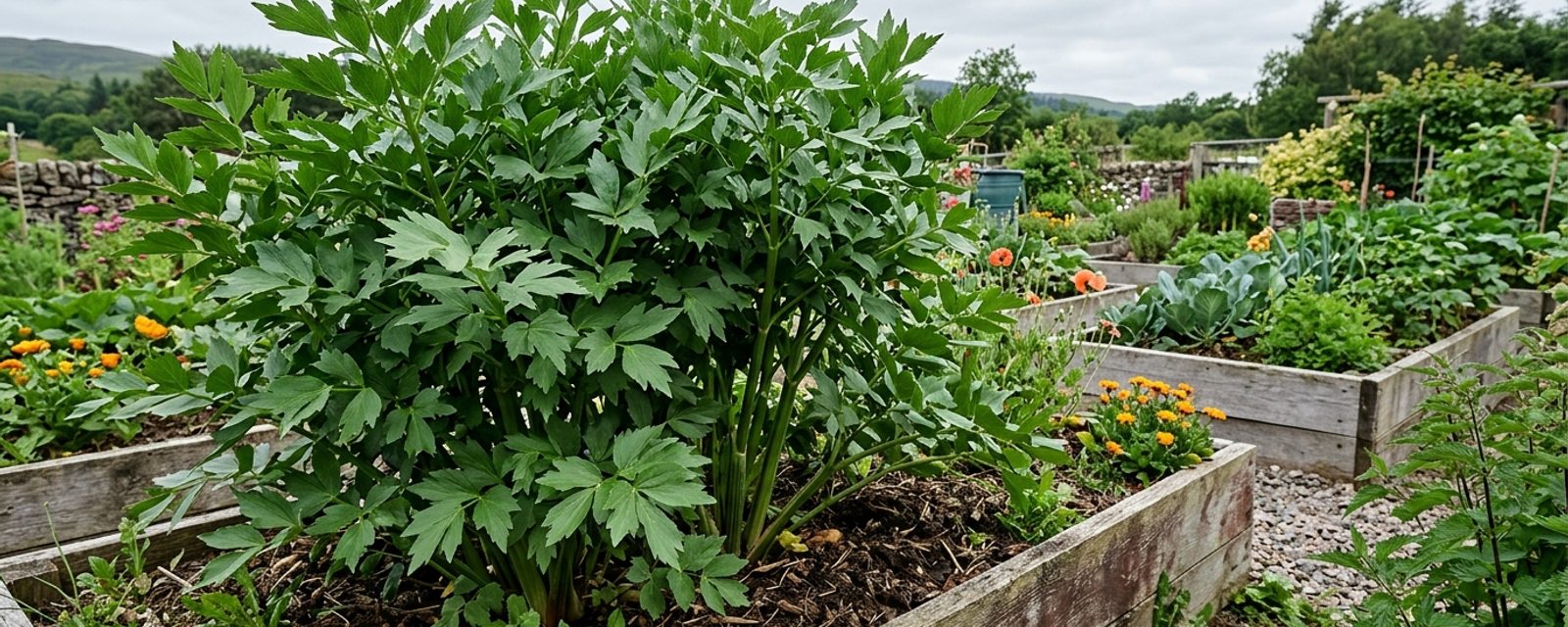
Levisticum officinale
All four parts of a lovage plant are worth using in the kitchen, not just the leaves, and it's a big, easy perennial once established. Get the soil right from the start: this is one herb that actually wants damp ground, not drainage.
Where thyme, sage, oregano and tarragon all need drainage protected above everything else, lovage wants rich, moist soil that doesn't dry out: a genuine advantage in Scotland's naturally damp climate rather than a challenge to work around. It also grows big, one of the largest herbs commonly grown in a UK garden, reaching 2m tall with flower stems by mid-to-late summer.
Site and soil
Choose a sunny or lightly shaded spot. Almost any soil works, but lovage performs best in rich, moist soil that doesn't dry out or get waterlogged; dig in a bucketful of garden compost or well-rotted manure at planting, and mulchA layer of material spread over the soil around plants to suppress weeds, retain moisture, and improve soil structure as it breaks down. Full definition → thickly with the same each spring. On poorer or drier soil, expect to water more often to compensate. Space plants 60-90cm apart to account for its full mature spread, even though an initial planting distance as tight as 30-45cm is sometimes given. For containers, grow one lovage alone (not mixed with other herbs) in a heavy pot at least 30cm wide and deep, with peat-freeCompost made without peat, which is harvested from a slow-forming, carbon-storing wetland habitat that peat extraction damages. Full definition → soil-based compost.
Sowing and planting
Sow indoors in spring into peat-free compost; only a few seeds are needed, since one plant is usually enough for a household. Move seedlings to individual pots as they grow, then transplant outdoors late spring to early summer, hardening offGradually getting young plants raised indoors used to outdoor conditions over 7–14 days before planting out, so cold, wind and direct sun don't shock or damage them. Full definition → first. Direct-sowing outdoors in a lightly shaded spot also works in spring, though seedlings need protecting from slugs and snails while young.
Care through the year
Water regularly through the first growing season until established; after that, lovage still needs plenty of moisture, more so in hot weather or on free-drainingSoil that lets water pass through quickly rather than pooling, so roots aren't sitting in wet ground after rain. Full definition → soil, watered ideally in the early morning or evening with rainwater. Container plants need steady, even moisture. Remove flower stems as they form to keep leaves coming for longer and to stop unwanted self-seeding, since lovage seeds readily and unchecked seedlings need regular weeding out.
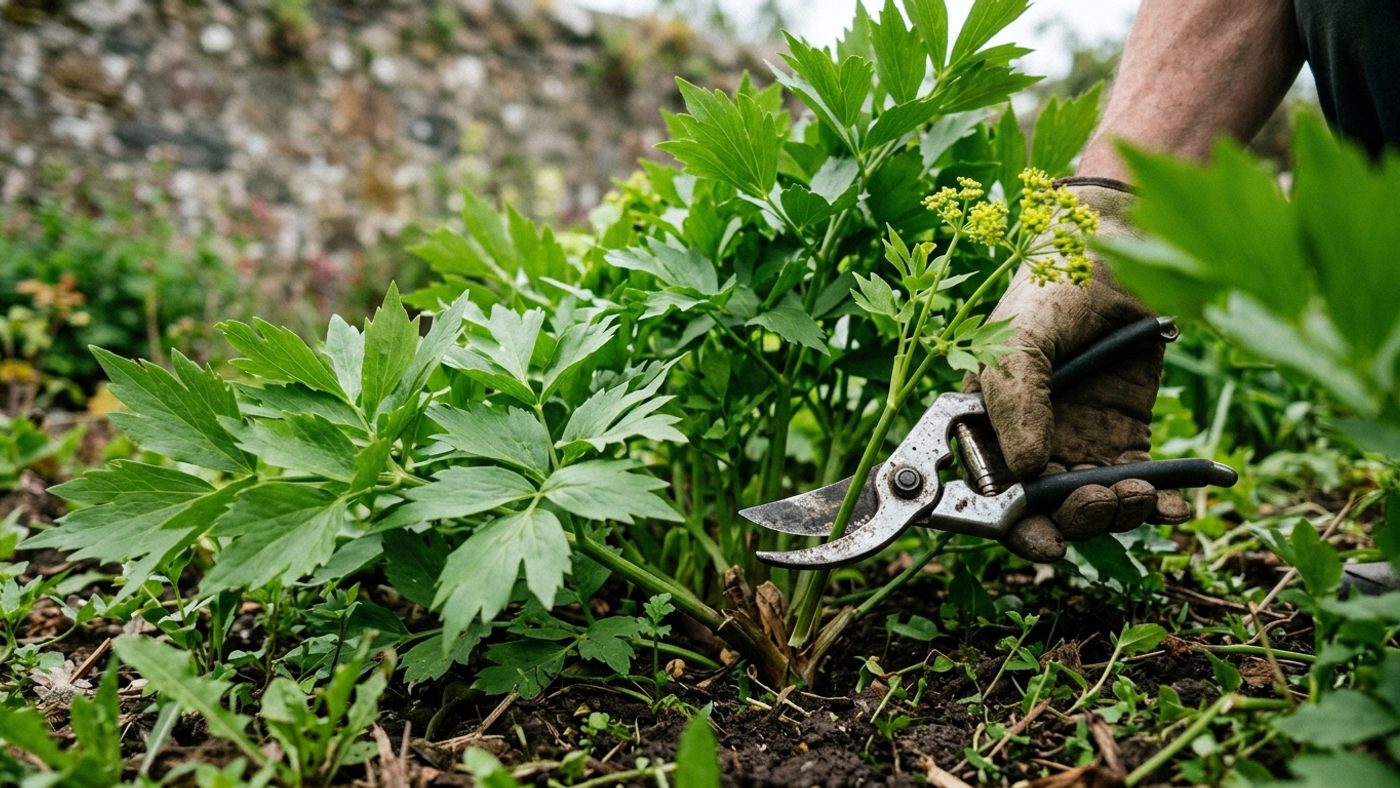
Cut down spent flower stems after a heavy frost, or in early spring before new growth appears; no winter protection is otherwise needed.
Harvesting
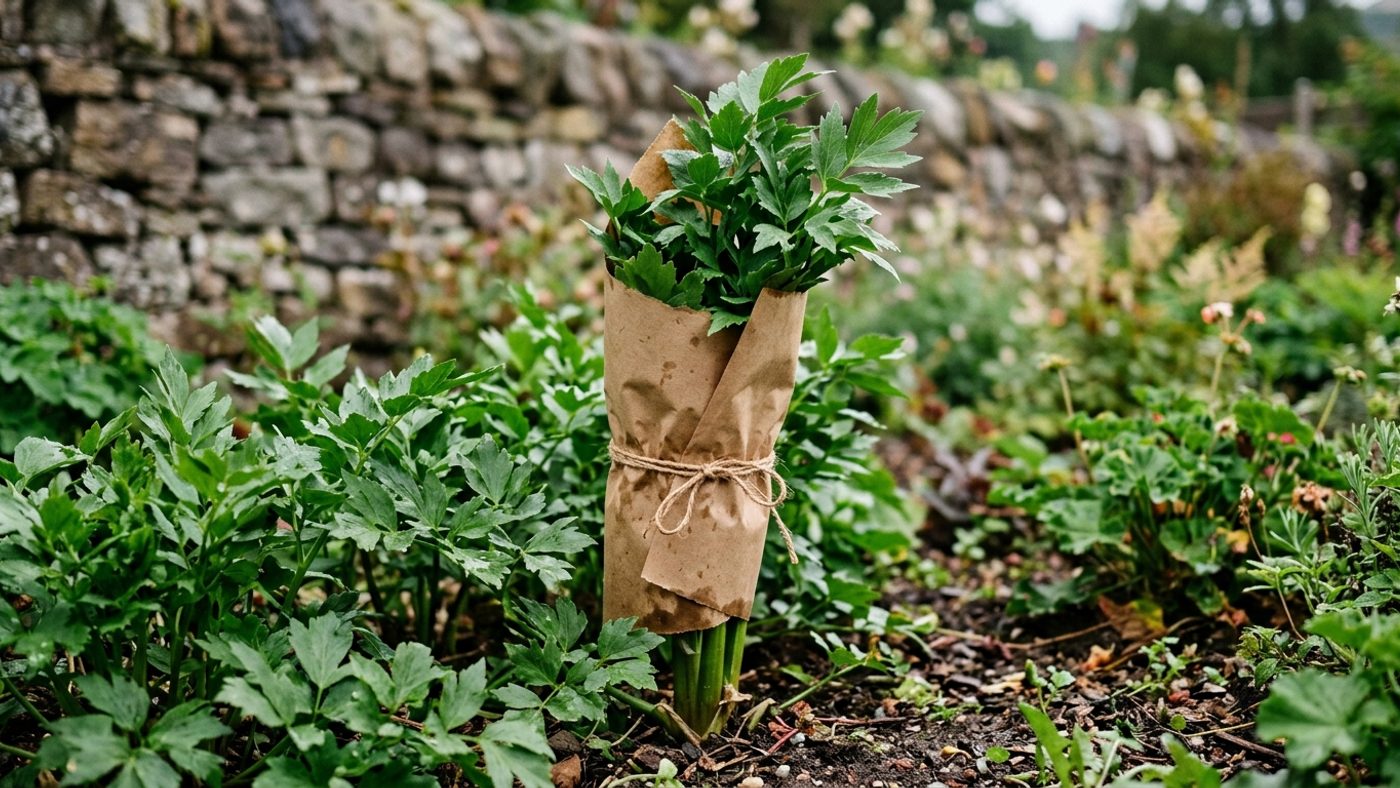
Pick leaves in spring and summer, fresh and finely chopped, stopping once plants flower, since leaves turn bitter once flowerheads form. For milder young stems, wrap a paper sleeve around stems about 30cm tall to blanch them, leaving at least a third exposed; unblanched stems can also be cooked.
Save seeds in late summer or autumn, used in baking much like fennel seed. Dig roots from established plants over winter while dormant, for soups and stews.
Varieties
There's only one lovage available in the UK — genuinely all there is, not an oversight. No named cultivarsA plant variety that arose or was bred under cultivation and is kept true by deliberate propagation, rather than a naturally occurring wild species. Full definition →, and no AGMThe RHS's Award of Garden Merit: a UK-wide trials award for reliable performance, not a Scotland-specific recommendation. Full definition → award scheme applies to this crop as a result.
★ Our pick for Scotland
Lovage (the species)
Levisticum officinale · the only lovage commercially available
No cultivar names exist for this crop: the straight species is what every UK grower is choosing between whether they realise it or not.
Why this one: Lovage has no named cultivars and no AGM award — there's simply nothing else on the market to compare it to.
Common problems
- Slugs and snails can nibble the soft leaves of young plants.
- Celery leaf mining fly larvae tunnel within leaves; remove and dispose of affected foliage.
- Self-seeding is routine maintenance, not a pest: weed out unwanted seedlings, or remove seedheads before they ripen, to keep lovage from spreading further than wanted.
Common questions
Does lovage need free-draining soil like Scotland’s other Mediterranean herbs?
No, the opposite: lovage wants rich, moist soil that doesn't dry out, making it an easier match for damp Scottish ground than thyme, sage or rosemary. Full sourced breakdown: <a href="/tools/garden-myths/lovage/">Lovage Myths →</a>
How much space does lovage actually need?
More than the smallest figure suggests: plan for the mature size, since lovage can reach 2m tall with a spread approaching 1m, one of the largest herbs commonly grown in a UK garden. Full sourced breakdown: <a href="/tools/garden-myths/lovage/">Lovage Myths →</a>
Which parts of a lovage plant can I actually eat?
All of them: leaves, young blanched stems, seeds, and roots dug while the plant is dormant over winter. Full sourced breakdown: <a href="/tools/garden-myths/lovage/">Lovage Myths →</a>
Is it a problem if I let lovage flower and self-seed?
It can be: lovage self-seeds readily, so unwanted seedlings need weeding out or seedheads removed before they ripen. Full sourced breakdown: <a href="/tools/garden-myths/lovage/">Lovage Myths →</a>
Sources
2 sources, and what each was used for
- RHS: perennial habit, site/soil, spacing, sowing method and months, propagation, pruning, harvest windows for leaf/stem/seed/root, mulching, common problems
- gardenersworld.com: mature spacing figure, poorer-soil watering need, container growing, leaf miner damage description, culinary uses of all plant parts