
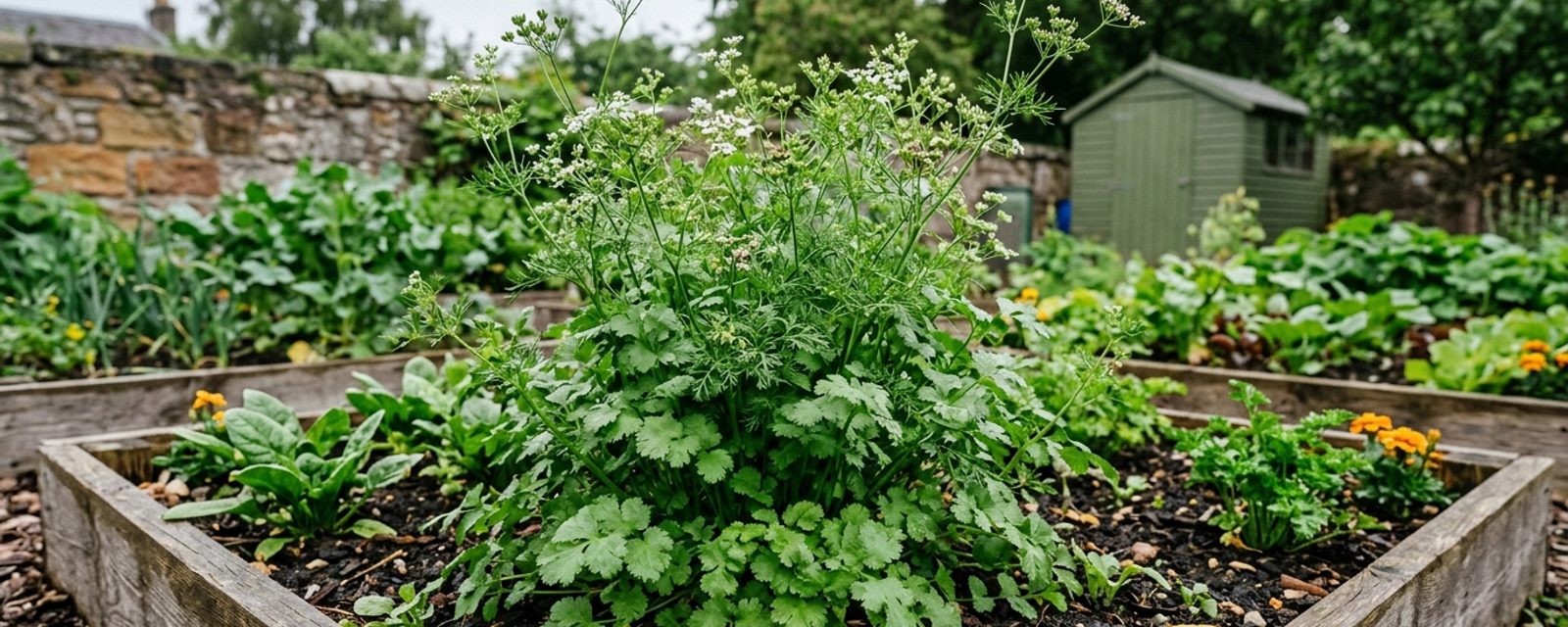
Coriandrum sativum
Coriander flips the usual "a cooler Scottish summer helps against boltingA plant switching early into flowering and seed production, usually triggered by stress, after which leaves, roots or bulbs turn bitter or unusable. Full page →" story on its head: cold spells and day length trigger bolting here too, not just heat, so the soil needs to stay damp and a slow-to-bolt variety earns its place more than it would for a herb like dill.
It's a fast-growing annual, ready to harvest within about ten weeks of sowing, wanting a sunny or lightly shaded spot in free-drainingSoil that lets water pass through quickly rather than pooling, so roots aren't sitting in wet ground after rain. Full definition → soil that's never allowed to dry out.
Site and soil
Choose a sunny or lightly shaded spot. Somewhere out of the midday sun helps if the goal is mainly leaf production through summer. Soil should be free-draining, and coriander does well in containers with peat-freeCompost made without peat, which is harvested from a slow-forming, carbon-storing wetland habitat that peat extraction damages. Full definition → multi-purpose compost. Sow or thin plants to around 5-10cm apart, widening to 20cm if growing specifically for seed.
Sowing
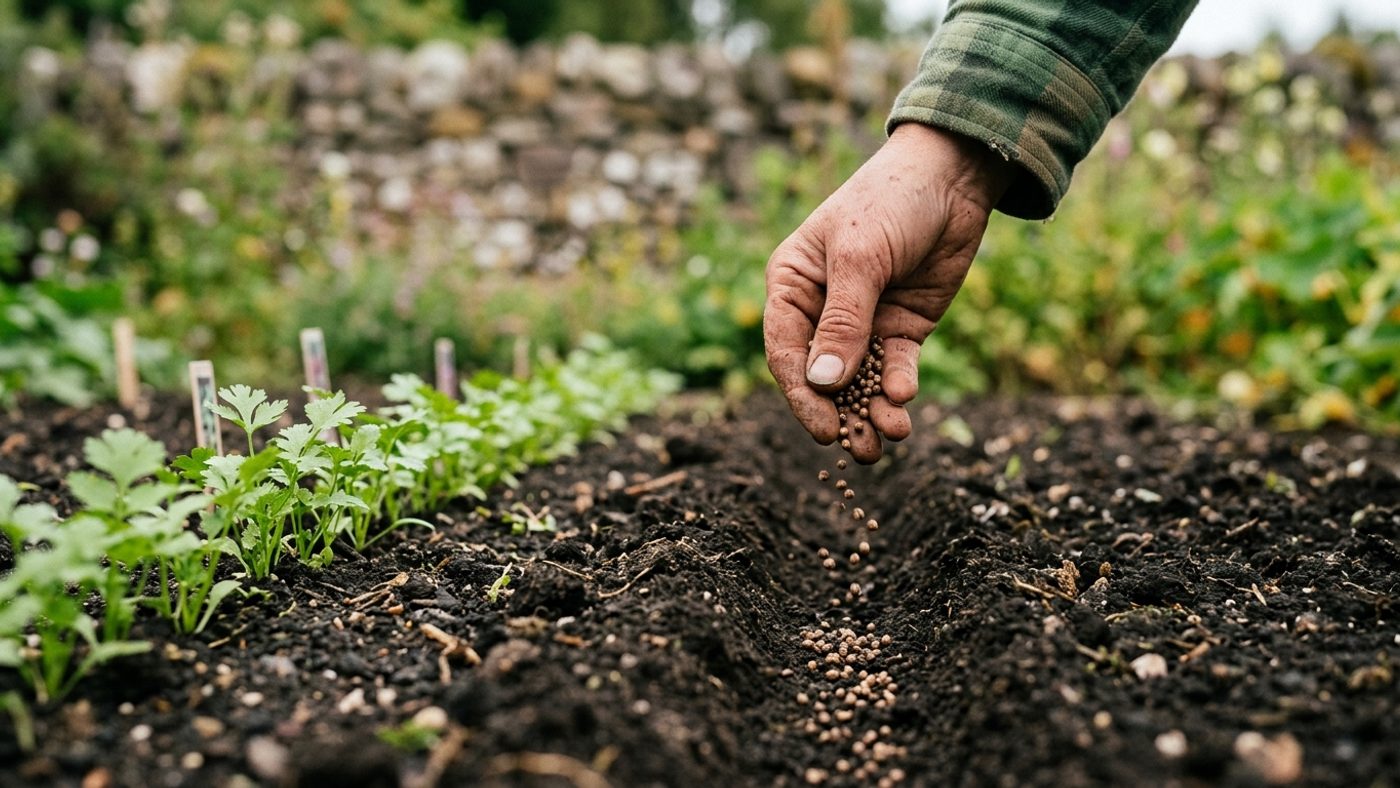
Sow indoors from February on a warm, sunny windowsill; it germinatesA seed sprouting: breaking dormancy and putting out its first root and shoot, given the right warmth and moisture. Full definition → in two to three weeks. Direct-sow outdoors from spring to autumn, into a shallow drillA shallow, straight groove made in prepared soil for sowing seed into, at a set depth so germination and rows are even. Full definition → or firmed compost surface, covered lightly and watered gently; outdoor germination takes one to three weeks depending on temperature. Succession-sow small batches every couple of weeks for a continuous harvest, and harden offGradually getting young plants raised indoors used to outdoor conditions over 7–14 days before planting out, so cold, wind and direct sun don't shock or damage them. Full definition → any indoor-raised plants before they go outside. Coriander is tender enough to need a clocheA small, portable clear cover placed over an individual plant or short row to trap warmth and keep off wind, rain and pests. Full definition → or biodegradable fleeceA lightweight, breathable fabric laid or draped over plants to trap a little warmth and keep off frost, wind and some flying pests. Full definition → in cold weather.
Care and preventing bolting
Keep the soil consistently damp: dry soil is itself a bolting trigger, alongside cold spells, day-length changes and hot, dry weather. Water ground-grown plants during prolonged dry spells specifically; check container plants daily and keep the compost just moist without overwatering, ideally with rainwater in the early morning or evening. Feeding isn't essential, though an occasional liquid seaweed feed is fine if wanted. Seaweed Feed: Kelp Meal, Liquid Concentrate → covers what it actually does, and the real legal picture if you're gathering it yourself from the shore.
Harvesting
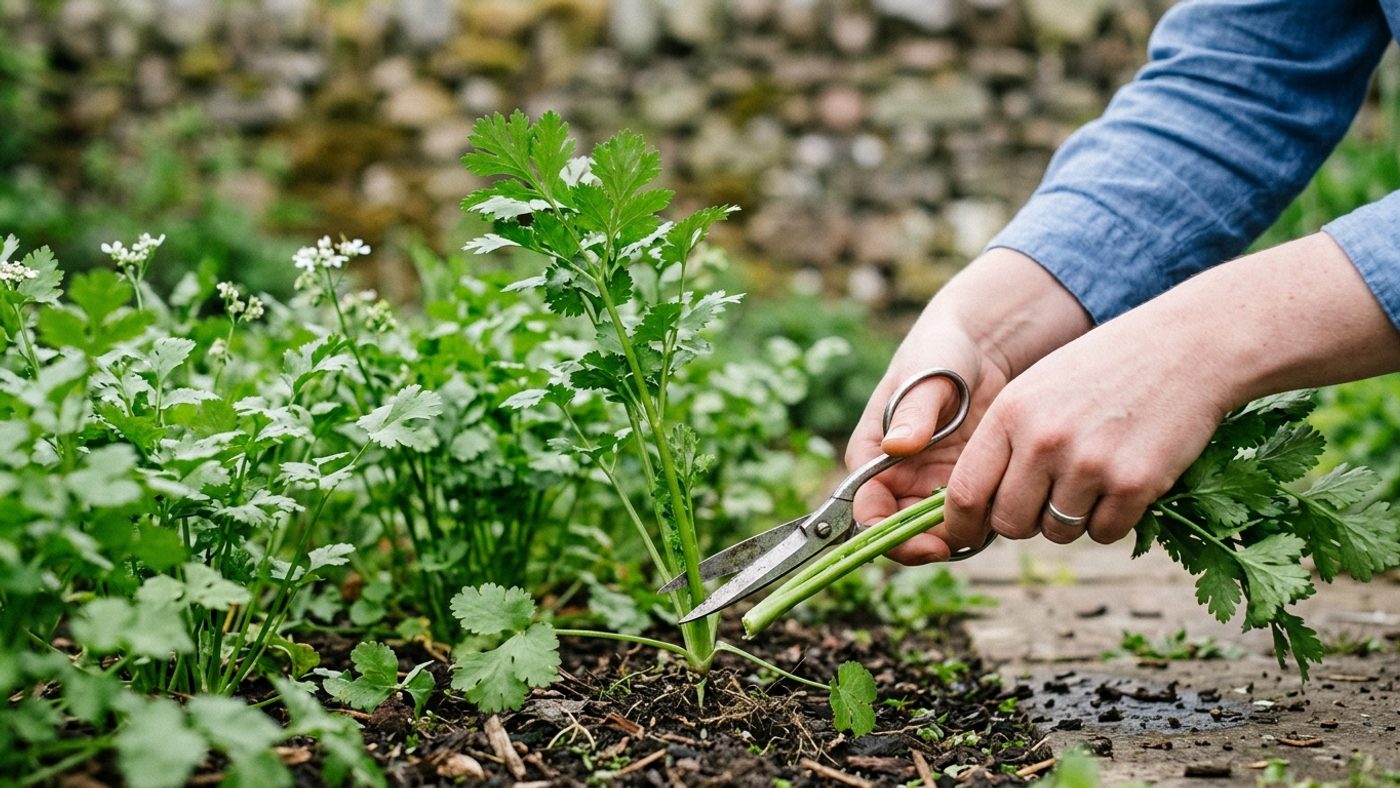
Harvest leaves from June to November, once plants reach 10-15cm, using a cut-and-come-again method: snip the plant off at the base of the stalk rather than stripping individual leaves, and use the stalk too, since it carries real flavour of its own.
For seed, let plants flower and let the seed heads dry, either green for a milder flavour or fully ripe and brown, then cut whole stems into a paper bag to finish drying.
Varieties
There are four AGMThe RHS's Award of Garden Merit: a UK-wide trials award for reliable performance, not a Scotland-specific recommendation. Full definition → varieties (Cruiser, Confetti, Calypso, Filtro). Confetti (feathery, milder foliage) and Filtro (vigorous, plentiful leaf) are also AGM-rated, but Cruiser and Calypso are the two bred deliberately, not left to chance, to resist bolting.
★ Our pick for Scotland
CalypsoAGM
Slow to bolt · long summer cropping period
An AGM variety bred specifically to resist the bolting risk that makes coriander harder going than dill in a Scottish garden.
Why this one: Bred specifically to resist bolting, with a longer summer cropping period than Cruiser: the combination that counts most for a herb Scotland's climate doesn't otherwise protect.
Also worth considering
CruiserAGM
Compact · large, tasty leaves · slow to bolt
A second slow-to-bolt AGM pick, more compact than Calypso, useful for a smaller bed or a container.
Best Coriander Varieties for Scotland → compares all named coriander varieties head-to-head, with the practical detail that doesn't fit in a summary card.
Common problems
- Bolting is coriander's most common problem, and unusually, cold spells and day-length changes trigger it alongside the more familiar heat and dry soil.
- Aphids can affect vigour and distort growth.
- Slugs and snails are a particular risk to young seedlings.
Common questions
Does Scotland's cooler climate help coriander avoid bolting, the way it helps dill?
No: coriander bolting is also triggered by cold spells and day-length changes, not just heat, so a cooler Scottish summer offers it no equivalent protection. Full sourced breakdown: <a href="/tools/garden-myths/coriander/">Coriander Myths →</a>
Does coriander need much watering?
Yes: dry soil is itself a named bolting trigger, so keep it consistently damp rather than letting it dry out the way Mediterranean shrub herbs prefer. Full sourced breakdown: <a href="/tools/garden-myths/coriander/">Coriander Myths →</a>
Should I throw away the stalks when using coriander?
No: the stalk carries real flavour of its own, so use it in cooking rather than composting it. Full sourced breakdown: <a href="/tools/garden-myths/coriander/">Coriander Myths →</a>
Is a supermarket coriander pot grown the same way as coriander sown in the garden?
Not quite: supermarket pots are grown at high density and are more prone to fungal disease as a result, so splitting one into individual pots on arrival gives it a better chance. Full sourced breakdown: <a href="/tools/garden-myths/coriander/">Coriander Myths →</a>
Sources
2 sources, and what each was used for
- RHS: annual habit, site/soil, sowing method and months, thinning, spacing, harvest windows for leaf/seed, cold-and-daylength bolting risk, AGM varieties, common problems
- gardenersworld.com: succession sowing, dry-soil bolting risk, occasional liquid feed, harvesting by snipping at the base, seed harvest method