
Phaseolus vulgaris
Sow French beans indoors in late April and you'll be picking slender pods by August.
French beans are frost-tender. That one fact governs everything about growing them in Scotland. They need warm soil, they need the frost to be gone, and they will not forgive a cold start. Dwarf varieties are the safer choice. Eight to ten weeks from sowing to picking fits neatly inside a short summer. But a climbing variety on a sunny wigwam, planted once the soil has genuinely warmed, will crop from mid-summer into October and give you more beans from less ground. The decision is whether you want safety or yield. The honest answer is that a row of each costs little more than picking one.
Dwarf or climbing
The type decision settles everything downstream, because the two are different enough to change when you harvest and for how long.
- Dwarf beans reach about 45cm tall and need no support. They crop in 8 to 10 weeks, which is fast enough to slot into a short Scottish summer with room to spare. But they only crop for a few weeks, so you need repeat sowings. A short row every three weeks from late spring to mid-summer gives you a steady supply. In a container, allow 30cm across and 45cm deep; dwarf beans are shallow-rooted but they resent drying out.
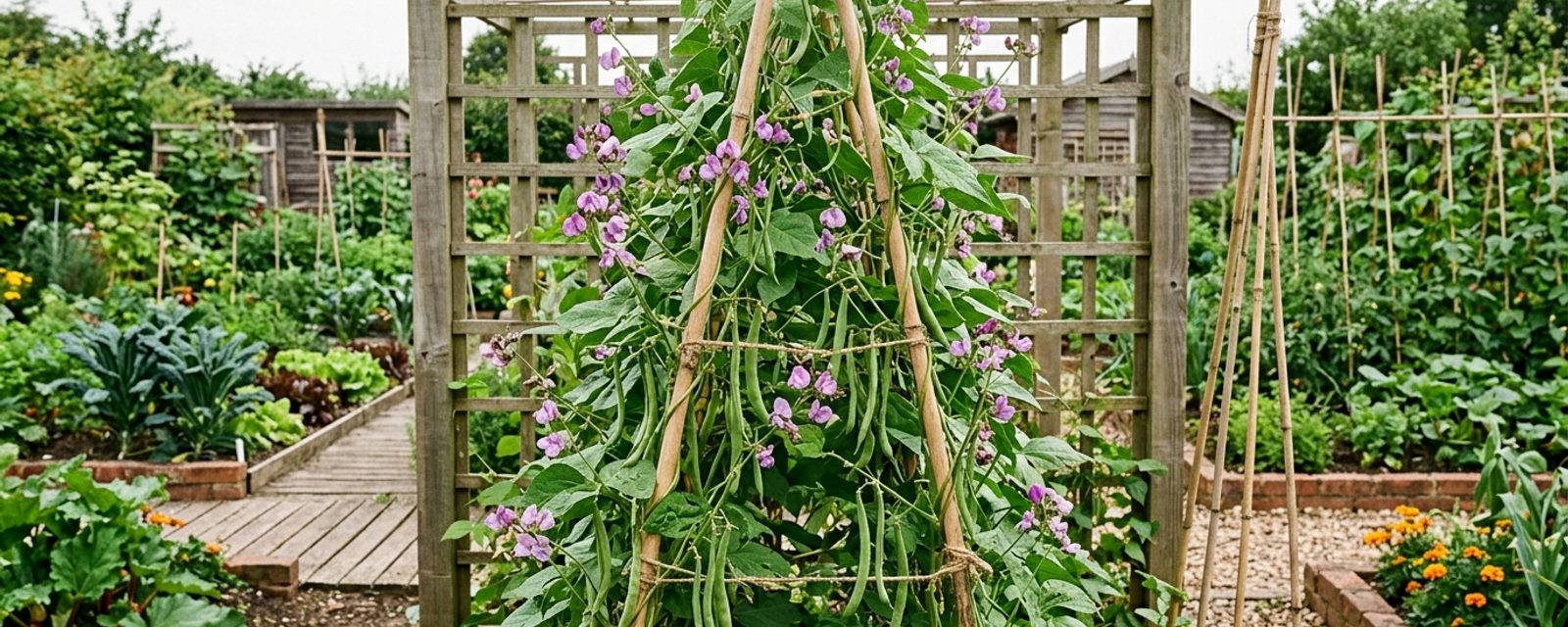
- Climbing beans reach 2m and need tall, sturdy supports. They take longer to start cropping but then produce over a much longer period, from mid-summer into early autumn. One wigwam of a climbing variety gives you more beans from a smaller footprint than a row of dwarfs, and it keeps going for months rather than weeks.
If you only have the space for one type, dwarf beans are the lower-risk choice. If you have room for supports and the patience to wait for the soil to warm, a climbing variety earns its footprint.
Varieties
Dwarf varieties suit a short season; climbing varieties give more beans over a longer period from the same footprint. These carry the RHS Award of Garden Merit, a UK-wide award rather than a Scottish one.
★ Our pick for Scotland
CobraAGM
Climbing
Heavy crop of tasty, stringless beans over a long period. Mauve flowers.
Why this one: A climbing variety, planted once the soil is warm and given a sturdy support, will crop from mid-summer into autumn, giving you more beans from the same footprint. Cobra is the AGMThe RHS's Award of Garden Merit: a UK-wide trials award for reliable performance, not a Scotland-specific recommendation. Full definition → climber that earns its space with a long, heavy crop.
Also worth considering
BostonAGM
Dwarf
Quick to crop in 8-10 weeks, the safer choice for a short season.
Golden GateAGM
Climbing
Large flat yellow pods, easy to spot when picking. Crops heavily over a long season.
Show other recommended varieties (2)
AlgarveAGM
Climbing
Straight, flat, mid-green pods, totally stringless.
SpriteAGM
Dwarf
Compact dwarf variety.
Best French Bean Varieties for Scotland → compares all named french bean varieties head-to-head, with the practical detail that doesn't fit in a summary card.
Soil, site and supports
French beans want a warm, sunny site with well-drained soil. Dig in at least two bucketfuls of garden compost or well-rotted manure per square metre a few weeks before planting.
Aminopyralid in manure: why composting doesn't destroy it → is worth reading before committing bought-in manure to a bean bed, since beans are one of the crops most likely to show the fern-like curling this herbicide causes.
Put the supports in before you plant. For climbing beans, use 2.5m bamboo canes or hazel poles. A wigwam of four or five canes tied at the top works well and looks good in a border. Space the canes 15cm apart at the base. An X-frame with canes crossing in the middle makes picking easier and usually crops better. Plant one bean at the base of each cane.
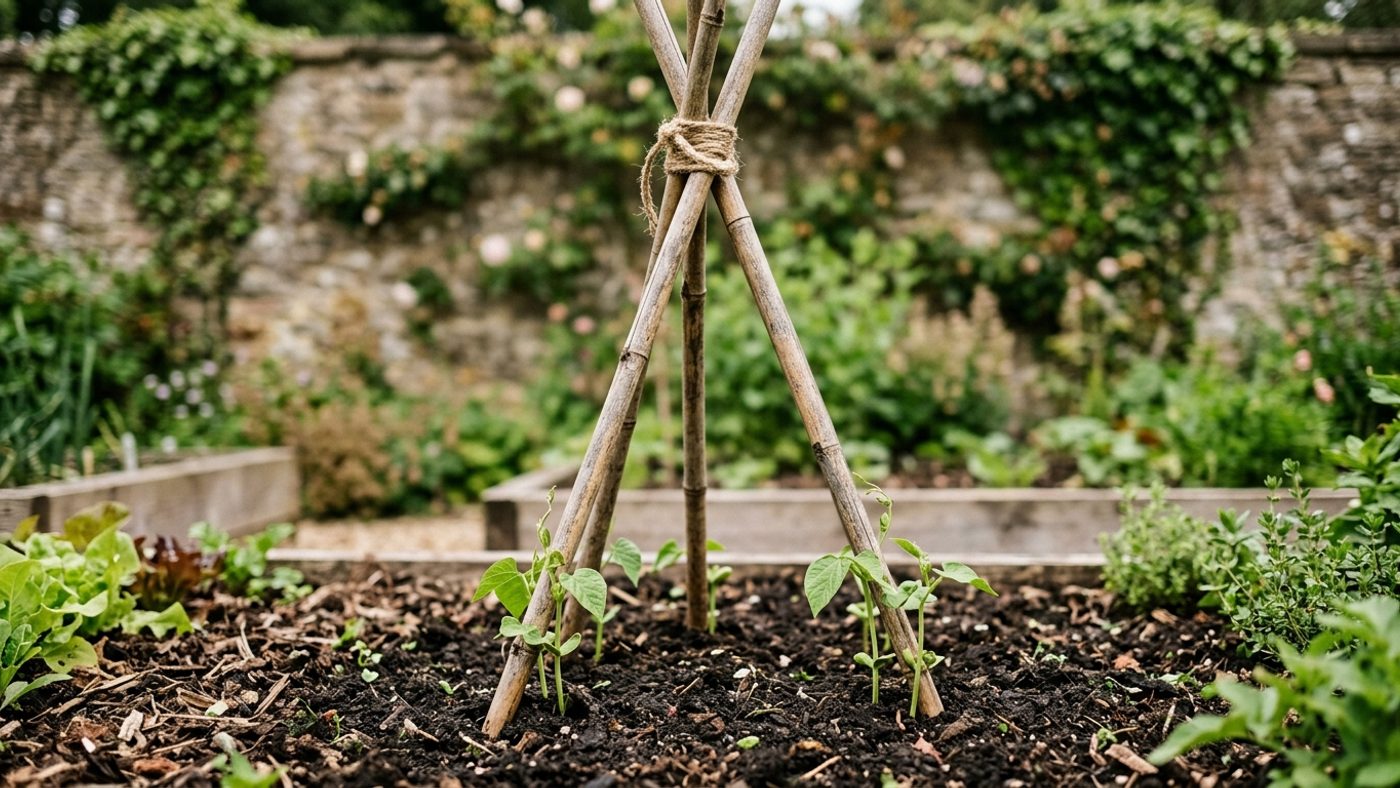
For dwarf beans, insert short twiggy sticks between the plants to keep them upright and lift the pods off the soil.
Sowing and planting
Sow indoors from late April for an early start. Sow one bean per small pot, 5cm deep, in moist peat-freeCompost made without peat, which is harvested from a slow-forming, carbon-storing wetland habitat that peat extraction damages. Full definition → multipurpose compost. Keep in a propagator or on a warm sunny windowsill. Plant out once all risk of frost has passed, usually late May or early June in Scotland.
Sow outdoors after the last frost, from late May or early June. Sow seeds 5cm deep. For climbing beans, sow one or two seeds at the base of each cane and thin to the strongest. For dwarf beans, sow 15cm apart in blocks or double rows. Warming the soil with fleeceA lightweight, breathable fabric laid or draped over plants to trap a little warmth and keep off frost, wind and some flying pests. Full definition → for a few weeks before sowing helps germinationA seed sprouting: breaking dormancy and putting out its first root and shoot, given the right warmth and moisture. Full definition →.
Containers: dwarf beans grow well in pots 30 to 45cm wide. Sow 5cm deep and 15cm apart. They will trail over the sides. Climbing beans need a container at least 75cm wide and 45cm deep, heavy enough not to topple once the beans are up their supports.
Watering and feeding
French beans are thirsty once they start to flower and form pods. Water regularly during dry weather. A mulchA layer of material spread over the soil around plants to suppress weeds, retain moisture, and improve soil structure as it breaks down. Full definition → of garden compost around the plants holds moisture and keeps the weeds down. Plants in the ground rarely need feeding. Feed container plants every fortnight with a high potassium liquid fertiliser once the first flowers appear.
With climbing varieties, tie in any loose shoots and pinch outRemoving the soft growing tip of a stem to stop upward growth and make the plant branch out sideways instead. Full definition → the growing tips once the plants reach the top of their supports. This encourages side-shoots lower down and keeps the crop within reach.
Harvesting
Dwarf beans are ready 8 to 10 weeks after sowing. Climbing beans start a little later but crop for much longer. Pick the pods at 15 to 20cm long. They are ready when they snap easily and before you can see the individual beans through the pod. Regular picking stimulates more flowers and more pods. A plant that is picked clean keeps producing. One left with pods swelling to seed shuts down, and the crop is over. Every two or three days is the right rhythm once they start. In a wet Scottish August that also gets you through the plants often enough to spot slug damage before it costs you a row.
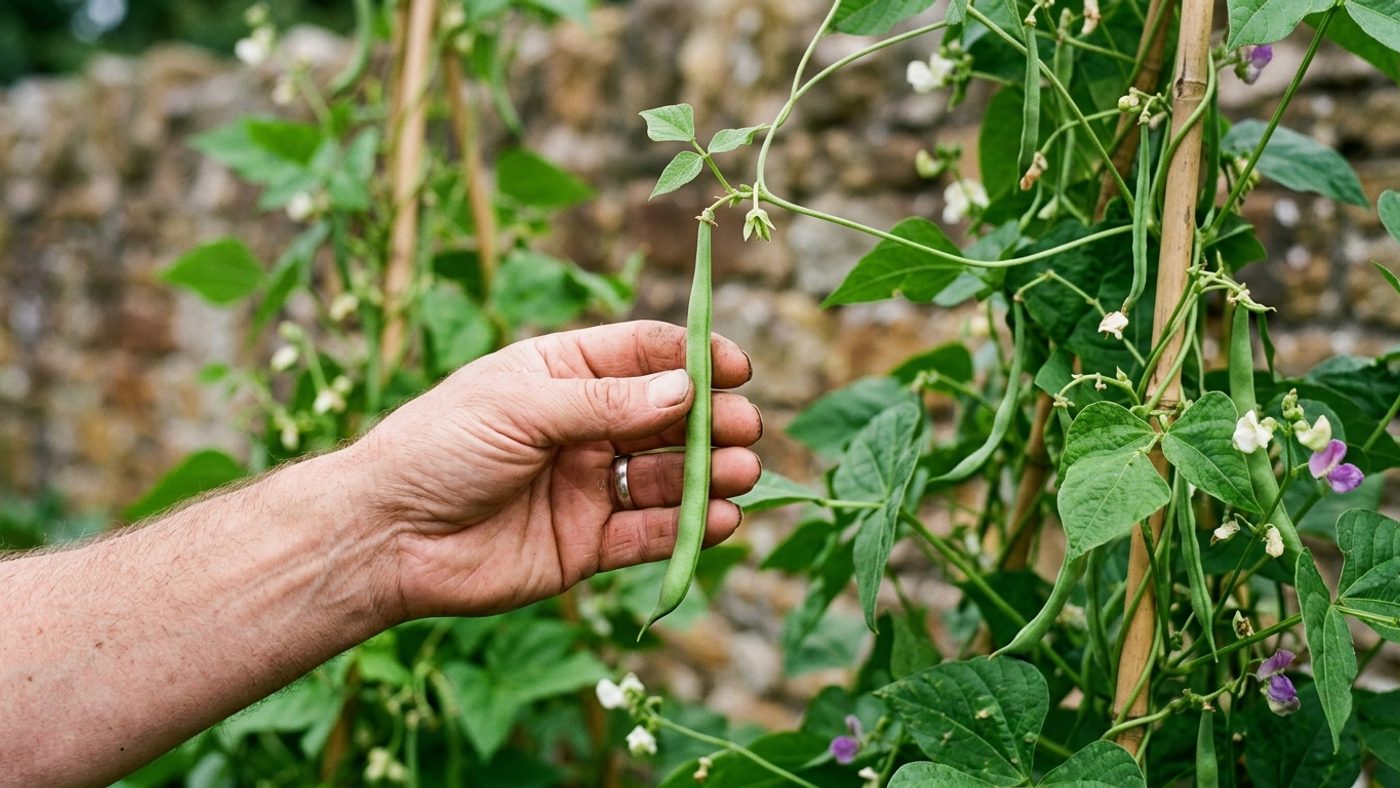
French bean flowers are self-pollinating, so saved seed grows true to type. Leave a few pods to mature and dry at the end of the season, then store the seeds in a labelled paper bag somewhere cool and dry for next year. Once the crop is finished, cut the plants down and dig the roots in. As legumes they fix nitrogen that the next crop will use.
Common problems
- Slugs and snails go for young plants. Sowing indoors keeps seedlings safe until they are large enough to cope.
- Black bean aphid (blackfly) colonises the shoot tips. Pinch out affected tips and squash them, or spray off with water. The plants usually grow through it.
- Nothing coming up. The soil was too cold. Wait for warmth.
See more problems
- Bean seed fly maggots damage germinating seeds. More of a problem in cold wet soil, which is another reason to wait for warmth before sowing outdoors.
- Rust. Brown pustules on the leaves. Usually disfiguring rather than fatal. Good spacing and airflow reduce the risk.
- Halo blight is a bacterial disease that starts inside the seed itself. Clean, certified seed and watering at the base rather than over the foliage are the real defences.
- Aphids other than blackfly can build up on leaves and pods in a still, sheltered spot. A strong jet of water, or waiting for the local ladybirds, usually keeps numbers down.
- Grey mould (botrytis) shows as a fuzzy grey growth, usually on damaged or ageing tissue in damp, still conditions. Good spacing and clearing affected material reduce the risk.
Common questions
Should I grow dwarf or climbing French beans in Scotland?
Dwarf beans are the safer choice. They crop in 8 to 10 weeks, which fits neatly into a short Scottish summer, and they need no support. But they only crop for a few weeks, so you need to sow several batches for a steady supply. Climbing beans take longer to start but produce over a much longer period, mid-summer into early autumn, and give you a large crop from a small footprint. One wigwam of Cobra, planted once the soil is warm, will keep you in beans for months. If you have the space for supports, a row of climbers and a few dwarf successions covers the whole summer.
When should I sow French beans in Scotland?
Wait until all risk of frost has passed and the soil has warmed, late May or early June for most of Scotland. Sowing into cold wet soil is the most common failure. For an earlier start, sow indoors from late April, one bean per small pot at 5cm deep, and plant out once the frost risk has passed. Warming the soil with fleece or clochesA small, portable clear cover placed over an individual plant or short row to trap warmth and keep off wind, rain and pests. Full definition → for a few weeks before sowing helps germination, and protecting the young plants with the same fleece gives them a head start.
Do climbing beans need a lot of support?
Yes, and it needs to go in before you plant. Climbing beans reach 2m and a summer gale will flatten an unsecured wigwam. Use 2.5m bamboo canes or hazel poles. For a wigwam, arrange four or five canes in a circle, spacing them 15cm apart at the base, and tie the tops together. An X-frame with canes crossing in the middle makes picking easier. Plant one bean at the base of each cane. Once the plants reach the top, pinch out the growing tips to encourage side-shoots lower down.
Why are my bean pods tough and stringy?
You left them on the plant too long. Pick at 15 to 20cm long. They are ready when they snap easily and before you can see the individual beans through the pod. Regular picking is the whole trick with French beans. A plant that is picked clean keeps producing. One left with pods swelling to seed shuts down.
What are the black insects on my bean tips?
Black bean aphid, also called blackfly. They colonise the tender shoot tips and can be dense in a bad year. Pinch out the affected tips and squash them, or spray them off with water. They rarely kill the plant, and once the beans are cropping strongly the colony usually declines on its own.
Sources
2 sources, and what each was used for
- RHS: sowing indoors late April / outdoors late May-early June, 5cm depth, the 'after the last frost' instruction, dwarf 15cm spacing, 8-10 week cropping, 15-20cm pod picking, AGM varieties, bean seed fly named as a problem
- Garden Organic: sowing every three weeks for succession, 7-14 day germination, dwarf 60cm vs climbing 2m habit, wigwam or double-row A-frame support, a 30cm wide by 45cm deep container minimum, picking every 2-3 days when pods snap cleanly, and drying pods for storage