
Apium graveolens var. dulce
Celery punishes a missed watering and a too-early planting date more than almost any other vegetable — and almost nobody actually digs a trench for it anymore.
Celery has a reputation as a fussy crop, and the reputation is earned. It wants constant moisture, a late and cautious start outdoors, and regular attention while it grows. None of that is a reason to skip it, but it is a reason to know what you're taking on before you sow.
Choosing a type
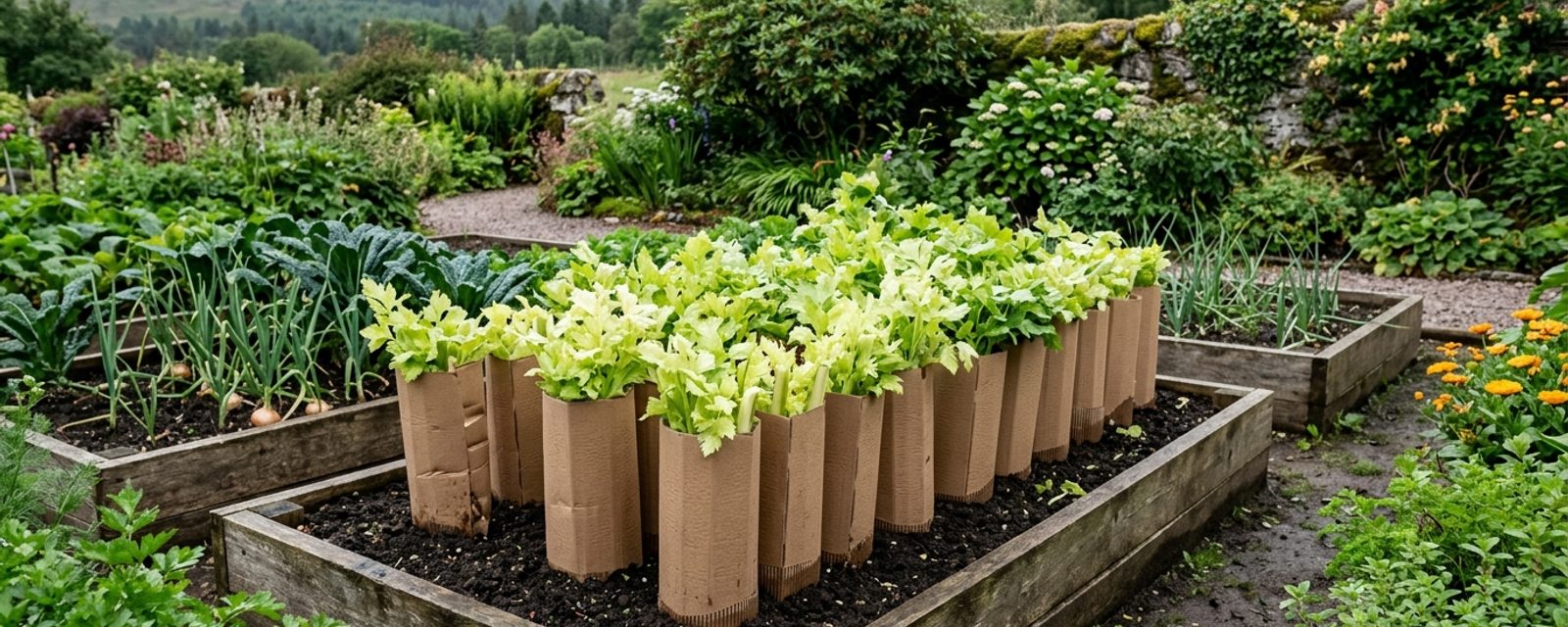
Self-blanchingExcluding light from part of a growing plant, usually by earthing up, wrapping or covering, so it grows pale, tender and less bitter. Full definition → and green varieties are what almost everyone actually grows: planted in a block so the plants shade each other, with a paper or cardboard collar doing the rest of the work. Trench varieties, the traditional kind grown in a dug trench and earthed upDrawing soil up around a plant's base as it grows, most often potatoes, to keep light off developing tubers and support tall stems. Full definition → through the season, are rarely available at all, and slower and trickier to grow well. Choose self-blanching unless you specifically want the trench method for its own sake.
Preparing the ground
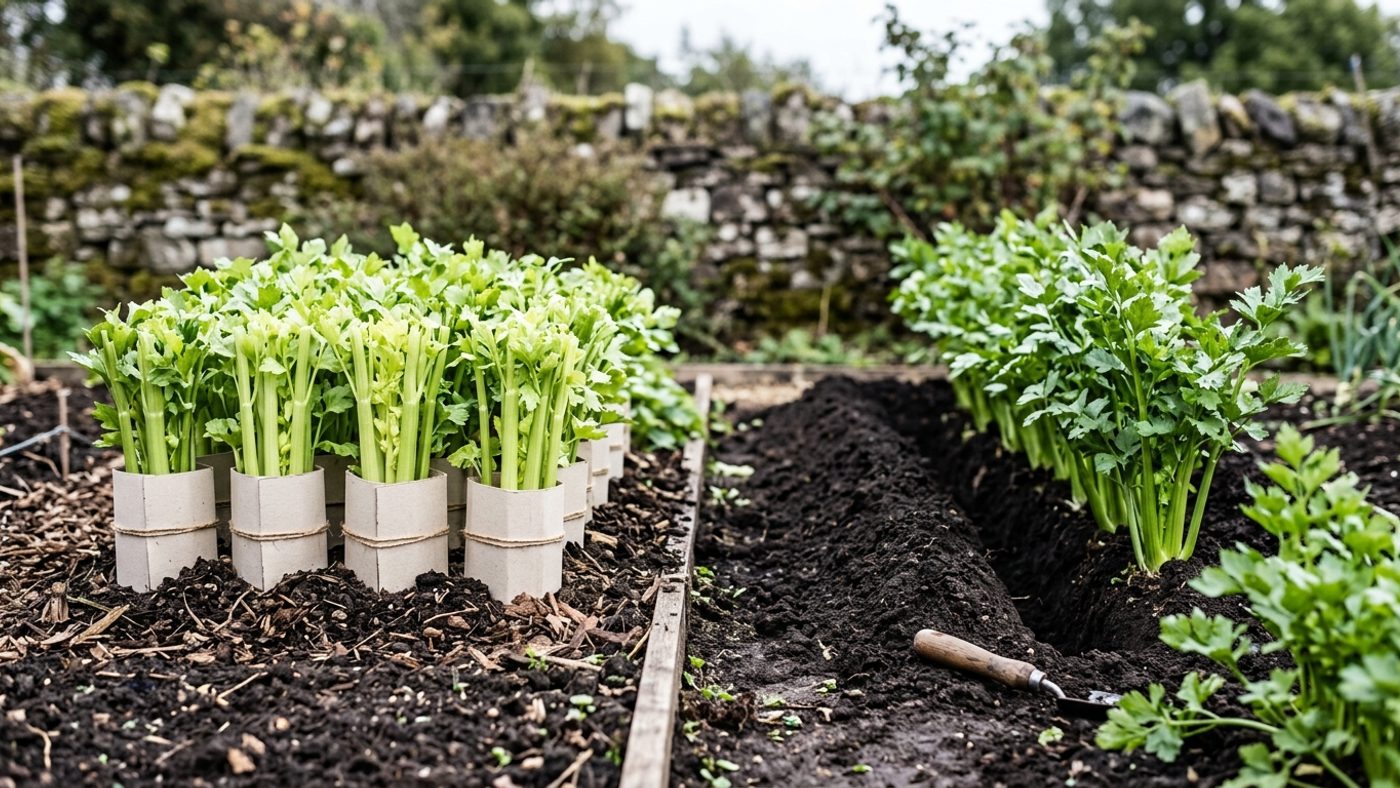
Celery wants a sunny site with fertile, moisture-retentive soil, ideally prepared the autumn before: dig in plenty of well-rotted manure or garden compost to help the ground hold water through summer. For a trench variety, dig a trench 40-50cm wide, refilled with a compost-and-manure mix to about 10cm below the surface; sources genuinely differ on how deep to dig the trench itself, covered below.
Sowing
Sow indoors only, mid-March to early April: celery seed needs light to germinate, so scatter it thinly on the surface of peat-freeCompost made without peat, which is harvested from a slow-forming, carbon-storing wetland habitat that peat extraction damages. Full definition → compost rather than covering it, in trays, modulesA tray divided into small individual cells, each sown with its own seed or seedling, so each plant grows undisturbed roots until it's ready to plant out. Full definition → or small pots. GerminationA seed sprouting: breaking dormancy and putting out its first root and shoot, given the right warmth and moisture. Full definition → needs at least 15°C and can take up to three weeks. Prick seedlings out into individual 7.5cm pots once they're large enough to handle.
Planting out
Plants are usually ready about ten weeks after sowing, which puts planting out at late May to early June. Wait until night temperatures are reliably staying above 10°C for more than 12 hours at a stretch: this is a genuine cold threshold, not just a frost one, and celery exposed to colder nights while young is prone to bolt. Cover with clochesA small, portable clear cover placed over an individual plant or short row to trap warmth and keep off wind, rain and pests. Full definition → or fleeceA lightweight, breathable fabric laid or draped over plants to trap a little warmth and keep off frost, wind and some flying pests. Full definition → for extra insurance while plants establish.
Space self-blanching varieties 23cm apart in each direction, planted in a block rather than rows, so the plants shade each other's stems. Trench varieties go in single rows 30-45cm apart. In containers, use the same 23cm spacing in a large pot of peat-free multi-purpose compost, sited somewhere sunny and sheltered; containers dry out fast and need generous, regular watering all season. Water thoroughly at planting, and watch for slugs straight away.
Varieties
Tango and Victoria below both carry the RHS Award of Garden Merit, a UK-wide award rather than a Scottish one. Granada doesn't, but its disease resistance earns it a place regardless.
RHS also lists 'Tall Utah 52/70' with AGMThe RHS's Award of Garden Merit: a UK-wide trials award for reliable performance, not a Scotland-specific recommendation. Full definition → and 'Lorreta' without, neither adding a trait beyond what Tango, Victoria and Granada already cover between them.
★ Our pick for Scotland
TangoAGM
Self-blanching, fast-growing, bolt-resistantA plant switching early into flowering and seed production, usually triggered by stress, after which leaves, roots or bulbs turn bitter or unusable. Full page →
Bolt-resistant and tolerant of less-than-ideal conditions.
Why this one: Named specifically for bolt resistance and tolerance of less-than-ideal conditions, which matters more on celery than almost any other crop: it bolts if its cold-sensitive seedling stage is exposed to anything below 10C, a threshold a Scottish late spring reaches later and less reliably than RHS's own date range assumes.
Also worth considering
VictoriaAGM
Vigorous, quick-growing, well-flavoured, up to 1m tall
Named for flavour and speed. Quick-growing matters on a crop that already needs a ten-week head start under cover before it can go outside into a short growing season.
Granada
Self-blanching, pale-green fleshy stalks, resistant to celery leaf spot
The one named variety with disease resistance built in, specifically to celery leaf spot, the same disease this guide's rotationMoving each crop family to different ground each year, on a multi-year cycle, so pests and diseases that build up in soil don't get a repeat host. Full definition → callout warns about. Genuinely more useful in a cool, damp climate where foliar disease pressure runs higher for longer.
Best Celery Varieties for Scotland → compares all named celery varieties head-to-head, with the practical detail that doesn't fit in a summary card.
Care
Keep the soil consistently moist throughout. MulchA layer of material spread over the soil around plants to suppress weeds, retain moisture, and improve soil structure as it breaks down. Full definition → thickly with compost or well-rotted manure once plants are established to help hold that moisture and keep weeds down, but leave a gap right around the base of the stems so they don't sit in wet mulch and rot. If the ground was well prepared, feeding usually isn't needed; on poorer soil, a light dressing of high-nitrogen fertiliser once plants are established gives them a boost, and container plants do best fed fortnightly with a balanced liquid feed through summer. Weed regularly and by hand near the plants: celery grows slowly at first and is easily swamped.
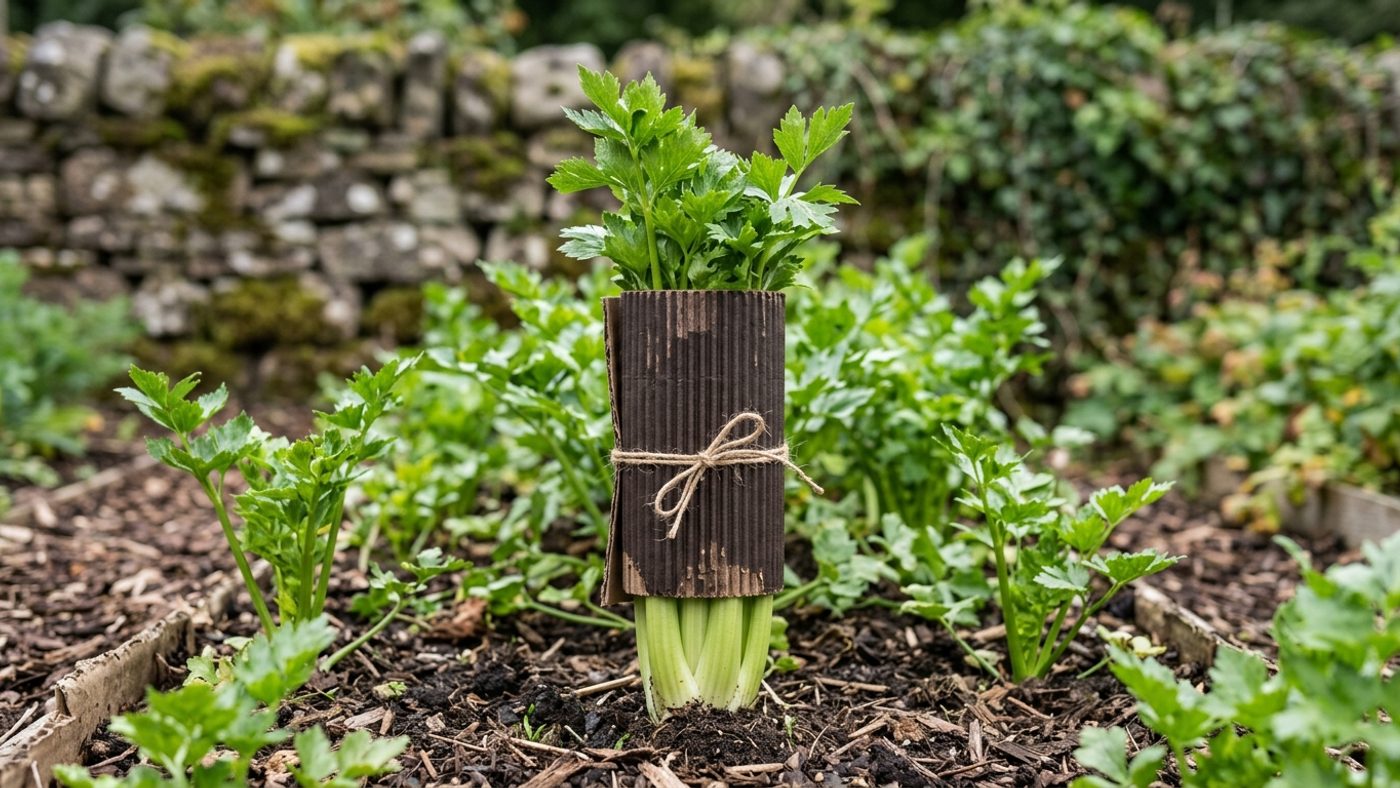
Blanching: in mid-to-late summer, once stems reach about 30cm tall, tie a sleeve of newspaper or corrugated cardboard around them, leaving the top third of the plant exposed to light. Only the outer plants in a block strictly need it; wrap every plant instead if you want all your stems milder and sweeter. Trench varieties are blanched by gradually mounding soil around the stems through late summer instead, or with the same paper-and-cardboard method.
Harvesting
Self-blanching and green varieties are ready from mid-summer to autumn, roughly 25 weeks after sowing: harvest as soon as they reach a usable size and before the leaves start yellowing, since the stems turn stringy with age. Most types aren't hardy, so cover with cloches or biodegradable fleece as night temperatures fall, and finish harvesting before the first frost. Trench varieties take longer, around 40 weeks, cropping from late autumn to early winter and tolerating a harder frost with fleece protection. Lift whole plants as needed and use them promptly.
Common problems
- Slugs and snails are a genuine risk to this crop.
- Stringy, over-strong stems are almost always a watering problem rather than a variety fault: celery is about 95 per cent water and shows a missed watering directly in the eating quality of the stem.
- Bolting follows cold exposure while plants are young, specifically nights below 10C for more than 12 hours. Keep plants under cover until that threshold passes reliably, harden offGradually getting young plants raised indoors used to outdoor conditions over 7–14 days before planting out, so cold, wind and direct sun don't shock or damage them. Full definition → carefully, and protect with cloches or fleece for a few weeks after planting out.
See more problems
- Celery leaf mining fly larvae tunnel inside the leaves, leaving dried, scorched-looking patches.
- Celery leaf spot causes dark spots on the leaves. Remove affected foliage, and see the rotation note above: avoid growing celery where celery or celeriac has grown in the past few years.
Common questions
Do I need to dig a trench to grow celery?
Almost certainly not: nearly all celery sold today is self-blanching or green, grown in a block with a paper or cardboard collar instead of a trench; trench varieties are rarely available and slower to grow. Full sourced breakdown: <a href='/tools/garden-myths/celery/'>Celery Myths →</a>
Can celery follow celeriac in my rotation, or the other way round?
No: celery and celeriac are the same species, just different varieties bred for stalks versus a root, and growing either where the other grew recently raises the risk of celery leaf spot. Full sourced breakdown: <a href='/tools/garden-myths/celery/'>Celery Myths →</a>
Is it safe to plant celery out once the frost risk has passed?
Not necessarily: celery bolts if night temperatures fall below 10C for more than 12 hours, a threshold well above freezing, so wait until nights are reliably staying above that. Full sourced breakdown: <a href='/tools/garden-myths/celery/'>Celery Myths →</a>
Why has my celery gone stringy?
Almost always a watering gap: celery is about 95 per cent water and turns stringy and strongly flavoured the moment it goes short, so keep the soil consistently moist, especially in containers. Full sourced breakdown: <a href='/tools/garden-myths/celery/'>Celery Myths →</a>
Sources
2 sources, and what each was used for
- RHS: self-blanching vs trench distinction, soil prep including the trench-digging method, sowing light/temperature requirement and timing, transplant temperature threshold and its bolting consequence, spacing for both types and for containers, watering (celery's central vulnerability), mulching with a stem-rot caveat, feeding, blanching method for both types, harvesting timing and method, five named varieties with AGM status, bolting cause and fix, slug risk, celery leaf mining fly, celery leaf spot and its crop-rotation consequence with celeriac
- Garden Organic: independently corroborates the block-planting method for self-blanching celery and the 10C night-temperature bolting threshold; gives a genuinely different trench depth (10cm) against RHS's 30cm, shown as a real disagreement rather than resolved by guesswork; supplies harvest timing in weeks (25 weeks self-blanching, 40 weeks trench) that RHS does not give as a figure; confirms family (Apiaceae) and rates the crop 'tricky' difficulty