
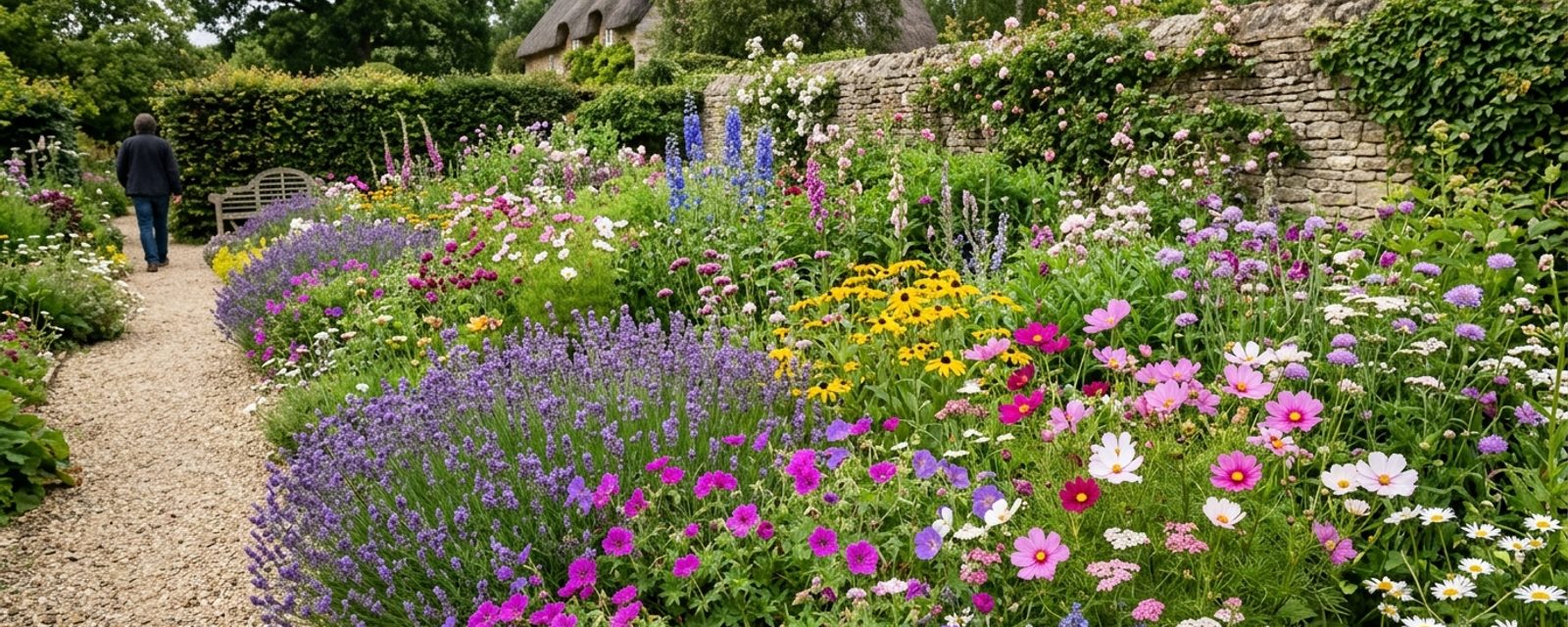
Not a single pest gets solved with a spray. The real fix, again and again, turns out to be a predator, a parasite or a pollinator already willing to do the job for free. Here's who actually shows up to help.
Further reading: bat-friendly gardens, building a hibernaculum, and rare Scottish butterflies worth gardening for.
🌼 Attracted
Create the conditions, they arrive: habitat and planting, not a product.
Small, round, brightly spotted beetles: both the adults and their spiky black-and-orange larvae feed on aphids. More than 40 species live in Britain, so colour and pattern alone won’t always confirm which one you’re looking at.
Helps control: Aphids, Brown Scale
True flies that mimic wasps and bees, hovering in place before darting off. Larvae are legless, aphid-eating maggots; adults feed on nectar and pollen, so a garden with nothing in flower starves the very insects doing the pest control.
Helps control: Aphids, Glasshouse Whitefly
Fast-moving, mostly black or metallic-sheened beetles that hunt after dark. The violet ground beetle is one of the largest and most recognisable, and both adults and larvae prey on slugs and other soft-bodied pests.
Helps control: Aphids, Leek Moth, Flea Beetle +2 more
Britain’s biggest beetle family, over 1,000 species, with short wing cases that leave most of the abdomen exposed. The devil’s coach horse is the most recognisable, and both it and its smaller relatives hunt slugs and other soft-bodied pests.
Helps control: Leek Moth, Slugs and Snails
Tiny, rarely seen wasps whose grubs develop inside a living aphid, eventually leaving behind a hollow, papery husk called a mummy. The mummy, not the wasp, is the sign to look for in the garden.
Helps control: Aphids, Brown Scale, Beet Leaf Miner
The same wasps a picnic tries to avoid also hunt caterpillars to feed their own grubs, cabbage whites included on a brassica bed. Seven species are common in British gardens, typically yellow and black or reddish-brown.
Helps control: Cabbage White Caterpillars
Brown, pincer-tailed insects that look alarming but rarely bite. Mostly nocturnal, they feed on aphids and other soft-bodied pests overnight, though large numbers can also nibble soft fruit and flowers.
Helps control: Aphids
Garden birds take a real bite out of aphid, caterpillar and flea beetle numbers, especially while feeding chicks in spring. Which species turn up, and how to encourage them, depends more on feeders, water and nesting cover than on the pests themselves.
Helps control: Aphids, Cabbage White Caterpillars, Flea Beetle +3 more
Common frogs and toads eat slugs and other soft-bodied pests, and a garden pond is usually what brings them in. Britain has two native frog species, two toads, and three newts, all worth encouraging around a damp corner.
Helps control: Flea Beetle
Large, furry and rounder-bodied than honeybees or solitary bees, bumblebees are the dominant pollinator in Scotland’s cooler climate. Several species stay active at lower temperatures than honeybees, and six turn up most often in Scottish gardens.
Far more varied than bumblebees: over 250 British species, from 5mm to over 15mm long, with no single description covering them all. Most nest alone in soil, hollow stems or bee hotels rather than a hive.
📦 Bought
Ordered by post and released: species, timing and temperature matter.
A parasitic wasp too small to see by eye: the sign it’s working is a blackened whitefly scale, not the wasp itself. Bought in and released under cover, it needs a minimum temperature to establish.
Helps control: Glasshouse Whitefly
A microscopic nematode watered into moist soil, invisible even under a hand lens. There’s nothing to identify by eye; fewer slugs over the following weeks is the only sign it’s worked.
Helps control: Slugs and Snails
Another microscopic, watered-in nematode, this one targeting vine weevil larvae in the root zone rather than the adult beetle. Timing and soil temperature matter more than with most bought-in controls.
Helps control: Vine Weevil
A microscopic, watered-in nematode aimed specifically at caterpillars, cabbage whites included. Nothing to identify by eye: fewer caterpillars over the following weeks is the sign it’s worked.
Helps control: Cabbage White Caterpillars, Plum Moth