
Helianthus tuberosus
Jerusalem artichoke is one of the hardiest, lowest-maintenance vegetables you can grow, and it does a second job as a windbreak if you let it.
Despite the shared name, this is an unrelated plant to globe artichoke: a sunflower relative grown for its tuberA swollen underground stem or root a plant uses to store energy, which can also grow into a new plant, the classic example being a potato. Full definition →, not a thistle relative grown for a flower bud. If it's the flower-bud crop you're after, see our globe artichoke guide instead.
This crop asks for very little once it's in the ground, and its one real quirk, an unwillingness to stay confined to a tidy rotationMoving each crop family to different ground each year, on a multi-year cycle, so pests and diseases that build up in soil don't get a repeat host. Full definition →, is worth planning around rather than fighting. Site it deliberately, expect it to persist, and it rewards you with a reliable autumn and winter harvest and genuine shelter for whatever you grow near it.
Planting
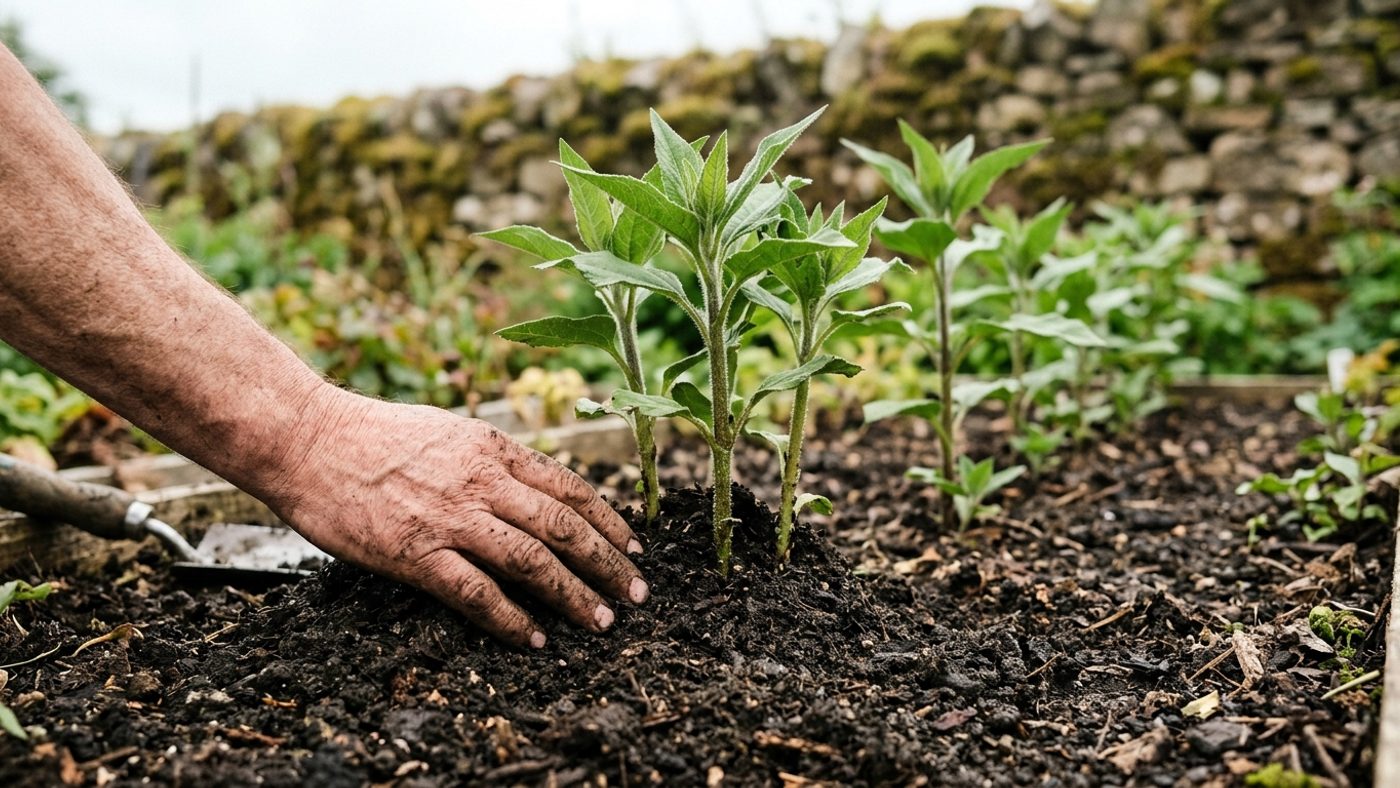
Plant tubers, not seed, from late winter through mid-spring (January to March), 10-15cm deep and 30cm apart. Choose firm, smooth tubers, ideally slightly smaller than a hen's egg: a healthy supermarket tuber works fine. Prepare the site with a bucketful of well-rotted organic matter per square metre, in a sunny spot with moisture-retentive soil that won't waterlog.
Row spacing is one place the sources genuinely disagree: allow 1m between rows if you need to walk between them, or as little as 30cm for a dense block you won't need access to, though a wider 1.5m is also given as a standard row spacing. How much access you actually need matters more here than either figure being wrong.
A crop that resists rotation
A 3-year rotation is the usual ideal for this crop, the same as most vegetables, but it's genuinely hard to follow in practice: any tuber piece left in the soil is enough for the plant to come back the following year, so it tends to grow in the same place whether or not that's the plan. Rather than fighting that habit, many growers site it permanently instead, deliberately using its height as a windbreak or screen for a more exposed part of the plot.
Varieties
Only two varieties are grown, and neither carries an RHS Award of Garden Merit: Jerusalem artichoke sits outside the usual annual-vegetable award scheme.
★ Our pick for Scotland
Dwarf Sunray
Shorter growth (120-150cm), long smooth pale tubers
Needs far less staking than the taller Fuseau.
Why this one: At little more than a metre tall against Fuseau's 2m-plus, Dwarf Sunray needs far less mounding or staking for stability, which matters more on an exposed, windy plot than the extra height of a taller variety.
Also worth considering
Fuseau
Tall growth (2m+), smooth-skinned tubers
The taller, more effective windbreak of the two, with smooth-skinned tubers that are genuinely easier to peel than the usual knobbly shape.
Best Jerusalem Artichoke Varieties for Scotland → compares all named jerusalem artichoke varieties head-to-head, with the practical detail that doesn't fit in a summary card.
Care
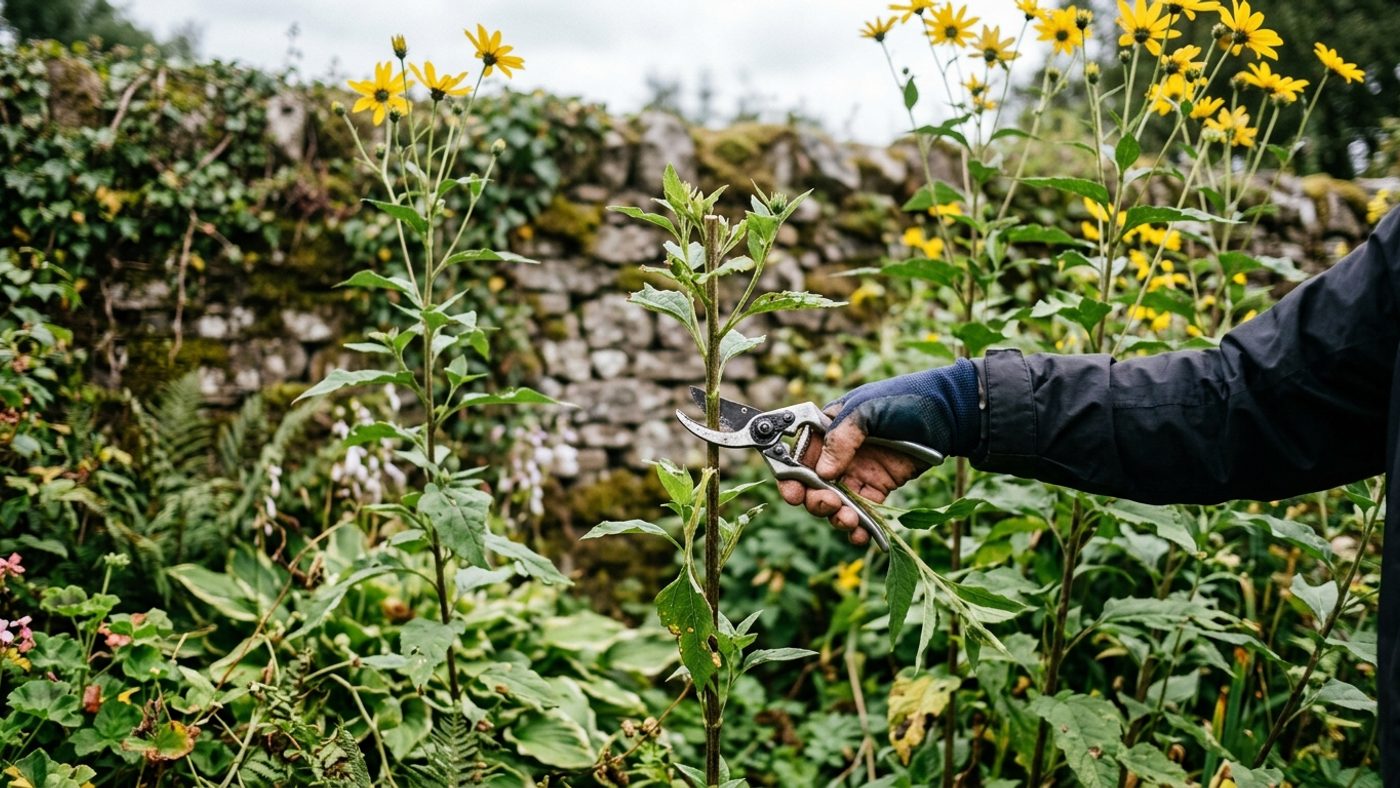
Water during dry spells to help the tubers swell, and mulchA layer of material spread over the soil around plants to suppress weeds, retain moisture, and improve soil structure as it breaks down. Full definition → with well-rotted organic matter in late winter or spring after planting. Once stems reach 30cm, mound soil around the base for stability, and on windy sites, stake with canes and twine or prune stems back to about 1.5m in late summer to reduce wind resistance. Late-summer yellow flowers benefit pollinators, though removing them redirects the plant's energy into the tubers instead: a genuine trade-off, not a clear-cut choice.
Harvesting
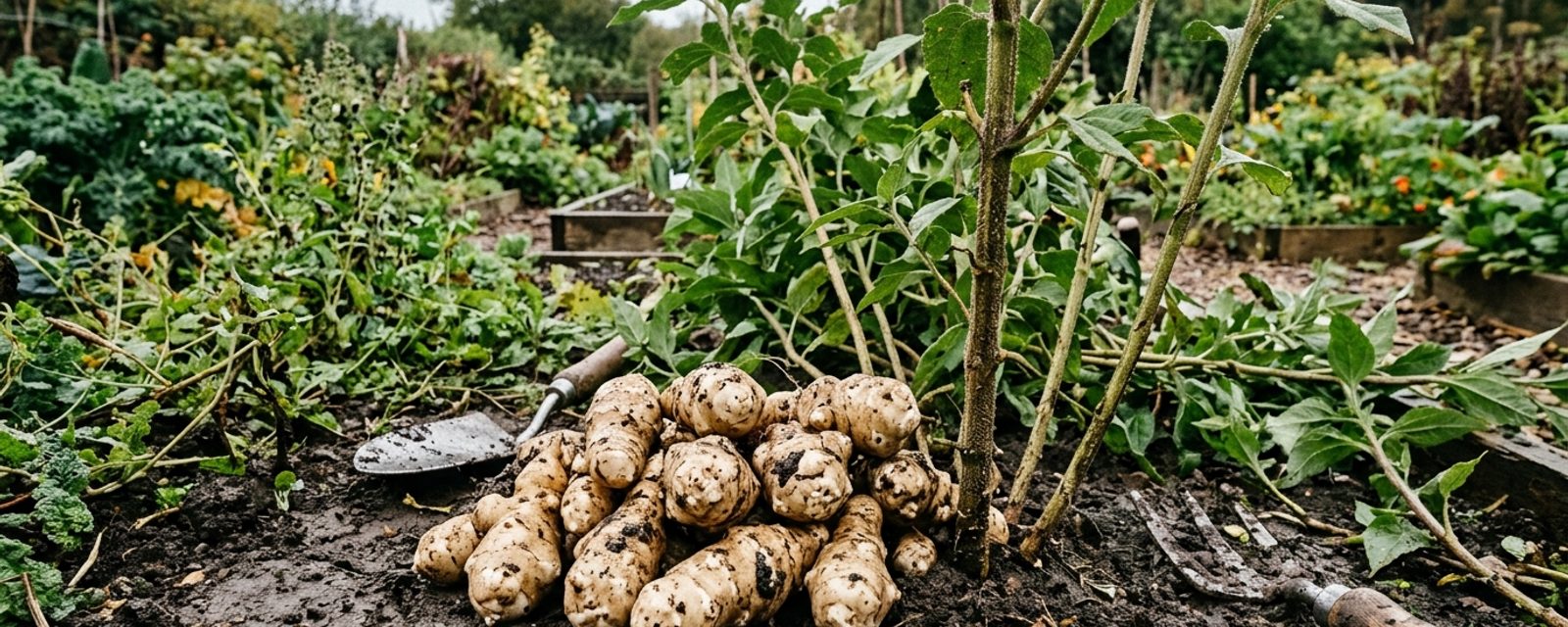
Each plant produces 10 or more tubers, ready to lift from late autumn onward. Dig only what you need with a garden fork rather than lifting the whole crop: tubers don't store well once out of the ground, so the ground itself is the best storage you'll get. Frost is said to improve the flavour, and tubers left in place through winter are simply there when you want them, protected with a mulch if the ground freezes hard.
A note on eating them: Jerusalem artichokes contain a carbohydrate that can cause digestive wind, especially in large portions. Starting with small amounts, cooking with lemon juice, and harvesting later in the season are all said to help.
Common problems
- Unwanted regrowth isn't really a pest or disease, but it's this crop's most common complaint: any tuber piece left in the ground when you harvest is enough for it to return. Dig thoroughly if you actually want to clear a bed, or accept the habit and site the crop permanently instead.
- Slugs and snails nibble new shoots in spring and can eat into tubers left in the ground over winter, though they don't do much damage to established growth.
- Sclerotinia is a fungal disease that can survive in the soil for long periods. This crop is otherwise notably robust, with few serious problems beyond it.
Common questions
Can I rotate Jerusalem artichoke around the plot like other vegetables?
Not easily: it regrows from any tuber piece left in the soil, so it tends to stay put regardless of a 3-year plan; either dig thoroughly each year or site it permanently instead. Full sourced breakdown: <a href='/tools/garden-myths/jerusalem-artichoke/'>Jerusalem Artichoke Myths →</a>
Do Jerusalem artichokes store well once dug up?
No: tubers don't store well once lifted, keeping only about a fortnight refrigerated; leave them in the ground and dig up only what you need through autumn and winter. Full sourced breakdown: <a href='/tools/garden-myths/jerusalem-artichoke/'>Jerusalem Artichoke Myths →</a>
Are the tall stems just something to deal with?
No: the height works as a genuine windbreak or screen, and the late-summer flowers attract pollinators, so it's worth siting deliberately rather than treated as pure downside. Full sourced breakdown: <a href='/tools/garden-myths/jerusalem-artichoke/'>Jerusalem Artichoke Myths →</a>
Will a few missed tubers cause problems next year?
Yes, if you're trying to clear the bed: any tuber piece left behind is enough for the plant to come back, especially in light soil. Full sourced breakdown: <a href='/tools/garden-myths/jerusalem-artichoke/'>Jerusalem Artichoke Myths →</a>
Sources
3 sources, and what each was used for
- RHS: tuber selection, soil prep, planting depth and spacing, container growing, watering, mounding and staking for wind stability, flower removal, pruning for wind resistance, overwinteringKeeping a plant alive and intact through the cold months, whether left outdoors, moved under cover, or stored dormant. Full definition → in the ground, harvest method and yield, the digestive-wind caveat, two named varieties, pest and disease list
- gardenersworld.com: corroborates depth and spacing closely, though gives a wider 1.5m row spacing than RHS's 1m, shown as a genuine difference; adds a specific refrigerated storage figure (up to a fortnight) RHS doesn't give; corroborates the windbreak/shelter use
- Garden Organic: the one detail neither other source makes this explicit: normal 3-year rotation advice is genuinely hard to follow on this crop, since it regrows from any tuber piece left behind, which is why many growers treat it as a permanent windbreak planting instead of rotating it — a real practical tension, not a contradiction to paper over