
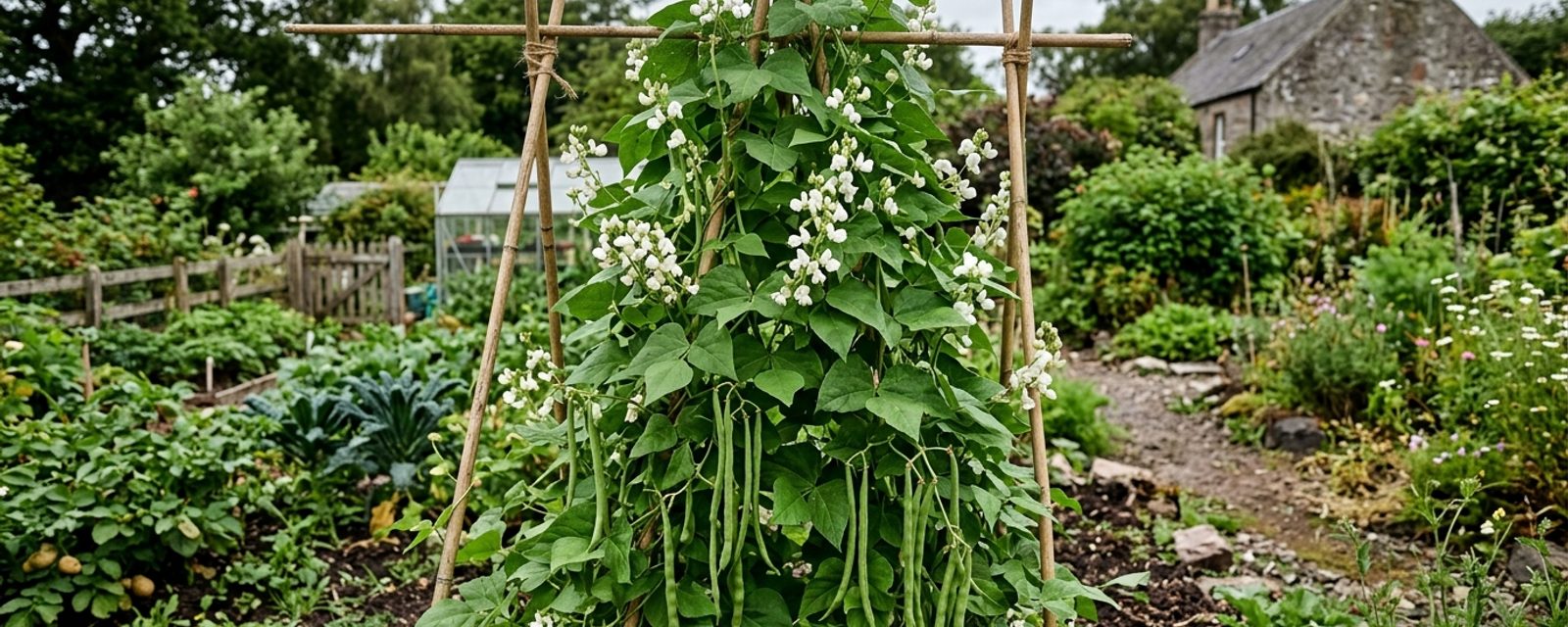
Phaseolus coccineus
Runner beans are among the highest-yielding vegetables you can grow, climbing tall on a simple cane structure and cropping for weeks once they get going.
Variety matters more here than timing: the soil just needs to be properly warm before sowing, a little later in the north than the south. What matters more is picking a variety bred for reliable cropping in cool, changeable weather rather than one bred for a hot, dry summer Scotland rarely delivers.
Sowing and support
Sow indoors mid-April to May, or direct outdoors from late May to early June once frost risk has passed and the soil reaches 12°C, typically a little later in the north of the UK than the south. Sow 5cm deep, one seed per pot indoors or two per cane base outdoors, thinning to one seedling per cane.
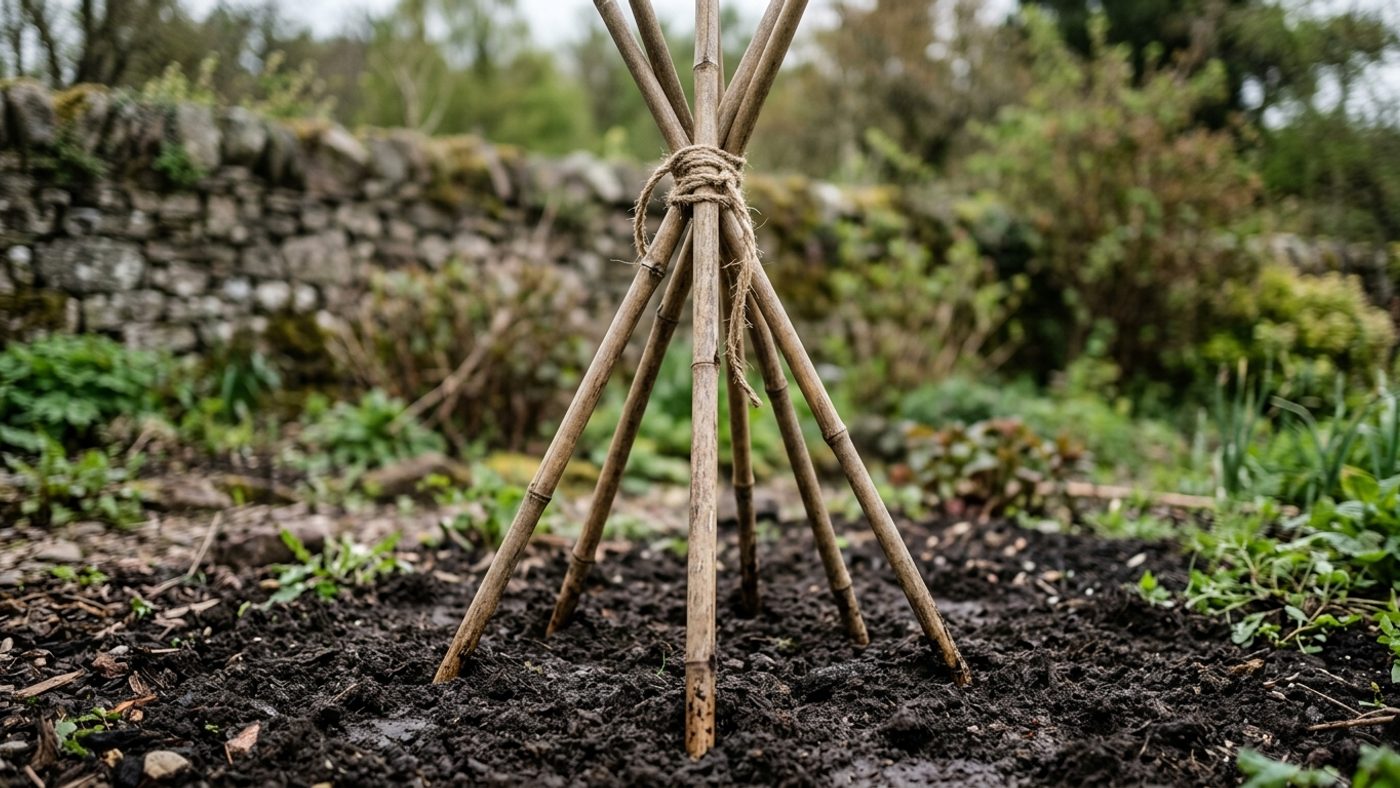
Climbing varieties need a proper structure in place before or as you sow: a traditional double-row A-frame of 2.5m canes, an X-frame crossed and tied at the centre for easier picking, or a simpler wigwam of five or more canes tied at the top. Space canes 15-30cm apart (or a simpler 20cm), with rows 45-60cm apart for a double row and at least 1.5m between two double rows. Dwarf varieties skip all of this: short twiggy sticks between plants, spaced 30cm apart, is all they need.
Growing Up on an Exposed Scottish Plot → covers which structures actually hold up in wind, and how to anchor a tall A-frame or wigwam properly.
Varieties
RHS also lists 'White Lady' (heavy crops, thick stringless pods), 'Liberty' (large pods, red flowers) and 'Enorma' Elite (slender pods to 50cm), all AGMThe RHS's Award of Garden Merit: a UK-wide trials award for reliable performance, not a Scotland-specific recommendation. Full definition →, plus 'Firelight' (no AGM, bred for hot dry summers, the opposite of what a Scottish garden usually needs).
★ Our pick for Scotland
MoonlightAGM
Runner/French cross, white flowers, stringless
Named for cropping well in less than ideal conditions.
Why this one: Most AGM runner beans are picked for heat or drought performance, which Scotland rarely needs. Moonlight is named specifically for cropping well in less than ideal conditions, a more directly useful trait here than chasing the biggest headline yield.
Also worth considering
StardustAGM
Runner/French hybrid, self-fertileA plant that can set fruit using its own pollen, without needing a second, different variety nearby to cross-pollinate it. Full definition →
RHS names it 'heavy crop whatever the weather', and self-fertility removes a dependency on pollinator activity that can be less reliable in a cooler, wetter summer.
Best Runner Bean Varieties for Scotland → compares all named runner bean varieties head-to-head, with the practical detail that doesn't fit in a summary card.
Care
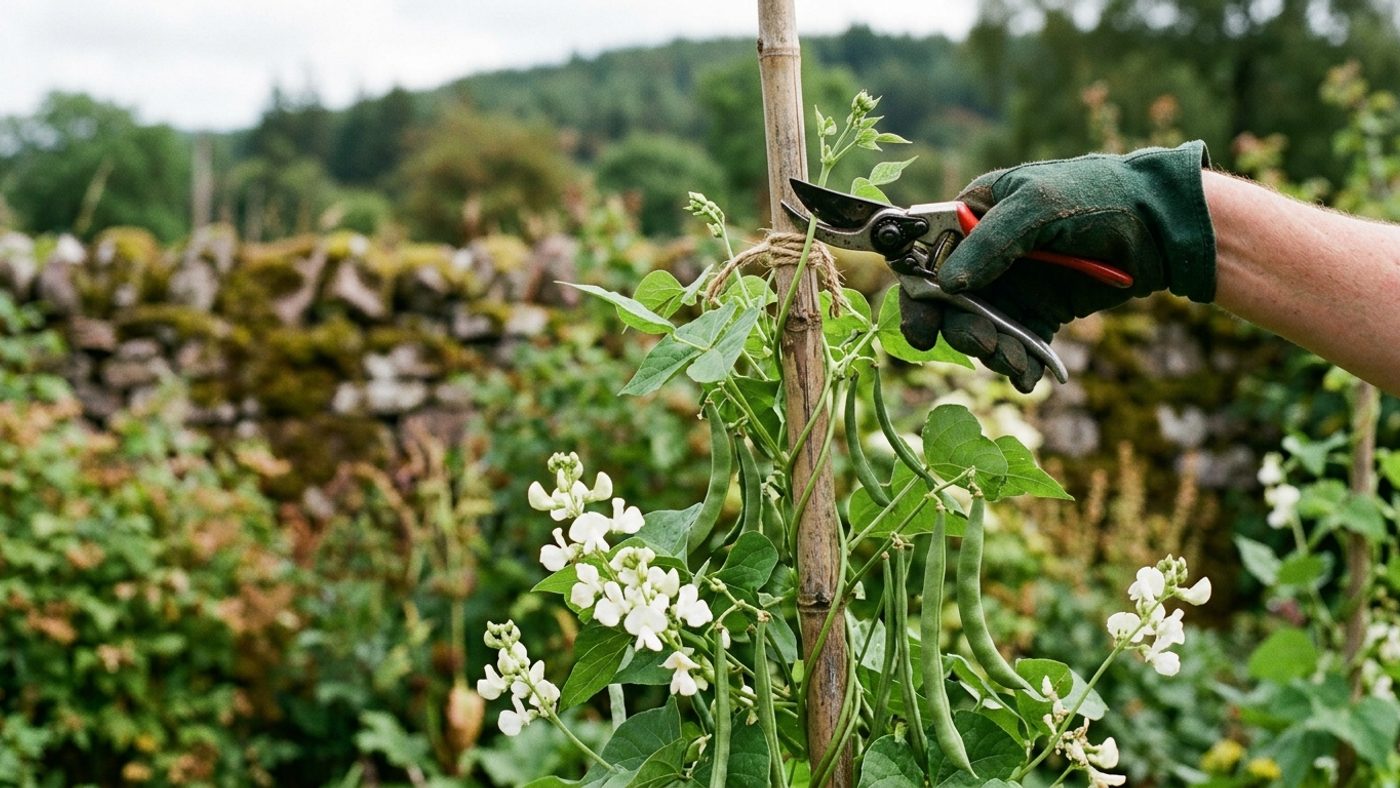
Water regularly once flowering and pod formation begin; container plants need frequent, generous watering throughout. MulchA layer of material spread over the soil around plants to suppress weeds, retain moisture, and improve soil structure as it breaks down. Full definition → with garden compost or well-rotted manure after planting. Ground-grown plants usually need no extra feeding, but container plants benefit from a high-potassium liquid feed once a fortnight from first flowering. Tie in loose stems as they climb, and once a plant reaches the top of its support, cut off the extra growth to encourage side-shoots lower down and keep the crop within reach.
Harvesting
Cropping typically starts mid-summer and continues 8 weeks or more with regular picking. Pick pods young and tender, about 20-25cm long: they should snap easily, with the beans inside still small and pale. Pick every 2-3 days once cropping starts, since a pod left to mature signals the plant to stop producing more. Once harvest finishes, cut plants at the base and leave the nitrogen-fixing roots in the ground rather than pulling the whole plant up.
Common problems
- Slugs and snails are a genuine risk to young plants on this crop, more so than on broad beans. Copper rings, crushed eggshells or wildlife-friendly pellets all help, alongside raising a few spare seedlings to replace losses.
- Black bean aphid (blackfly) forms colonies on shoot tips, and other aphids can affect the plant more generally too. Pinch outRemoving the soft growing tip of a stem to stop upward growth and make the plant branch out sideways instead. Full definition → growing tips once flowers set pods to reduce it.
- Bean seed fly maggots can kill germinatingA seed sprouting: breaking dormancy and putting out its first root and shoot, given the right warmth and moisture. Full definition → seed or leave seedlings blind before they even reach the shoot-tip stage above. Cold, wet soil makes it worse, so a fast, warm start matters here too.
See more problems
- Rust is a fungal disease affecting the leaves.
- Halo blight is a bacterial disease that starts in the seed itself; clean, certified seed and watering at the base rather than over the foliage are the real defences.
- Red spider mite can establish in warm, dry conditions, though this is less of a risk in a typically cooler, wetter Scottish summer.
- Green shieldbugs may appear but rarely cause real crop damage; the one species with any capacity to matter is still mostly a southern England problem.
- Poor pod-set in hot weather is a real risk further south, but less of one here. A cool, damp Scottish summer instead calls for a variety bred for reliable cropping in changeable conditions rather than one bred for heat.
Common questions
Does it matter if I miss picking a few pods?
Yes: a pod left to mature signals the plant to stop producing more, so regular picking every 2-3 days once cropping starts genuinely protects the rest of the harvest. Full sourced breakdown: <a href='/tools/garden-myths/runner-beans/'>Runner Bean Myths →</a>
Should I choose the heaviest-cropping variety I can find?
Not automatically: several AGM varieties are bred for hot, dry summers Scotland rarely supplies; a variety named for reliable cropping in cool, changeable weather, such as Moonlight or Stardust, is the better fit here. Full sourced breakdown: <a href='/tools/garden-myths/runner-beans/'>Runner Bean Myths →</a>
Will nasturtiums planted nearby keep blackfly off my beans?
Don't rely on it: nasturtiums are presented as a trap crop for blackfly but only as practice, not tested trial data; pinching out growing tips once flowers set pods is the properly established defence. Full sourced breakdown: <a href='/tools/garden-myths/runner-beans/'>Runner Bean Myths →</a>
Do dwarf runner bean varieties need the same tall canes as climbing types?
No: dwarf varieties, up to 45cm, only need short twiggy sticks, nothing close to the 2.5m canes a climbing wigwam or A-frame needs. Full sourced breakdown: <a href='/tools/garden-myths/runner-beans/'>Runner Bean Myths →</a>
Sources
3 sources, and what each was used for
- RHS: climbing vs dwarf choice, three support-structure methods (A-frame, X-frame, wigwam) with exact spacings, soil prep, sowing depth and timing for indoor/outdoor/container routes, watering, feeding, pruning at cane height, harvest timing and size, post-harvest nitrogen-fixing advice, six named varieties with exact AGM status individually confirmed
- RHS: confirming runner beans as a bean seed fly host directly, since runner beans' own growing page does not name this pest
- gardenersworld.com: corroborates depth and spacing closely; gives specific non-chemical slug controls (copper rings, crushed eggshells, wildlife-friendly pellets) RHS doesn't detail; adds freezing as a storage method; names 'Red Rum' as AGM, a claim that could not be verified on RHS's own page and was not used as a result