
Raphanus sativus
Radish is one of the fastest crops you can put in the ground, ready in as little as four weeks, with a slower winter form that extends the season for months past the point the quick summer type finishes.
Summer radish rewards speed and small, repeated sowings; winter radish rewards patience and a narrow sowing window. Treat them as two different crops sharing a name rather than one crop grown two ways, and the advice for each stops feeling contradictory. The one thing genuinely working in this crop's favour here: the heat and drought that trigger boltingA plant switching early into flowering and seed production, usually triggered by stress, after which leaves, roots or bulbs turn bitter or unusable. Full page → are a threshold a Scottish summer rarely reaches.
Sowing summer radish
Sow February to September, in small batches every couple of weeks rather than one row, about 1cm deep, thinning to 2.5-5cm apart in rows 15cm apart. Avoid sowing into the hottest, driest stretch of summer if you can help it. An early crop from February is possible with pre-warmed soil and a clocheA small, portable clear cover placed over an individual plant or short row to trap warmth and keep off wind, rain and pests. Full definition →.
Sowing winter radish: a different plant, a different window
Sow July to August only: earlier and the plant bolts instead of forming a usable root, the same trigger as summer radish but a much narrower window either side of it. Space plants 15-20cm apart, considerably more room than summer radish needs. It's a slower crop, taking 8-10 weeks rather than the summer type's 4-8, and it pays that time back by staying usable through winter rather than finishing in a matter of weeks.
Varieties
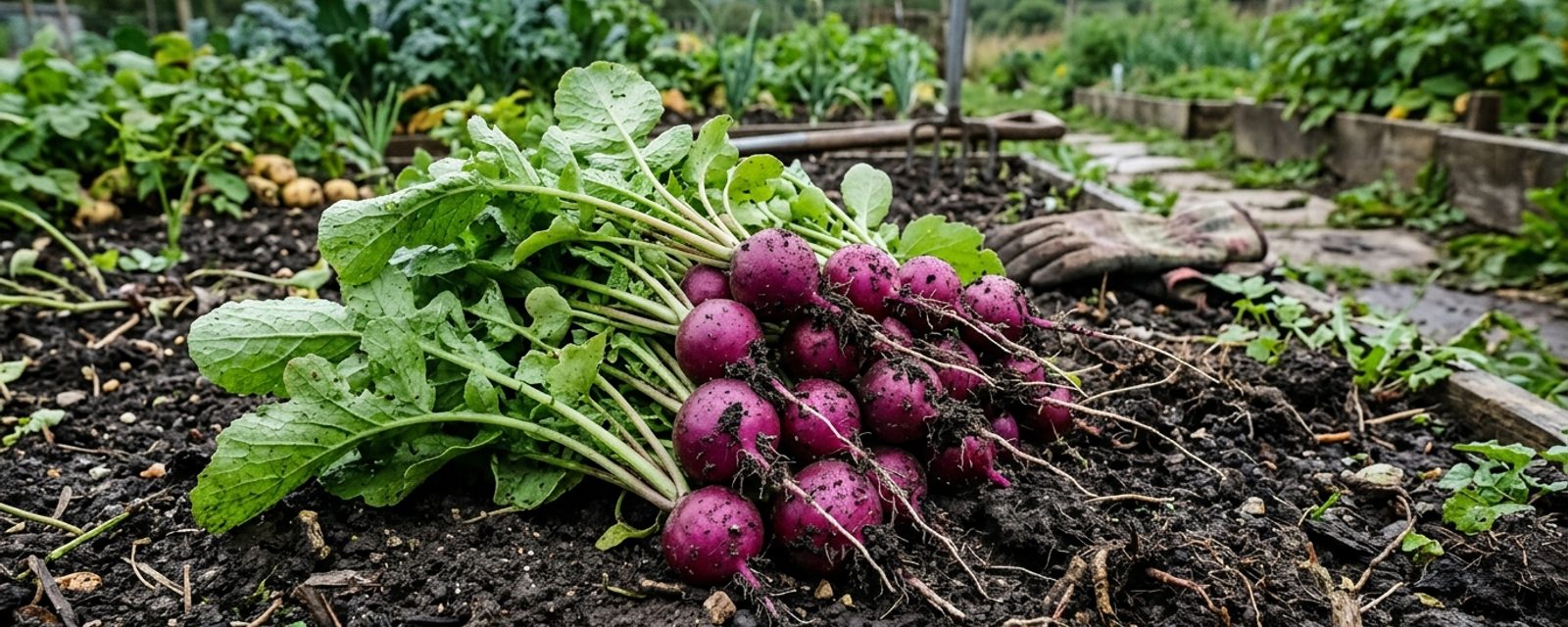
RHS also lists 'Scarlet Globe' and 'French Breakfast 4 Francis' among salad radishes with AGMThe RHS's Award of Garden Merit: a UK-wide trials award for reliable performance, not a Scotland-specific recommendation. Full definition →, plus 'China Rose' (winter, no AGM). The award is UK-wide, not a Scottish one. Oriental and edible-podded radishes are separate, less common types. Note: Black Spanish Round, shown above, is not AGM despite an earlier version of this page saying otherwise.
★ Our pick for Scotland
AmethystAGM
Salad radish, purple roots, slow to turn woody
Stays good for longer without going pithy.
Why this one: Radish punishes hesitation more than almost any other quick crop, so a variety that buys extra time before turning woody is genuinely useful forgiveness rather than a minor perk.
Also worth considering
Black Spanish Round
Winter radish, sow July/August
Not AGM, but the winter radish RHS documents in the most depth, giving the best-supported route to a hardy, storable crop through the months the summer type can't reach.
Best Radish Varieties for Scotland → compares all named radish varieties head-to-head, with the practical detail that doesn't fit in a summary card.
Watering and care
Keep the soil consistently moist rather than heavily watered. This crop is an exception to the usual "more water helps" instinct: overwatering pushes growth into leaf rather than root, so even, moderate moisture beats generous watering. Uneven moisture is also what causes split roots, usually still edible but worth avoiding with regular watering through dry spells. Weed by hand close to the plants rather than hoeing, to avoid disturbing the root.
Intercropping: a genuine use for radish's speed
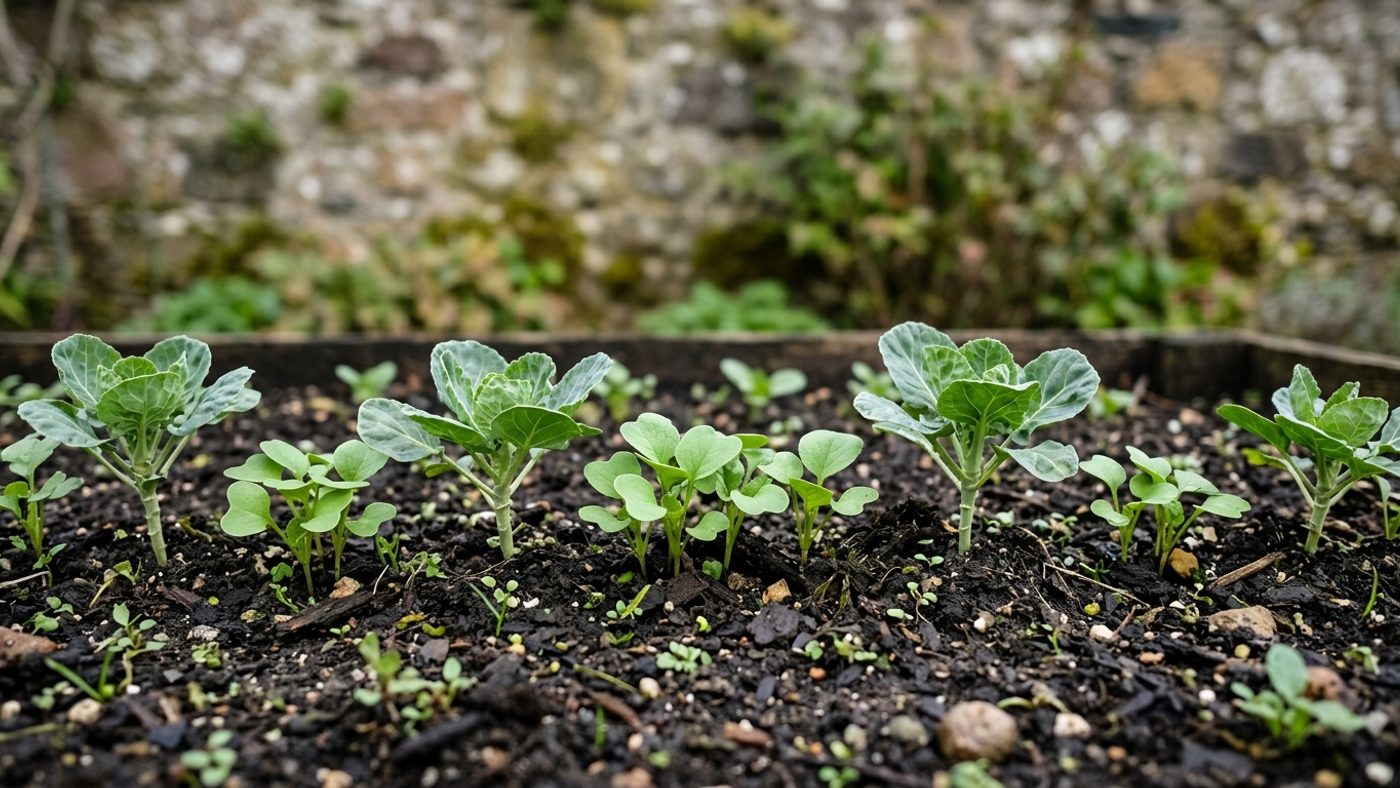
Radish's speed is useful beyond its own harvest. Sown into the gaps between young, slow-growing crops such as Brussels sprouts or sweetcorn, it's harvested and gone before the bigger plants need the space or start shading it out. It's a rare case of a companion-style claim holding up cleanly on more than one source rather than needing a caveat.
Harvesting
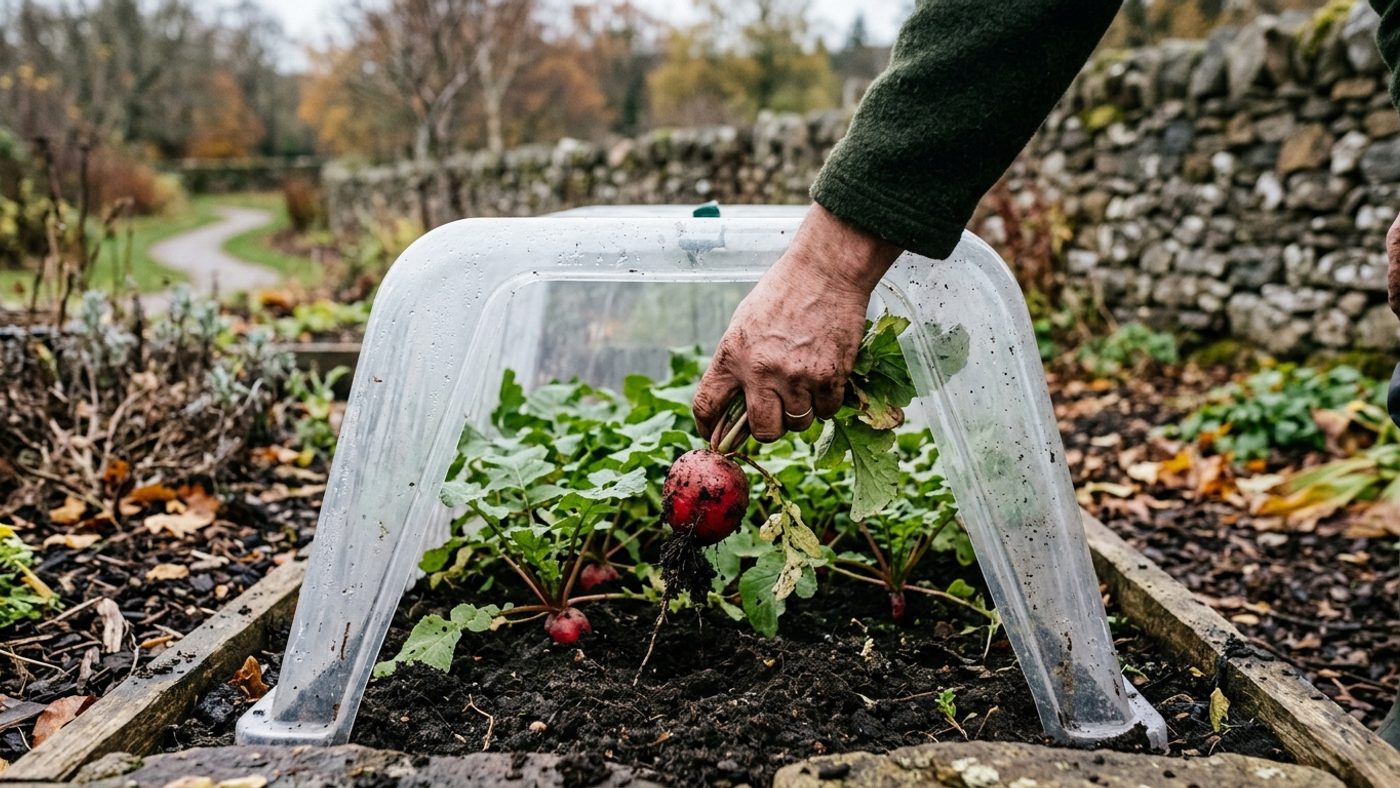
Pull summer radish young, at about the size of a 5p coin: waiting longer makes it worse, not better, turning pithy and increasingly hot-flavoured rather than staying crisp and mild. Lift winter radish from November onwards, or leave it in the ground under a cloche or fleeceA lightweight, breathable fabric laid or draped over plants to trap a little warmth and keep off frost, wind and some flying pests. Full definition → and pull roots as you need them; it stays crisp rather than turning woody even at a larger size.
Common problems
- Slugs and snails attack young seedlings, especially in damp conditions.
- Woody, pithy roots mean the crop was left too long. Harvest summer radish at about 2.5cm across, without waiting for it to get bigger.
- Roots that stay small or fail to swell usually come down to overcrowding or a dry spell. Thin properly and keep the soil evenly moist.
See more problems
- Bolting is triggered by hot, dry weather on summer radish, and by sowing too early on winter radish. A Scottish summer rarely supplies enough heat to trigger it on the summer type, though consistent watering still matters.
- Split roots are caused by uneven watering, a dry spell followed by heavy rain or a sudden soak. Usually still edible.
- Flea beetles leave small holes in the leaves, but the damage is cosmetic on this crop, the same as on pak choi.
- Cabbage root fly is more of a risk to the slower-growing winter and oriental types, which spend longer in the ground, than to fast summer radish.
- Club root and brassicaThe cabbage family: cabbage, kale, broccoli, cauliflower, Brussels sprouts, kohlrabi, swede, turnip and more, sharing the same pests, diseases and rotation rules. Full definition → downy mildew can both affect radish, since it's a brassica itself. Include it in your brassica rotationMoving each crop family to different ground each year, on a multi-year cycle, so pests and diseases that build up in soil don't get a repeat host. Full definition → rather than treating it as exempt because it's fast.
- Root rot can affect radish in waterlogged soil. Good drainage and avoiding overwatering are the main defences.
Common questions
Should I water radish generously to get a bigger crop?
No: overwatering grows lots of leaf at the expense of the root; keep the soil consistently moist rather than heavily watered, especially in dry spells. Full sourced breakdown: <a href='/tools/garden-myths/radish/'>Radish Myths →</a>
Can I sow winter radish any time, the way I can with summer radish?
No: winter radish has a narrow window, July to August only; sown earlier it bolts instead of forming a usable root. Full sourced breakdown: <a href='/tools/garden-myths/radish/'>Radish Myths →</a>
Is radish only worth growing in summer?
No: a winter radish sown in July or August is lifted from November and, with some protection, stays usable well into winter. Full sourced breakdown: <a href='/tools/garden-myths/radish/'>Radish Myths →</a>
Can I plant radish between my other vegetables to save space?
Yes: radish is genuinely fast enough to sow between slower-growing crops such as Brussels sprouts or sweetcorn and harvest before the bigger plants need the room. Full sourced breakdown: <a href='/tools/garden-myths/radish/'>Radish Myths →</a>
Sources
4 sources, and what each was used for
- RHS: the four radish types, soil prep, sowing depth and timing for summer and winter radish, spacing, watering, weeding, harvest timing and size, bolting cause and fix, split-root cause, seven named varieties with exact AGM status, pest and disease list
- Garden Organic: corroborates the growing calendar and harvest-young advice independently; gives a shallower sowing depth (0.5cm) than RHS, shown as a genuine difference; adds a specific overwatering caution (too much water grows leaves at the expense of the root) RHS doesn't make this explicitly
- Teagasc: corroborates sowing windows, spacing and harvest timing independently for both summer and winter radish; adds Rhizoctonia root rot, a disease neither RHS nor Garden Organic name for this crop
- gardenersworld.com: independently corroborates radish as a fast intercrop between slower-maturing vegetables