
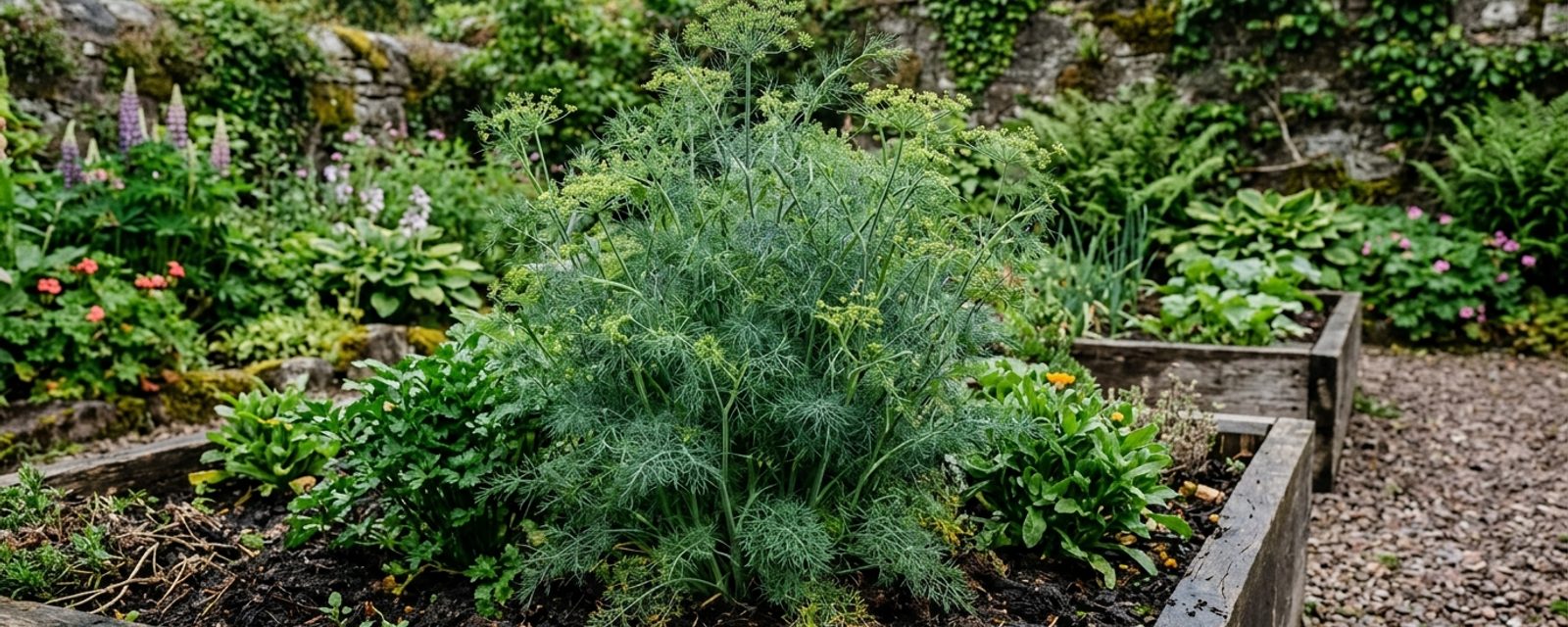
Anethum graveolens
Dill's two real risks in a Scottish garden pull in opposite directions: a cooler summer genuinely helps against boltingA plant switching early into flowering and seed production, usually triggered by stress, after which leaves, roots or bulbs turn bitter or unusable. Full page →, but an exposed site works against it in the wind, and a slow-to-bolt AGMThe RHS's Award of Garden Merit: a UK-wide trials award for reliable performance, not a Scotland-specific recommendation. Full definition → variety is worth choosing on that basis alone.
It wants a warm, sunny, sheltered spot in fertile, free-drainingSoil that lets water pass through quickly rather than pooling, so roots aren't sitting in wet ground after rain. Full definition → soil. Unlike a woody Mediterranean herb, it's an annual grown fresh from seed each year, so there's no established plant to overwinterKeeping a plant alive and intact through the cold months, whether left outdoors, moved under cover, or stored dormant. Full definition → and no long-term siting decision to get wrong.
Site and soil
Choose a warm, sunny, sheltered spot with fertile, free-draining soil; dill dislikes cold, soggy conditions. Space plants 20cm apart, with 30cm between rows. For containers, use a minimum 30cm wide and deep pot with peat-freeCompost made without peat, which is harvested from a slow-forming, carbon-storing wetland habitat that peat extraction damages. Full definition → multi-purpose compost.
Sowing
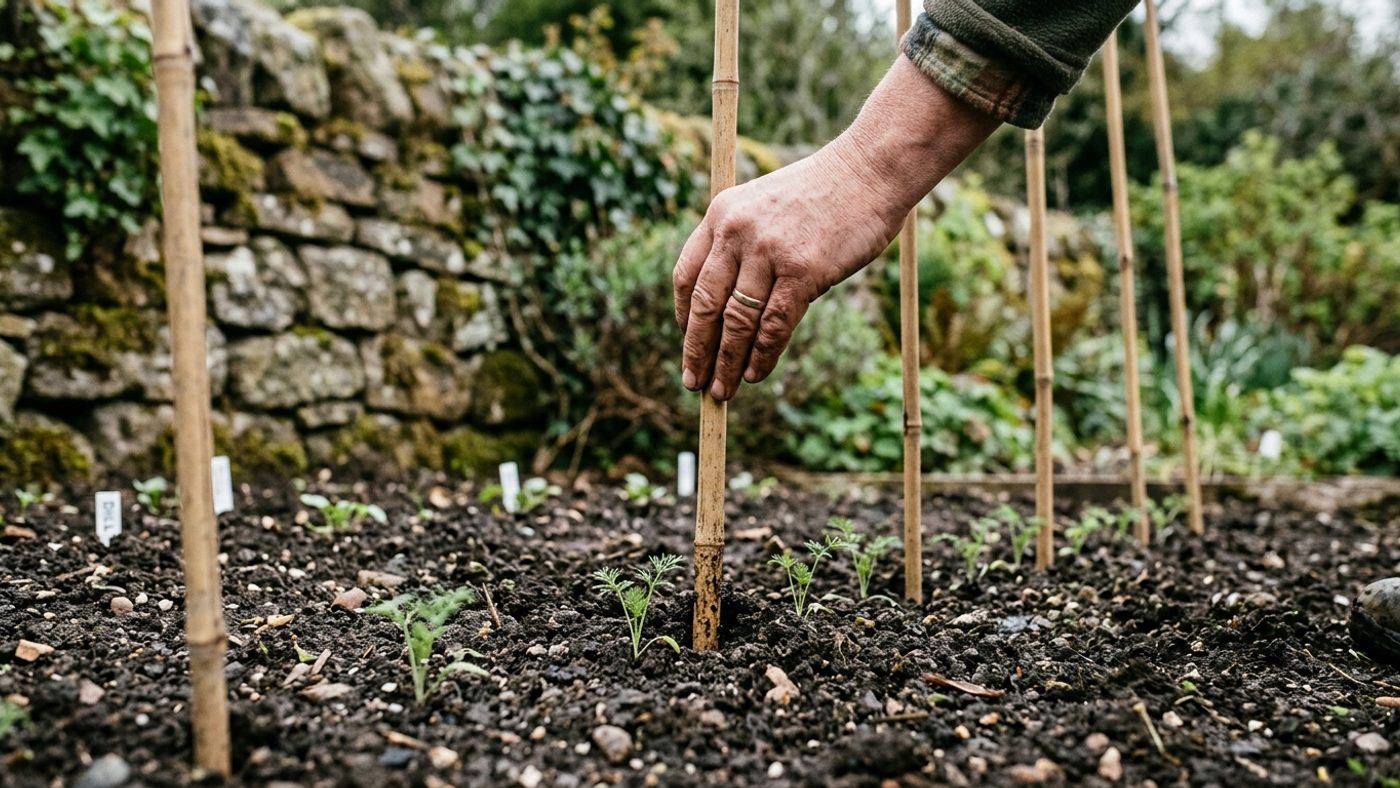
Direct-sow outdoors from mid-spring to mid-summer: make a shallow 1cm drillA shallow, straight groove made in prepared soil for sowing seed into, at a set depth so germination and rows are even. Full definition →, water the base, sow thinly, and cover with soil. Thin seedlings to 20cm apart. Succession sowing every few weeks keeps fresh leaf coming through summer. To sow indoors, fill a modular trayA tray divided into small individual cells, each sown with its own seed or seedling, so each plant grows undisturbed roots until it's ready to plant out. Full definition → with peat-free seed compost, sow one seed per module, and keep at a minimum of 15C; it germinatesA seed sprouting: breaking dormancy and putting out its first root and shoot, given the right warmth and moisture. Full definition → in one to two weeks. Transplant outdoors about four weeks after sowing, before a tap rootA single, thick, dominant root growing straight down from a plant, storing energy and anchoring it, as opposed to a spreading mass of fine roots. Full definition → forms, and harden offGradually getting young plants raised indoors used to outdoor conditions over 7–14 days before planting out, so cold, wind and direct sun don't shock or damage them. Full definition → first. Push in a few canes at sowing time if the site is exposed: dill can reach around 1.5m tall, and strong wind can flatten it.
Care and preventing bolting
Water consistently, especially during dry spells: container plants bolt particularly easily if they dry out. Keep beds weed-free so dill isn't competing for water and nutrients, and avoid disturbing the roots once plants are in the ground, since root disturbance is a named bolting trigger alongside hot, dry weather. Dill doesn't normally need feeding, though an occasional liquid feed can give a boost if growth looks weak. Regular harvesting also encourages bushier growth and delays flowering.
Harvesting
Start harvesting leaves about six weeks after sowing, continuing through autumn. Snip only a few from a young plant and leave at least a third of it standing.
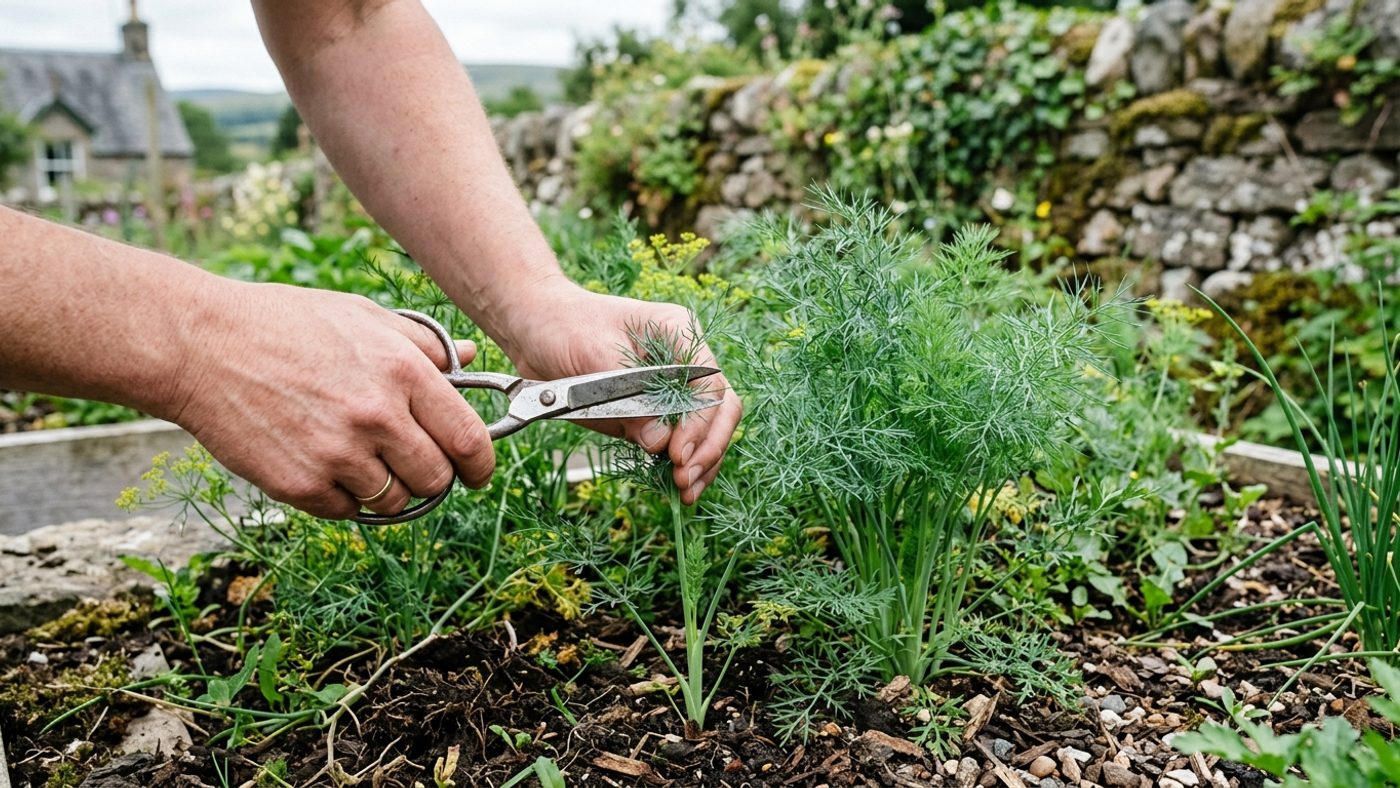
Leaves are best used fresh, though they can be dried; flowers can be picked during their bloom period, and seeds are ready in late summer or autumn, once they've turned brown and dry.
Varieties
Six varieties exist (Domino, Dukat, Diana, Tetra, Mammoth, and the standard species). Only Domino carries AGM, though Dukat, Diana and Tetra are also bushy and slow to bolt without the award. Mammoth is grown for seed rather than leaf.
★ Our pick for Scotland
DominoAGM
Bushy, compact · slow to bolt
The only AGM dill variety, and a genuinely useful pick for leaf harvest: bushy, compact growth with slow bolting.
Why this one: Its bushy, compact growth is bred for leaf harvest specifically, unlike Mammoth's tendency to flower freely and run to seed. The only dill variety with an AGM behind it.
Also worth considering
Mammoth
Large, robust · flowers freely
No AGM, but ideal for seed production: a genuinely different goal from Domino's leaf-focused strengths.
Best Dill Varieties for Scotland → compares all named dill varieties head-to-head, with the practical detail that doesn't fit in a summary card.
Common problems
- Bolting is dill's most common problem: premature flowering triggered by hot, dry conditions or disturbed roots, which limits leaf growth.
- Aphids can affect vigour and distort growth.
- Slugs and snails can damage young, delicate foliage.
Common questions
Does dill need staking in a Scottish garden?
Often, yes: dill can reach around 1.5m tall and strong wind can flatten it, so push a few canes in at sowing time rather than waiting to see if it's needed. Full sourced breakdown: <a href="/tools/garden-myths/dill/">Dill Myths →</a>
Why does my dill keep bolting (running to seed) before I can harvest much leaf?
Hot, dry conditions and disturbed roots are the named triggers, not cold: water consistently, avoid root disturbance when transplanting, and a cooler Scottish summer already works in your favour. Full sourced breakdown: <a href="/tools/garden-myths/dill/">Dill Myths →</a>
Should I sow dill indoors or direct outdoors?
Either works, but indoor-raised seedlings need transplanting within about four weeks, before the tap root forms: direct sowing sidesteps that step and the root-disturbance bolting risk entirely. Full sourced breakdown: <a href="/tools/garden-myths/dill/">Dill Myths →</a>
Does dill need feeding?
Not normally: dill doesn't need a regular feeding routine, though an occasional liquid feed can give a boost if growth looks weak. Full sourced breakdown: <a href="/tools/garden-myths/dill/">Dill Myths →</a>
Sources
2 sources, and what each was used for
- RHS: annual habit, site/soil, sowing method and months, thinning, spacing, harvest windows for leaf/flower/seed, bolting risk, AGM variety, common problems
- gardenersworld.com: succession sowing, wind-flattening risk and cane support, weed-free care, feeding, bolting prevention via watering and avoiding root disturbance