
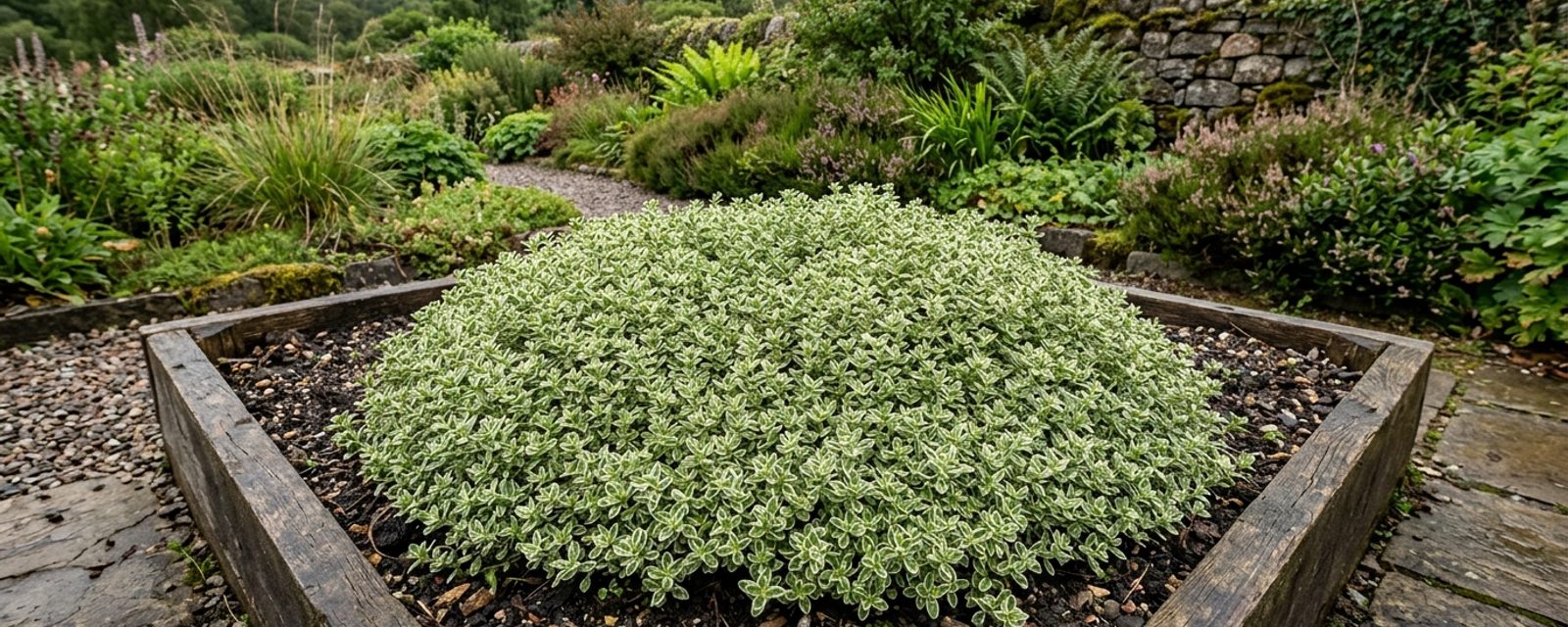
Thymus vulgaris
Thyme is one of the hardier herbs grown in Scotland, not one to baby through winter: cold wind and wet roots are what actually kill it, not frost, and feeding it in open ground works against the very flavour you're growing it for.
Full sun, free-drainingSoil that lets water pass through quickly rather than pooling, so roots aren't sitting in wet ground after rain. Full definition → soil, and then being left alone is all it really asks for. Silver Queen carries a genuine AGMThe RHS's Award of Garden Merit: a UK-wide trials award for reliable performance, not a Scotland-specific recommendation. Full definition → award and a true lemon scent alongside the plain-flavoured common thyme most gardeners already grow.
Site and soil
Choose a spot in full sun with free-draining soil. Heavy or damp ground works against thyme rather than for it: on clay or a wet site, grow it in a raised bed or container instead of open ground. MulchA layer of material spread over the soil around plants to suppress weeds, retain moisture, and improve soil structure as it breaks down. Full definition → with gravel or grit rather than bark or compost, since an organic mulch traps moisture around the stems and encourages rot.
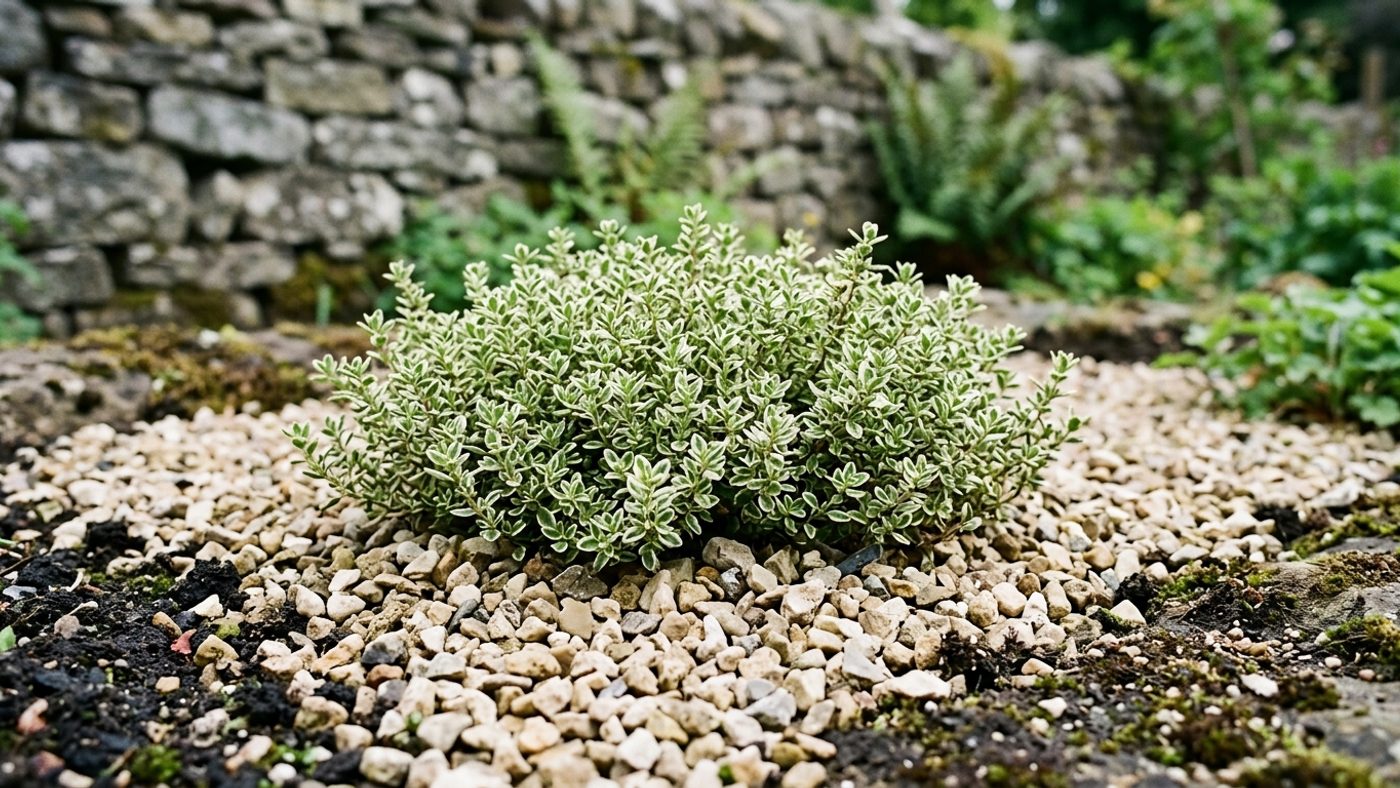
Space plants 20-30cm apart, on the wider end for upright forms and the narrower end for low, creeping types. For containers, use a minimum 15cm wide x 10cm deep pot with drainage holes, filled with soil-based compost mixed with up to 25% horticultural grit, and keep it raised off the ground.
Sowing and planting
Sources disagree on the best starting method. Seed-sowing is a standard route: indoors at 15-20C in spring, scattered on the compost surface without covering, germinatingA seed sprouting: breaking dormancy and putting out its first root and shoot, given the right warmth and moisture. Full definition → within about two weeks. A second view instead favours buying young plants, since seed-raised thyme can be hard to establish. Either works, but a bought or propagated young plant is the safer choice for a first attempt. Plant out mid-spring to early summer, hardening offGradually getting young plants raised indoors used to outdoor conditions over 7–14 days before planting out, so cold, wind and direct sun don't shock or damage them. Full definition → any indoor-raised plants first.
Care through the year
Once established, thyme is drought-tolerant and needs little to no extra watering beyond rainfall; excess moisture around the roots causes root rot, not drought damage. Water newly planted or container thyme through dry spells only. Skip feeding on open ground entirely; container plants benefit from a light liquid seaweed feed from March to May. Trim lightly in mid-to-late spring and again after flowering to keep plants compact, and avoid cutting into old, bare wood, since thyme rarely reshoots reliably from it.
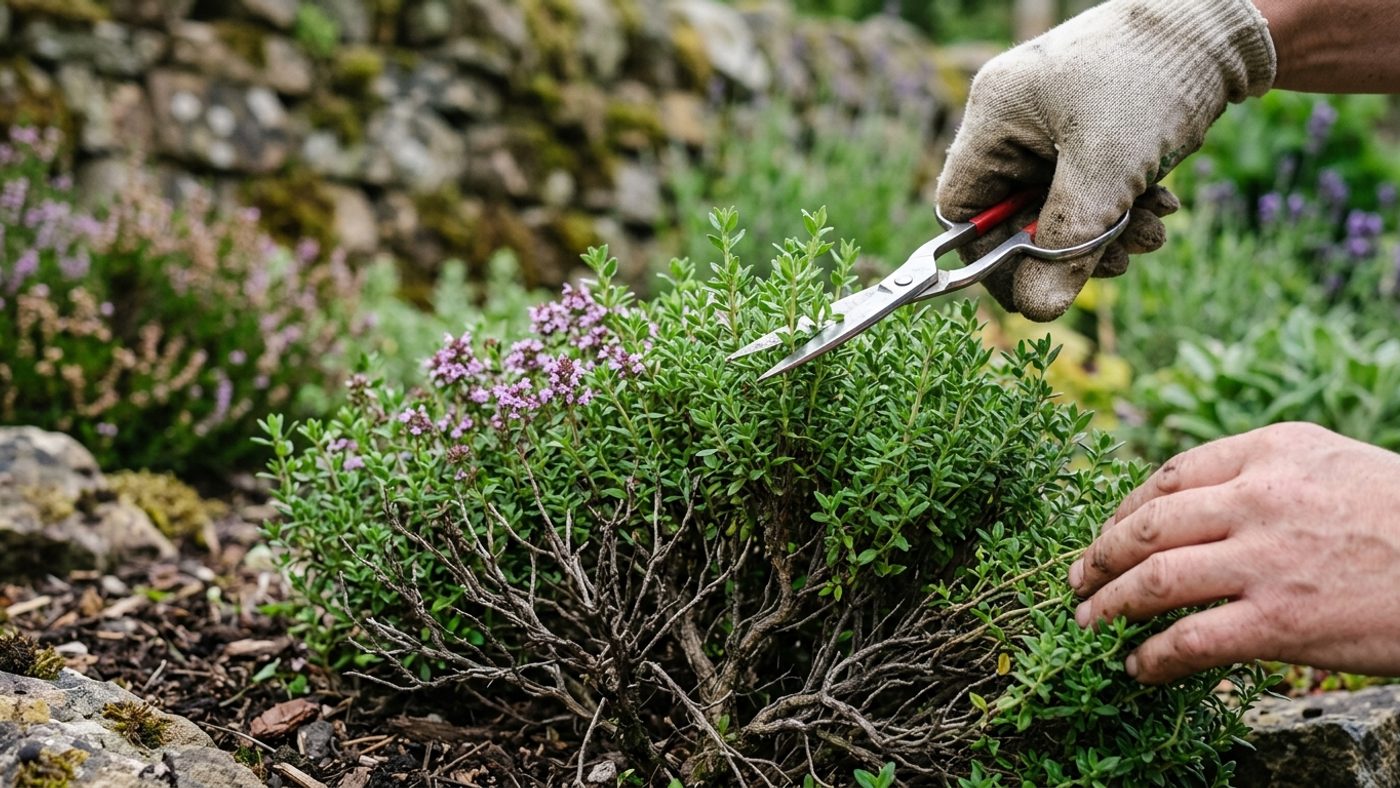
Plants naturally go woody after three to four years; propagate fresh replacements from cuttings rather than trying to rejuvenate an old plant. Propagate by softwood cuttings (spring/early summer), semi-ripe cuttings (summer), layeringPropagating a new plant by pinning a low, flexible stem into the soil while still attached to the parent, so it roots before being cut free. Full definition →, or divisionPropagating a clump-forming perennial by digging it up and splitting it into several smaller pieces, each with roots and shoots attached. Full definition → of established plants (spring or autumn).
Winter
Protect against damp with a clocheA small, portable clear cover placed over an individual plant or short row to trap warmth and keep off wind, rain and pests. Full definition → in high-rainfall areas, and move containers somewhere sheltered from wind rather than reaching for fleeceA lightweight, breathable fabric laid or draped over plants to trap a little warmth and keep off frost, wind and some flying pests. Full definition →. Less hardy species such as Thymus cilicicus are a genuine exception and need greenhouse or porch protection, though one UK source describes it as frost-hardy, in contrast with that advice. The safer bet in a Scottish garden is to treat it as tender and grow it somewhere it can be moved under cover.
Harvesting
Pick leaves year-round as an evergreen, but for the best flavour, harvest soft new growth in late spring and summer, before the plant flowers. Regular picking keeps plants bushy and encourages fresh growth.
Varieties
Silver Queen carries a genuine AGM award, a UK-wide merit rather than a Scotland-specific one.
Six standard culinary varieties carry no AGM (Snowdrift, Sparkling Bright, Lemon Curd, Caraway thyme, Broad-leaved thyme, Common thyme). Thymus Coccineus Group carries AGM but is a creeping ornamental form, not culinary.
★ Our pick for Scotland
Silver QueenAGM
Variegated, lemon-scented, pink-tinted winter shoot tips · H5The RHS's H1a–H7 scale for how much cold a plant can survive outdoors, H1a being tender indoor-only and H7 hardy anywhere in the UK. Full definition →
A bushy, dwarf, AGM-rated cultivarA plant variety that arose or was bred under cultivation and is kept true by deliberate propagation, rather than a naturally occurring wild species. Full definition → with cream-edged leaves and a genuine lemon scent alongside the standard thyme flavour.
Why this one: One of only a handful of AGM culinary herbs across the whole genus, and its H5 hardiness (down to -15C in most places) is real rather than nominal: a genuinely well-rated plant on its own UK-wide merits.
Also worth considering
Common thyme
Thymus vulgaris · bushy, well-flavoured
The standard culinary variety on the grow-your-own list, without an AGM award, but the one most kitchen gardeners actually plant.
Best Thyme Varieties for Scotland → compares all named thyme varieties head-to-head, with the practical detail that doesn't fit in a summary card.
Common problems
- Slugs and snails can damage young shoots.
- Rosemary beetle and sage and Ligurian leafhoppers can both target thyme, though it rarely suffers pest damage overall.
- Root rot follows waterlogged soil or overwatering far more often than any pest or disease does. Drainage is the real defence.
Common questions
Will thyme survive a Scottish winter outdoors?
In most gardens, yes: common thyme and cultivars like Silver Queen withstand UK frosts on their own; what actually kills it is cold wind and wet roots, not low temperature. Full sourced breakdown: <a href="/tools/garden-myths/thyme/">Thyme Myths →</a>
Should I feed my thyme plants?
Not in open ground: thyme is adapted to poor, low-nutrient soil, and feeding pushes soft growth with a blander flavour. Save feeding for containers only. Full sourced breakdown: <a href="/tools/garden-myths/thyme/">Thyme Myths →</a>
Why has my thyme gone woody in the middle?
Age: thyme rarely reshoots reliably once cut back into old, bare wood, so the practical fix is to take cuttings and start a replacement rather than trying to rescue it. Full sourced breakdown: <a href="/tools/garden-myths/thyme/">Thyme Myths →</a>
Is it better to grow thyme from seed or buy a young plant?
A bought young plant is the lower-risk route for a first attempt: seed-raised thyme can be harder to establish. Full sourced breakdown: <a href="/tools/garden-myths/thyme/">Thyme Myths →</a>
Sources
3 sources, and what each was used for
- RHS: evergreen sub-shrub habit, sun and free-drainage requirement, sowing method, spacing, propagation, pruning, harvest window, winter protection, varieties, common problems
- gardenersworld.com: cold wind and wet winter risk, gravel mulch over organic mulch, container feeding, pruning after flowering
- RHS: Silver Queen AGM pick