
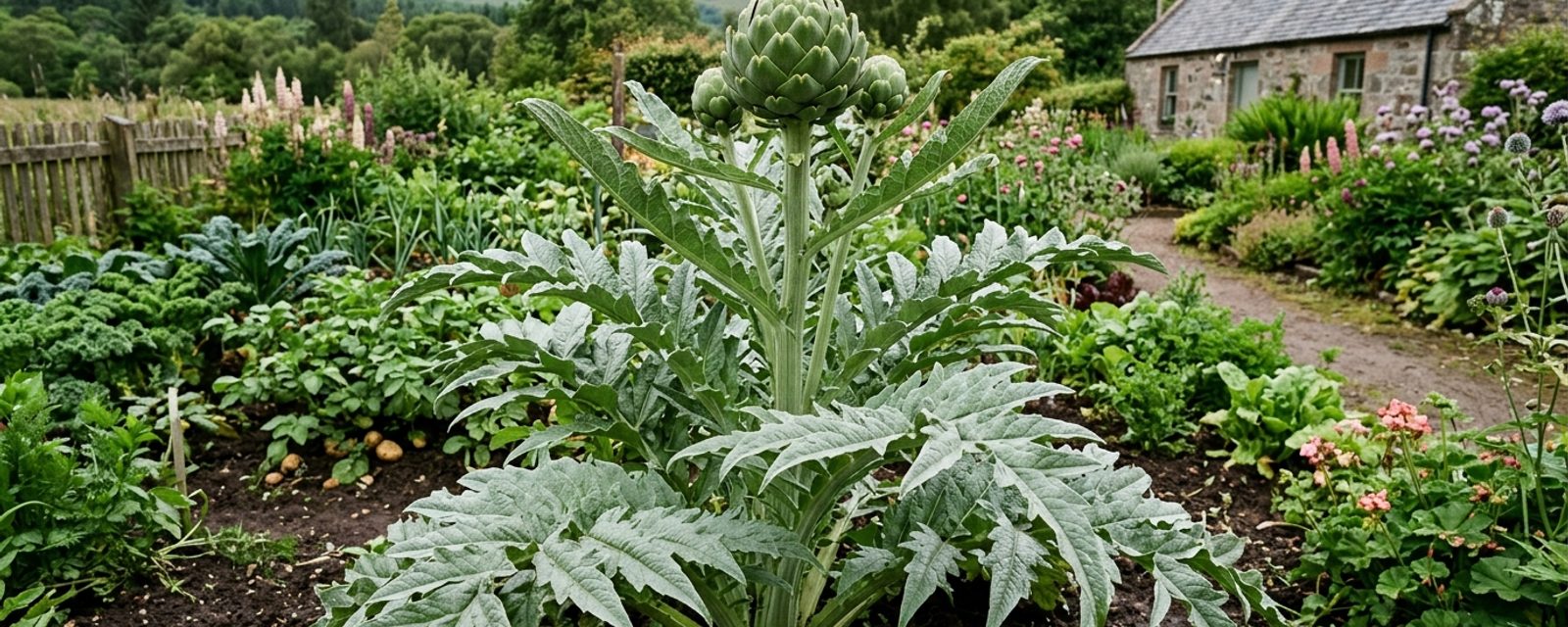
Cynara cardunculus (Scolymus Group)
Globe artichoke is a genuinely marginal crop for a cold, exposed Scottish garden: it needs shelter from frost-prone ground to survive, let alone crop. A sheltered spot, deliberate winter protection and a hardy variety turn it into a real, if patient, harvest.
Despite the shared name, this is an unrelated plant to Jerusalem artichoke: a thistle relative grown for its large, unopened flower bud, not a sunflower relative grown for a tuberA swollen underground stem or root a plant uses to store energy, which can also grow into a new plant, the classic example being a potato. Full definition →. If it's the tuber crop you're after, see our Jerusalem artichoke guide instead. This is a genuine architectural perennial as well as a vegetable, reaching well over a metre tall and about a metre wide with large silvery-grey leaves, and it asks for patience: the first proper crop doesn't arrive until the second summer. What you're growing towards is the fleshy base of the bud's scales and the heart underneath: boiled, steamed, roasted or grilled, then eaten with melted butter or a dressing.
Perennial Vegetables Worth Growing in Scotland → compares globe artichoke against the other permanent-bed crops worth the same long-term commitment.
Planting
Buy plug or young pot-grown plants from an online supplier in spring, or a larger container-grown plant from a garden centre at most times of year; packeted seed is sold too, if you'd rather start from scratch. Plant out in late spring or early summer, after the last frost. Seed sown indoors from February to March should be hardened offGradually getting young plants raised indoors used to outdoor conditions over 7–14 days before planting out, so cold, wind and direct sun don't shock or damage them. Full definition → and planted out once it has 5 or more true leaves and is about 30cm tall. Space plants 60-90cm apart (RHS's own range runs 75-90cm; 60cm is Gardener's World's wider low end), in a warm, sunny, sheltered site with reasonably fertile, free-drainingSoil that lets water pass through quickly rather than pooling, so roots aren't sitting in wet ground after rain. Full definition → soil, and avoid very cold, frost-prone or waterlogged spots. Dig in two bucketfuls of organic matter per square metre before planting. On a cold inland or northern plot without that kind of sheltered spot, growing in a large container, at least 45cm wide and deep, keeps the option of moving it under cover for winter rather than relying on mulchA layer of material spread over the soil around plants to suppress weeds, retain moisture, and improve soil structure as it breaks down. Full definition → alone.
Winter protection
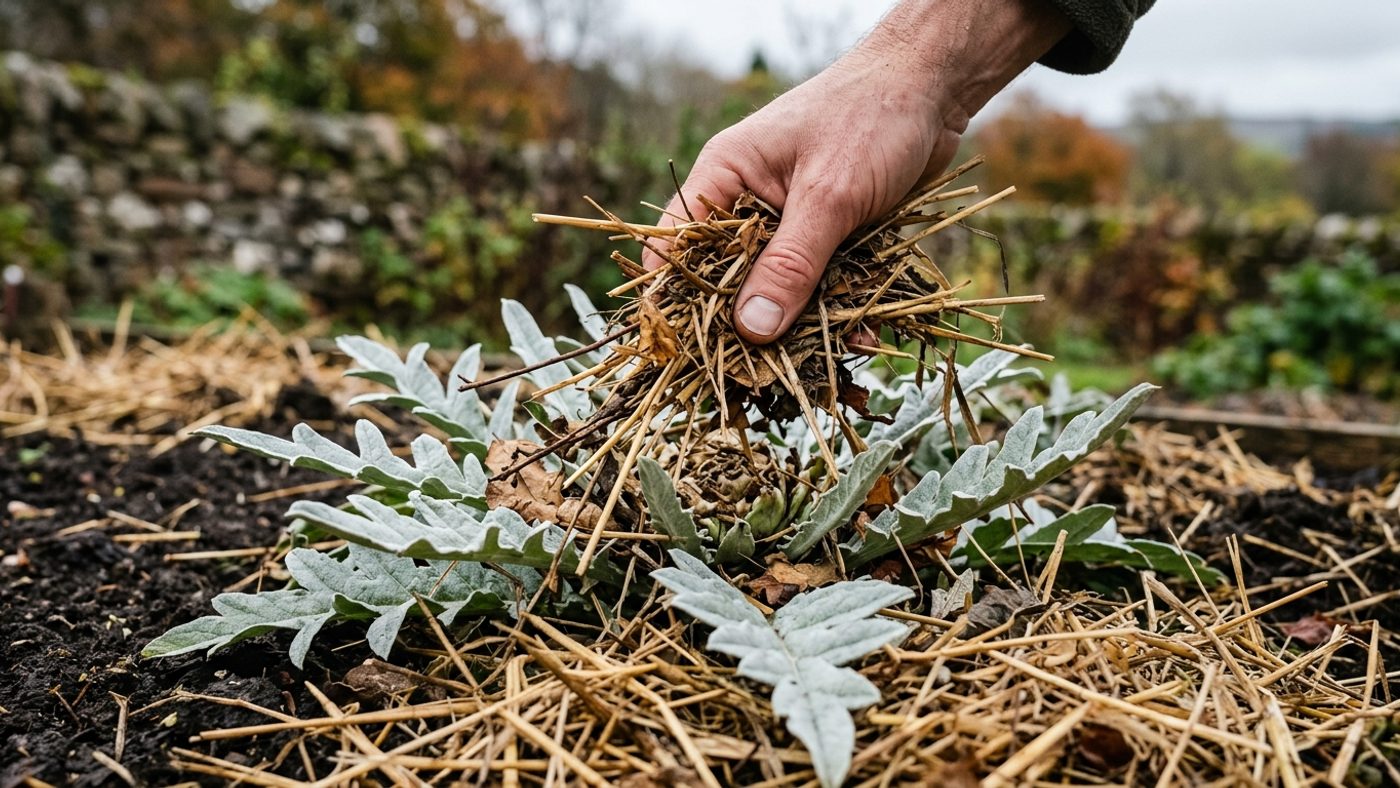
Spread a thick mulch of spent foliage, straw, bracken or garden compost over the crownThe base of a perennial plant where roots and shoots meet, often sold and planted as a ready-made dormant plant rather than grown from seed. Full definition → in late autumn, and cover young plants with fleeceA lightweight, breathable fabric laid or draped over plants to trap a little warmth and keep off frost, wind and some flying pests. Full definition → or clochesA small, portable clear cover placed over an individual plant or short row to trap warmth and keep off wind, rain and pests. Full definition → through a hard frost. An established plant, one that's been in place two or three years, can usually cope with its crown protected this way, but a genuinely severe or prolonged frost can still kill an unprotected plant outright. Treat this as a routine yearly task, not an occasional precaution.
Varieties
None of these varieties carry an RHS Award of Garden Merit, so hardiness and cropping reliability are what actually separate them.
★ Our pick for Scotland
Gros Vert de Lâon
Large green buds, excellent flavour
A hardy French variety: hardiness, not bud size or flavour, is what sets it apart.
Why this one: Hardiness is the trait that sets Gros Vert de Lâon apart, and on an exposed Scottish plot that's worth more than bud size or flavour.
Also worth considering
Green Globe Improved
Large green buds, thick fleshy scales
The reliable, widely available choice: a consistent cropper with good flavour, without a specific hardiness claim attached.
Purple Globe
Purple buds, nutty flavour
Ornamental as well as edible, with a pleasant nutty-flavoured heart: a real difference in the eating, not just the colour.
Care
Water regularly through the first growing season while plants establish. Once established, globe artichoke is fairly drought tolerant, though watering during a prolonged hot, dry spell (particularly while buds are forming) improves both crop size and quality. Mulch to retain moisture. Feeding usually isn't necessary in reasonable soil, but an organic, high-potassium fertiliser in spring helps on poorer ground.
Divide established clumps to keep them vigorous: RHS gives every four to five years, Garden Organic a shorter three. Either interval works; lean toward the shorter one if cropping starts to decline. Lift the clump in spring and either split it or detach young offset rosettes 20-30cm tall from the base, trim their leaves back to about 15cm, and replant straight away.
Harvesting
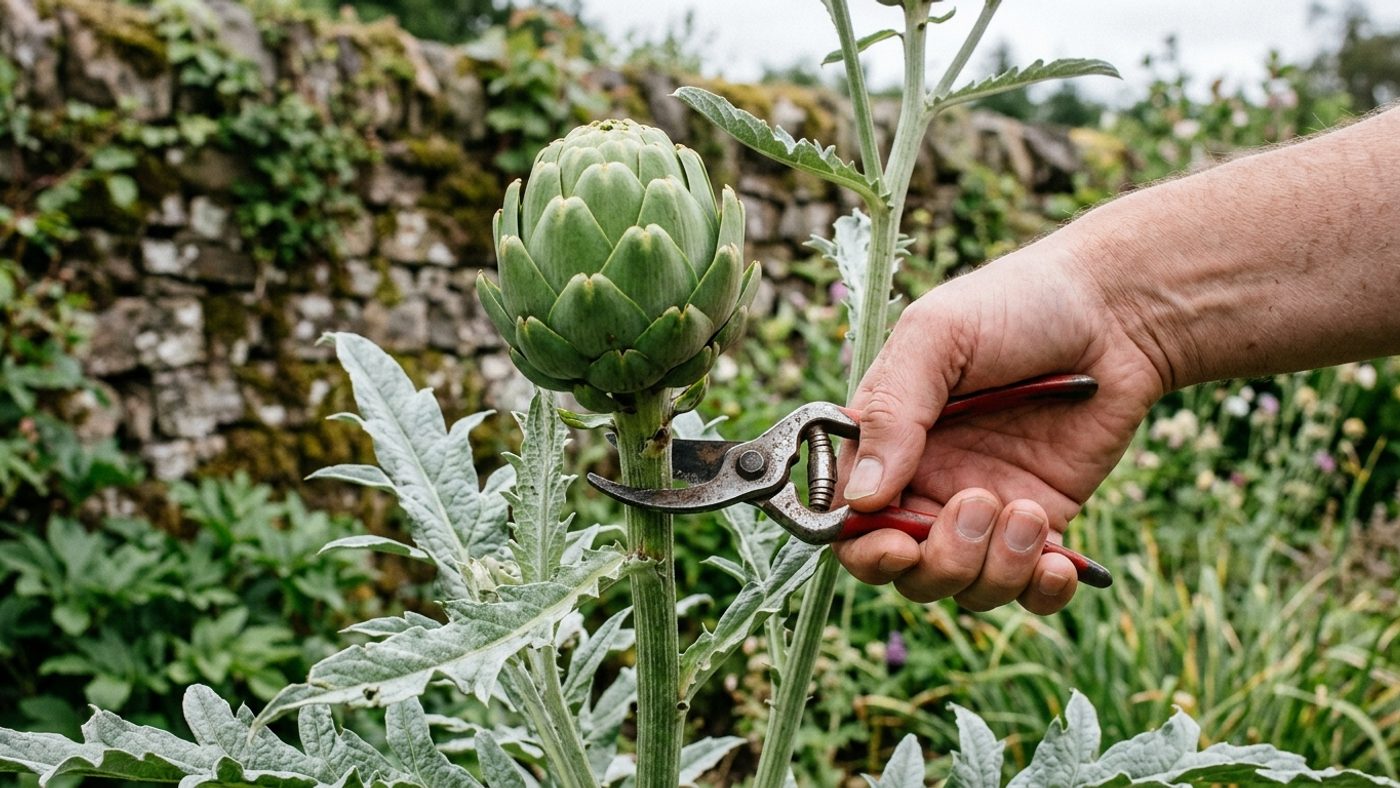
Expect the first real harvest in the second summer after planting: RHS puts it that way, and Garden Organic gives a concrete average of about 18 months from planting. Gardener's World says a smaller crop is possible even in the first year. From June onward, cut flower buds with secateurs just above a leaf joint while they're still full size but tightly closed: soft, loose scales mean the bud has opened too far. Cut the main central bud first; smaller secondary buds follow through the season, with a mature plant producing up to 12 buds in a season. Leave one or two buds to open into their large purple thistle-like flowers if you want them: they're a genuine draw for bumblebees and other pollinators.
Common problems
- Aphids are named among this crop's main problems, though it's otherwise a largely trouble-free plant.
- Slugs and snails are mainly a risk to young plants rather than established clumps.
- Frost damage isn't a pest or disease, but see Winter protection above: it's this crop's most serious real risk here.
Common questions
Is globe artichoke the same plant as Jerusalem artichoke?
No, despite the shared name. Globe artichoke is a thistle relative grown for its unopened flower bud; Jerusalem artichoke is an unrelated sunflower relative grown for its tuber. They're different genera, eaten differently, and grown completely differently. If it's the tuber crop you're after, that's Jerusalem artichoke, covered in its own guide.
How long before I actually get a harvest?
Plan for the second summer after planting as the real first crop, about 18 months on average from planting, though a smaller first-year harvest is genuinely possible too.
Does globe artichoke need winter protection in a Scottish garden?
Yes: treat it as routine. Sources pull in different directions on hardiness, so choose a hardy variety, plant in free-draining soil in a sheltered spot, and mulch the crown thickly each autumn rather than lifting it. Full sourced breakdown: <a href='/tools/garden-myths/globe-artichoke/'>Globe Artichoke Myths →</a>
How often should established plants be dividedPropagating a clump-forming perennial by digging it up and splitting it into several smaller pieces, each with roots and shoots attached. Full definition →?
Every three to five years: dividing sets the plant back while it re-establishes roots, so guidance points to a multi-year cycle, not an annual one; lean toward the shorter end if cropping starts to decline. Full sourced breakdown: <a href='/tools/garden-myths/globe-artichoke/'>Globe Artichoke Myths →</a>
Sources
3 sources, and what each was used for
- RHS: planting method and timing, buying/sourcing plants, site and soil requirements, spacing, plant height and spread, watering, feeding, winter protection, division timing, harvesting method and yield, eating/cooking method, pollinator value if left to flower, three named varieties, pests and frost risk
- Garden Organic: corroborates spacing (90cm) and winter/site requirements; gives a genuinely different division interval (every three years, against RHS's four to five) and a concrete 18-month average time to first harvest RHS doesn't state as a figure; indoor seed-sowing dates (Feb-Mar)
- gardenersworld.com: corroborates spacing (60-90cm) and feeding/watering; states a small first-year crop is possible, a genuine point of difference from RHS's second-summer framing; corroborates aphids and slugs/snails as the main pests