
Aphids are everywhere, and that is fine. They very rarely kill a plant, and they are a vital food for ladybirds, hoverflies and birds. This page covers which ones matter, what the damage looks like, and why the best first move is usually doing nothing.
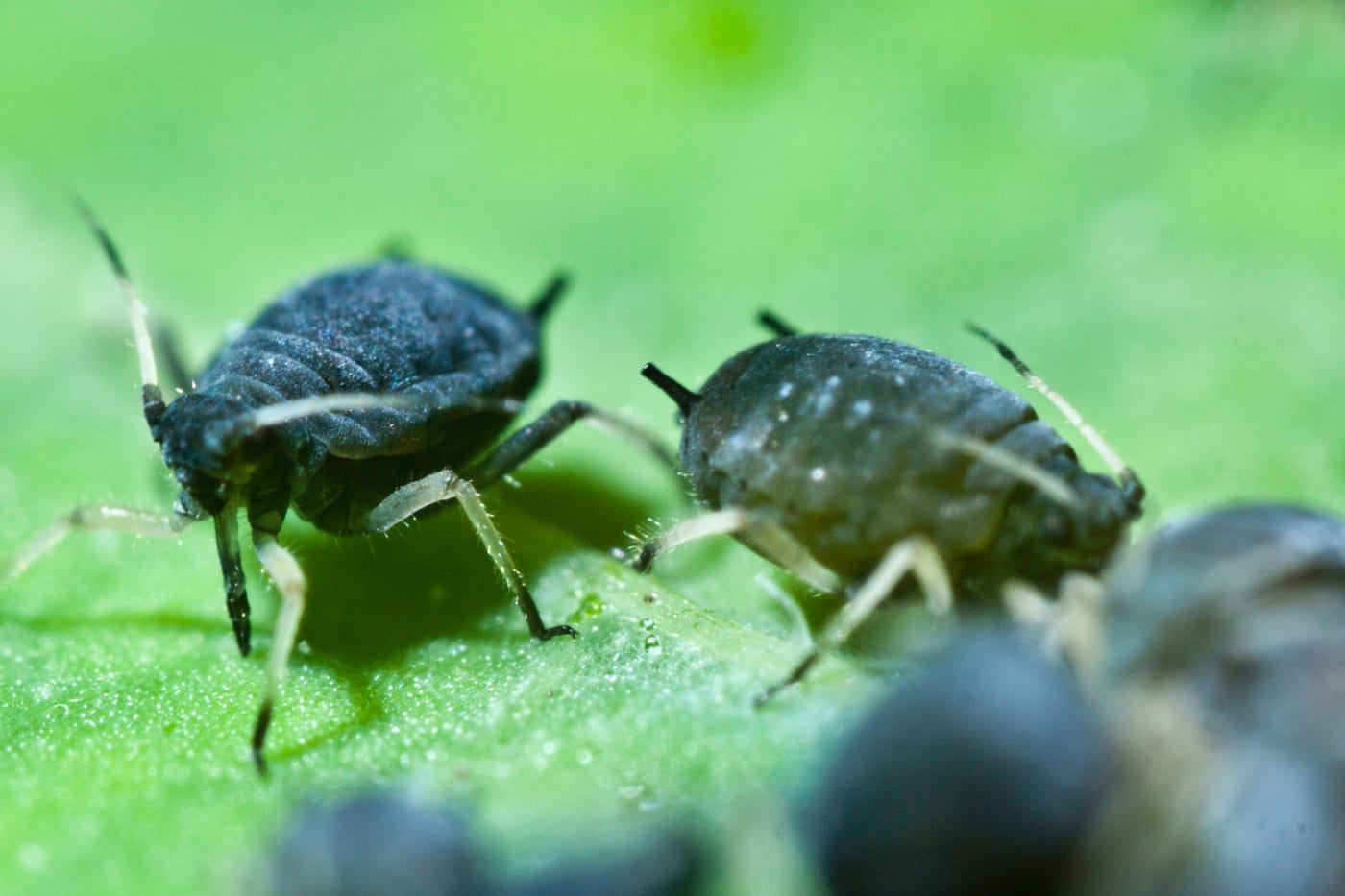
What does it look like?
Sap-sucking true bugs, 1-7mm long. Green, black, yellow, pink, white or mottled. Some species cover themselves in white waxy secretions.
🌱 Plants at risk
Aphids also affects these crops:
- Tomatoes
- French Beans
- Peas
- Lettuce
- Brussels Sprouts
- Raspberries
- Blackcurrants
- Basil
- Broad Beans
- Runner Beans
- Endive
- Sweetcorn
- Peppers
- Chillies
- Aubergines
- Apples
- Pears
- Plums
- Damsons
- Cherries
- Gooseberries
- Redcurrants
- Blackberries
- Tayberries
- Loganberries
- Blueberries
- Quince
- Dill
- Coriander
- Sorrel
- Chervil
- Angelica
- Honeyberries
- Globe Artichoke
Symptoms
Stunted growth with curled or distorted leaves; honeydew secretion that attracts sooty moulds; white cast skins accumulating on leaves; and transmission of plant viruses, a particular concern for soft fruit and vegetables. They very rarely kill plants.
Life cycle
Wingless females give birth to live young for much of the year, so numbers can build fast once conditions suit them. Most species overwinterKeeping a plant alive and intact through the cold months, whether left outdoors, moved under cover, or stored dormant. Full definition → as eggs, usually on a woody host like a tree or shrub, then migrate to soft-stemmed garden plants in early summer once that first host's foliage toughens up and the weather warms. Some aphids skip that dormancy altogether in a mild winter or indoors, staying active year-round rather than restarting from eggs each spring.
Controls: what actually works
Not every method here works equally well: some are backed by real evidence, some are simply traditional, and a few have been tested and shown not to help despite how often they get repeated.
Tolerate them
RHS: 'Tolerate aphids where possible. It is usual to have some in a healthy, balanced garden.' Aphids very rarely kill plants, and predator populations naturally bring them under control through spring and summer.
Listing 'do nothing' as the first control is not a cop-out. It is what the primary authority recommends.
Encourage natural enemies: ladybirds, ground beetles, hoverflies, parasitoid wasps, earwigs
All five are aphid predators. Encourage them, and let predator populations bring aphid numbers under control through spring and summer.
Squash colonies by hand
Squash colonies between finger and thumb.
Pesticides
RHS: 'No - The RHS recommends that you don't use pesticides', because they reduce biodiversity and harm soil health.
Companion planting: nasturtiums as a trap crop for blackfly on beans
Garden Organic presents it as effective, but as practice rather than trial data.
Natural predators of aphids
These 6 creatures eat aphids, and each has its own page here on how to get more of them in your garden: what to plant, or what to order and when.
Scottish grower notes
Cabbage aphid, the aphid that most troubles brassicasThe cabbage family: cabbage, kale, broccoli, cauliflower, Brussels sprouts, kohlrabi, swede, turnip and more, sharing the same pests, diseases and rotation rules. Full definition →, is generally less of a problem in Scotland than further south. It builds fastest in hot seasons, so Scotland's cooler summers are a genuine advantage for brassica growers.
On raspberries the key aphid is the large raspberry aphid (Amphorophora idaei), a virus carrier. The James Hutton Institute's Scottish raspberry breeding programme produced varieties with aphid-resistance genes, but the aphid has evolved to overcome the older gene (A1) and is now colonising plants with the newer gene (A10) — so bred-in resistance is weakening and shouldn't be relied on alone.
Frequently asked questions
What should I do first if I find aphids in my garden?
Start with tolerate them. After that, encourage natural enemies. Work through the rest in order of how well-evidenced they are if the first two aren’t enough on their own.
Will aphids kill my plants?
They rarely kill established plants. The damage is usually cosmetic on outer leaves, and natural predators often bring numbers under control without you doing anything.
Should I just leave aphids alone?
In most gardens, yes. aphids are food for birds, wasps and predatory insects, and a healthy garden carries some without trouble. Tolerance is also RHS's official position now, for that same reason.
Sources
4 sources, recorded with what each was used for
- RHS1: biodiversity framing and tolerance advice, identification (1-7mm, colours, waxy species, 500+ British species), damage including virus transmission, named predators, finger-squashing, explicit advice against pesticides
- Garden Organic8: nasturtium trap crop; predator-attraction principle
- SAC/SRUC13: cabbage aphid is less troublesome in Scotland's cooler climate, a counterbalancing advantage for brassica growing
- James Hutton Institute2: large raspberry aphid (Amphorophora idaei) as raspberry virus vector; Hutton raspberry breeding aphid-resistance genes A1/A10 being overcome by new biotypes