
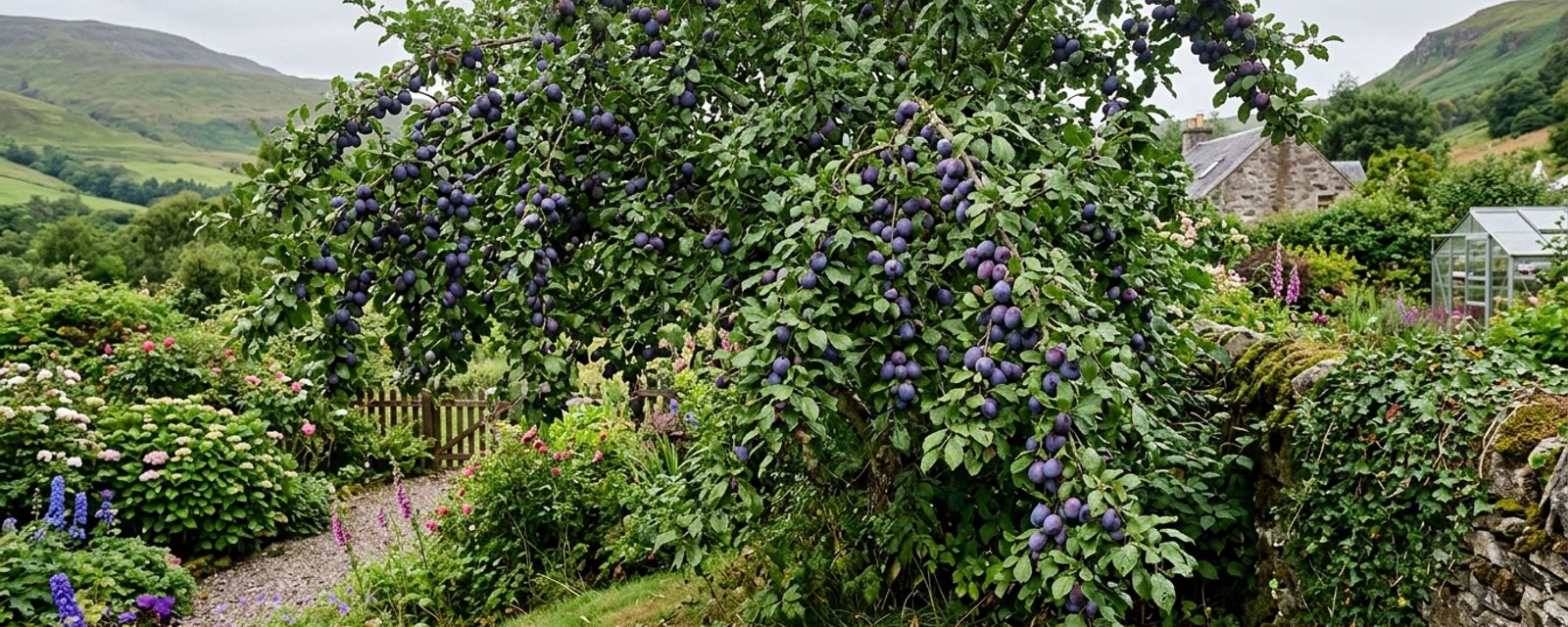
Prunus domestica
Almost every named plum variety is self-fertileA plant that can set fruit using its own pollen, without needing a second, different variety nearby to cross-pollinate it. Full definition →, so one tree is genuinely enough. Pruning in winter is the wrong call here, the reverse of apples and pears, and there's a real frost-hardiness gap between Czar and the more famous Victoria worth knowing before you buy.
Plums are a genuinely different crop from apples and pears, not just a smaller version of the same tree-fruit playbook. Pollination is easier (self-fertility is the norm, not the exception), pruning timing is reversed, and harvesting works the opposite way round from pears. Treat the rules below as their own thing rather than assuming apple or pear habits carry over.
Choosing a rootstock
A plum tree is a graftJoining a chosen fruiting variety onto a separate rootstock, so the tree grows the fruit of one plant on the roots of another. Full definition →, the same as apples and pears: the rootstockThe root system and lower stem a fruit tree is grafted onto, chosen to control the tree's eventual size rather than for its own fruit. Full definition → controls its eventual size. Plums have a wider range than pears, closer to apples:
- Pixy: semi-dwarfingHow much a fruit tree's rootstock limits or allows its eventual size, from extremely dwarfing (smallest) through to very vigorous (largest). Full definition →, 3-4m. CordonA fruit tree or bush trained as a single main stem with short fruiting side-spurs, usually grown at an angle against a wall, fence or wire. Full definition → or dwarf bush; fruits from three to four years, the earliest-cropping option.
- VVA-1: semi-dwarfing, about 3m. A second small-garden option.
- St Julien A: semi-vigorous, 4.5-5m.
- Wavit: semi-vigorous, 4-4.5m.
- Brompton: vigorous, over 4.5m. For a larger garden or open orchard space.
Buy a tree already grafted onto the rootstock you want; it can't be changed later.
Pollination
One tree of Czar, Victoria or any of the others will set fruit alone. A second, different variety flowering at a similar time still helps some varieties crop more heavily, but it's an improvement here, not a requirement.
Fruit Tree Pollination Groups Explained → works through flowering groups, triploids and self-fertility across apples, pears, plums and cherries together.
Planting
Choose a warm, sunny site, sheltered from frost pocketsA low-lying spot where cold air drains and pools on still nights, making it noticeably more frost-prone than the surrounding area. Full definition →, with fertile soil that doesn't waterlog, ideally slightly acidic at pH 6-6.5. If planting into a lawn, clear a circle of grass at least 1m across first. For a wall-trained form, plant it 25-35cm out from the wall. Plant bare-root trees during the dormant season, before growth starts, from autumn to late winter or early spring; containerised trees any time of year. In a container, use a pot at least 50cm wide and deep with loam-based compost, and choose a compact variety like Blue Tit on a dwarfing rootstock.
Care
Water newly planted trees regularly through dry spells for at least their first growing season. Mulch in late winter or spring, leaving a gap around the trunk; a well-mulchedA layer of material spread over the soil around plants to suppress weeds, retain moisture, and improve soil structure as it breaks down. Full definition → tree generally needs no extra feeding. Container trees need a steady supply of moisture, never standing in water, plus a high-potassium liquid feed every fortnight from April to August.
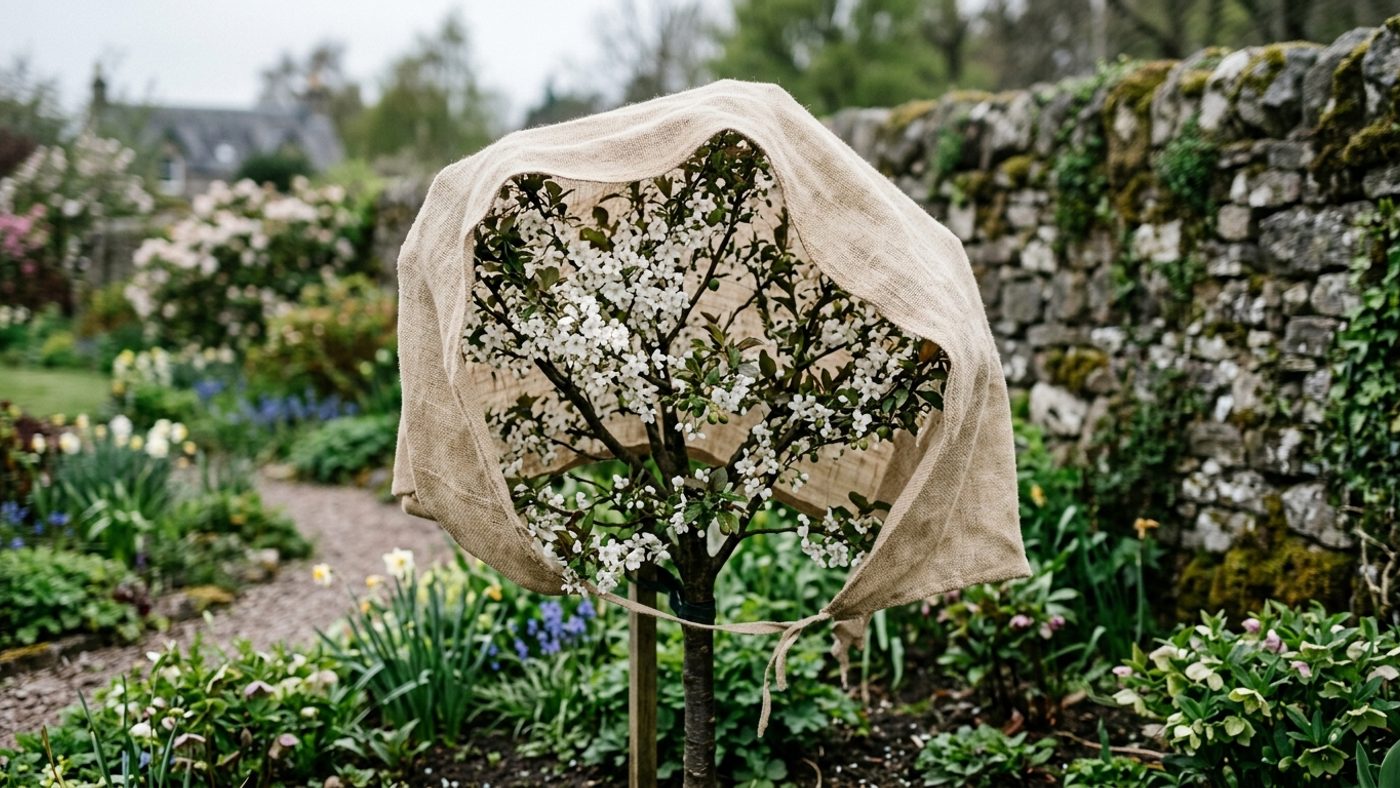
Plums flower early, in March or April, squarely inside Scotland's own late-frost window. If frost is forecast while a tree is in blossom, cover it with fleeceA lightweight, breathable fabric laid or draped over plants to trap a little warmth and keep off frost, wind and some flying pests. Full definition → overnight. In early summer, thin overloaded branches to one fruit every 5-8cm, or a pair every 15cm, to stop them breaking under the weight of a heavy crop.
Pruning and training forms
This is the one rule to unlearn from apples and pears: never prune a plum tree while it's dormant, or during mid-to-late autumn. A cut made then is how silver leaf disease and bacterial canker get in. Prune young trees in spring, once the buds have opened, and established trees in summer instead.
- Bush: a trunk about 75cm tall with 3-4 main branches.
- Pyramid: central leaderTwo more fruit tree shapes: central leader keeps one dominant upright trunk; half-standard is a free-standing tree on a clear trunk of about 1.2–1.5m. Full definition → kept intact, branches from 40-50cm up.
- Fan: wall-trained, pruned twice yearly, early summer and again straight after fruiting.
- Cordon: single-stemmed and compact, works well with a semi-dwarfing rootstock and a variety like Blue Tit.
Varieties
The choice among the six AGMThe RHS's Award of Garden Merit: a UK-wide trials award for reliable performance, not a Scotland-specific recommendation. Full definition → varieties comes down to season and use.
The remaining AGM varieties, all self-fertile: Warwickshire Drooper (dual-purpose, yellow fruit, reliable cropper), Marjorie's Seedling (late, good for cooking and eating fresh), and Opal (dessert, reddish-purple, good flavour). Only Czar and Victoria carry a confirmed frost-hardiness ratingThe RHS's H1a–H7 scale for how much cold a plant can survive outdoors, H1a being tender indoor-only and H7 hardy anywhere in the UK. Full definition →; the others simply weren't checked for it.
★ Our pick for Scotland
CzarAGM
Culinary · early (Aug) · self-fertile · compact
Rated H6, hardy to -20°C, and 'less susceptible to frost damage than many other cultivarsA plant variety that arose or was bred under cultivation and is kept true by deliberate propagation, rather than a naturally occurring wild species. Full definition →': a real advantage while plums flower in Scotland's own frost-risk window.
Why this one: Plums flower in March/April, squarely inside Scotland's late-frost window, and frost damage to blossom is the crop's single named weather risk. Czar is 'less susceptible to frost damage than many other cultivars', rated H6 against Victoria's H5. It's also self-fertile, compact, and a reliable cropper, but the frost resistance is the real reason it leads, not an afterthought.
Also worth considering
VictoriaAGM
Dessert and culinary · mid-season (Aug-Sept) · self-fertile
The UK's most widely grown plum, and still the right default for most gardens. The honest trade-off: it 'flowers early, so at risk from spring frosts', rated H5 against Czar's H6.
Blue TitAGM
Dual-purpose · self-fertile · compact
A compact habit suited to a dwarfing rootstock and a container: a real option where space, not climate, is the limiting factor.
Best Plum Varieties for Scotland → compares all named plum varieties head-to-head, with the practical detail that doesn't fit in a summary card.
Harvesting
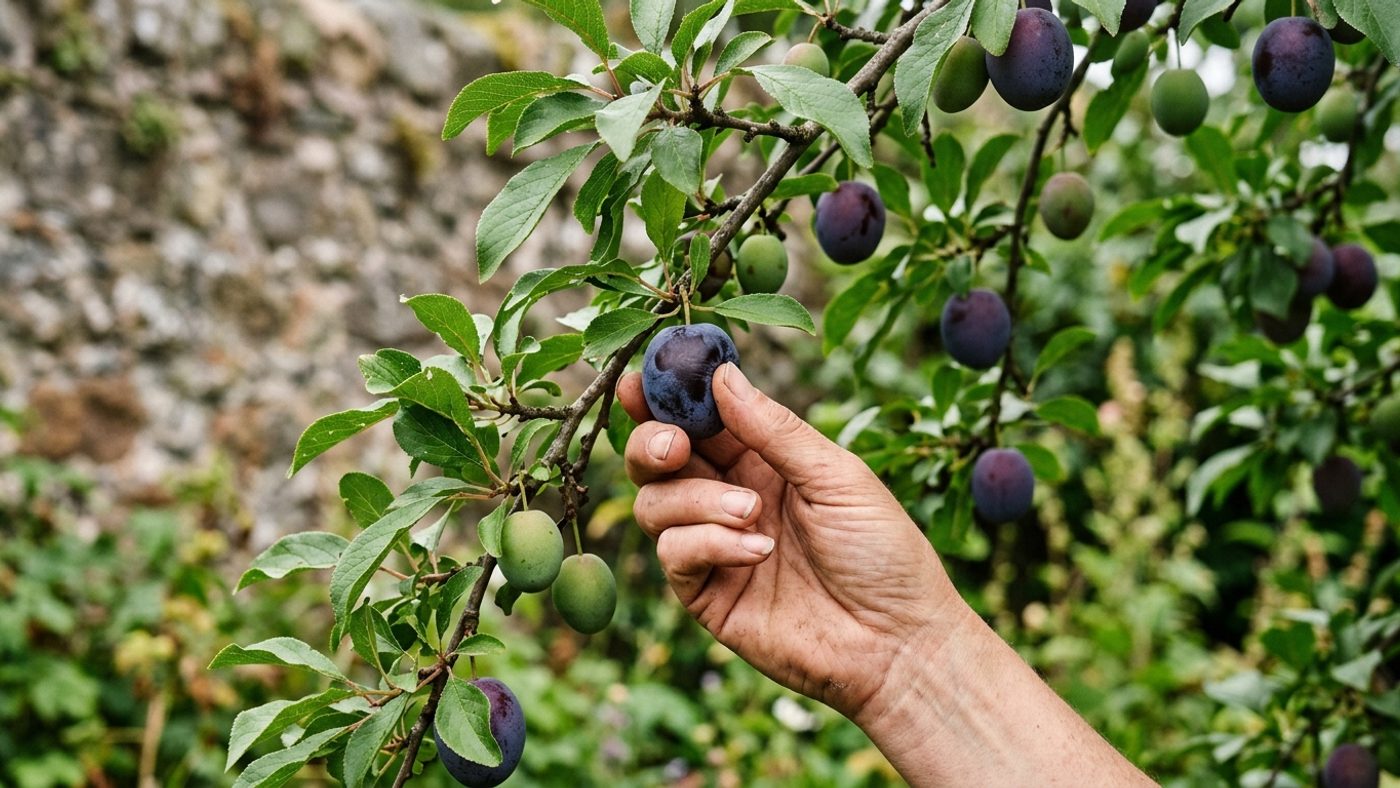
Plums ripen on the tree: the opposite of pears, which are picked firm and ripened afterwards indoors. Leave them where they are and check by feel: ripe once soft to a gentle squeeze. Fruit doesn't ripen all at once, so expect to pick over the tree several times through mid to late summer into early autumn, depending on variety. Handle carefully, since ripe plums bruise easily.
Common problems
- Plum aphids distort new growth and shoots.
- Brown rot turns fruit soft and brown with pale concentric rings, spreading fast where fruit touches. Remove affected fruit promptly.
- Frost at blossom time is the crop's biggest weather risk, since plums flower as early as March. Cover with fleece overnight when frost is forecast during flowering.
See more problems
- Silver leaf and bacterial canker both enter mainly through pruning cuts made at the wrong time of year: the reason pruning is restricted to spring and summer only.
- Blossom wilt causes flowers and nearby leaves to brown and wither, and can spread into the wood behind them.
- Plum moth caterpillars tunnel into ripening fruit, often only found when a plum is cut open.
- Honey fungus is a serious root disease with no cure; remove and destroy an affected tree.
- Wasps and birds both target ripening fruit; netting helps against birds, and picking promptly limits both.
- Biennial bearing, a heavy crop one year followed by little the next, happens in plums the same as apples and pears in some varieties, evened out over time by fruit thinning.
Common questions
Do I need two plum trees to get fruit?
No: all 6 AGM plum varieties are self-fertile, so a single tree of Czar, Victoria or any other sets fruit alone; a second tree still improves cropping for some varieties, but it is not required. Full sourced breakdown: <a href="/tools/garden-myths/plums/">Plum Myths →</a>
When should I prune a plum tree?
The opposite of what you might expect: avoid pruning while dormant or in mid-to-late autumn, since a cut then lets in silver leaf disease and bacterial canker; prune young trees in spring once buds open, established trees in summer. Full sourced breakdown: <a href="/tools/garden-myths/plums/">Plum Myths →</a>
How do I know when to pick plums?
By feel, not firmness: plums develop their best flavour left to ripen on the tree and are ready once they feel soft when gently squeezed, the opposite of how pears are picked. Full sourced breakdown: <a href="/tools/garden-myths/plums/">Plum Myths →</a>
Is Czar really more frost-hardy than Victoria?
Yes: Czar is rated H6 and less susceptible to frost damage than many cultivars, while Victoria is rated H5 and flowers early enough to be at risk from spring frosts; Victoria's popularity rests on flavour and reliability, not blossom hardiness. Full sourced breakdown: <a href="/tools/garden-myths/plums/">Plum Myths →</a>
Sources
5 sources, and what each was used for
- RHS: getting started, rootstocks (Pixy, VVA-1, St Julien A, Wavit, Brompton), pollination (self-fertility as the norm, not the exception), 6 AGM varieties all self-fertile, soil pH 6-6.5, site and soil prep, planting method and timing, container growing, watering, feeding, frost protection at blossom, fruit thinning, training forms, the no-winter-pruning rule and why, harvesting method (ripens on the tree, unlike pears), and named problems
- RHS: corroborates Pixy (semi-dwarfing, 3-4m, cordon/dwarf bush, fruiting from three to four years) as the dedicated plum rootstock entry on this page
- RHS: 'less susceptible to frost damage than many other cultivars', H6 hardiness rating, AGM, self-fertility, season of use, disease susceptibility
- RHS: 'flowers early, so at risk from spring frosts', H5 hardiness rating, AGM, self-fertility, season of use, disease susceptibility
- gardenersworld.com: independently corroborates self-fertility as the norm for plums, the no-winter-pruning rule (silver leaf risk), bare-root trees establishing better than container-grown, and the pest/disease list