
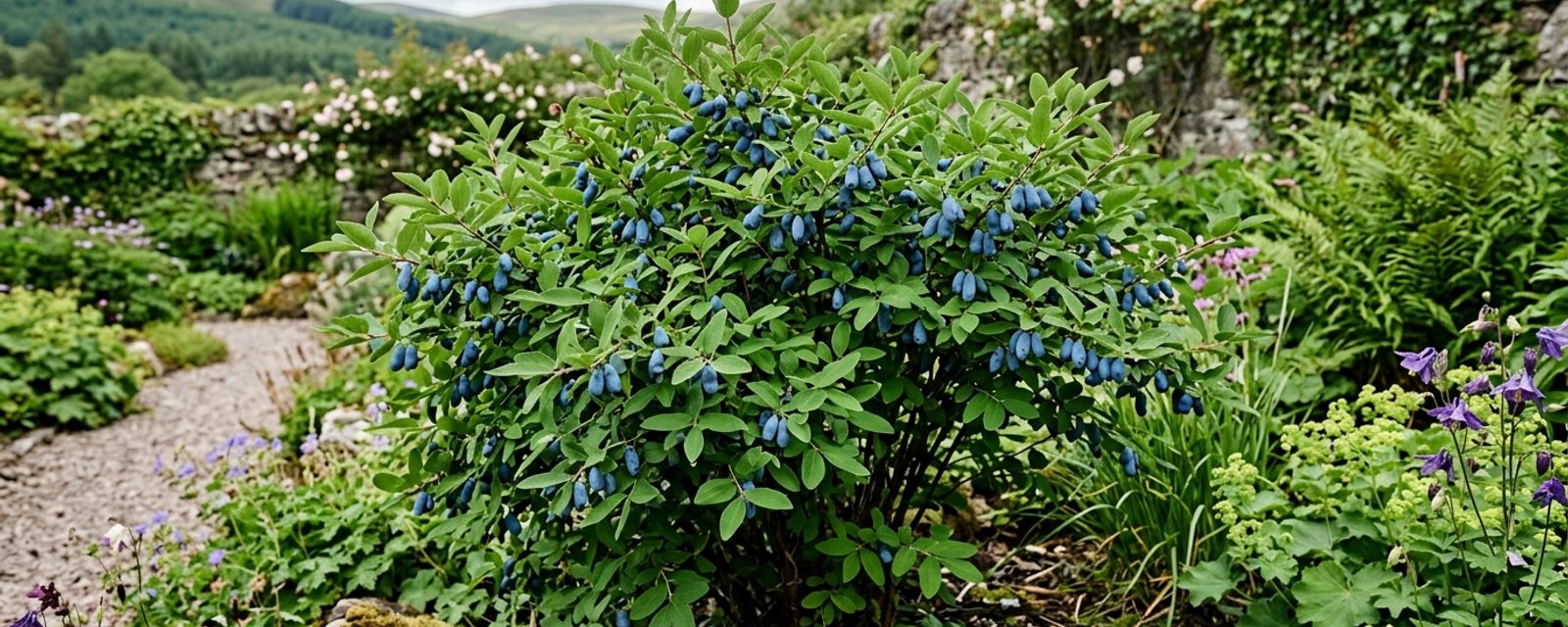
Lonicera caerulea
Honeyberry's stems shrug off cold that would kill most fruit outright, but its flowers open in late winter with almost none of that hardiness to spare — the real risk here isn't the plant, it's the blossom.
Also sold as haskap, honeyberry is a form of edible honeysuckle, Lonicera caerulea. Not every honeysuckle berry is safe to eat; many are potentially harmful, so plant a named honeyberry or haskap cultivarA plant variety that arose or was bred under cultivation and is kept true by deliberate propagation, rather than a naturally occurring wild species. Full definition → rather than any garden honeysuckle. The fruit tastes and looks very similar to a blueberry, eaten fresh or used in jams and jellies.
Site and soil
Full sun ripens the wood and gives the best yield, though light shade can mean fewer aphids. Almost any well-drained soil suits it, acid or alkaline included. Plant in spring, once frost risk has passed, giving the shrub a full summer to establish. Space plants 1.5-2.5m apart, or as little as 0.5-1m for a compact cultivar like Morena.
Pollination
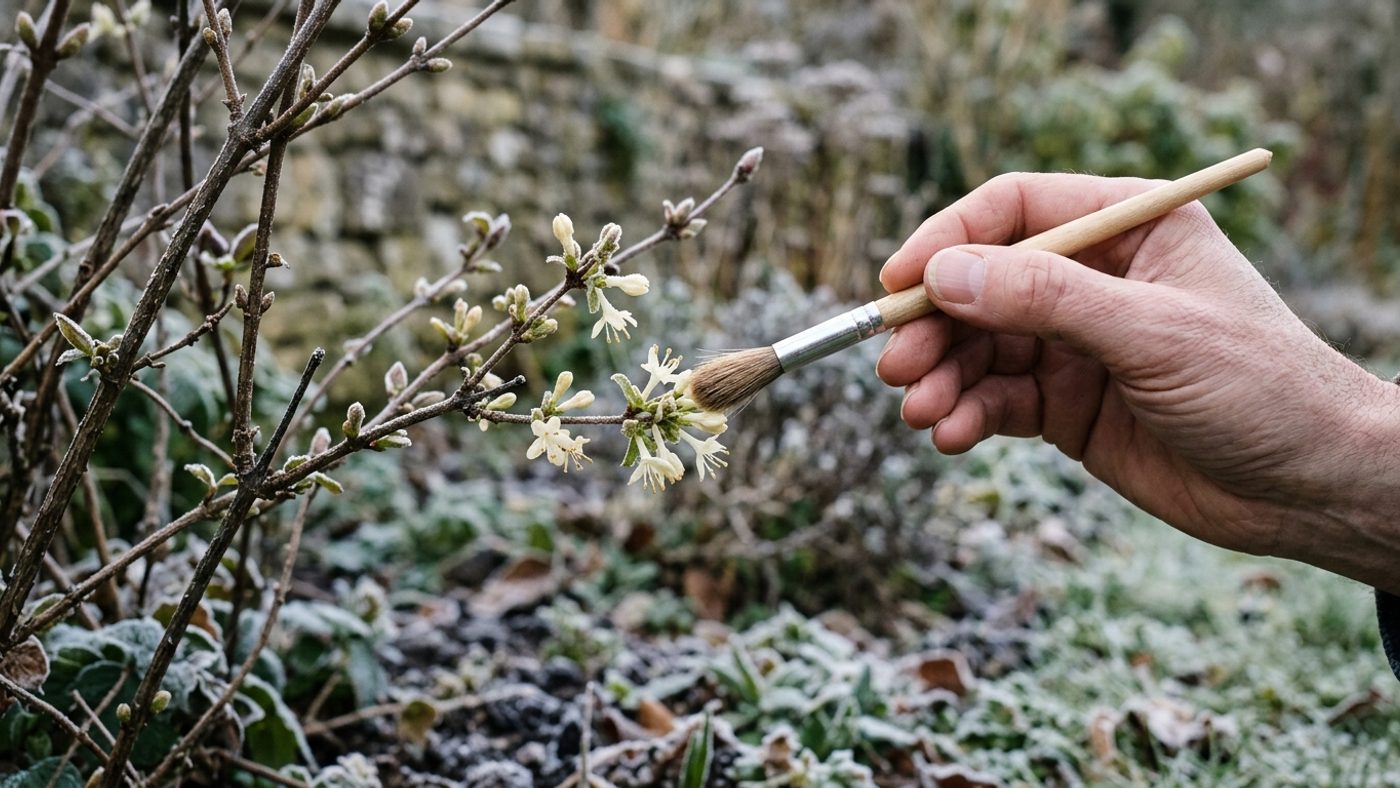
Plant two or more shrubs; a single honeyberry won't set fruit. Flowering runs from late winter to very early spring, a window with little pollinating insect activity, so it's genuinely worth hand-pollinating to improve yield rather than leaving it to chance: lightly brush over the open flowers with a small, soft paintbrush. Stem hardiness is rated anywhere from -20°C to -40°C depending on the source, but the flowers themselves tolerate only -7°C, which is exactly why a hard late frost at flowering time matters far more than a cold winter.
Care
Established plants need no routine extra watering beyond a normal dry spell. A yearly spring application of a balanced fertiliser, such as blood, fish and bone, is all the feeding they need.
Pruning
Little pruning is needed while the shrub is young. Once established, prune in early to mid-summer, straight after harvesting: remove straggly, weak or damaged growth, and thin out any overcrowded shoots.
Varieties
No honeyberry cultivar carries an AGMThe RHS's Award of Garden Merit: a UK-wide trials award for reliable performance, not a Scotland-specific recommendation. Full definition → yet, a genuine gap for a crop this new to UK gardens. Zojka and Morena are both named cultivars of the same botanical variety, Lonicera caerulea var. kamtschatica.
★ Our pick for Scotland
Zojka
Lonicera caerulea var. kamtschatica · H7The RHS's H1a–H7 scale for how much cold a plant can survive outdoors, H1a being tender indoor-only and H7 hardy anywhere in the UK. Full definition → · very heavy crops
Vigorous, with very heavy crops of large, 3cm, very sweet berries.
Why this one: Zojka is vigorous with very heavy crops of unusually large, sweet fruit, which matters more here than elsewhere: honeyberry takes 5-10 years to reach full size, so a cultivar that crops well once established is worth more than one that's merely reliable.
Also worth considering
Morena
Lonicera caerulea var. kamtschatica · H7 · compact
Spreads just 0.5-1m against Zojka's 1-1.5m, the most compact of the two, while keeping the same H7 rating and sweet flesh. The real choice where space, not hardiness, decides.
Lonicera caerulea var. edulis
H7 · sweet burgundy-red flesh
The other named 'best eating' botanical variety, useful where a specific kamtschatica cultivar isn't available from a supplier.
Best Honeyberry Varieties for Scotland → compares all named honeyberry varieties head-to-head, with the practical detail that doesn't fit in a summary card.
Harvesting
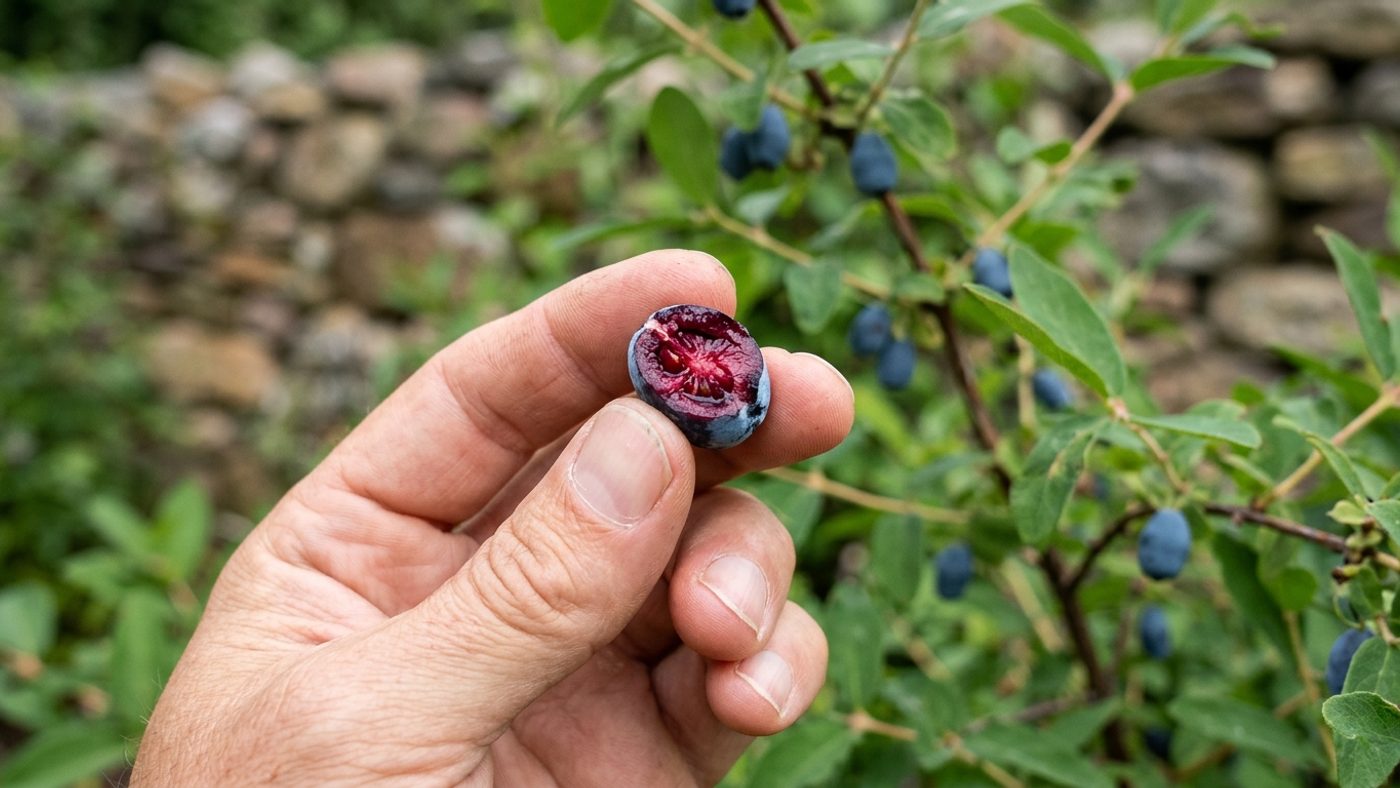
Ready late spring to early summer. Berries turn blue with a white bloom before they're actually ripe, so check the flesh too: cut one open and look for purple-red or burgundy-red colour, since green flesh under a blue skin is still very sour. Expect a first small crop after about two years, building toward a mature yield of around 6kg as the shrub reaches full size over 5-10 years, a genuinely slow build compared with most fruit.
Common problems
Honeyberry is genuinely low-trouble overall, but its own named cultivars carry a longer pest and disease list than the crop's reputation for toughness suggests.
- Honeysuckle aphids distort new growth and shoots; light shade can reduce the risk.
- Powdery mildew can affect leaves and shoots.
- Glasshouse whitefly can turn up on this shrub despite it being grown outdoors, not under cover.
See more problems
- Thrips cause fine silvery mottling on leaves.
- Fungal leaf spot causes small discoloured patches on leaves.
- Silver leaf causes leaves to take on a silvery sheen; prune out and destroy affected wood.
- Honey fungus is a rare but serious root disease with no cure; remove and destroy an affected plant.
Common questions
Is honeyberry the same thing as haskap?
Yes, two names for the same plant, Lonicera caerulea. Not every honeysuckle berry is safe to eat, though: many are potentially harmful, so buy a named honeyberry or haskap cultivar rather than assuming any garden honeysuckle's berries are edible.
Do I need more than one plant to get fruit?
Yes: no honeyberry variety is self-fertileA plant that can set fruit using its own pollen, without needing a second, different variety nearby to cross-pollinate it. Full definition →, so every plant needs pollen from a different, compatible variety flowering at the same time; not just any two honeyberries will do, so check the pairing and flowering times before buying. Full sourced breakdown: <a href="/tools/garden-myths/honeyberries/">Honeyberry Myths →</a>
If it's hardy to -40°C, what's the actual risk in a Scottish garden?
Real, but oversold: honeyberry flowers can shrug off temperatures down to about -7C, but that is a safety margin, not a guarantee: a harder frost or a prolonged freeze can still damage open blossom, so fleeceA lightweight, breathable fabric laid or draped over plants to trap a little warmth and keep off frost, wind and some flying pests. Full definition → the bush overnight in a colder-than-usual snap during flowering. Full sourced breakdown: <a href="/tools/garden-myths/honeyberries/">Honeyberry Myths →</a>
How do I know a honeyberry is actually ripe, not just blue?
No: the skin colours before the flesh finishes ripening, so wait five to ten days after a berry first turns blue and cut one open to check the flesh is purple-red inside before picking the rest. Full sourced breakdown: <a href="/tools/garden-myths/honeyberries/">Honeyberry Myths →</a>
Sources
6 sources, and what each was used for
- RHS: what honeyberry is (a form of Lonicera caerulea, also called blue or edible honeysuckle, tasting similar to a blueberry), the safety warning that not all honeysuckle berries are edible, site and soil, planting timing, pollination (plant two or more, hand-pollination technique with a soft paintbrush given the winter/early-spring flowering window), pruning timing and method, feeding, harvesting method, yield and the roughly two-year wait for a first crop, the two named 'best eating' botanical varieties, and its own general pest/disease framing
- RHS: H7 hardiness, ultimate height and spread, 5-10 year maturity timeline, pollination confirmation
- RHS: var. edulis: winter flowering window, H7, fruit size and colour, burgundy-red sweet flesh
- RHS: Morena: compact 0.5-1m spread, H7, winter flowering, large sweet fruit, the fuller named-pest list (honeysuckle aphids, thrips, glasshouse whitefly, powdery mildews, fungal leaf spot, silver leaf, honey fungus), pruning detail
- RHS: Zojka: vigorous habit, H7, winter flowering, very heavy crops of large 3cm very sweet fruit
- James Hutton Institute: 'Scotland's new superfruit' framing; stem hardiness to -20C and flower hardiness to only -7C, a real disagreement with RHS's own quick-facts figure of -40C; the Scottish Honeyberry Growers Cooperative's commercial orchards; breeding work aimed at improving sweetness, since the species is naturally very acidic