
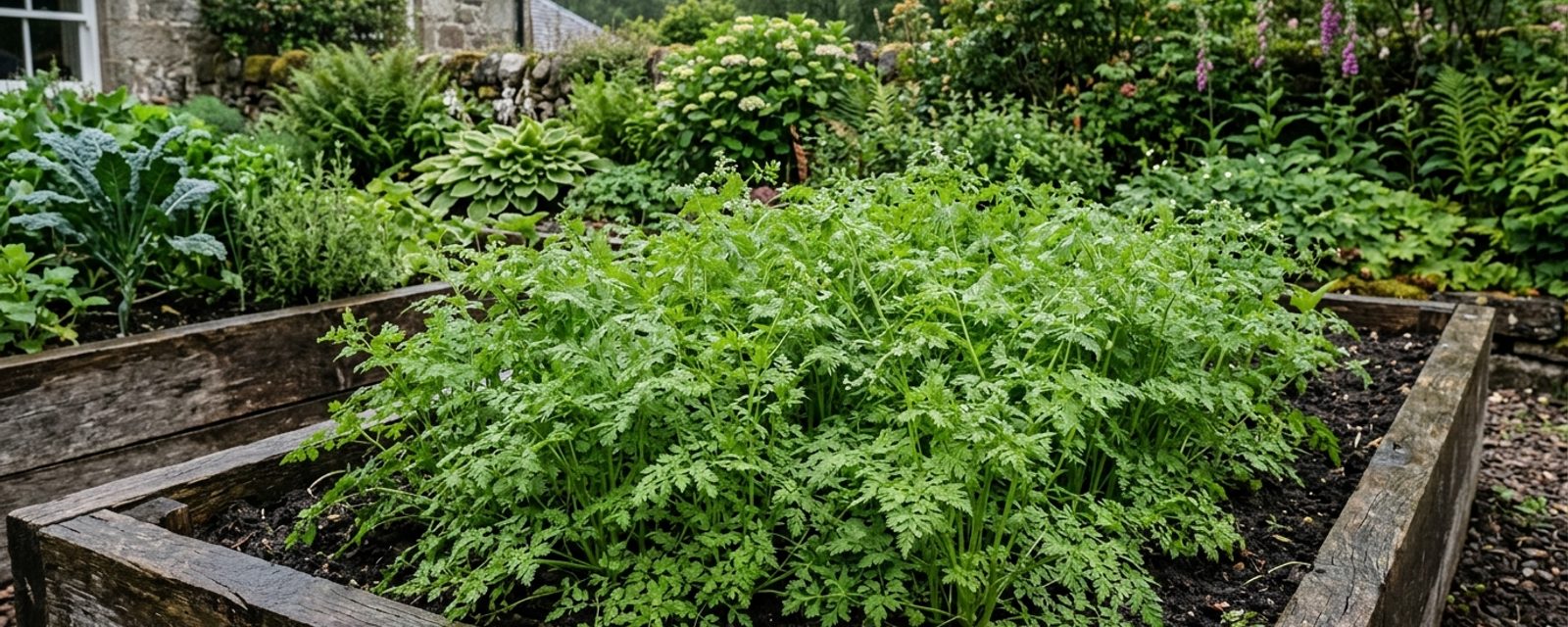
Anthriscus cerefolium
Chervil comes with one real disagreement between sources over whether to transplant it at all, a late-summer sowing that carries a harvest into winter, and a genuine preference for shade over sun.
It's an easy, fast-growing herb with a delicate aniseed hint, closer in habit to a salad leaf than to a woody Mediterranean herb, quick to establish and just as quick to run to seed if conditions turn hot and dry.
Site and soil
Choose a cool, lightly shaded spot; hot sun causes premature flowering. Soil should stay consistently moist without being waterlogged, fertile and moisture-retentive yet free-drainingSoil that lets water pass through quickly rather than pooling, so roots aren't sitting in wet ground after rain. Full definition →. Space rows 30cm apart, thinning seedlings to 15cm. For containers, use a minimum 25cm wide and deep pot, sown direct with seed covered by about 1cm of compost.
Sowing
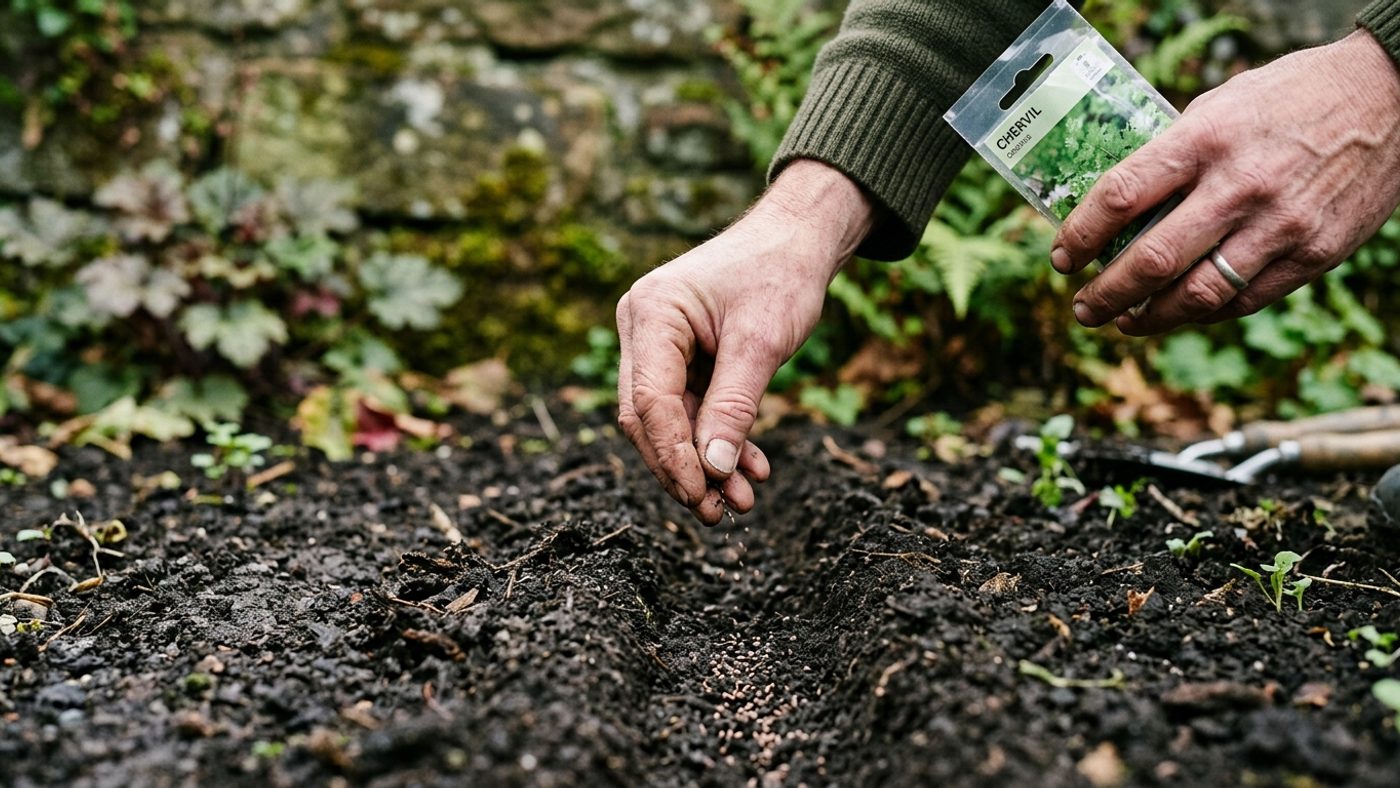
Direct-sowing is the safer route: chervil develops a deep root quickly and can suffer if transplanted later. Sow outdoors from April to August, into a shallow 1cm drillA shallow, straight groove made in prepared soil for sowing seed into, at a set depth so germination and rows are even. Full definition →, seed sown thinly; it can take up to three weeks to emerge. RHS also gives indoor sowing on a windowsill or in a greenhouse as an option, germinatingA seed sprouting: breaking dormancy and putting out its first root and shoot, given the right warmth and moisture. Full definition → in 5-10 days, with seedlings moved to individual pots and planted outdoors from mid-spring once about 5cm tall, though this carries the transplant risk above. Succession-sow through the year for a continuous supply, with a final sowing in late summer to give a crop that stands over winter.
Care and harvesting
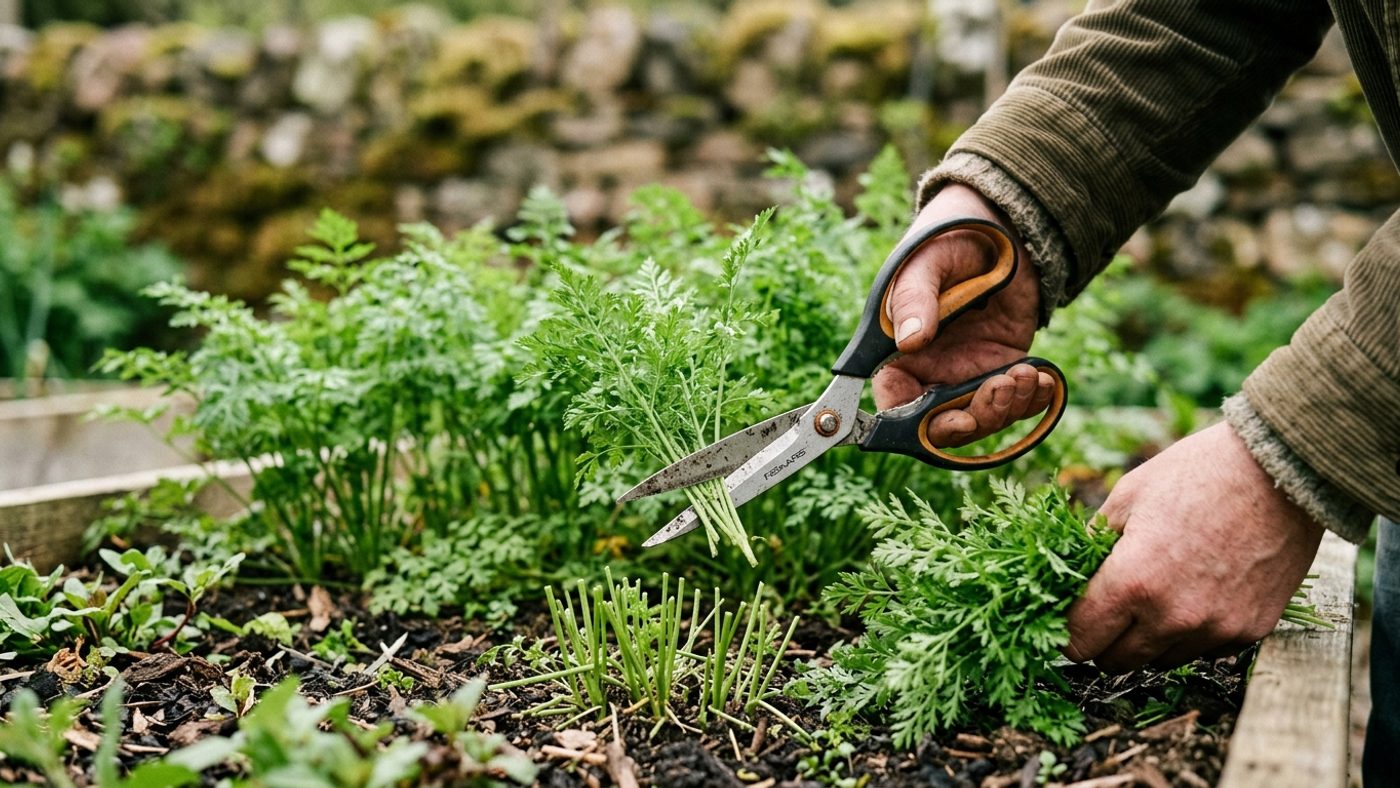
Water regularly to keep the soil consistently moist; this also delays boltingA plant switching early into flowering and seed production, usually triggered by stress, after which leaves, roots or bulbs turn bitter or unusable. Full page → in hot weather, and container plants need particular attention when it's warm. Harvest from about eight weeks after sowing, once plants reach at least 10cm tall: pick soft young leaves a few at a time from each plant, or cut all stems down to 5-7.5cm for a fuller harvest that regrows.
In autumn and early winter, a clocheA small, portable clear cover placed over an individual plant or short row to trap warmth and keep off wind, rain and pests. Full definition →, coldframe or greenhouse extends the season further; move container plants into a greenhouse for winter.
Varieties
Three forms exist in total (standard flat-leaved, curly-leaved, Vertissimo). None carries AGMThe RHS's Award of Garden Merit: a UK-wide trials award for reliable performance, not a Scotland-specific recommendation. Full definition →; Vertissimo's slow-to-bolt trait is the one that actually works with Scotland's climate, while the curly-leaved and standard forms differ mainly in leaf appearance.
★ Our pick for Scotland
Vertissimo
Slow to bolt
The only named chervil variety with a distinguishing trait: slow to bolt.
Why this one: Chervil's main bolting trigger is hot sun, a risk a Scottish summer already reduces compared with further south. A slow-to-bolt variety compounds that existing advantage rather than compensating for a disadvantage.
Common problems
- Bolting is chervil's most common problem, triggered by hot, dry weather; a shaded spot and consistent watering both help delay it.
- Aphids can affect vigour and distort growth.
Common questions
Should I sow chervil direct or start it indoors?
Sources disagree: RHS treats indoor sowing and potting onMoving a plant into a larger pot as its roots fill the current one, giving it more room and fresh compost before it becomes pot-bound. Full definition → as a standard method, but a second source warns chervil forms a deep root quickly and can suffer when transplanted, recommending direct sowing instead. Full sourced breakdown: <a href="/tools/garden-myths/chervil/">Chervil Myths →</a>
Is chervil only a spring-to-autumn herb?
No: a late-summer sowing can stand over winter, giving a harvest through the colder months most soft annual herbs can't match. Full sourced breakdown: <a href="/tools/garden-myths/chervil/">Chervil Myths →</a>
Does chervil want a sunny spot like most herbs?
No, the opposite: hot sun causes premature flowering, so a cool, lightly shaded spot is the real recommendation. Full sourced breakdown: <a href="/tools/garden-myths/chervil/">Chervil Myths →</a>
Sources
2 sources, and what each was used for
- RHS: annual/biennialA plant that completes its life cycle over two years: growth in year one, then flowering, seeding and dying in year two. Full definition → habit, site/soil, sowing method and months, thinning, spacing, harvest window and method, watering, winter cloche/coldframe use, varieties, common problems
- gardenersworld.com: deep-root/transplant-sensitivity caution, succession sowing through the year, late-summer sowing standing over winter, salad-mix sowing option