
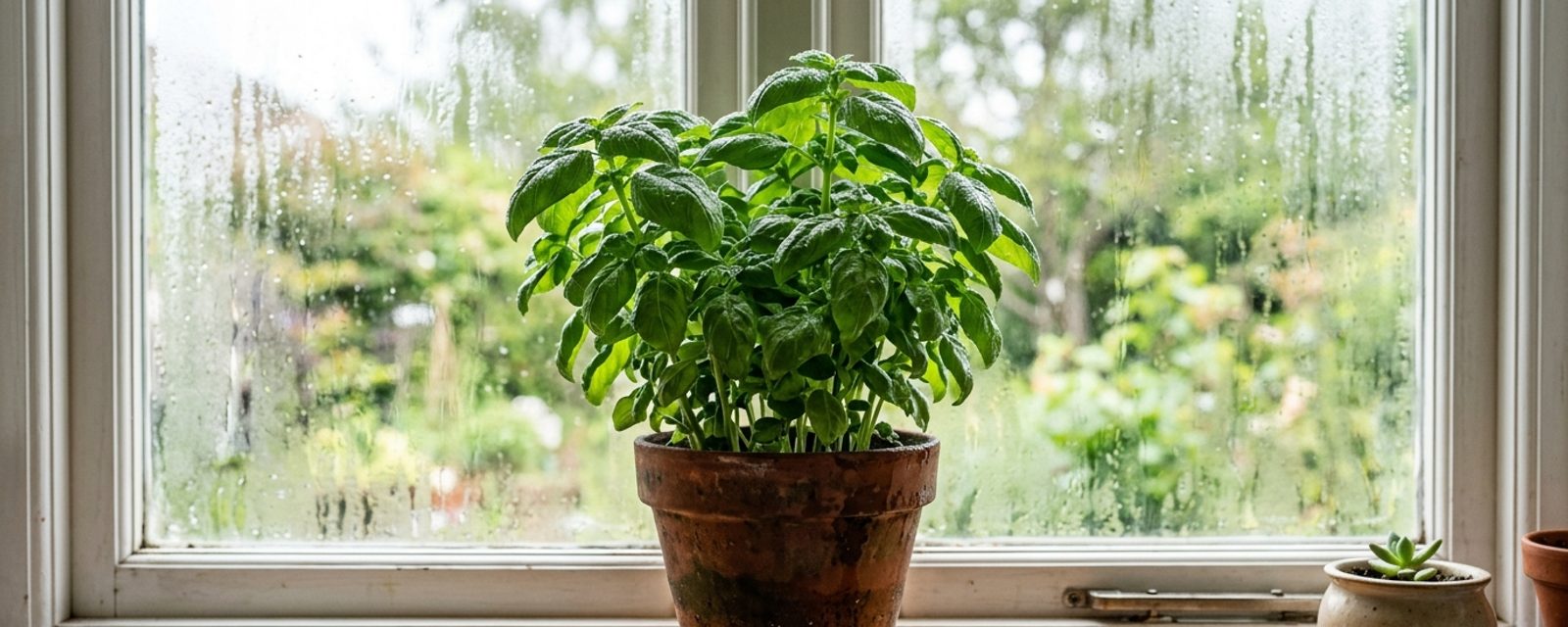
Ocimum basilicum
Basil in Scotland is a windowsill or greenhouse crop, not a bed crop: it isn't hardy in the UK, needs about 20C to germinateA seed sprouting: breaking dormancy and putting out its first root and shoot, given the right warmth and moisture. Full definition →, and needs nights consistently above 10C to survive outdoors, a bar much of Scotland doesn't reliably clear even in July.
The good news is that basil doesn't need a garden at all. A pot onMoving a plant into a larger pot as its roots fill the current one, giving it more room and fresh compost before it becomes pot-bound. Full definition → a bright kitchen windowsill, sown in March or April, gives you fresh leaves from May through September. A greenhouse or polytunnel gives you a bigger plant and a longer season. Outdoors is a gamble you can take in a warm summer, but the smart money is on the windowsill.
Which windowsill herbs are safe for cats → is worth a look before a pot of basil goes on a sill a cat can reach, since not every popular kitchen herb belongs next to it.
Why basil needs cover in Scotland
Warmth doesn't just decide whether the plant survives: it decides whether the leaves are worth picking. The aromatic oils that give basil its flavour need heat to develop, so a plant that merely survives a cool, grey Scottish summer typically produces small, flavourless leaves. The same plant under glass, in the trapped warmth of a greenhouse or polytunnel, produces the lush, aromatic leaves that make basil worth growing. A windowsill above a radiator is warmer than a Scottish June.
Varieties
Sweet Genovese is the standard cooking basil, with no AGMThe RHS's Award of Garden Merit: a UK-wide trials award for reliable performance, not a Scotland-specific recommendation. Full definition →. Salvo and Aroma 2 carry the AGM on RHS's general list, a UK-wide award, not a Scottish one — though neither variety's own individual plant page shows the AGM badge, an unresolved discrepancy between two RHS-published pages. Under glass, conditions matter more than variety: a warm windowsill makes any of them perform.
★ Our pick for Scotland
Sweet Genovese basil
Ocimum basilicum
The classic Italian basil. Large tender leaves with the strongest aroma. The one for pesto.
Why this one: Sweet Genovese is the standard for pesto and cooking, with the strongest aroma of the common varieties: the safe, versatile default once a warm windowsill or greenhouse is sorted.
Also worth considering
SalvoAGM
Compact
A compact, dense form. Good for pots on a sunny windowsill.
Aroma 2AGM
Bushy
Vigorous and productive.
Show other recommended varieties (2)
Lemon basil
O. basilicum var. citriodorum
Citrus-flavoured leaves. Good in salads and with fish.
Thai basil
O. basilicum var. thyrsiflora
Anise-liquorice flavour. Stands up to heat in stir-fries.
Best Basil Varieties for Scotland → compares all named basil varieties head-to-head, with the practical detail that doesn't fit in a summary card.
Sowing and planting
Sow indoors from March to July. Fill small pots with peat-freeCompost made without peat, which is harvested from a slow-forming, carbon-storing wetland habitat that peat extraction damages. Full definition → seed compost. Sow a few seeds per pot, 0.5cm deep, and keep at about 20C on a warm windowsill or in a propagator. Germination takes one to two weeks. Thin to the strongest seedling per pot. Keep the compost moist.
If you want to try basil outdoors, wait until early summer when nights are reliably warm. Plant in a sheltered south-facing spot in well-drained soil. Do not plant out until at least two weeks after your last frost date, and keep fleeceA lightweight, breathable fabric laid or draped over plants to trap a little warmth and keep off frost, wind and some flying pests. Full definition → handy. Expect a smaller plant and a shorter season.
Care through the season
Water regularly. Basil in a pot on a sunny windowsill dries out fast and may need watering every day in summer. Keep the compost evenly moist but not waterlogged. Water in the morning and try not to wet the leaves.
Pinching outRemoving the soft growing tip of a stem to stop upward growth and make the plant branch out sideways instead. Full definition →: this is the single action that turns a single stalk into a bushy productive plant. Every week, pinch out the growing tip above a pair of leaves. The plant will produce two new shoots below the cut. Keep doing this and you will have a dense, leafy plant rather than one tall spindly stem.
Rooting Cuttings in Water: What Actually Works → covers turning the tips you pinch out into new plants; basil is one of the cuttings that roots reliably in a jar on a windowsill.
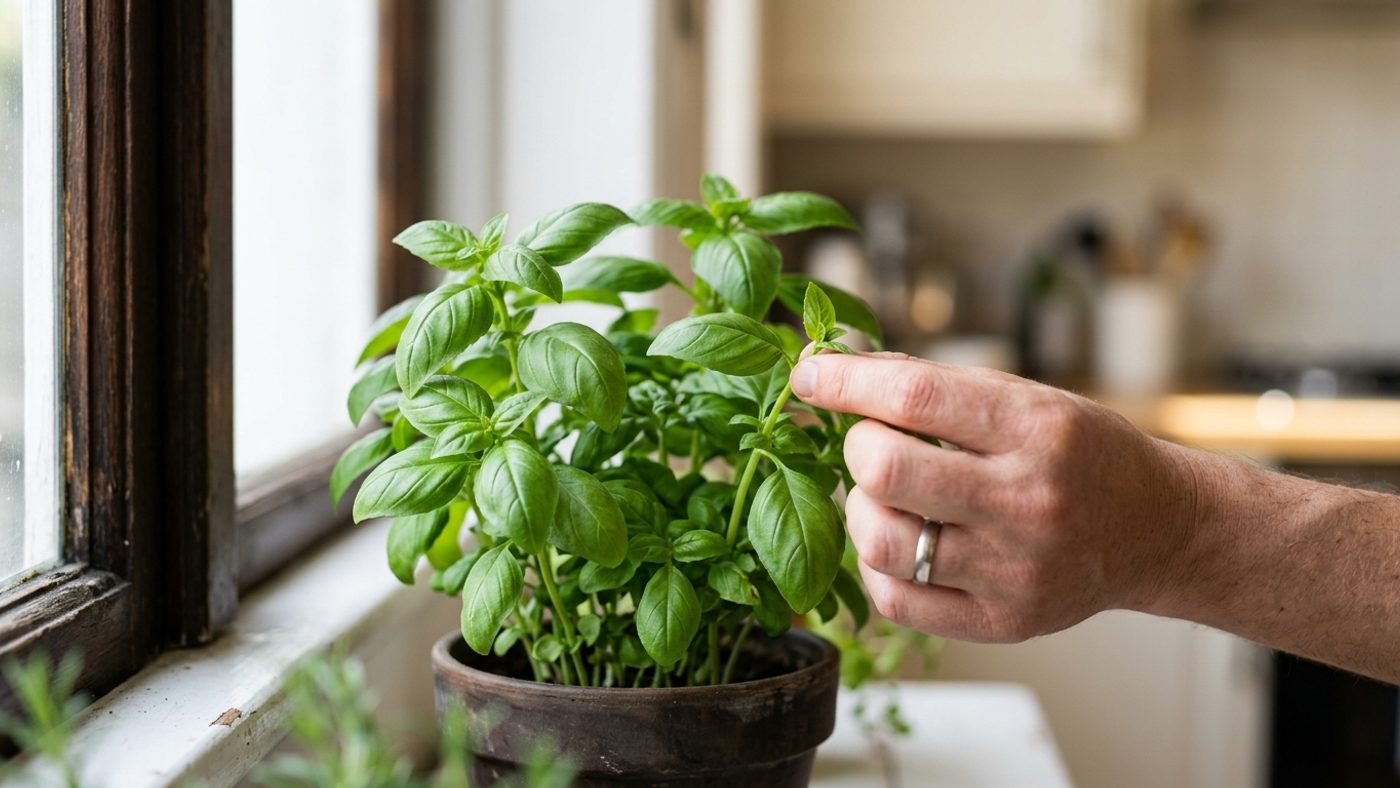
Flower removal: remove any flower buds as soon as they appear. Once basil flowers, the leaves lose flavour and the plant puts its energy into seed. Pinch out the buds and keep harvesting.
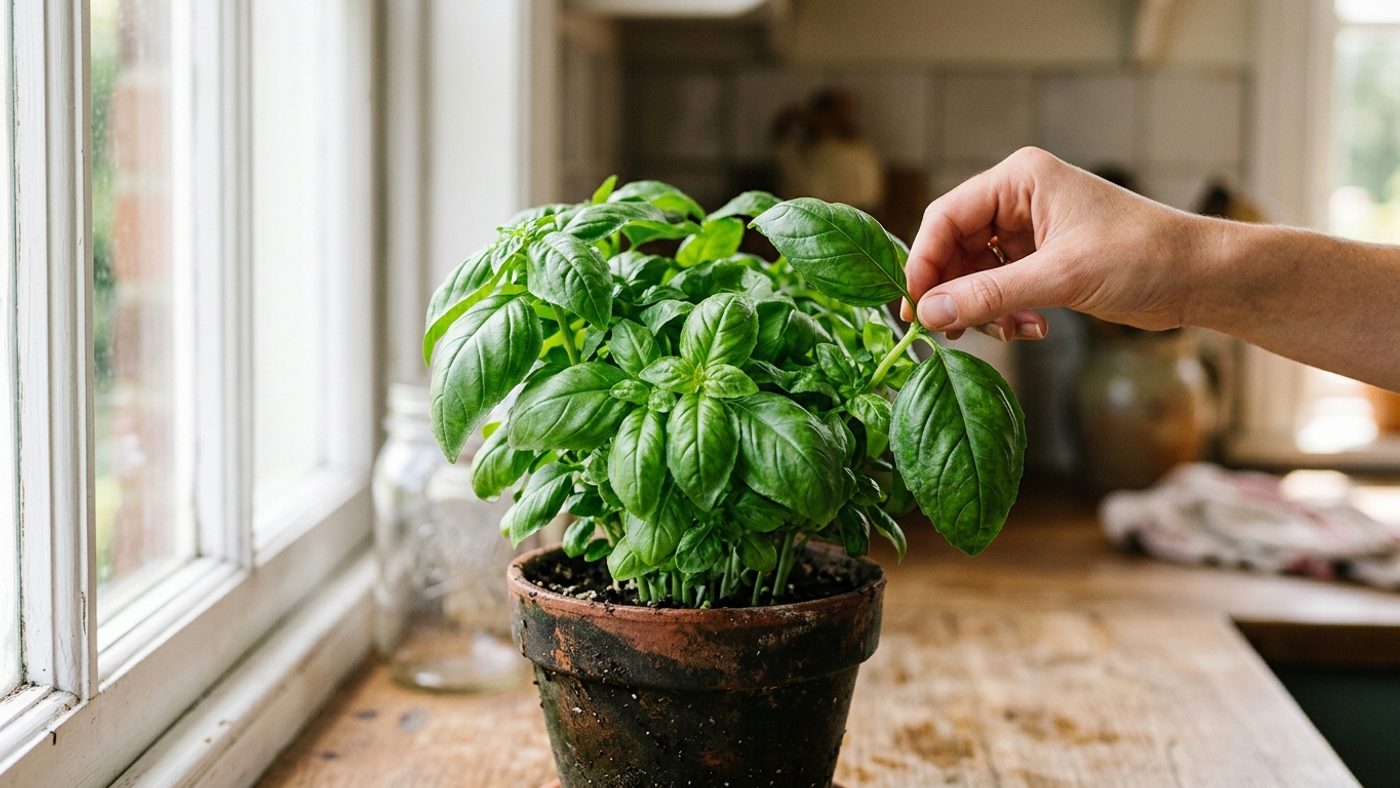
Harvesting: pick leaves regularly from the top of the plant, taking the larger outer leaves first. Harvest in the morning when the oils are strongest. The more you pick, the more the plant produces. A well-maintained plant will crop from May until September or until the light levels drop in autumn.
Common problems
- Aphids cluster on the new growth. Wipe them off with a damp cloth, or spray with soapy water. Check the undersides of leaves regularly.
- Glasshouse whitefly clusters on the undersides of leaves and rises in a cloud when disturbed, leaving sticky honeydew behind. Yellow sticky traps and regular checks keep it under control on a windowsill or in a greenhouse.
- LeggyDescribes a plant that's grown tall, thin and sparse rather than bushy, usually from too little light or not being pinched out. Full definition → plants mean you are not pinching out the growing tips. Cut the plant back to a pair of healthy leaves and it will bush out.
See more problems
- Yellowing leaves usually means the plant is too cold, too wet, or short of light. Move it to a warmer, brighter spot and let the compost dry slightly between waterings.
- Grey mould appears as fuzzy grey patches on the leaves in damp stagnant conditions. Improve airflow. Remove affected leaves. Water only in the morning.
- Sage and Ligurian leafhoppers cause coarse pale mottling on the leaves; growth and vigour aren't affected.
Common questions
Can I grow basil outdoors in Scotland?
Yes, but only from June once nights are reliably warm, and only in a sheltered, south-facing spot: a pot or greenhouse is still the more reliable route, and outdoor basil here is realistically a July-to-September crop rather than the longer season a seed packet implies. Full sourced breakdown: <a href='/tools/garden-myths/basil/'>Basil Myths →</a>
How do I keep basil producing leaves?
Pinch out the growing tips regularly and remove flower buds as soon as they appear: both genuinely extend leaf production, since once basil flowers the plant shifts its energy to seed and the flavour drops. Full sourced breakdown: <a href="/tools/garden-myths/basil/">Basil Myths →</a>
How do I water basil?
Water regularly rather than daily on a fixed schedule: basil wilts dramatically when dry but recovers within hours, and overwatering (yellowing leaves, root rot) kills more potted basil than underwatering does. Full sourced breakdown: <a href="/tools/garden-myths/basil/">Basil Myths →</a>
Can I grow basil from a supermarket pot?
You can try, but supermarket basil is usually multiple seedlings crammed into one pot and raised under artificial light. It rarely lasts more than a few weeks. For a plant that keeps producing, sow your own from seed in a pot of peat-free seed compost on a warm windowsill. Thin to one strong seedling per pot. It will crop for months.
Sources
2 sources, and what each was used for
- RHS: non-hardiness in the UK, indoor sowing Mar-Jul, outdoor early summer with 10C night threshold, 20C germination, keep indoors until after last frost, 10cm spacing, greenhouse/windowsill advice for cooler locations, AGM varieties
- Garden Organic: 5-10 day germination, indoor sowing March to mid-May, transplanting 30cm apart at 5-10cm tall, year-round windowsill and greenhouse cropping, pinching tips to delay flowering, and that purple-leaved varieties carry less flavour