
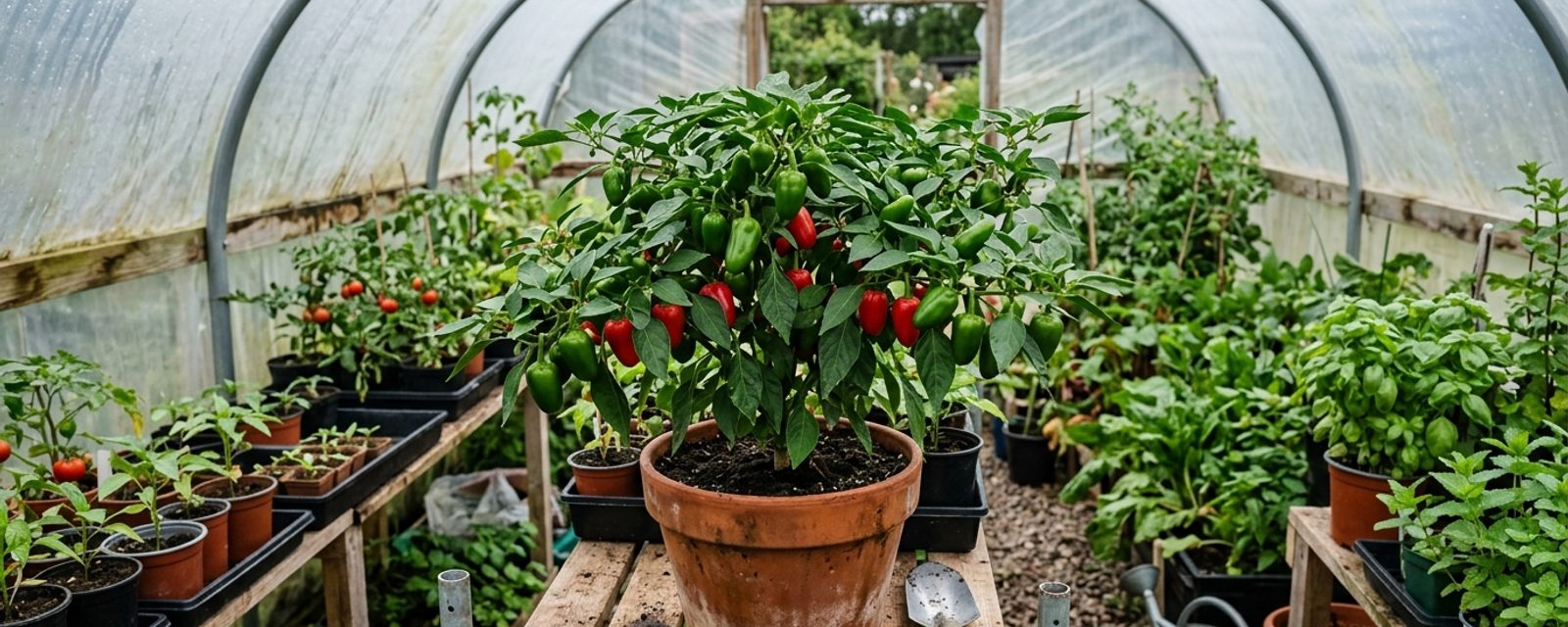
Capsicum annuum
Peppers are best grown under cover in Scotland, not in the open ground, which makes the choice of variety and how you use your greenhouse or polytunnel space the two decisions that matter most here.
This isn't a soft preference. Outdoor growing works only in the mildest gardens or an unusually hot summer, so treat a greenhouse, polytunnel or large coldframe as close to essential for a real crop rather than a nice-to-have.
Preparing the ground
If growing in the ground, use well-drained, fertile, moisture-retentive soil, working in a few bucketfuls of garden compost or well-rotted manure if it's poor or heavy, or mulchingA layer of material spread over the soil around plants to suppress weeds, retain moisture, and improve soil structure as it breaks down. Full definition → the surface for a no-digA growing method that avoids turning the soil over, building fertility instead by adding organic matter on the surface. Full definition → bed. In containers, use a pot at least 30cm wide with peat-freeCompost made without peat, which is harvested from a slow-forming, carbon-storing wetland habitat that peat extraction damages. Full definition → multi-purpose compost: one plant per pot, or two to three in a standard growing bag.
Sowing
Sow indoors mid-February to early March for greenhouse cultivation, or late March to early April if you're aiming for eventual outdoor planting. Seed needs 18-21°C to germinateA seed sprouting: breaking dormancy and putting out its first root and shoot, given the right warmth and moisture. Full definition → in a heated propagator or on a warm windowsill, then 16-18°C in bright light once through, with evenly moist compost. Pot seedlings on into their own 7.5-9cm pot once they have two true leaves.
Planting
Plant into a heated greenhouse from late April, an unheated greenhouse from mid-May, or outdoors from late May/June only in milder areas or a long, hot summer, after two weeks hardening offGradually getting young plants raised indoors used to outdoor conditions over 7–14 days before planting out, so cold, wind and direct sun don't shock or damage them. Full definition →. Space plants 38-45cm apart depending on variety, or 30cm for compact types. Cover young plants with clochesA small, portable clear cover placed over an individual plant or short row to trap warmth and keep off wind, rain and pests. Full definition → for wind and cold protection, ideally until the end of June.
Varieties
All three varieties below carry the RHS Award of Garden Merit, a UK-wide award rather than a Scottish one.
RHS also lists 'Topepo Rosso' (round pimento-type, bred for stuffing) and 'Bianca' (tobacco mosaic virus resistance, sunscald-shielding foliage), both AGMThe RHS's Award of Garden Merit: a UK-wide trials award for reliable performance, not a Scotland-specific recommendation. Full definition → on the general list though neither shows the badge on its own individual page, and 'Jolly Giallo' (no AGM either place), the only yellow-fruited pick.
★ Our pick for Scotland
RedskinAGM
Compact, 45cm tall, ideal for containers, medium fruit from July
The compact pick built for greenhouse and polytunnel space.
Why this one: RHS's own compact pick, sized for containers, which matters directly in a crop that's realistically grown under cover here: greenhouse and polytunnel space is usually the limiting factor, not garden space, and Redskin's small footprint plus relatively early July cropping both work in its favour.
Also worth considering
MohawkAGM
Dwarf, 50cm tall, ideal for patio pots, bell-shaped fruit
An even smaller-footprint option than Redskin, explicitly named by RHS for patio pots, useful for a windowsill or the smallest greenhouse corner rather than a dedicated bed.
Corno di Toro RossoAGM
Large, tapering fruit up to 25cm, sweet, crisp, thin skin
Independently named by both RHS and Gardener's World, an unusually well-corroborated choice worth the extra space and heat it needs if your greenhouse or polytunnel has room to spare beyond the compact picks above.
Best Sweet Pepper Varieties for Scotland → compares all named sweet pepper varieties head-to-head, with the practical detail that doesn't fit in a summary card.
Care
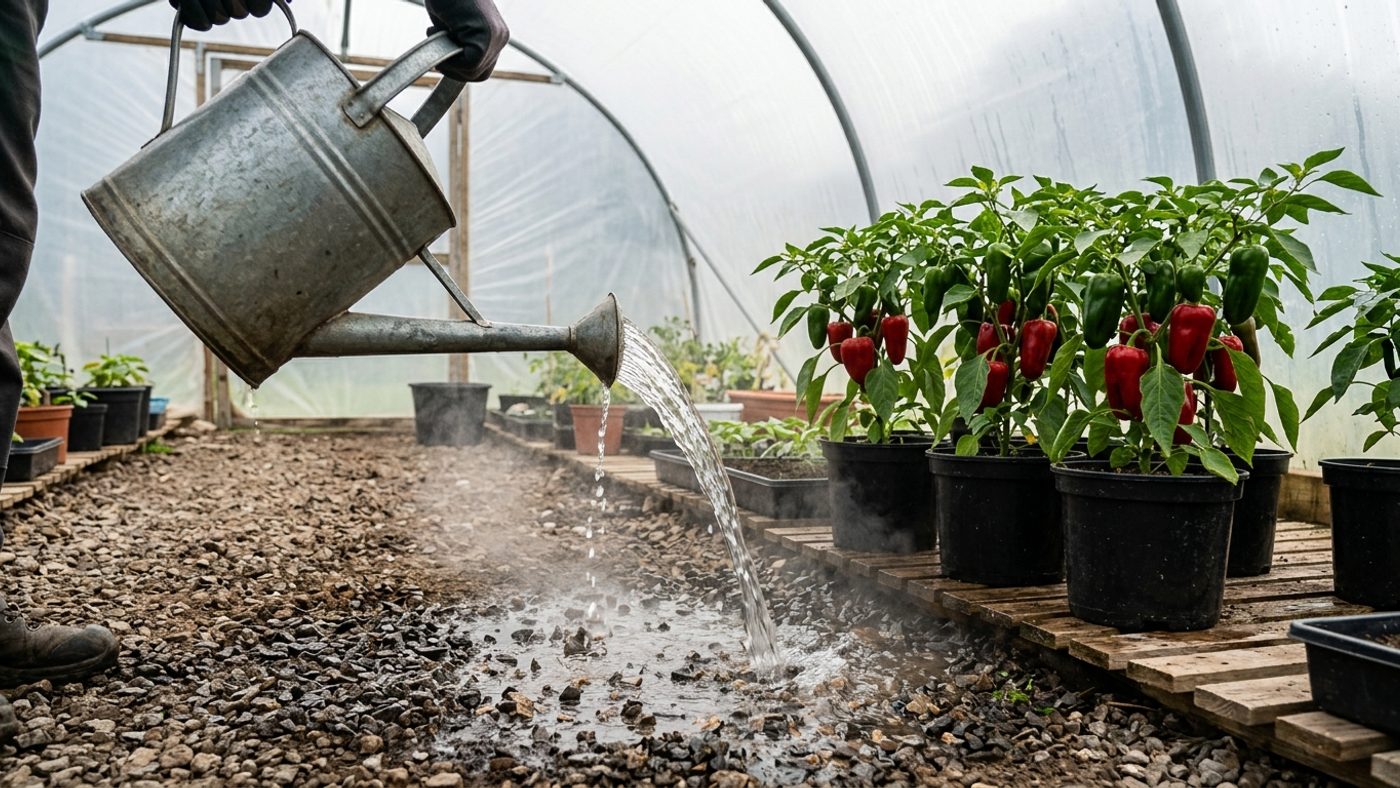
Keep temperatures above 12°C, ideally above 15°C: peppers thrive in warmth, but fruiting actually suffers above 30°C, so shade and ventilate a greenhouse in a heatwave rather than assuming more heat is always better. Raise humidity on hot days by damping down, pouring a full watering can over the greenhouse floor to evaporate. Keep soil or compost evenly moist: flower buds can drop if plants get too dry, and container plants may need watering daily in hot, dry spells. Feed weekly with a high-potash liquid fertiliser once flowering starts, at around half the strength you'd use for tomatoes; ground-grown plants in well-prepared soil often need none at all.
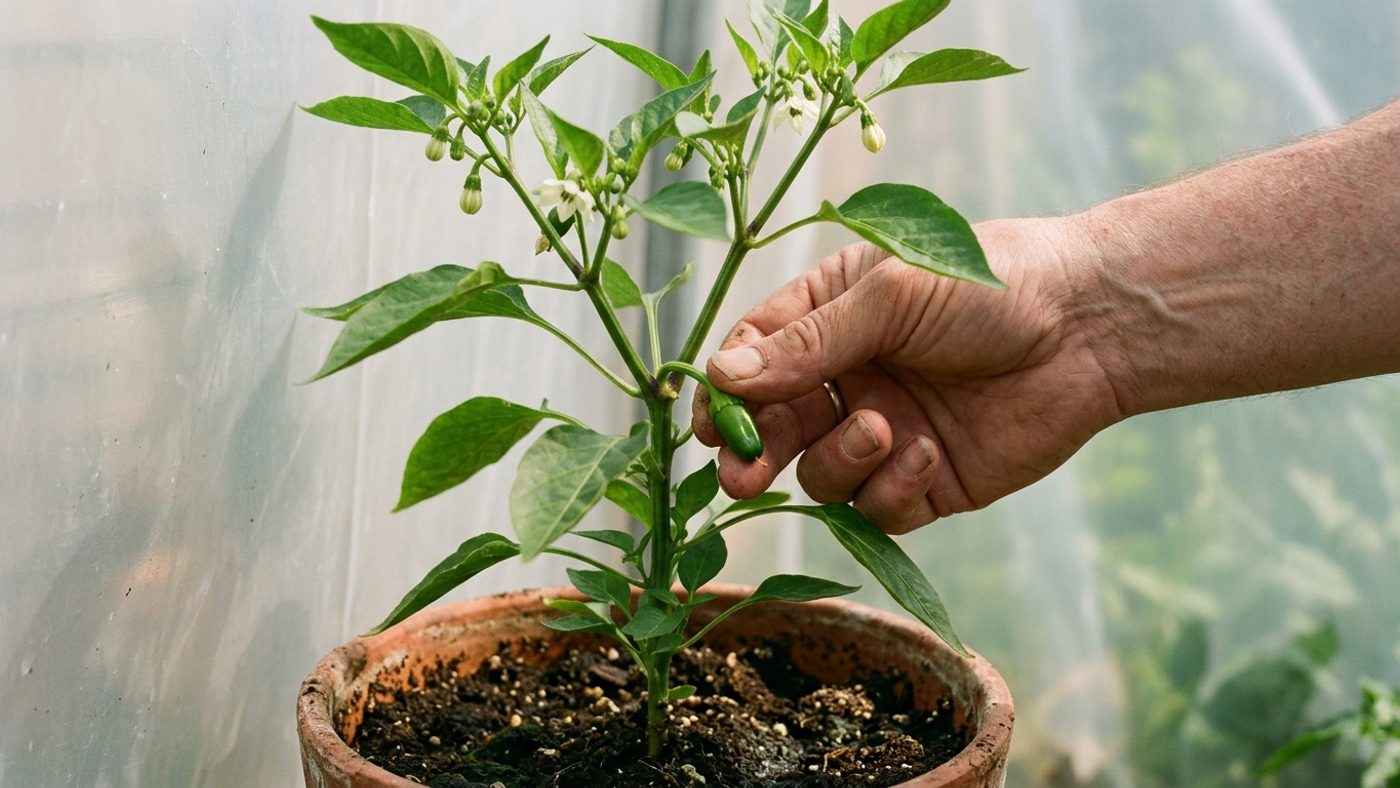
Remove the first fruit to set, the "king fruit", to stop it draining the plant's energy before it's built up strength for a full crop, along with any early misshapen fruit. Pinch outRemoving the soft growing tip of a stem to stop upward growth and make the plant branch out sideways instead. Full definition → the growing tip at about 30cm to encourage more fruit, though this delays the first harvest. Support with bamboo canes as the plant grows, adding more canes and soft twine for heavily laden side-shoots, which are otherwise prone to snapping.
Harvesting
Pick once fruit is swollen and glossy, at green or any later colour stage; most varieties ripen from green through to red, though some turn yellow, orange or purple, and the flavour sweetens as they ripen. Picking earlier keeps more fruit developing behind it, where letting fruit fully ripen slows the next round. As the season ends, cover outdoor plants with plastic-free fleeceA lightweight, breathable fabric laid or draped over plants to trap a little warmth and keep off frost, wind and some flying pests. Full definition →, or bring potted plants indoors, to help remaining fruit finish ripening. Peppers are best eaten fresh but keep for a few days in the fridge.
Common problems
- Aphids target shoot tips and the undersides of leaves, so check both regularly.
- Glasshouse whitefly feeds on sap and leaves sticky honeydew behind.
- Blossom end rot shows as dark blotches at the base of the fruit.
See more problems
- Grey mould causes soft tissue decay, especially in humid greenhouse conditions.
- Red spider mite causes mottled leaves and early leaf loss, especially in a dry greenhouse.
Common questions
Do peppers really need a greenhouse or polytunnel in Scotland?
For a reliable crop, yes: RHS is direct that peppers are usually grown under cover in the UK, and are only really successful outdoors in milder parts of the country or a genuinely hot summer. Full sourced breakdown: <a href='/tools/garden-myths/peppers/'>Pepper Myths →</a>
Should I remove the first pepper that forms on my plant?
Yes: the first fruit, the 'king fruit', should be removed to stop it draining the plant's energy before it's built up enough strength to support a full crop. Full sourced breakdown: <a href='/tools/garden-myths/peppers/'>Pepper Myths →</a>
Why is my pepper plant dropping its flowers?
Almost always dryness. RHS notes flower buds may fall off if plants get too dry, so keep the soil or compost evenly moist, especially in containers during hot weather.
Do I need to feed peppers as heavily as tomatoes?
No: peppers need less feeding than tomatoes: about half the strength, or weekly rather than more often. Full sourced breakdown: <a href='/tools/garden-myths/peppers/'>Pepper Myths →</a>
Sources
3 sources, and what each was used for
- RHS: the under-cover-vs-outdoor recommendation, sowing method and temperature, transplant timing for heated/unheated greenhouse/outdoor routes, spacing, container growing, temperature tolerances and their effect on fruiting, humidity management, watering and its link to flower drop, feeding, pinching out and support, harvesting method and end-of-season fruit-ripening, six named varieties (five AGM), blossom end rot, aphids, grey mould, red spider mite, whitefly
- Teagasc: independently corroborates germination temperature (21-25C) and the 12C fruit-set threshold; adds the 'king fruit' removal technique (the first fruit to set is removed to avoid draining the plant's energy early) that RHS doesn't mention at all; corroborates high-potash feeding at reduced strength versus tomatoes
- gardenersworld.com: independently corroborates the under-cover recommendation ('growing peppers is best done under cover in the UK') and the 10C greenhouse-planting threshold; gives a storage note (a few days in the fridge) that RHS's page omits entirely