
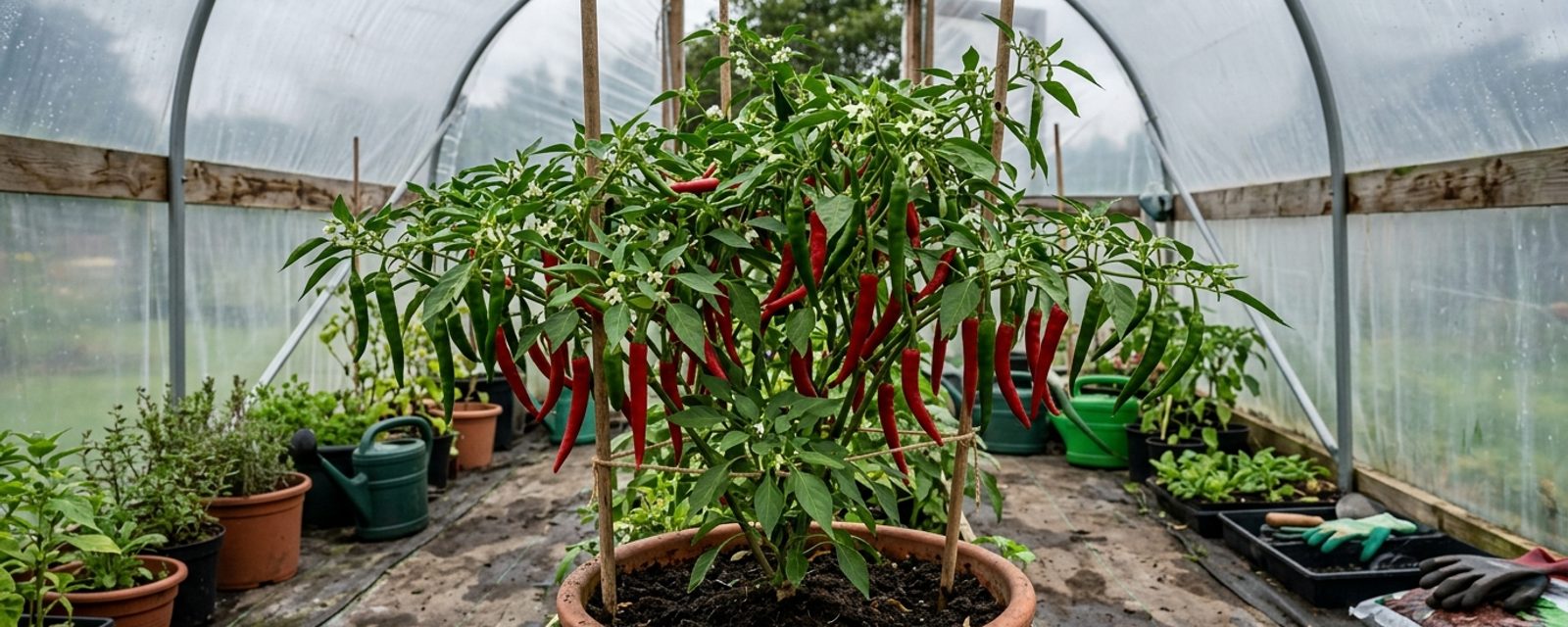
Capsicum annuum, C. frutescens or C. chinense (species varies by variety)
Chillies need heat and sunshine to fruit well, and a greenhouse or polytunnel is the reliable route to a real crop here — but one variety is a genuine cold-tolerant exception to that rule.
Chillies ask for the same conditions as sweet peppers: heat, humidity and lots of sun. What chillies add on top is a genuinely wide spread of heat levels between varieties, and at least one that copes with a cooler summer better than the rest.
Preparing the ground
If growing in the ground, use well-drained, fertile, moisture-retentive soil, working in a few bucketfuls of garden compost or well-rotted manure if it's poor or heavy, or mulchingA layer of material spread over the soil around plants to suppress weeds, retain moisture, and improve soil structure as it breaks down. Full definition → the surface for a no-digA growing method that avoids turning the soil over, building fertility instead by adding organic matter on the surface. Full definition → bed. In containers, use a pot at least 22cm wide for one plant, or three plants to a standard growing bag, in peat-freeCompost made without peat, which is harvested from a slow-forming, carbon-storing wetland habitat that peat extraction damages. Full definition → multi-purpose compost. Whichever route you choose, this is a crop that spends its whole life under cover here rather than moving between a seedbed and open ground, so it's worth preparing the greenhouse border or bags properly rather than treating it as a temporary stopgap.
Sowing
Sow indoors from late winter to mid-spring, as early as January with a heated propagator, or from March without one. Seed needs about 21°C to germinateA seed sprouting: breaking dormancy and putting out its first root and shoot, given the right warmth and moisture. Full definition →; an early start gives an earlier and longer harvest. Move seedlings to 16-18°C in bright light once through, potting onMoving a plant into a larger pot as its roots fill the current one, giving it more room and fresh compost before it becomes pot-bound. Full definition → progressively, ending in a 13cm pot before planting out.
Plant Pot Sizes: Litres to CM Conversion → has the full table if you're working from litre sizes rather than centimetres at any stage of potting on.
Planting
Plant out once night-time temperatures are reliably at least 12°C, usually late May or early June, after hardening offGradually getting young plants raised indoors used to outdoor conditions over 7–14 days before planting out, so cold, wind and direct sun don't shock or damage them. Full definition → for two to three weeks. Space plants 38-45cm apart, or 30cm for dwarf varieties; Gardener's World gives a slightly wider 45cm with 60cm between rows for the same crop, worth knowing if your source disagrees with this one. Position in the sunniest spot in the greenhouse for the best flavour.
Varieties
All three varieties below carry the RHS Award of Garden Merit, a UK-wide award rather than a Scottish one.
RHS also lists 'Apache' (fills the heat gap between Loco and Prairie Fire), 'Hot Thai' (up to 200 fruits per plant, the highest stated yield of the six), and 'Prairie Fire' (max 30cm height, windowsill-viable, and the hottest by far), all AGMThe RHS's Award of Garden Merit: a UK-wide trials award for reliable performance, not a Scotland-specific recommendation. Full definition →.
★ Our pick for Scotland
FuegoAGM
Cayenne type, long tapering fruit, more cold tolerant than most, 30,000-50,000 SHU
The one RHS chilli variety named for cold tolerance.
Why this one: The one variety with cold tolerance stated as its own trait, in a crop that otherwise needs heat and lots of sunshine to fruit well. That single trait does more for a Scottish grower than any other variety note here.
Also worth considering
LocoAGM
Compact, small fruit turning green-purple-orange-red, 20,000-30,000 SHU
The compact pick, the smallest-footprint variety named, useful where greenhouse or polytunnel space is the limiting factor rather than garden space, which is usually the case for this crop.
Hungarian Hot WaxAGM
Large fruit with a hint of citrus, turns hotter as it ripens, 5,000-15,000 SHU
The mildest-rated variety RHS names with AGM, worth including precisely because it's approachable: pick it green for a genuinely mild pepper, or let it ripen for more heat, hedging against however much sun and warmth the season actually delivers.
Best Chilli Pepper Varieties for Scotland → compares all named chilli pepper varieties head-to-head, with the practical detail that doesn't fit in a summary card.
Care
Keep temperatures above 12°C, ideally above 15°C: fruiting suffers above 35°C, so shade and ventilate on the hottest days. Raise humidity by damping down the greenhouse floor, and mist plants in hot weather to help deter red spider mite as a side benefit. Water little and often, keeping compost evenly moist for a healthy, productive plant. Feed weekly with a high-potash liquid fertiliser once flowering starts, at around half the strength you'd use for tomatoes. Support larger varieties with a cane, since the stems are brittle and snap easily under a heavy crop.
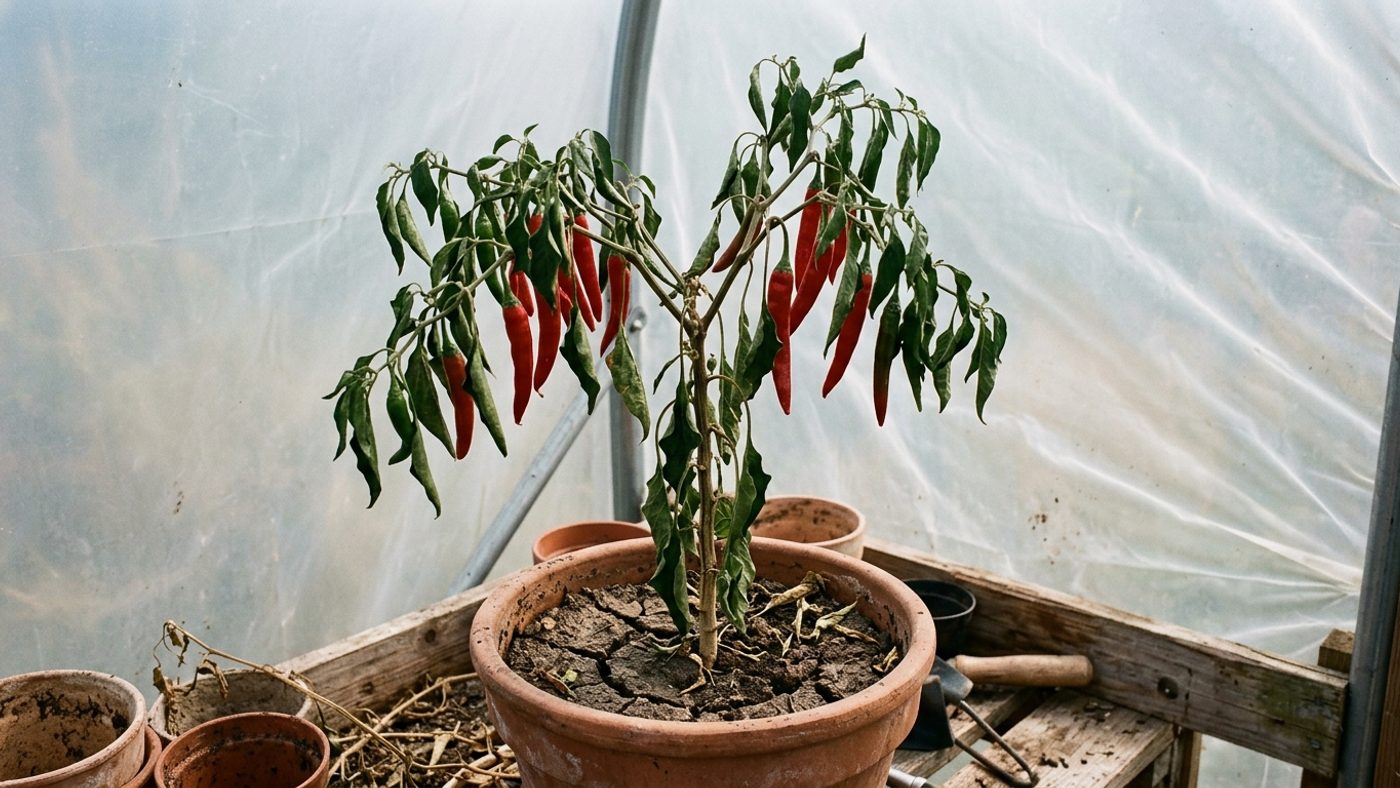
If maximum heat matters more to you than yield, a genuine trade-off exists: letting plants dry out completely between waterings stresses them into producing more capsaicin, but this weakens the plant and reduces its overall harvest. Choose one goal or the other rather than expecting both.
Harvesting
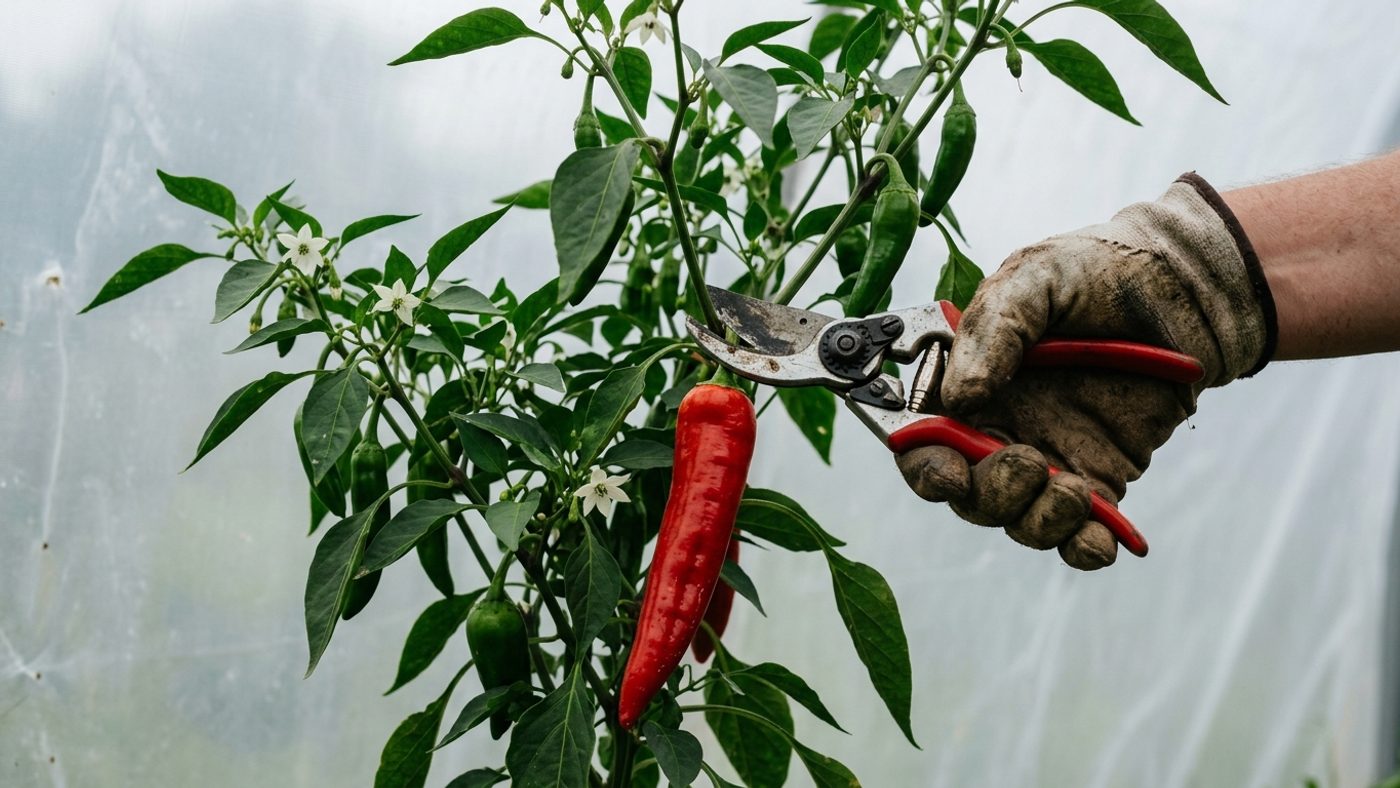
Ready from mid-summer into autumn under cover; outdoor fruiting, where attempted, typically starts by August. Pick green for a milder flavour, or leave fruit to ripen, usually to red, for more heat and sweetness; picking early keeps more fruit developing behind it. Cut with a knife or secateurs to leave a clean wound rather than tearing the plant. Chillies can be dried, frozen or pickled: store dried chillies in an airtight jar somewhere cool and dark.
Common problems
- Aphids target shoot tips and the undersides of leaves.
- Glasshouse whitefly feeds on sap and leaves sticky honeydew behind.
- Blossom end rot follows inconsistent watering, showing as dark blotches at the base of the fruit.
See more problems
- Grey mould spreads in humid greenhouse conditions; remove dead material and improve ventilation.
- Red spider mite shows as fine webbing and is worse in dry conditions; regular misting helps deter it.
Common questions
Do chillies really need a greenhouse in Scotland?
For a reliable crop, yes: chillies usually crop best in a greenhouse, and fruiting is often reduced when grown outdoors, though a cold-tolerant variety such as Fuego helps close the gap. Full sourced breakdown: <a href='/tools/garden-myths/chillies/'>Chilli Myths →</a>
Is there a chilli variety that copes better with a cool summer?
Yes: Fuego is named specifically as more cold tolerant than most of the recommended varieties, worth choosing deliberately rather than assuming every chilli needs identical conditions. Full sourced breakdown: <a href='/tools/garden-myths/chillies/'>Chilli Myths →</a>
Does watering less make chillies hotter?
Yes, genuinely, though it's a trade-off: letting plants dry out between waterings stresses them into producing more capsaicin, but it also weakens the plant and reduces overall yield. Full sourced breakdown: <a href='/tools/garden-myths/chillies/'>Chilli Myths →</a>
Do chillies need feeding as heavily as tomatoes?
No: chillies need less feeding than tomatoes: high-potash feed at half strength, or once a week rather than more often. Full sourced breakdown: <a href='/tools/garden-myths/chillies/'>Chilli Myths →</a>
Sources
3 sources, and what each was used for
- RHS: the greenhouse-vs-outdoor recommendation and its effect on fruiting, sowing method and temperature, transplant timing and the 12C threshold, spacing, container growing, temperature/humidity management, watering, feeding, pinching and support, harvesting method, six named AGM varieties with Scoville ratings, blossom end rot, aphids, grey mould, red spider mite, whitefly
- Teagasc: independently corroborates germination temperature (21-25C) and the 12C fruit-set threshold; confirms 90cm cane support is sufficient in an unheated greenhouse; corroborates reduced feeding strength versus tomatoes
- gardenersworld.com: independently corroborates the greenhouse-for-hottest-varieties recommendation; gives a different spacing figure (45cm apart, 60cm between rows) shown as a genuine variation; adds the water-stress-for-more-heat technique and storage/drying methods that RHS's page only mentions in passing