
Ladybirds can't be bought. The way to get more in the garden is to create the right conditions, and here's how.
What does it look like?
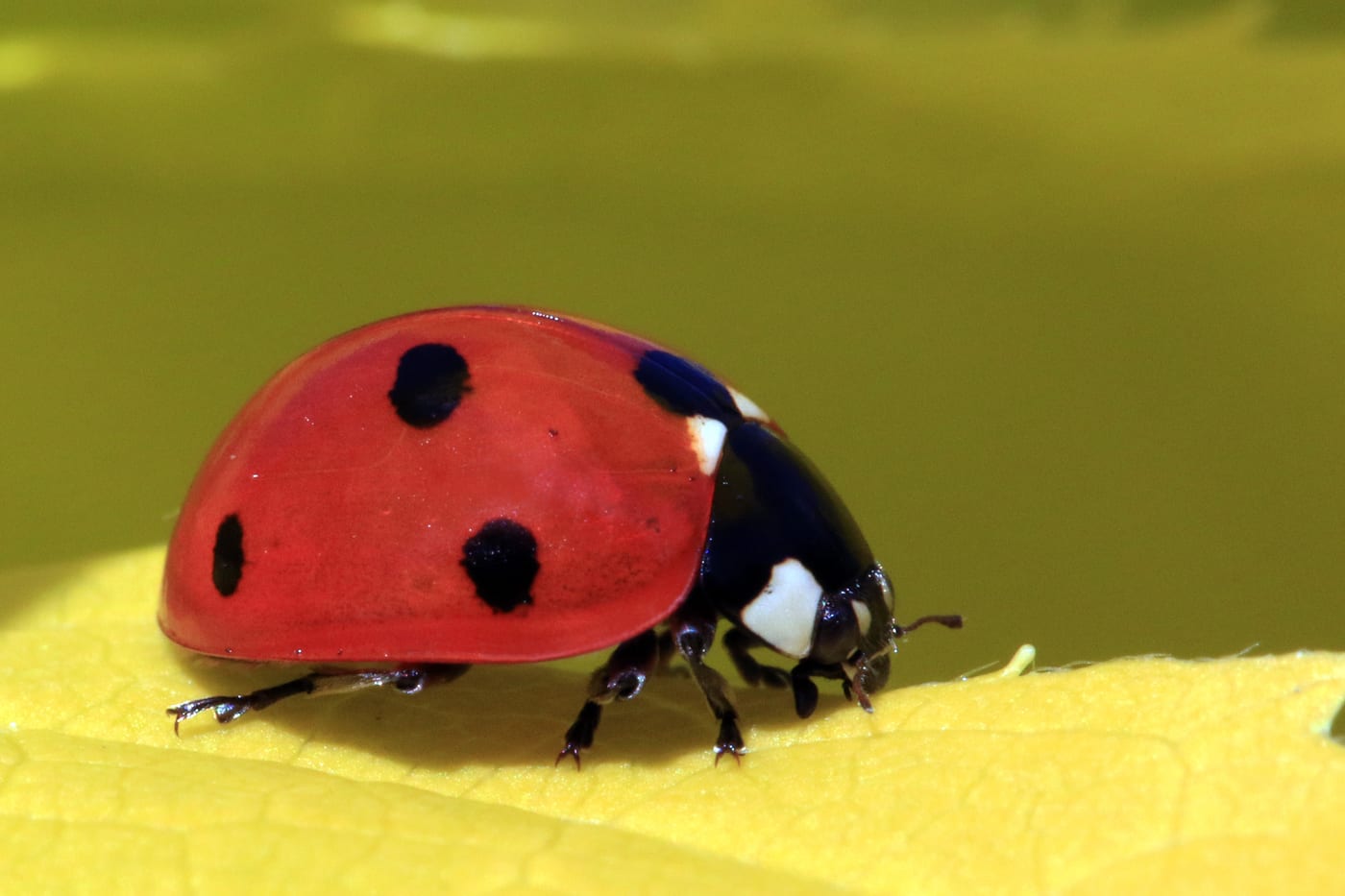
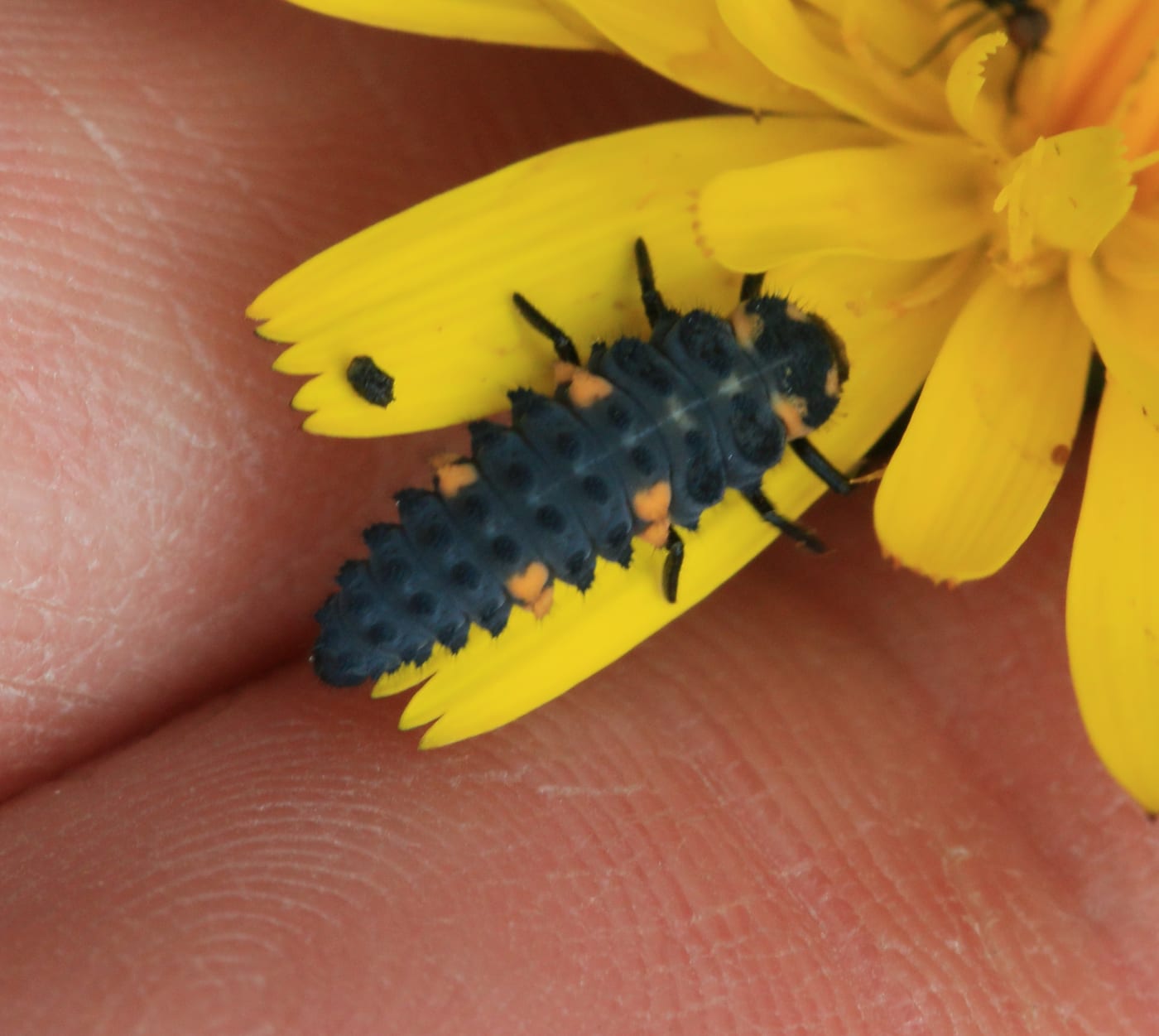
Ladybirds are beetles in the family Coccinellidae, 1 to 10mm long and round or oval in shape. The most familiar species have brightly coloured red or yellow wing cases marked with dark or light spots. More than 40 species live in Britain, and about half of these are small, under 3mm, and dark coloured, easily mistaken for something other than a ladybird entirely. Larvae look quite different from the adults: elongated, mostly black or dark grey, often with yellow or orange markings and small hairs or spikes. The seven-spot ladybird (red with seven black spots, 5-8mm) is the most familiar British species, and the two-spot ladybird (4-5mm, variable colouring) is nearly as common; both are aphid-eaters. The orange ladybird (orange with 12 to 16 white spots) is one of the mildew-eating exceptions, and the kidney spot ladybird (black with two red kidney-shaped markings) is one of the scale-insect specialists. For confirming an identification or logging a sighting, the European Ladybird Survey covers all British species and runs its own recording scheme.
Life cycle
Most adult ladybirds overwinter in sheltered places, often clustering together in large groups, sometimes inside buildings. They emerge in spring to mate and lay eggs: species that prey on aphids lay their eggs directly on plants already carrying an aphid colony, so the larvae hatch straight into a food source. Many species produce several generations through the summer.
Not every ladybird in the garden is native
The harlequin ladybird, introduced to Britain and established since 2004, is now widespread in England and spreading into Scotland. Like native species it preys on aphids, but it also eats the eggs and larvae of other insects, including native ladybirds, and evidence on its effect on native populations is mixed: some native species show no decline where harlequins are present, others have become less common, and research is ongoing. There is no way to control it that wouldn't also harm native ladybirds, and it is now so well established that destroying a few would make no difference to its overall numbers. One found indoors can simply be captured and released outside.
How to tell them apart: Adult harlequins are 8 to 10mm long, larger than most native species, with highly variable colouring, from red or orange with black spots to black with red spots and up to 21 spots in total. The clearest tell is a white triangular marking on the head, which native ladybirds don't have. Harlequin larvae are also distinctive: black and orange with two orange stripes, spiky, and up to 1cm long.
How to encourage it
Log piles, areas of long grass and leaf litter left alone over winter give ladybirds somewhere to gather, and once a cluster has settled in it is worth leaving undisturbed until spring.
Most pesticides, including organic ones, kill natural enemies along with the pest they're aimed at. Aphid numbers usually build up before predator numbers catch up, so waiting a while after aphids appear, rather than spraying straight away, gives ladybirds and other predators the chance to do the job instead.
Plant these near the crops that need help:
- Alyssum: its nectar and pollen attract ladybirds and other aphid predators; grow it alongside a crop that gets aphids.
- Calendula: grown among vegetables, it helps attract predatory insects and increases pollination.
- Poached-egg plant: grown among vegetables as part of a mixed planting, it helps attract beneficial predators.
Calendula and poached-egg plant are fully hardy and can be sown in situ in spring or autumn (protect autumn-sown poached-egg plant from frost). Alyssum is less hardy and only reliable in mild, sheltered spots, so a spring sowing once frost risk has passed is the safer bet across most of Scotland. All three flower by summer, which is also when aphid colonies, and the ladybirds after them, tend to build up: there's no shortcut to an earlier effect, since it takes a growing season rather than a few weeks for the planting to do its job.
Why this matters in Scotland
Scotland already has 1,714 recorded sightings of the harlequin ladybird on NBN Atlas Scotland, the national biodiversity records database, as of 2026-08-04: a species already well established here, not one still arriving.
That turns "spreading into Scotland" from a direction into a scale, and it's most likely in gardens and towns specifically, where the species is most commonly seen: worth telling the harlequin apart from a native ladybird now, not treating it as a distant possibility.
What it helps control
Aphids are the pest most often named for ladybirds to control, but several species also prey on scale insects, and a few feed on mildews rather than insects at all.
Frequently asked questions
Can I buy ladybirds?
Not usefully: ladybirds released into a garden with nothing to hold them there simply leave. Creating the right habitat and food source is what actually keeps a population around; see "How to encourage it" above.
Is every ladybird I see the same?
No, see "Not every ladybird in the garden is native" above. Not every insect that looks similar is the same species, and telling them apart matters.
How do I know if ladybirds are actually helping?
Watch the pest population, not the predator count: fewer aphids, brown scale over a few weeks is the real sign, not how many ladybirds you can spot on a given day.
Do ladybirds only deal with the pests listed above?
No, also scale insects; some species feed on mildew rather than insects at all. The list above is what they're best known for, not the full extent of what they take.
Sources
12 sources, recorded with what each was used for
- RHS: For Aphids: RHS names ladybirds among aphid predators and recommends encouraging natural enemies, waiting for predator populations to control aphids naturally in spring and summer. Most pesticides, including organic ones, reduce biodiversity including natural enemies; aphid populations tend to build before natural enemies are active in enough numbers, so waiting lets predators do the work instead.
- Garden Organic: Garden Organic strongly supports attracting predators including ladybirds via diverse flowering plants, calling it an evidence-based ecosystem approach rather than companion planting as such. Coriander and fennel flowers, Californian poppy, poached-egg plant and calendula, mixed in among vegetables, are named as flowers that support predatory insects; calendula is specifically also credited with increasing pollination.
- RHS: Identification (family, size, wing-case colouring, the >40-British-species and small-dark-species facts, larva appearance), life cycle (overwintering clusters, spring mating and egg-laying on aphid colonies, multiple summer generations), and the harlequin ladybird's UK establishment, colouring, effect on native species, and that it is neither desirable nor necessary to try to control it.
- RHS: Alyssum's nectar and pollen attract predators of aphids.
- Wildlife Trusts: The harlequin ladybird's white triangular head marking is the clearest way to tell it apart from native species, and it is spreading into Scotland.
- RHS: RHS's dedicated harlequin ladybird page: larva identification (black and orange, up to 1cm, two orange stripes and spiky), that there is no way to control it without also harming native ladybirds, that destroying a few makes no difference given how established it already is, and that one found indoors can simply be captured and released outside.
- NBN Atlas Scotland: NBN Atlas Scotland's harlequin ladybird species page recorded 1,714 sightings in Scotland as of 2026-08-04, evidence of how established it already is here rather than a species still arriving.
- RHS: Alyssum (Lobularia maritima) is propagated by sowing seed in situ in spring, and is rated H3: hardy in coastal and relatively mild parts of the UK, down to -5 to 1°C, but not reliably hardy everywhere.
- RHS: Calendula officinalis is propagated by sowing seed in situ in spring or autumn, and is rated H5: hardy throughout the UK even in severe winters.
- RHS: Poached-egg plant (Limnanthes douglasii) is propagated by sowing seed in situ in spring or autumn, protecting autumn sowings from frost, and is rated H5: hardy throughout the UK even in severe winters.
- RHS: RHS's beneficial insects and bugs page: adult ladybirds need sheltered sites for overwintering.
- european-ladybirds.brc.ac.uk: European Ladybird Survey: run by the UK Centre for Ecology & Hydrology and Anglia Ruskin University, it provides species descriptions covering all UK ladybirds and a recording scheme for confirming an identification or logging a sighting.