
Parasitoid Wasps (wild) can't be bought. The way to get more in the garden is to create the right conditions, and here's how.
What does it look like?
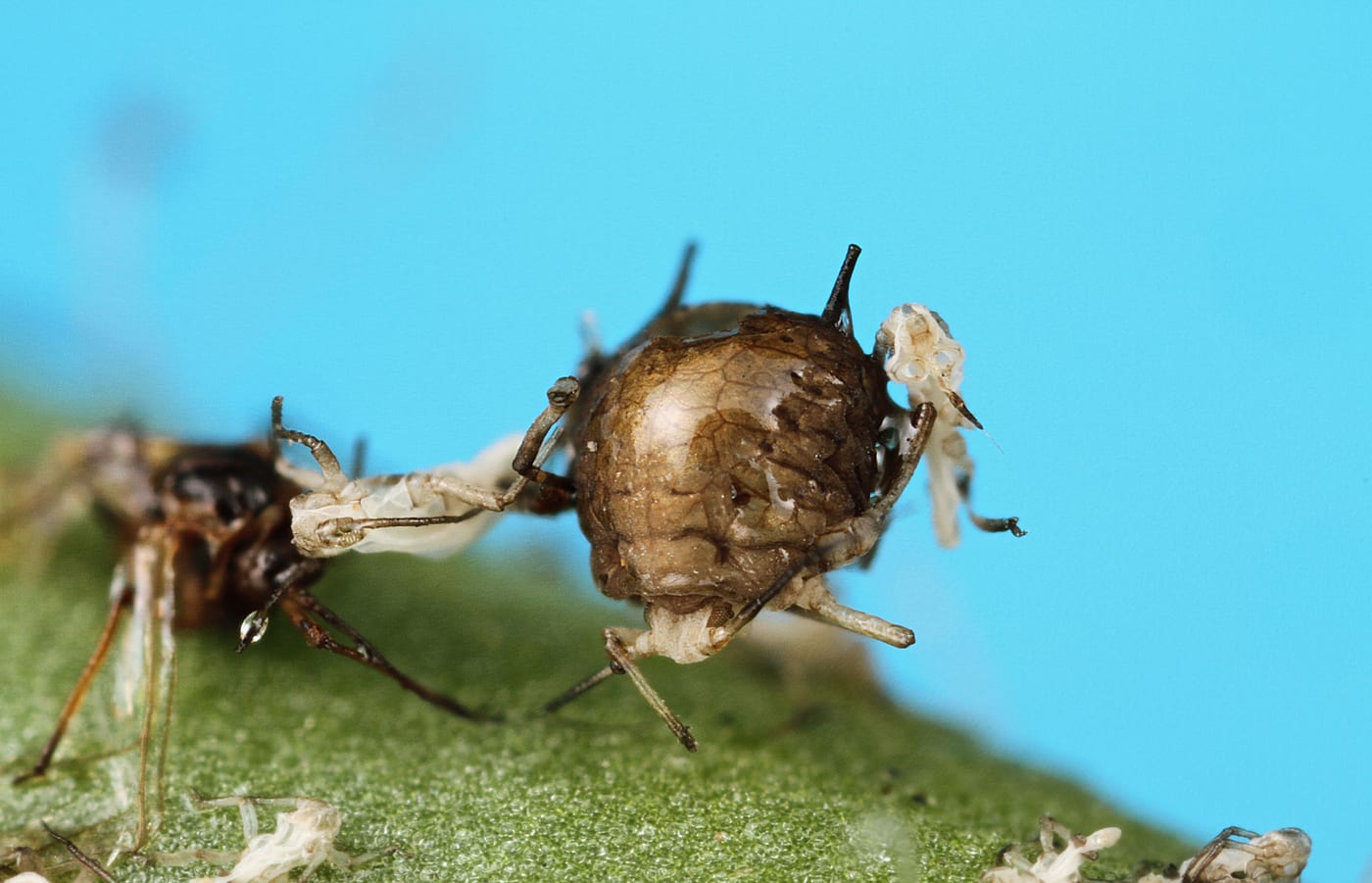
Most parasitoid wasps are tiny and rarely noticed directly; the sign to look for is the aphid, not the wasp. Adult females of several genera, including Aphidius, Praon, Aphelinus and Lysiphlebus, lay a single egg inside an aphid. The egg hatches into a grub that feeds inside the aphid and eventually kills it, usually by eating its contents, then pupates inside the empty body. By this stage the aphid has turned whitish-brown and swollen, an 'aphid mummy', and the adult wasp emerges through a hole it cuts in the mummy's skin.
How to encourage it
Most pesticides, including organic ones, kill parasitoid wasps along with the aphids they're aimed at, so spraying undoes the predator you're trying to attract.
Plant these near the crops that need help:
- Alyssum: grown near a crop, its nectar and pollen attract aphid predators including parasitoid wasps.
- Calendula: grown among vegetables, it helps attract predatory insects and increases pollination.
- Poached-egg plant: grown among vegetables as part of a mixed planting, it helps attract beneficial predators.
What it helps control
Don't confuse this wild parasitoid wasp with Encarsia formosa, a specific species ordered by post for whitefly control. Same broad insect group, opposite approach: one arrives on its own, the other comes in the post.
Frequently asked questions
Can I buy parasitoid wasps (wild)?
Not usefully: parasitoid wasps (wild) released into a garden with nothing to hold them there simply leave. Creating the right habitat and food source is what actually keeps a population around; see "How to encourage it" above.
How do I know if parasitoid wasps (wild) are actually helping?
Watch the pest population, not the predator count: fewer aphids, brown scale, beet leaf miner over a few weeks is the real sign, not how many parasitoid wasps (wild) you can spot on a given day.
Sources
4 sources, recorded with what each was used for
- RHS: For Aphids: RHS names parasitoid wasps among aphid predators and recommends encouraging natural enemies.
- RHS: Alyssum's nectar and pollen attract predators of aphids.
- RHS: RHS's dedicated aphid predators page: how several parasitoid wasp genera (Aphidius, Praon, Aphelinus, Lysiphlebus) lay eggs inside aphids, and how the resulting 'aphid mummy' forms and the adult wasp emerges.
- Garden Organic: Coriander and fennel flowers, Californian poppy, poached-egg plant and calendula, mixed in among vegetables, are named as flowers that support predatory insects; calendula is specifically also credited with increasing pollination.