
Earwigs can't be bought. The way to get more in the garden is to create the right conditions, and here's how.
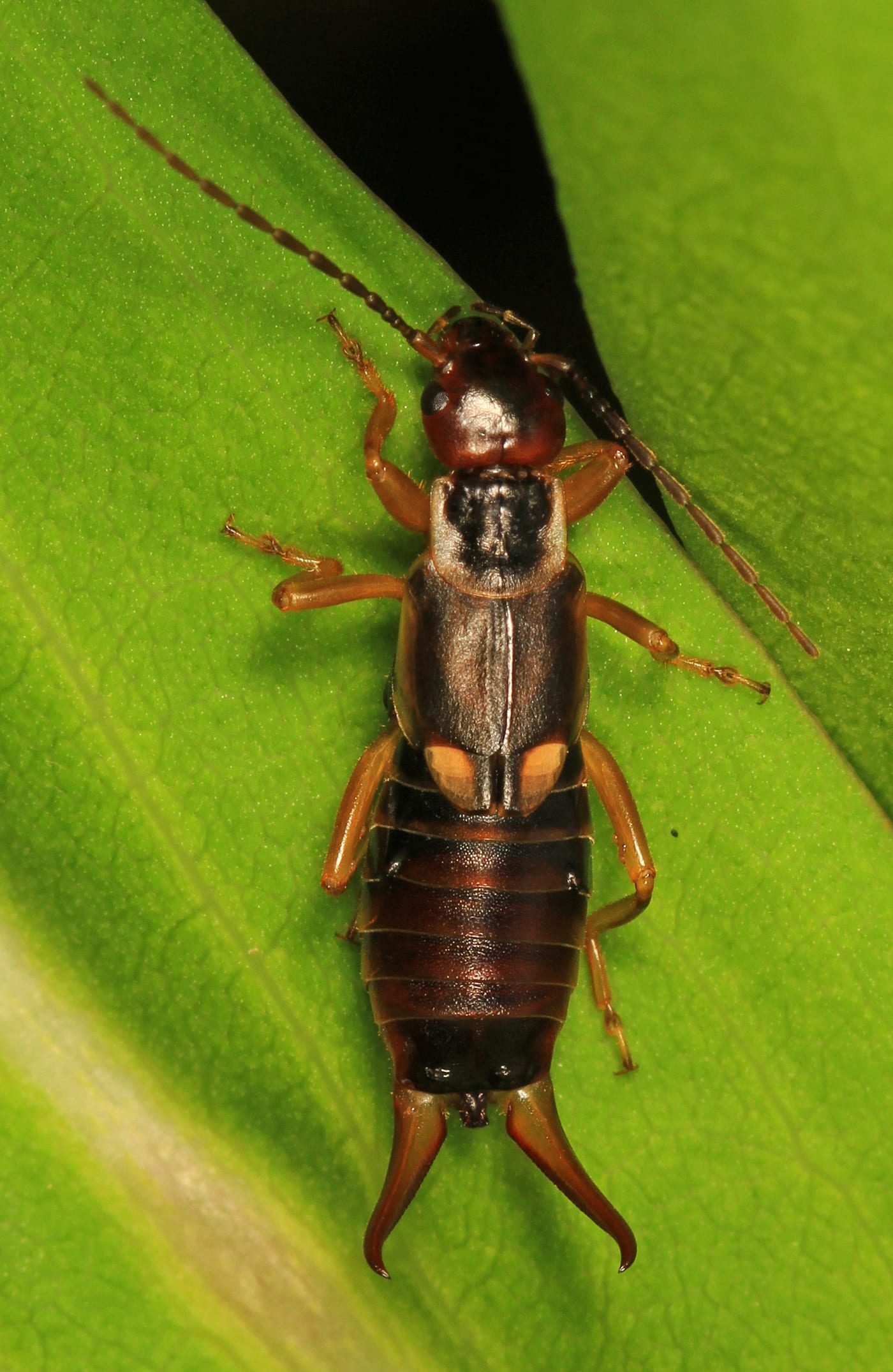
What does it look like?
The common European earwig (Forficula auricularia) is brown, up to 13 to 15mm long, with a distinctive pair of pincers (forceps) at the rear end. The pincers look alarming but are harmless, and are sometimes raised in self-defence rather than used to bite. A smaller species, the lesser earwig (Labia minor), around 6mm long, turns up in compost heaps.
Life cycle
Earwigs breed twice a year, with batches of eggs laid in the soil in midwinter and again in early summer; females stay with their eggs until they hatch, and the nymphs look like small versions of the adults. Earwigs overwinter as adults in the soil and other sheltered places, and are largely nocturnal, feeding at night from late spring to early autumn.
How to encourage it
RHS's own suggestion for encouraging earwigs on fruit trees is an upturned flower pot loosely stuffed with hay or straw, tied onto a cane among the branches. Earwigs shelter in it by day, and it doubles as a way to keep tabs on numbers.
What it helps control
Frequently asked questions
Can I buy earwigs?
Not usefully: earwigs released into a garden with nothing to hold them there simply leave. Creating the right habitat and food source is what actually keeps a population around; see "How to encourage it" above.
Could earwigs actually cause a problem in my garden?
Occasionally, depending on what you're growing: see the note near the bottom of this page.
How do I know if earwigs are actually helping?
Watch the pest population, not the predator count: fewer aphids over a few weeks is the real sign, not how many earwigs you can spot on a given day.
When will I actually see earwigs in the garden?
It depends on the stage in their life cycle — see "Life cycle" above for when they're active and what to expect through the year.
Earwigs are also sometimes a pest in their own right: flower petals and young leaves of some plants, including dahlia, clematis and chrysanthemum, can be eaten, and older foliage occasionally reduced to a skeleton of veins. On fruit trees, though, RHS treats them as beneficial: they eat aphids there without damaging the tree or fruit. Like slugs, whether earwigs help or hurt depends on what's growing.