
BoltingA plant switching early into flowering and seed production, usually triggered by stress, after which leaves, roots or bulbs turn bitter or unusable. Full page → is not a pest or a disease. It's a plant switching from growth to flowering before you want it to, and once it starts there is no reversing it. It affects more crops than anything else grown in a Scottish garden, from lettuce and spinach to onions, beetroot and celery, and the trigger is not always the one you'd guess: some crops bolt from heat, some from a cold snap, and a few from both.
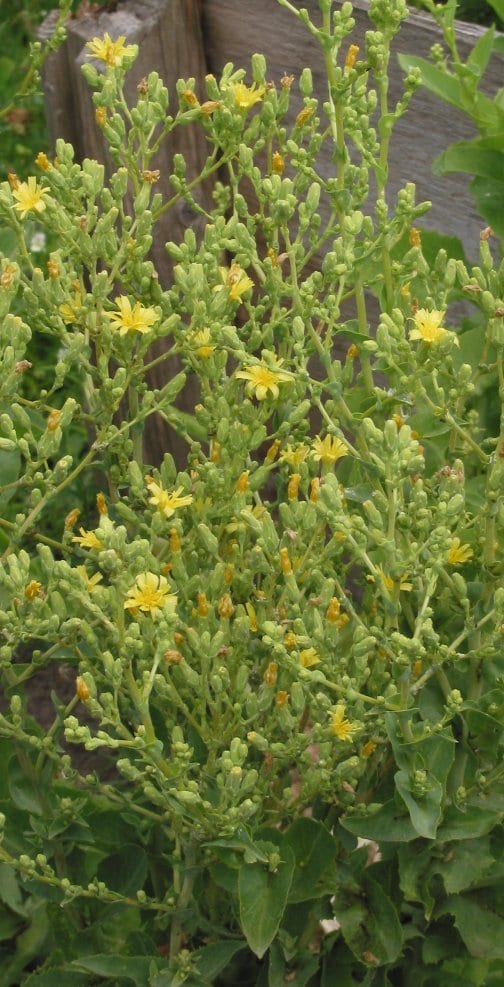
What it looks like
A tall flower stalk shoots up from the centre of the plant, and leaves often turn bitter or tough as it redirects energy away from growth. On a root crop, the root stops swelling and can turn woody. Once flowering has started, that's it: the plant will not go back to producing leaf or root.
Two triggers, pointing in opposite directions
Annual vegetables, lettuce, spinach, radish, endive, Florence fennel, rocket, most herbs and most brassicasThe cabbage family: cabbage, kale, broccoli, cauliflower, Brussels sprouts, kohlrabi, swede, turnip and more, sharing the same pests, diseases and rotation rules. Full definition →, bolt when stressed by heat, warm nights, drought, or the lengthening days of summer. It's an acceleration of a change the plant was always going to make eventually.
BiennialA plant that completes its life cycle over two years: growth in year one, then flowering, seeding and dying in year two. Full definition → vegetables, onions, leeks, beetroot, turnips, kohlrabi, spring cabbage, celery and celeriac, bolt from the opposite trigger: a cold spell, especially while the plant is young or newly transplanted, which tricks it into behaving as though it has already been through a winter and should flower now rather than next year. Root disturbance and general transplant stress can trigger either type.
This is why the same word covers "my lettuce ran to seed in a heatwave" and "my onions flowered after a cold snap": genuinely opposite weather is doing the same thing to two different plants' internal clocks.
🌱 Plants at risk
Bolting also affects these crops:
Why this matters in Scotland
Heat-triggered crops get an easier ride from Scotland's cool summers; cold-triggered ones get a harder one from Scotland's colder, less settled spring.
Lettuce, spinach, endive, rocket, radish and the heat-sensitive herbs rarely meet the sustained heat that triggers bolting further south, a real advantage. Onions, beetroot, celery and celeriac face the opposite: a Scottish spring's cold snaps and late frosts are exactly the trigger that sends them to flower early, which is why those crops do best from autumn planting, heat-treated sets, and transplants delayed until the cold-snap risk has passed. Treating "Scotland is cooler" as uniformly good news for bolting would be wrong for close to half the crops on this list.
One complication worth naming honestly: day length is also a named trigger for the heat-sensitive half of the list, and Scotland's higher latitude means genuinely longer summer daylight than further south. No source we've found measures how much that offsets the cool-summer advantage for bolting specifically, so treat it as a real factor pulling the other way rather than a reason to doubt the advantage altogether, heat and drought are still the dominant triggers for this group.
What actually prevents it
Not every method here is equally proven: some are backed by real evidence, others are simply traditional advice worth trying alongside them.
Sowing and transplanting timing: delay cold-sensitive biennial crops until the cold-snap risk has passed
For crops that bolt from cold (onions, leeks, beetroot, celery, celeriac and similar), raise plants in modulesA tray divided into small individual cells, each sown with its own seed or seedling, so each plant grows undisturbed roots until it's ready to plant out. Full definition → under cover and transplant only once temperatures have settled, rather than rushing them out to an early cold snap. ClochesA small, portable clear cover placed over an individual plant or short row to trap warmth and keep off wind, rain and pests. Full definition → or fleeceA lightweight, breathable fabric laid or draped over plants to trap a little warmth and keep off frost, wind and some flying pests. Full definition → for the first few weeks after planting out give extra protection during the highest-risk window.
This is the opposite advice to the heat-triggered control below. Applying it to the wrong half of the list would not help: a crop bolting from cold needs warmth and shelter, not the watering that helps a heat-triggered crop.
Consistent watering through dry, warm spells for heat-triggered crops
Dry soil encourages bolting, particularly named for cauliflower, rocket and spinach, but the same logic applies across the heat-triggered half of this list. Keeping the soil consistently moist through a warm spell removes one of the two levers (heat plus drought) that push these crops to flower.
Choose bolt-resistant cultivarsA plant variety that arose or was bred under cultivation and is kept true by deliberate propagation, rather than a naturally occurring wild species. Full definition → where one exists
Bolt resistance is a named, bred trait on many crops, including Boltardy beetroot, Winter Density lettuce and Mikado spinach. It doesn't remove the risk, but it raises the threshold before either trigger takes effect.
Check the variety picks on the crop's own growing guide for the specific bolt-resistant options worth choosing.
Succession sowing: sow smaller batches every few weeks rather than one large sowing
Spreading sowings across several weeks means that even if one batch hits its trigger window (a heatwave or a cold snap) and bolts, later or earlier batches sown under different conditions usually don't, so the whole crop isn't lost at once.
For alliums specifically: snap off the flower stem as soon as it appears
Onions and garlic are the exception to 'once bolted, nothing can be done'. Removing the flower stem the moment it appears stops the plant from finishing the flowering process and limits further damage to the bulb, though the bulb's ultimate size and storage life are usually still reduced.
This is damage limitation, not prevention, and it is allium-specific. Do not generalise it to lettuce, spinach or the brassicas above, where our own crop guides are explicit that a bolted plant cannot be rescued.
Frequently asked questions
What should I do if my crop bolts?
Nothing will bring it back for most crops — pull it and start again, or, on a leafy crop, use what you can before it turns bitter. The two exceptions are onions and garlic, where snapping off the flower stem the moment it appears limits further damage to the bulb, though its size and storage life are usually still reduced.
Is bolting the same problem on every crop?
No, and that's the thing most advice gets wrong. Annual crops (lettuce, spinach, herbs, most brassicas) bolt when stressed by heat, drought or long days. Biennial crops (onions, leeks, beetroot, celery, celeriac) bolt from the opposite trigger: a cold spell that tricks them into thinking they've already had their winter. Advice for one type can be useless, or actively wrong, for the other.
Does Scotland make bolting better or worse?
Both, depending on the crop. Cool summers are a genuine advantage for the heat-triggered half of the list. A colder, less settled spring is a genuine disadvantage for the cold-triggered half. Treating 'Scotland is cooler' as blanket good news would leave onion and beetroot growers caught out.
Do bolt-resistant varieties actually work?
They raise the threshold rather than removing the risk. Boltardy beetroot, Winter Density lettuce and Mikado spinach are all bred specifically for this and are worth choosing over a non-resistant variety, but none of them make timing or watering optional.
Sources
2 sources, recorded with what each was used for
- RHS: definition, the two-mechanism explanation (annual heat/day-length triggers vs biennial cold/vernalisation triggers), warm-night threshold, dry-soil trigger, susceptible crop groups, sowing timing, cloches/fleece, bolt-resistant cultivars, succession sowing
- RHS: the allium-specific flower-stem-removal rescue action