
Powdery Mildew is a common disease that affects courgettes, swede and turnip in Scotland. Here is what it looks like, the conditions it needs, and the controls that actually work.
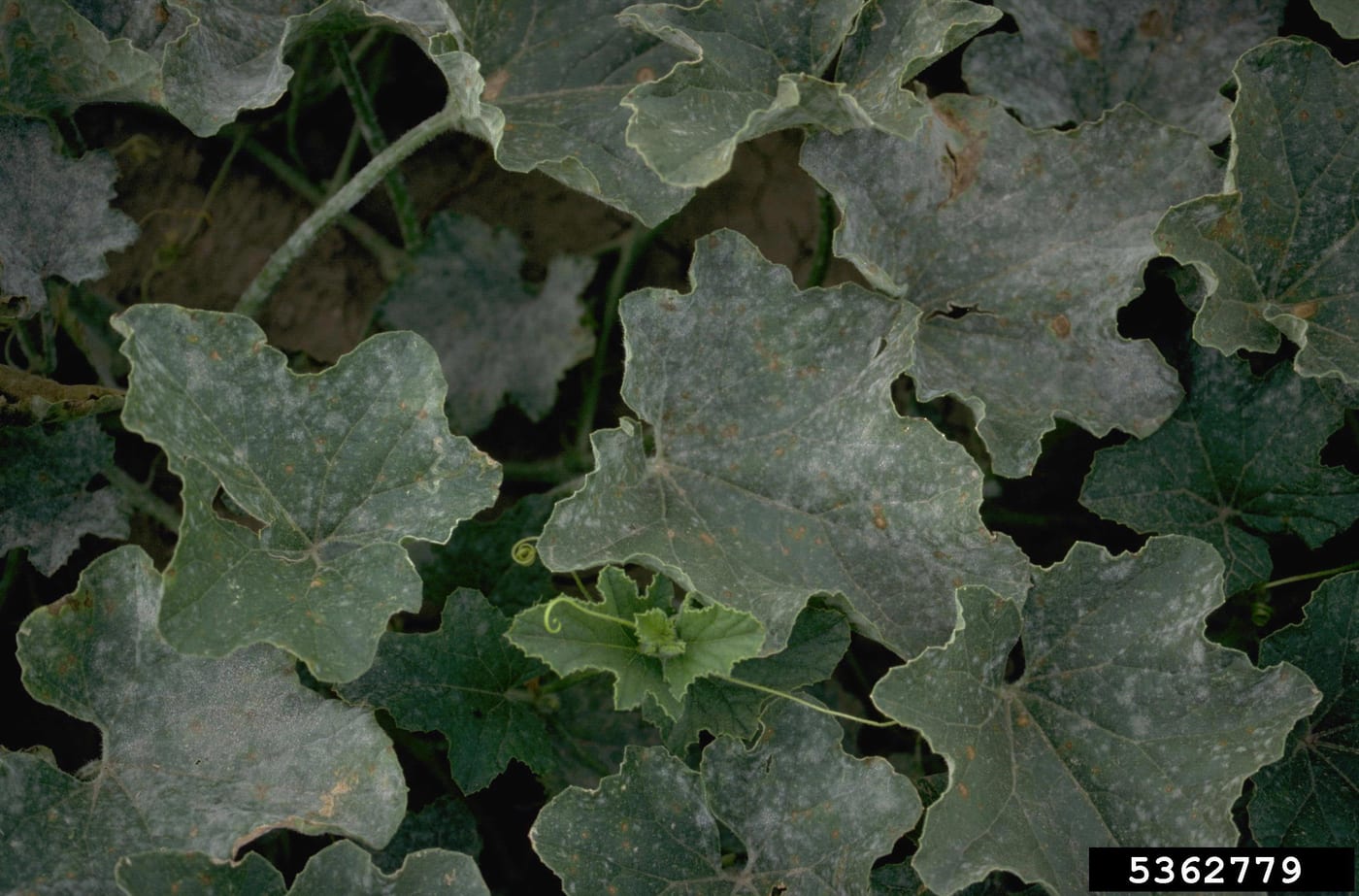
What does it look like?
A white, dusty coating on leaves, stems and flowers. Also leaf distortion, discolouration, stunted growth, and occasionally scarring on succulent plants.
🌱 Plants at risk
Powdery Mildew also affects these crops:
Powdery mildew is a DRY-conditions disease. Most gardeners assume the opposite, and act on that assumption.
Powdery mildew favours dry conditions over wet. Its spores have 'unusually high water content, enabling them to infect under drier conditions'. High humidity without free water promotes spore production, but direct water contact actually inhibits the disease. Overhead watering at midday in dry weather can even reduce infection.
This inverts standard practice. Gardeners are taught to avoid wetting foliage, which is correct for botrytis and rust but wrong for powdery mildew. And the usual instinct on seeing mildew is to water less; RHS's advice is the reverse: water regularly to avoid drought stress, and mulchA layer of material spread over the soil around plants to suppress weeds, retain moisture, and improve soil structure as it breaks down. Full definition → to retain soil moisture.
Why this matters in Scotland
The one disease where Scotland's wet climate is a straightforward advantage outdoors, and a warning about growing under cover.
Most of what makes Scotland harder for growers is a limitation: colder, later, wetter, shorter. Powdery mildew is the inverse. It wants dry conditions and is inhibited by direct water contact, so an open Scottish garden is a hostile place for it. But the caveat is sharp: high humidity without free water promotes spore production, which describes a polytunnel exactly. Foliage stays dry under cover while humidity stays high. So Scottish courgettes grown outdoors are relatively safe from mildew, while the same crop under cover faces ideal conditions for it. Cover is again a trade, not a shield.
Controls: what actually works
Not every method here works equally well: some are backed by real evidence, and one has been tested and shown not to help despite how often it gets repeated.
Fungicides
RHS: 'The RHS recommends that you don't use fungicides.' They may reduce biodiversity and harm soil health.
Water regularly during dry periods to avoid drought stress; mulch to retain soil moisture
Water regularly through dry periods to avoid drought stress, and mulch to retain soil moisture. Overhead watering at midday in dry weather can also reduce infection.
Powdery mildew is inhibited by direct water contact, so midday overhead watering can actually help against it. Grey mould and blight are the opposite: wet foliage is exactly what lets them take hold, so keeping leaves dry is the right advice there. Both pieces of advice are correct for their own disease. On a crop at risk from both, courgettes get powdery mildew and are also botrytis-susceptible, that's a genuine trade-off: keeping foliage dry is the safer default, since grey mould tends to do more damage, with overhead watering reserved as a targeted response once powdery mildew has actually appeared rather than a routine habit.
Plant in full sun with good air circulation; avoid dense spacing near walls
Air circulation is the one control that works for powdery mildew, botrytis and blight alike: the common lever, despite their opposite moisture preferences.
Remove infected fallen leaves in autumn; prune infected shoots promptly
Grow mildew-resistant cultivarsA plant variety that arose or was bred under cultivation and is kept true by deliberate propagation, rather than a naturally occurring wild species. Full definition →
Check seed catalogues for mildew-resistant cultivars of vegetables and ornamentals.
Frequently asked questions
What should I do first if I find powdery mildew in my garden?
Start with water regularly during dry periods to avoid drought stress; mulch to retain soil moisture. After that, plant in full sun with good air circulation; avoid dense spacing near walls. Work through the rest in order of how well-evidenced they are if the first two aren’t enough on their own.
Is there a spray that works?
No. There are no amateur chemical treatments available for powdery mildew. The controls that work are cultural: the measures listed above.
How much of this advice is actually proven?
4 of the 5 controls above are evidence-based, not just repeated folklore. Start with the evidence-based ones and treat anything lower down the list as worth trying, not worth relying on.
Sources
1 source, recorded with what each was used for
- RHS1: group of fungi with narrow host ranges, white dusty coating and other symptoms, courgette susceptibility, DRY-conditions preference and spore water content, inhibition by direct water, midday overhead watering, advice against fungicides, watering/mulching/airflow/hygiene, existence of resistant cultivars