
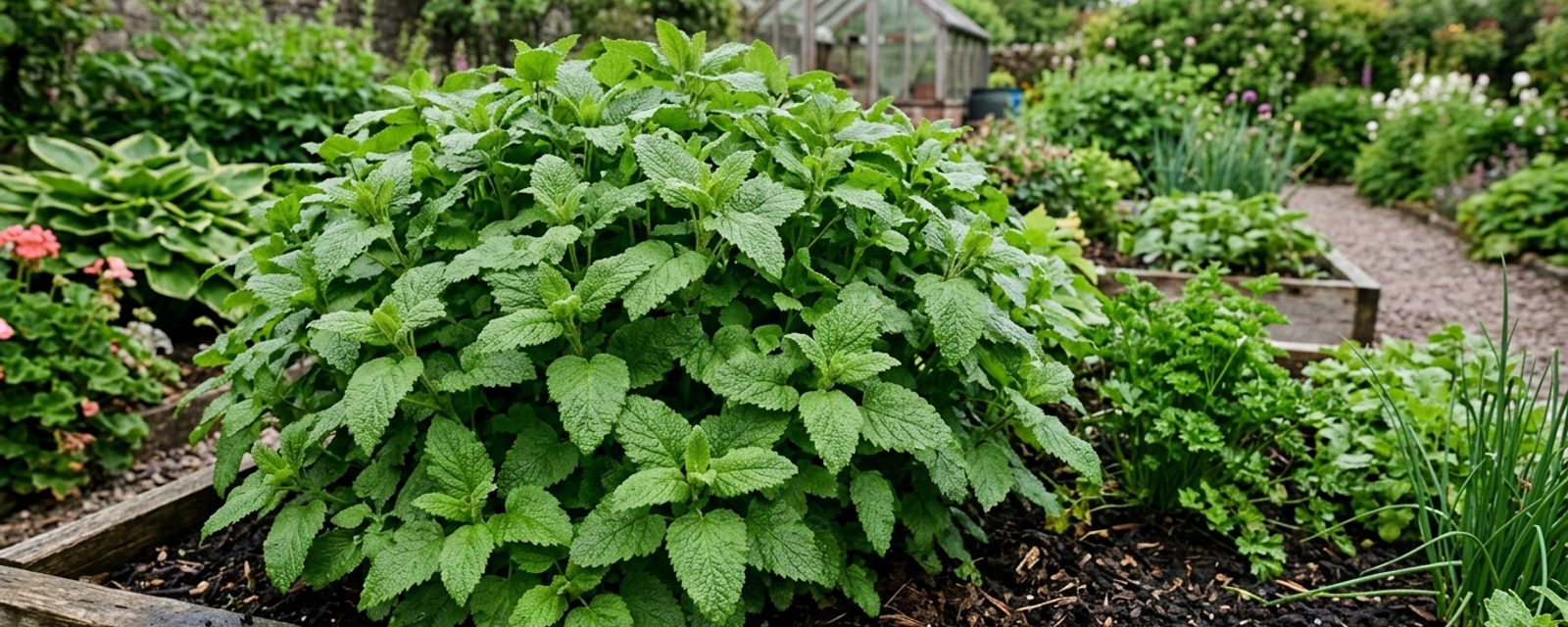
Melissa officinalis
The real containment warning for lemon balm matters more here than hardiness or drainage: this plant spreads readily and can be difficult to remove once it's settled in, so plan for that before planting rather than after.
It's a fully hardy perennial with a genuine lemon scent when the leaves are crushed, happy in sun or partial shade and tolerant of most soil types short of waterlogging.
Site and soil
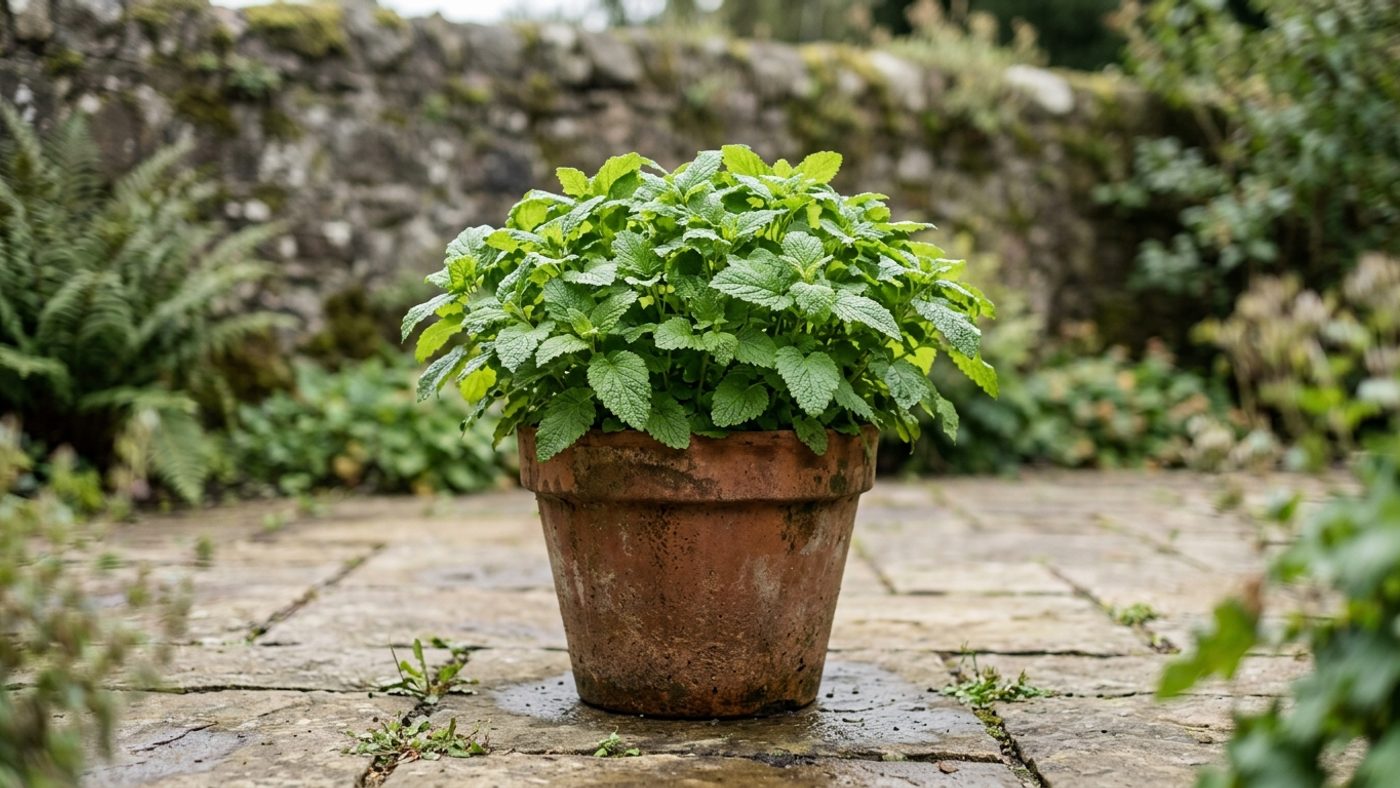
Choose a spot in sun or partial shade for the plain species; the yellow-leaved and variegated cultivarsA plant variety that arose or was bred under cultivation and is kept true by deliberate propagation, rather than a naturally occurring wild species. Full definition → (All Gold, Aurea) want full sun specifically, not shade, on their own individual RHS listings, despite the common assumption that gold or variegated foliage means a shade-loving plant. Most soil types work, but avoid waterlogged ground. Space plants 45cm apart. For containers, use a minimum 25cm wide and deep pot with peat-freeCompost made without peat, which is harvested from a slow-forming, carbon-storing wetland habitat that peat extraction damages. Full definition → loam-based compost, a genuinely useful choice here since it also curtails the spreading a border planting would allow.
Sowing and planting
Sow indoors in spring: cover seed lightly, and keep in a heated propagator or under plastic in a warm, bright spot; germinationA seed sprouting: breaking dormancy and putting out its first root and shoot, given the right warmth and moisture. Full definition → takes up to three weeks. Direct-sowing outdoors works from late spring to early summer, sown thinly and lightly covered, since light aids germination. Harden offGradually getting young plants raised indoors used to outdoor conditions over 7–14 days before planting out, so cold, wind and direct sun don't shock or damage them. Full definition → indoor-raised plants before planting out. DividingPropagating a clump-forming perennial by digging it up and splitting it into several smaller pieces, each with roots and shoots attached. Full definition → an established plant in spring or autumn is a genuine alternative to sowing from scratch.
Care through the year
Established ground-grown plants need no routine watering; container plants should be kept evenly moist. Neither source names feeding as necessary. Pinch outRemoving the soft growing tip of a stem to stop upward growth and make the plant branch out sideways instead. Full definition → growing tips while young to encourage a bushier plant. Cut the whole plant back to the base after flowering for a fresh flush of more flavourful leaves, and to stop unwanted self-seeding, since it self-seeds readily unless cut back this way.
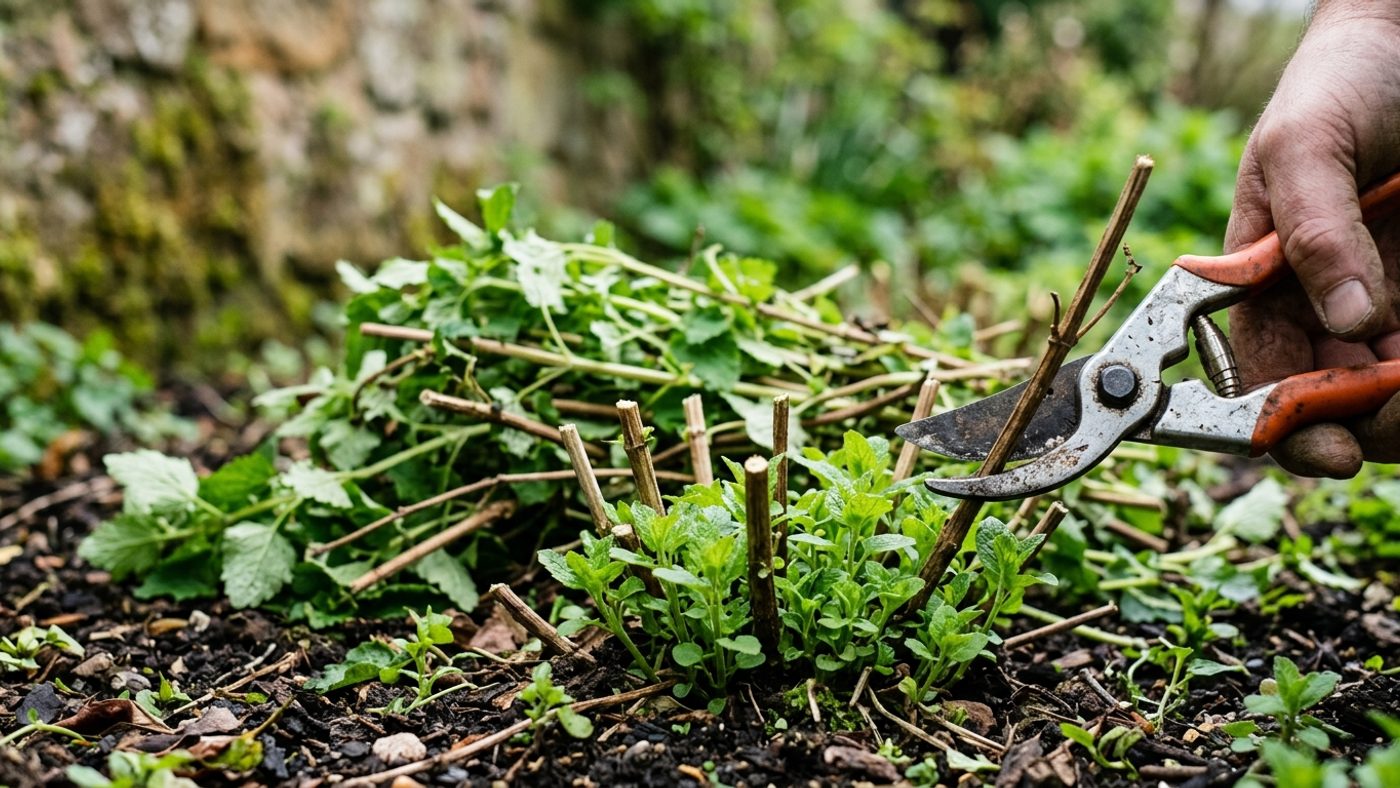
Dividing clumps every few years in spring or autumn also helps manage its size. Plants die back naturally over winter and resprout in spring; the only real winter care is keeping container plants somewhere sheltered from prolonged, heavy rain, since cold, soggy conditions rather than cold itself can cause root rot.
Harvesting
Harvest spring through autumn. Leaves are most flavourful when young, picked before the plant flowers.
Varieties
Three varieties are named in total (standard lemon balm, All Gold, Aurea). None carries AGMThe RHS's Award of Garden Merit: a UK-wide trials award for reliable performance, not a Scotland-specific recommendation. Full definition →; standard lemon balm's flavour strength is what makes it the plain culinary default. Aurea, with yellow-splashed leaf margins and a strong lemon flavour, is a third full-sun option alongside All Gold, closer to the species in size where All Gold is genuinely dwarf.
★ Our pick for Scotland
Standard lemon balm
Melissa officinalis · vigorous · strong lemon flavour
The strongest lemon flavour of the three named forms, and the one most gardeners actually want for cooking and infusions.
Why this one: No AGM award exists for lemon balm. The variegated forms trade some flavour intensity for decorative foliage, a real trade-off worth knowing before choosing one over the plain standard form.
Also worth considering
All Gold
Yellow leaves · full sun · good fragrance
A decorative, dwarf alternative that wants full sun on its own RHS listing (not shade, despite the gold foliage), useful for a gardener who wants the ornamental value alongside the culinary use in a small, sunny spot.
Best Lemon Balm Varieties for Scotland → compares all named lemon balm varieties head-to-head, with the practical detail that doesn't fit in a summary card.
Common problems
- Powdery mildew can cause white fungal growth and leaf distortion.
- Sage and Ligurian leafhoppers cause coarse pale mottling, though lemon balm is otherwise generally robust and healthy.
- Root rot is mostly a container risk: cold, soggy compost over winter, rather than cold itself, is what causes it, so keep pots sheltered from heavy rain.
Common questions
Will lemon balm take over my garden the way mint can?
No, it genuinely can: lemon balm has a real tendency to spread, forming a large clump within a few years and self-seeding readily unless cut back after flowering. Grow it in a container to curtail spreading, the same containment problem mint presents. Full sourced breakdown: <a href="/tools/garden-myths/lemon-balm/">Lemon Balm Myths →</a>
When is the best time to pick lemon balm leaves?
No: leaves are most flavourful when young and picked before the plant flowers. Cutting the whole plant back to the base after flowering prompts a fresh, more flavourful flush. Full sourced breakdown: <a href="/tools/garden-myths/lemon-balm/">Lemon Balm Myths →</a>
Does lemon balm need regular feeding?
No: established ground-grown plants need no watering routine, and no feeding is named as necessary. It's a genuinely low-maintenance perennial once settled in. Full sourced breakdown: <a href="/tools/garden-myths/lemon-balm/">Lemon Balm Myths →</a>
Sources
2 sources, and what each was used for
- RHS: perennial habit, site/soil, sowing method and months, propagation, pruning, harvest window, hardiness, winter care, invasive spreading behaviour, varieties, common problems
- Garden Organic: spacing figure, pinching out growing tips, division as propagation, harvest timing to 12 weeks after sowing