
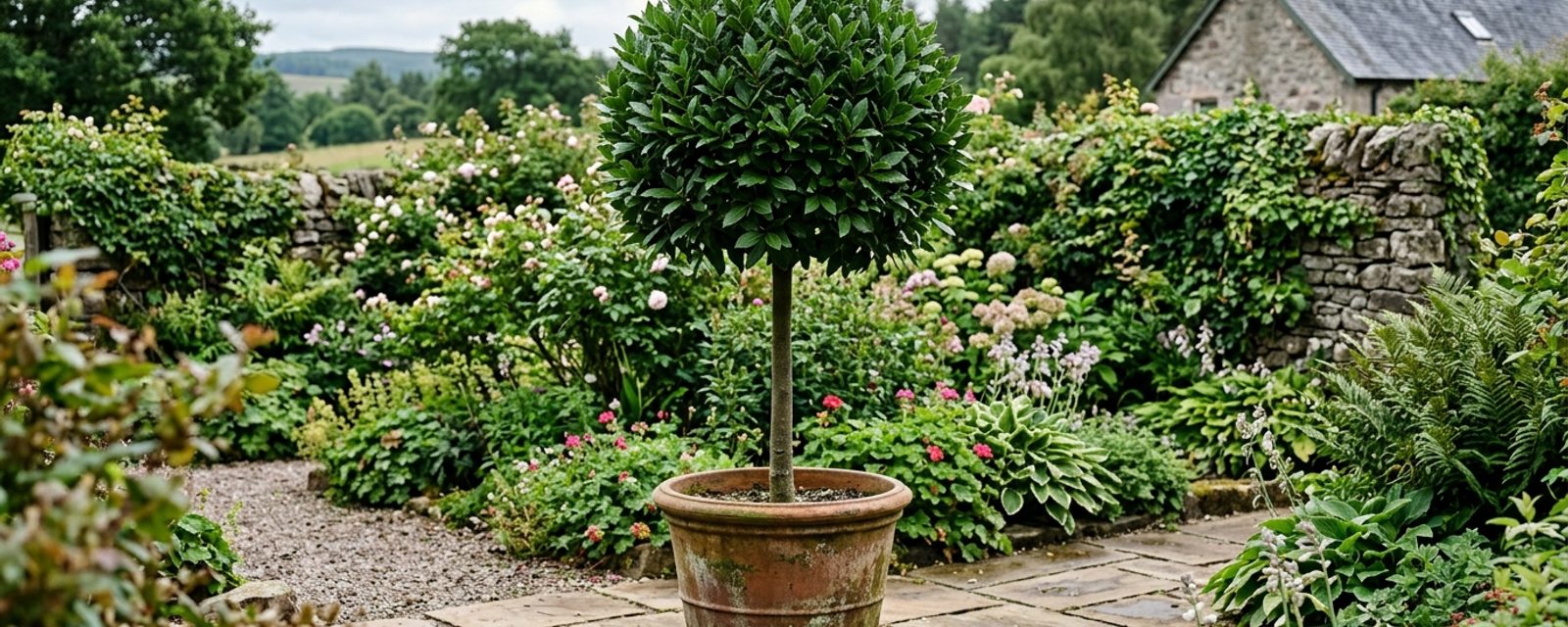
Laurus nobilis
Bay's real risk in a Scottish garden is different from rosemary's or thyme's: it's frost, not wet roots, and it hits young plants hardest. Most Scottish growers keep bay in a container for exactly that reason: a pot lets you move the plant somewhere sheltered the moment a hard frost is forecast, which a plant in open ground can't do for itself.
This is an evergreen shrub or small tree, not a soft herb: left unclipped it can reach 8-12m, though regular trimming is what keeps almost every garden bay at a manageable size, whether as a loose bush or a clipped standard. Established, sheltered plants need very little routine care; young plants and container specimens need real winter attention. Plants are dioecious, meaning individual bay trees are either male or female, and only female plants follow their small yellow spring flowers with glossy black berries; this makes no difference to leaf harvesting, since both sexes crop the same way.
Planting
RHS gives spring, once the soil is starting to warm up, for planting bay in the ground. Garden Organic gives a wider window, May-June and September-October, for planting out a bought plant or a rooted cutting. Either timing works; avoid planting into cold, wet soil regardless of the month. Choose a warm, sheltered site in free-drainingSoil that lets water pass through quickly rather than pooling, so roots aren't sitting in wet ground after rain. Full definition → soil, in full sun or light shade, ideally against a south- or west-facing wall, and avoid damp ground or a spot exposed to strong wind. It tolerates acid, alkaline or neutral soil, so pH isn't a real constraint here.
Growing in a container
Use a loam-based compost, peat-freeCompost made without peat, which is harvested from a slow-forming, carbon-storing wetland habitat that peat extraction damages. Full definition → John Innes No 2 or 3, mixed with horticultural grit for drainage, in a pot with plenty of drainage holes, slightly larger than whatever pot the plant was bought in. Check container plants regularly through summer, since they dry out faster than ground-planted bay, but avoid letting the compost sit waterlogged, which risks root rot. Feed with an organic-based general liquid fertiliser every two to three weeks from mid-spring to late summer; ground-planted bay needs no feeding at all, just a mulchA layer of material spread over the soil around plants to suppress weeds, retain moisture, and improve soil structure as it breaks down. Full definition → of organic matter in late winter or early spring. Repot every two to three years into a slightly larger container with fresh compost, or, once the pot is as large as you want to manage, refresh the compost and prune the roots instead of sizing up further.
Winter protection
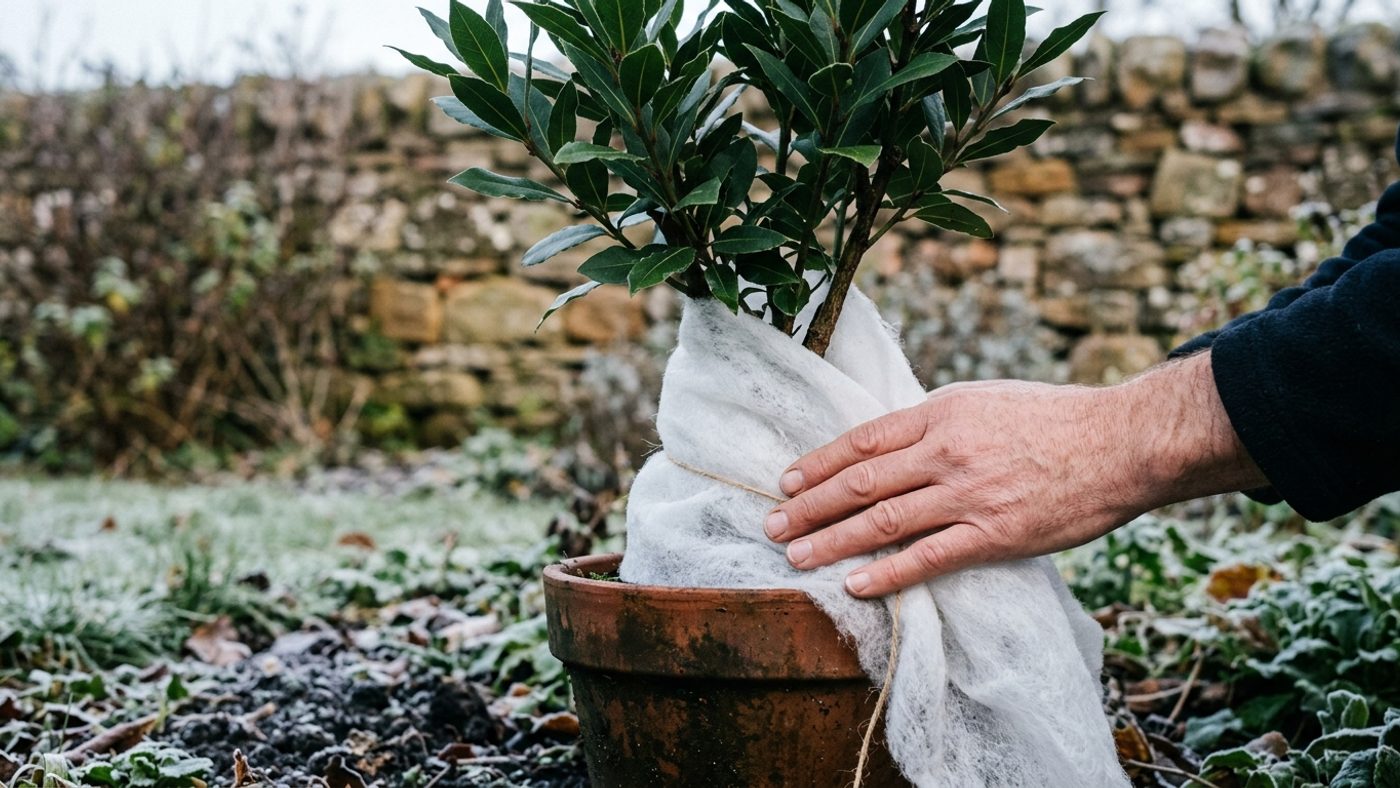
This is the routine case for most Scottish bay, not an occasional precaution: bay is rated H4The RHS's H1a–H7 scale for how much cold a plant can survive outdoors, H1a being tender indoor-only and H7 hardy anywhere in the UK. Full definition →, hardy through most of the UK to about -5 to -10°C, but genuinely more frost-tender than that figure suggests while young. Cover smaller or younger plants with biodegradable fleeceA lightweight, breathable fabric laid or draped over plants to trap a little warmth and keep off frost, wind and some flying pests. Full definition →, hessian or an old bedsheet whenever frost is forecast. Container plants are the more vulnerable case specifically because their roots have far less insulating soil around them than a ground-planted specimen: wrap the pot, or move it somewhere sheltered, a greenhouse, porch or the lee of a wall, for the coldest months. In spring, prune out any shoots that were damaged by frost over winter.
Cold-Hardy Herb Border Design → works through how to tier bay and other borderline-hardy herbs by hardiness in a permanent border.
Varieties
Best Bay Varieties for Scotland → compares all named bay varieties head-to-head, with the practical detail that doesn't fit in a summary card.
Pruning and training
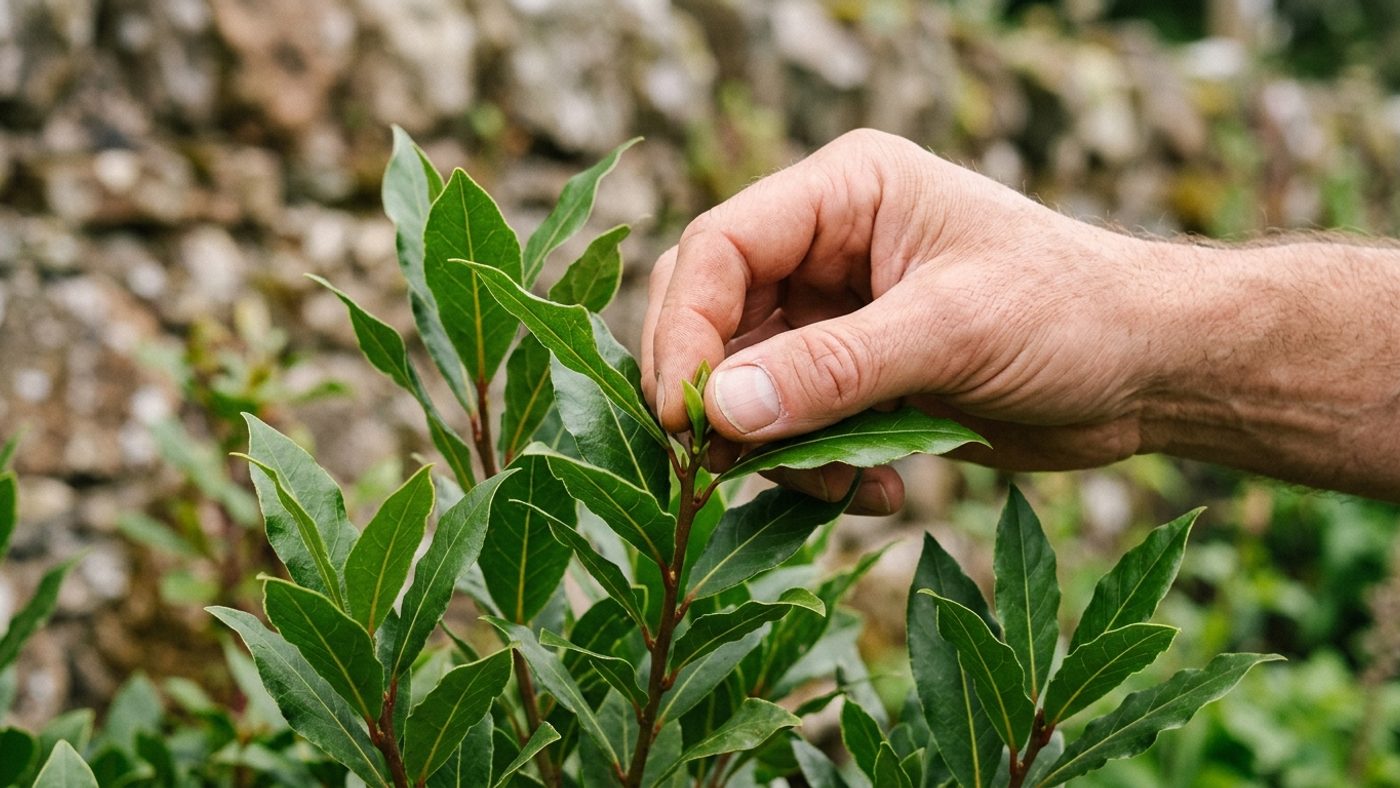
Pinch outRemoving the soft growing tip of a stem to stop upward growth and make the plant branch out sideways instead. Full definition → growing tips on young plants to encourage a bushy shape. Shorten new growth through summer using secateurs or loppers for a clean cut, and give a harder prune in mid-to-late spring if the plant has outgrown its space. Standards need root suckersA shoot that grows from a plant's roots or lower trunk, separate from the main framework, usually removed before it diverts energy. Full definition → removed as soon as they appear, to keep a single clear stem.
Propagation
Semi-ripe cuttings in late summer, or softwood cuttings in early summer, are the simplest, fastest and most practical route. LayeringPropagating a new plant by pinning a low, flexible stem into the soil while still attached to the parent, so it roots before being cut free. Full definition → in autumn works too, taking about a year to root. Seed is possible but slow and unreliable: it can take 5-12 months to germinateA seed sprouting: breaking dormancy and putting out its first root and shoot, given the right warmth and moisture. Full definition →, and Garden Organic notes a seed-raised plant can take up to two years before it's really worth harvesting from, well beyond what a rooted cutting needs.
Harvesting
Evergreen, so leaves can be picked year-round once a plant is established. Use fresh for a stronger, slightly bitter flavour, or dry and store in an airtight container, or freeze. Remove leaves before serving whatever you cook them in, since they stay tough and don't soften with cooking.
Common problems
- Bay sucker causes discoloured, distorted leaves at shoot tips, most active in spring. Pick off and destroy affected shoots when you see the damage.
- Scale insects, both horse chestnut and soft scale, show as small waxy bumps on stems and leaf undersides. A light infestation can usually be wiped or scraped off by hand.
- Root rot follows waterlogged compost or soil, especially over winter: the main real risk for a container-grown bay.
See more problems
- Powdery mildew and leaf spot are both named as disease risks, leaf spot often following waterlogged roots, the same underlying cause as root rot.
- Tortrix moth caterpillars roll and web leaves together, feeding inside; pick off and destroy affected leaves.
- Honey fungus is a rare but serious risk: no cure exists, so remove and destroy an affected plant rather than trying to treat it.
Common questions
Is bay actually hardy enough for a Scottish garden?
Yes, with care: the shared H4 rating with rosemary hides a real difference: rosemary's threat is wet, freezing roots, while bay's is air temperature hitting young or container growth. Fleece or move bay pots under cover below -5°C. Full sourced breakdown: <a href="/tools/garden-myths/bay/">Bay Myths →</a>
Should I grow bay in a container or in the ground?
A container, for most Scottish gardens: it's the mobility that matters, not the pot itself. Ground planting is genuinely viable, but only in a warm, sheltered spot, ideally against a south- or west-facing wall, and the plant is far less forgiving of a bad site in the ground than it is of a bad winter in a pot you can move.
Is bay safe to grow if I have pets?
Yes, with precautions: bay's essential oils cause vomiting and diarrhoea in pets, and whole leaves can even cause a gut blockage in cats. Keep trees, trimmings and fallen leaves away from areas pets access unsupervised. Full sourced breakdown: <a href="/tools/garden-myths/bay/">Bay Myths →</a>
How do I keep a bay tree small?
Regular trimming. Left alone, bay can reach 8-12m, but clipping is exactly why most bay trees stay a manageable container size or are shaped into topiary standards. Pinch out growing tips on young plants to encourage a bushy shape, then shorten new growth through summer to maintain size, and give it a harder prune in mid-to-late spring if it's got away from you.
Sources
4 sources, and what each was used for
- RHS: planting method and timing, container vs ground growing, compost mix, watering and feeding, hardiness and winter protection, pruning and training (topiary, standards, free-form), propagation, harvesting and storage, pests and diseases, repotting
- RHS: H4 hardiness figure, pH direction, ultimate size, and the fuller pest/disease list (bay sucker, horse chestnut and soft scale, tortrix moth caterpillars, powdery mildew, leaf spot, honey fungus)
- Garden Organic: a genuinely independent second growing guide: a wider planting window (May-June and September-October, against RHS's spring-only), the pinch-out-growing-tips training technique, seed-to-harvest timescale (up to 24 months), and corroborates container growing and winter protection for cold regions
- gardenersworld.com: corroborates container growing for colder areas and describes young plants as 'slightly tender'; states foliage is toxic to cats, dogs and horses, causing an upset stomach — a genuine safety note neither other source raises directly