
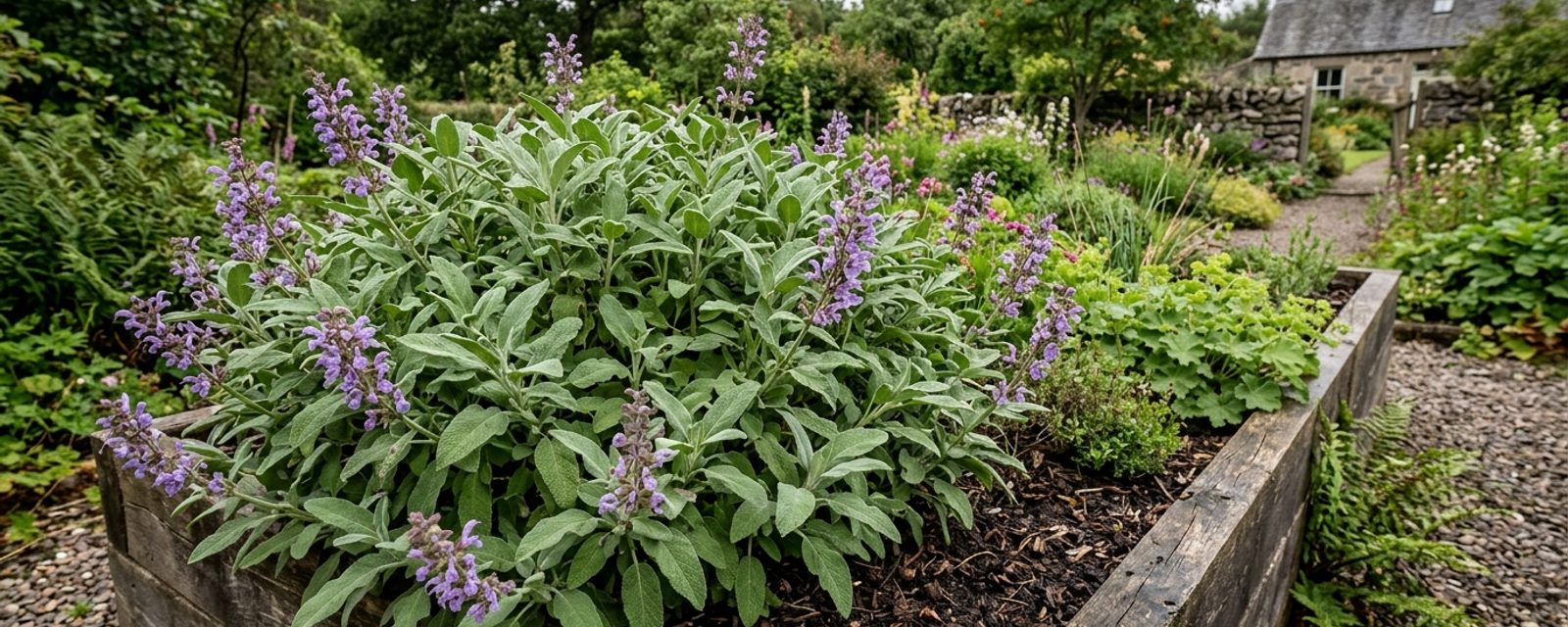
Salvia officinalis
Winter waterlogging, not cold, is the real risk for sage in Scotland, two independent sources agree; the AGMThe RHS's Award of Garden Merit: a UK-wide trials award for reliable performance, not a Scotland-specific recommendation. Full definition → variety that rarely flowers keeps more energy for leaf, and feeding it might be doing more harm than good.
Sage asks for the same things thyme and rosemary do: full sun, a sheltered spot, and free-drainingSoil that lets water pass through quickly rather than pooling, so roots aren't sitting in wet ground after rain. Full definition → soil, with the same reversed instinct it takes to grow any of them well here: work on the ground, not on wrapping the plant up for winter.
Site and soil
Choose a spot in full sun and shelter with free-draining soil. Poor drainage means growing sage in a raised bed or container instead of open ground; work grit into heavy soil either way.
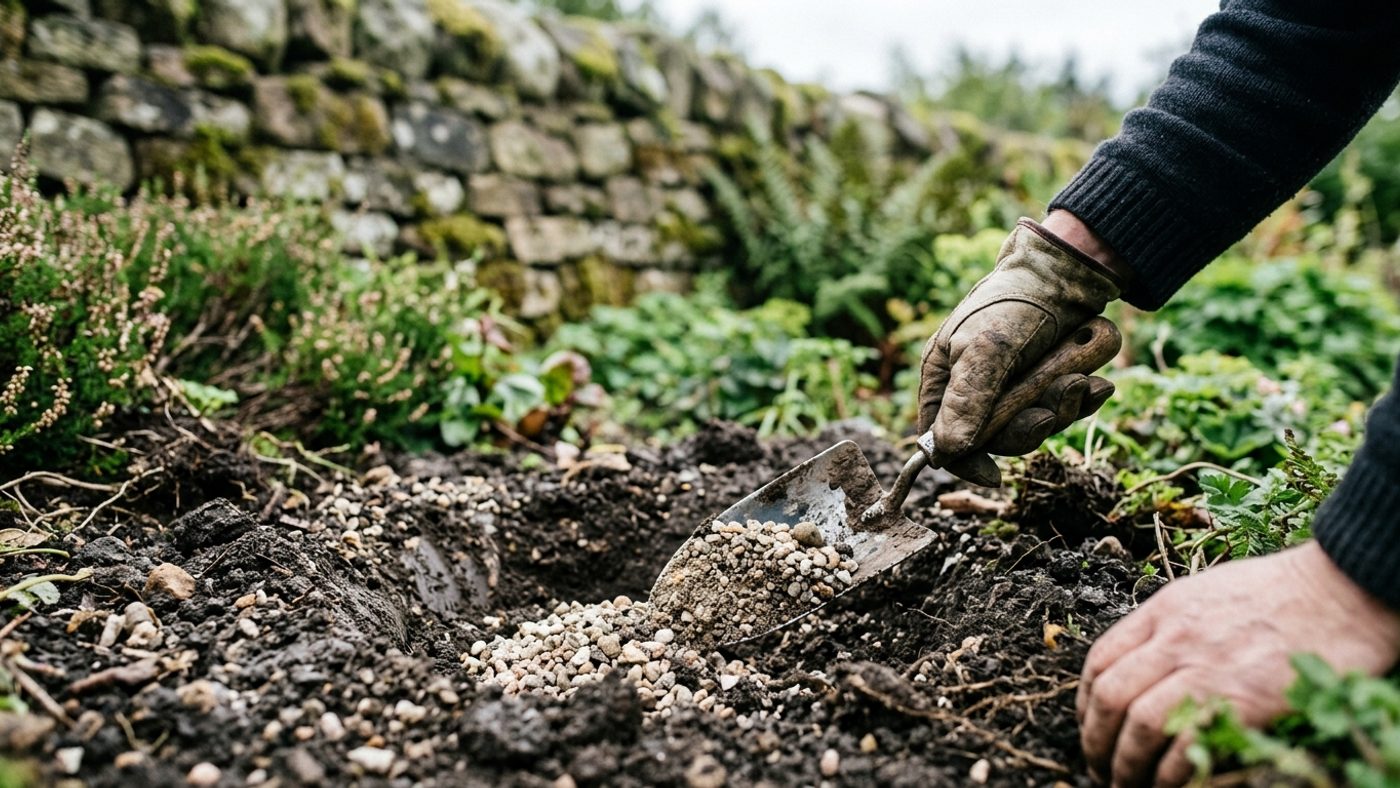
Space plants at least 30cm apart, though a mature plant's real footprint is closer to 60cm across. For containers, use a minimum 30cm wide and deep pot with drainage holes, filled with peat-freeCompost made without peat, which is harvested from a slow-forming, carbon-storing wetland habitat that peat extraction damages. Full definition → soil-based compost mixed with up to 25% horticultural grit.
Sowing and planting
Seed works but is slow: sown indoors in spring into peat-free compost, germinatingA seed sprouting: breaking dormancy and putting out its first root and shoot, given the right warmth and moisture. Full definition → in about two weeks, then potted onMoving a plant into a larger pot as its roots fill the current one, giving it more room and fresh compost before it becomes pot-bound. Full definition → as seedlings grow. It takes at least a year to reach harvesting size this way. A young bought plant is the faster, more reliable route for perennial kitchen sage, and seed is better saved for annual and biennialA plant that completes its life cycle over two years: growth in year one, then flowering, seeding and dying in year two. Full definition → sage relatives. Plant out in spring, once the soil is starting to warm; container-grown plants can go in at any time.
Care through the year
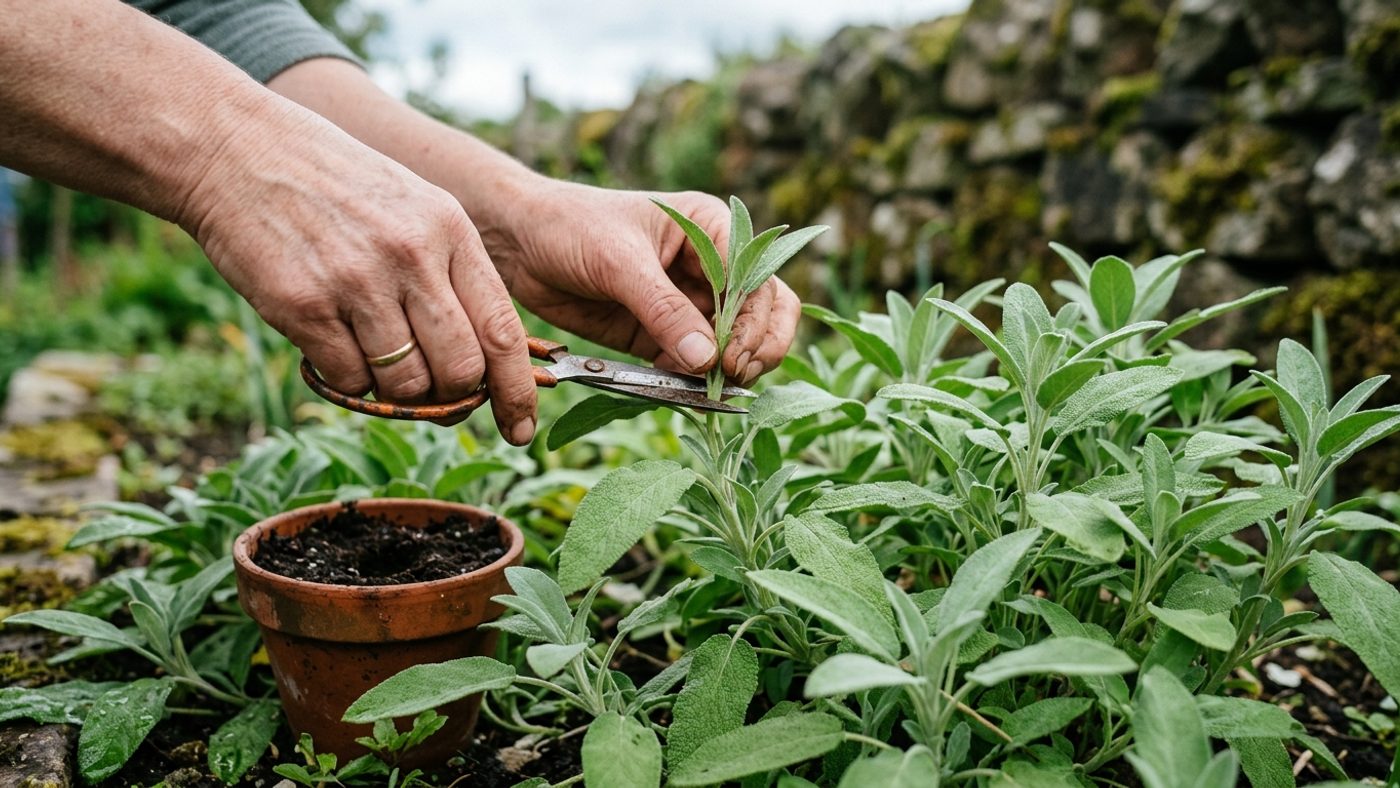
Water newly planted sage through dry spells in its first year; once established in the ground, it's drought-tolerant and needs little extra watering. Container plants need regular checking, kept slightly moist but never saturated. Skip feeding on open ground by default, since sage grown lean is closer to its natural poor-soil origins; container plants over a year old can take a general-purpose granular feed in spring or early summer. Prune lightly in mid-to-late spring to keep plants compact, trim faded flower stems in late summer, and never cut into old, bare wood, since it won't reshoot reliably. Plants naturally go woody after six to seven years; propagate fresh replacements from softwood cuttings (late spring/early summer) or layeringPropagating a new plant by pinning a low, flexible stem into the soil while still attached to the parent, so it roots before being cut free. Full definition → rather than trying to rejuvenate an old plant.
Winter
Protect containers from excess winter rain to prevent root rot, and keep them somewhere sheltered. Biodegradable fleeceA lightweight, breathable fabric laid or draped over plants to trap a little warmth and keep off frost, wind and some flying pests. Full definition → over in-ground plants is optional, not essential.
Harvesting
Pick leaves year-round as an evergreen, but for the best flavour, harvest soft new growth in spring and summer, before the plant flowers.
Varieties
Three AGM cultivarsA plant variety that arose or was bred under cultivation and is kept true by deliberate propagation, rather than a naturally occurring wild species. Full definition → exist in total (Purpurascens, Icterina, Berggarten) alongside common sage and four further non-AGM named varieties (Tricolor, Maxima, Kew Gold, Albiflora). Berggarten's rarely flowering keeps more energy in leaf, a practical trait alongside its AGM. Icterina, bright yellow-and-green variegated with well-flavoured leaves, is a third AGM option alongside Berggarten and Purpurascens.
★ Our pick for Scotland
BerggartenAGM
Large grey-green leaves · strong flavour · rarely flowers
An AGM cultivar with large, strongly flavoured leaves and purple-blue flowers, though it flowers only rarely, keeping the plant's energy in leaf growth instead.
Why this one: Larger leaves than Purpurascens make it the more practical pick for regular kitchen use, without giving up any of the purple-leaved variety's hardiness or flavour.
Also worth considering
PurpurascensAGM
Purple-grey foliage · mauve-blue flowers
A second AGM pick with striking purple-grey leaves, useful where a decorative border plant needs to earn its keep in the kitchen too.
Best Sage Varieties for Scotland → compares all named sage varieties head-to-head, with the practical detail that doesn't fit in a summary card.
Common problems
- Root rot follows waterlogged soil far more often than any pest or disease does here; good drainage is the real defence.
- Powdery mildew can affect leaves and stems.
- Rosemary beetle and sage and Ligurian leafhoppers both feed on foliage; leafhoppers leave coarse pale mottling.
See more problems
- Capsid bugs cause tattered, distorted foliage and can abort flower buds.
- Red spider mite can cause leaf discolouration, treatable with a water spray or soap-based organic insecticide.
Common questions
Is sage hardy enough for a Scottish winter?
Yes, in most gardens: sage is a hardy evergreen shrub, and the real risk over winter is waterlogged soil, not cold, so fix drainage first and treat fleece as optional. Full sourced breakdown: <a href="/tools/garden-myths/sage/">Sage Myths →</a>
Does sage need feeding?
Sources disagree, but the safer default is to grow it lean: in-ground sage generally needs no feeding, closer to its naturally poor-soil origins, and only container plants or genuinely weak growth need a feed. Full sourced breakdown: <a href="/tools/garden-myths/sage/">Sage Myths →</a>
Can I cut an old, woody sage plant hard back?
No: sage rarely reshoots from bare old woodWhether a plant fruits on stems grown the previous year (young wood) or on older, established branches (old wood), which decides how it's pruned. Full definition →, so prune lightly within the current season's growth instead, and take cuttings to start a replacement once a plant has gone properly woody. Full sourced breakdown: <a href="/tools/garden-myths/sage/">Sage Myths →</a>
Should I grow sage from seed?
Not for perennial kitchen sage: seed-raised plants are slow, taking at least a year to reach harvesting size, so a bought young plant is the better start. Full sourced breakdown: <a href="/tools/garden-myths/sage/">Sage Myths →</a>
Sources
2 sources, and what each was used for
- RHS: evergreen shrub habit, sun/shelter/drainage requirement, sowing method, spacing, propagation, pruning, harvest window, winter care, AGM varieties, common problems
- gardenersworld.com: winter waterlogging risk confirmation, grit for heavy soil, bonemeal feeding, pruning after flowering, harvest timing before flowering, propagation by soft-tip cuttings