
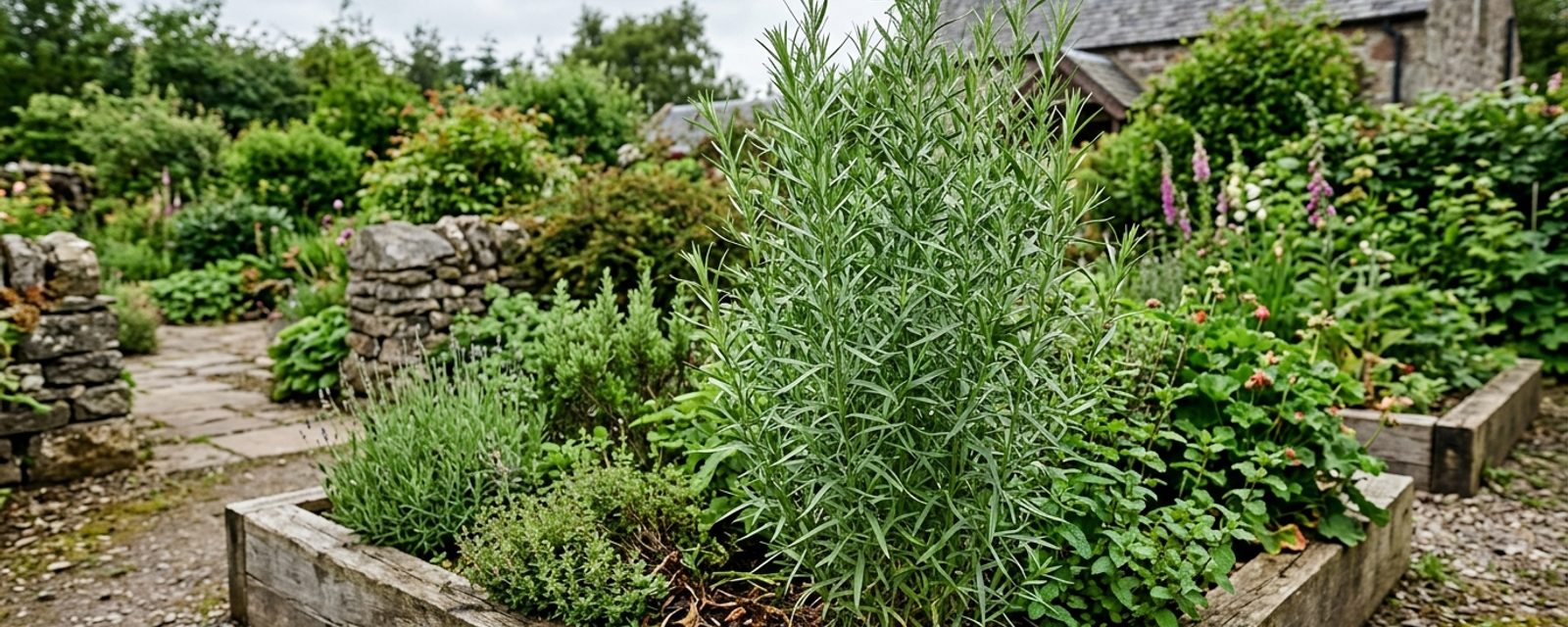
Artemisia dracunculus (Russian)
Tarragon is a choice between two genuinely different plants sold under the same name, not one herb with a drainage problem: a flavour-versus-hardiness trade-off, and French tarragon can't be grown from seed at all.
Choosing a type
Russian tarragon copes far better with UK winters and generally survives outside, at the cost of a grassier, slightly bitter flavour. French tarragon has a peppery flavour with a hint of liquorice, genuinely superior for cooking, but can struggle in UK winters from the combination of wet and cold, and may not survive outside at all. For a reliable outdoor bed, choose Russian tarragon. For the better flavour, grow French tarragon in a container you can move under cover for winter.
Site and soil
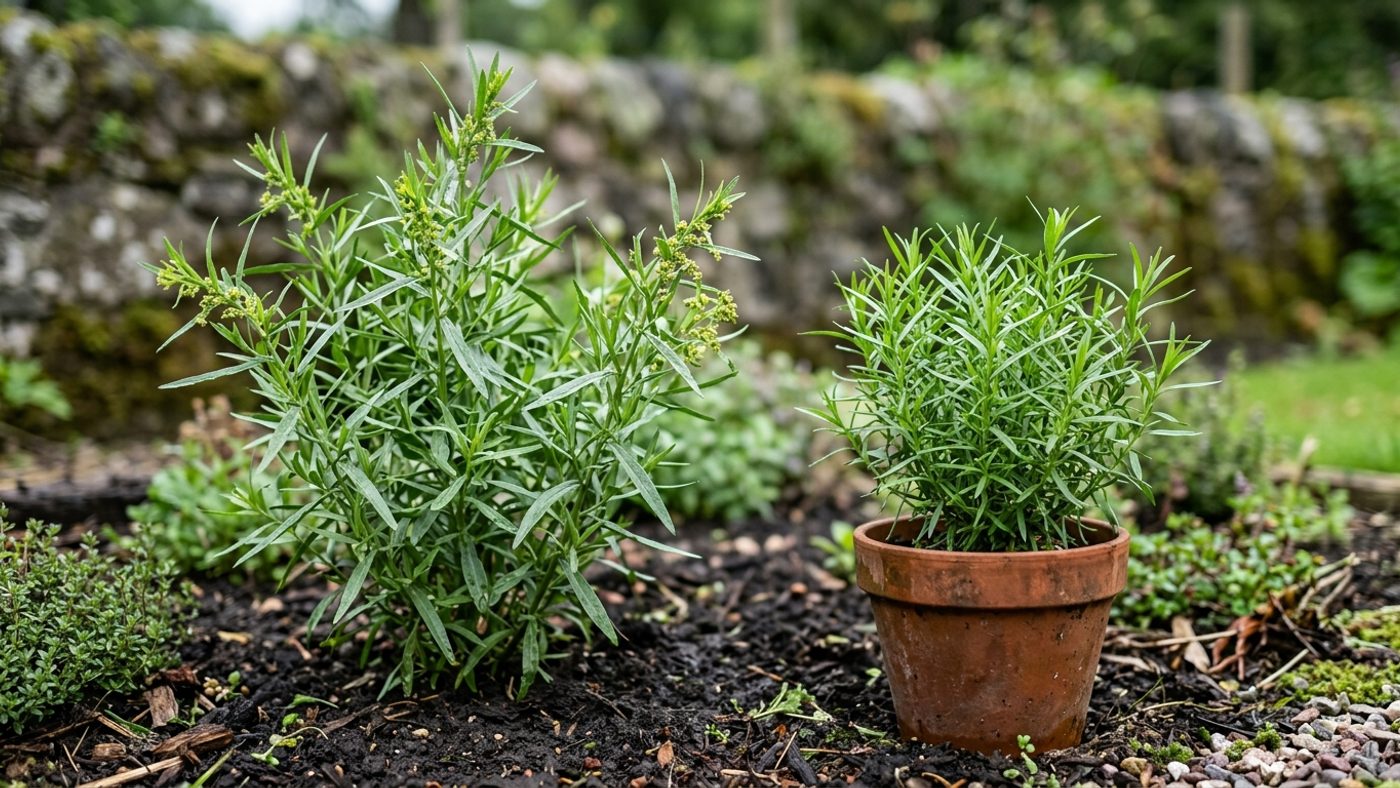
Choose a sheltered spot in full sun with well-drained soil; tarragon dislikes damp growing conditions. Work generous horticultural grit into the compost whether growing in a border or a pot. Space Russian tarragon 30cm apart and French tarragon 20cm apart, reflecting its smaller mature size. For containers, use a minimum 20cm wide and deep pot with drainage holes, filled with peat-freeCompost made without peat, which is harvested from a slow-forming, carbon-storing wetland habitat that peat extraction damages. Full definition → soil-based compost mixed with up to 25% grit.
Sowing and propagation
Russian tarragon seed is generally available: sow indoors in spring, lightly covered, and transplant outdoors mid-spring to early summer, or direct-sow outdoors from mid-spring, sown thinly on the surface and lightly covered. French tarragon seed is generally unavailable, since the plant rarely flowers or sets seed reliably; start it instead from a bought young plant, softwood cuttings taken from summer's new growth, or by dividingPropagating a clump-forming perennial by digging it up and splitting it into several smaller pieces, each with roots and shoots attached. Full definition → an established clump every few years in spring. Russian tarragon can also self-seed once established.
Care through the year
Water newly planted tarragon through dry spells in its first year; once established, it's drought-tolerant, though container plants need regular checking in summer. Avoid letting either type stand in water during rainy weather. Pick leaves frequently, and pinch outRemoving the soft growing tip of a stem to stop upward growth and make the plant branch out sideways instead. Full definition → any flower buds as they appear: once a plant flowers, leaf production slows. In spring, cut plants back to the lowest new shoots near the base.
Winter
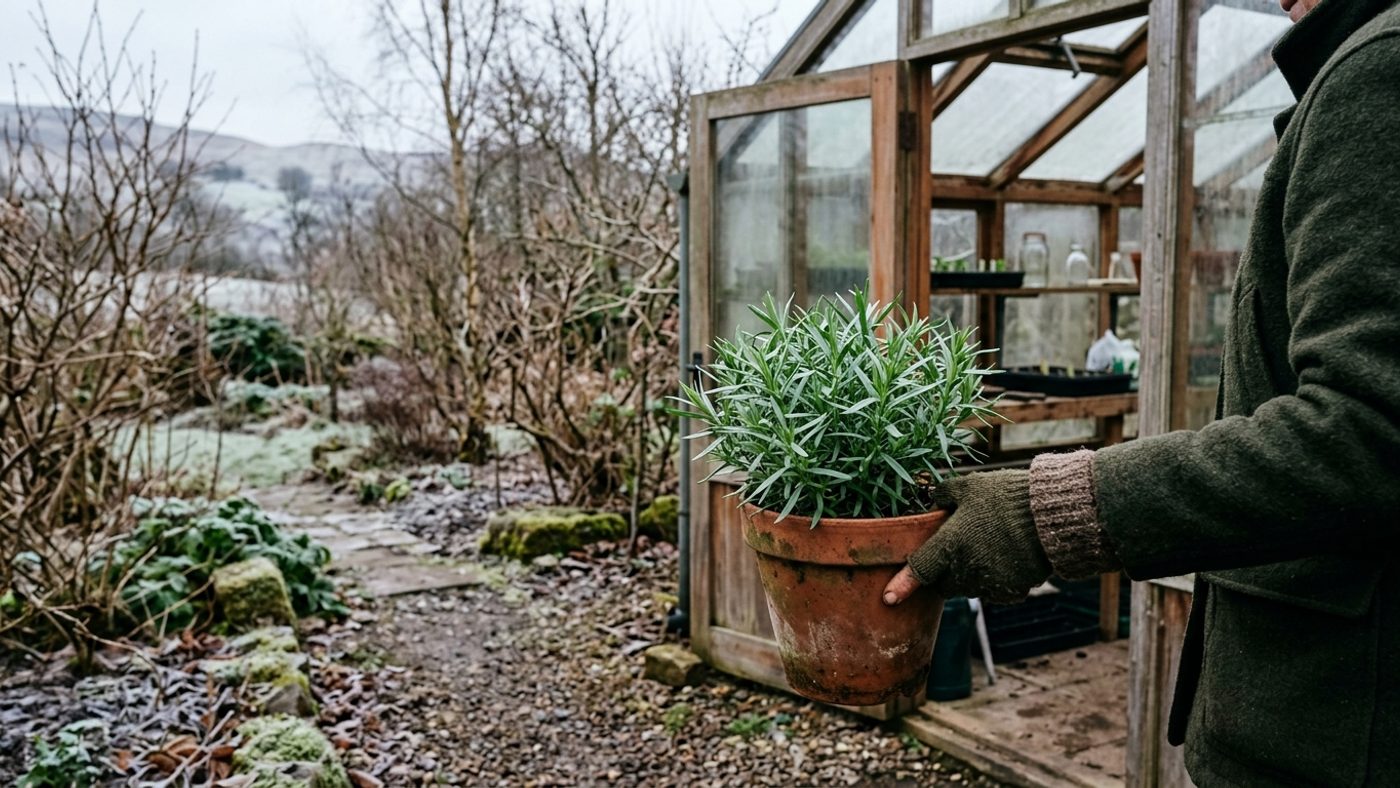
Russian tarragon generally survives outside on its own, needing the same extra precautions as French tarragon only in genuinely high-rainfall areas. French tarragon does best moved to a greenhouse or porch for winter, or to a sheltered spot outside such as near a building in a rain shadow, with a clocheA small, portable clear cover placed over an individual plant or short row to trap warmth and keep off wind, rain and pests. Full definition → improving its chances further if it has to stay outdoors.
Harvesting
Harvest April through October. Tarragon is best used freshly picked, though it can be dried for later use.
Varieties
Only two types exist, Russian and French, with no cultivarA plant variety that arose or was bred under cultivation and is kept true by deliberate propagation, rather than a naturally occurring wild species. Full definition →-level varieties beyond them and no AGMThe RHS's Award of Garden Merit: a UK-wide trials award for reliable performance, not a Scotland-specific recommendation. Full definition → award for either — hardiness is what actually decides which one to grow. A genuine gap for this crop, disclosed honestly rather than invented.
★ Our pick for Scotland
Russian tarragon
Hardy perennial · peppery flavour · copes well with UK winters
The realistic default for outdoor growing in Scotland: hardier, self-seeds, and grown from readily available seed, at the cost of a grassier, more bitter flavour than its French relative.
Why this one: It's the type that reliably survives a Scottish winter outdoors, which counts for more than French tarragon's better flavour if you only want to plant once.
Also worth considering
French tarragon
Superior flavour · genuinely more tender · best in a container
Better flavour by a real margin, but can struggle in UK winters and may not survive outside: a container plant moved under cover for winter, not a straight swap for Russian tarragon in the open ground.
Best Tarragon Varieties for Scotland → compares all named tarragon varieties head-to-head, with the practical detail that doesn't fit in a summary card.
Common problems
- Powdery mildew can affect leaves, stems and flowers.
- Rust is the most common fungal problem, though tarragon is otherwise rarely troubled by pests or disease.
Common questions
Which tarragon should I grow outdoors in Scotland?
Russian tarragon: French tarragon can struggle in UK winters from wet and cold and may not survive outside, while Russian copes far better. Full sourced breakdown: <a href="/tools/garden-myths/tarragon/">Tarragon Myths →</a>
Do French and Russian tarragon taste the same?
No: French tarragon has a peppery, slightly liquorice flavour and is considered better for cooking, while Russian is grassier and slightly bitter. Full sourced breakdown: <a href="/tools/garden-myths/tarragon/">Tarragon Myths →</a>
Can I grow French tarragon from seed?
Not realistically: French tarragon seed is generally unavailable, so it's propagated by cuttings or division; Russian tarragon is the one genuinely available from seed. Full sourced breakdown: <a href="/tools/garden-myths/tarragon/">Tarragon Myths →</a>
Should I let my tarragon flower?
Better not to: leaf production slows once a plant flowers, so pinch out buds as they appear and pick leaves frequently. Full sourced breakdown: <a href="/tools/garden-myths/tarragon/">Tarragon Myths →</a>
Sources
2 sources, and what each was used for
- RHS: French/Russian hardiness comparison, site/soil, spacing, sowing method and months, propagation, pruning, harvest window, winter protection, common problems
- gardenersworld.com: grit in compost, French tarragon's borderline hardiness confirmation, watering caution against waterlogging, pinching out flower buds to prolong harvest