
Bumblebees can't be bought. The way to get more in the garden is to create the right conditions, and here's how.
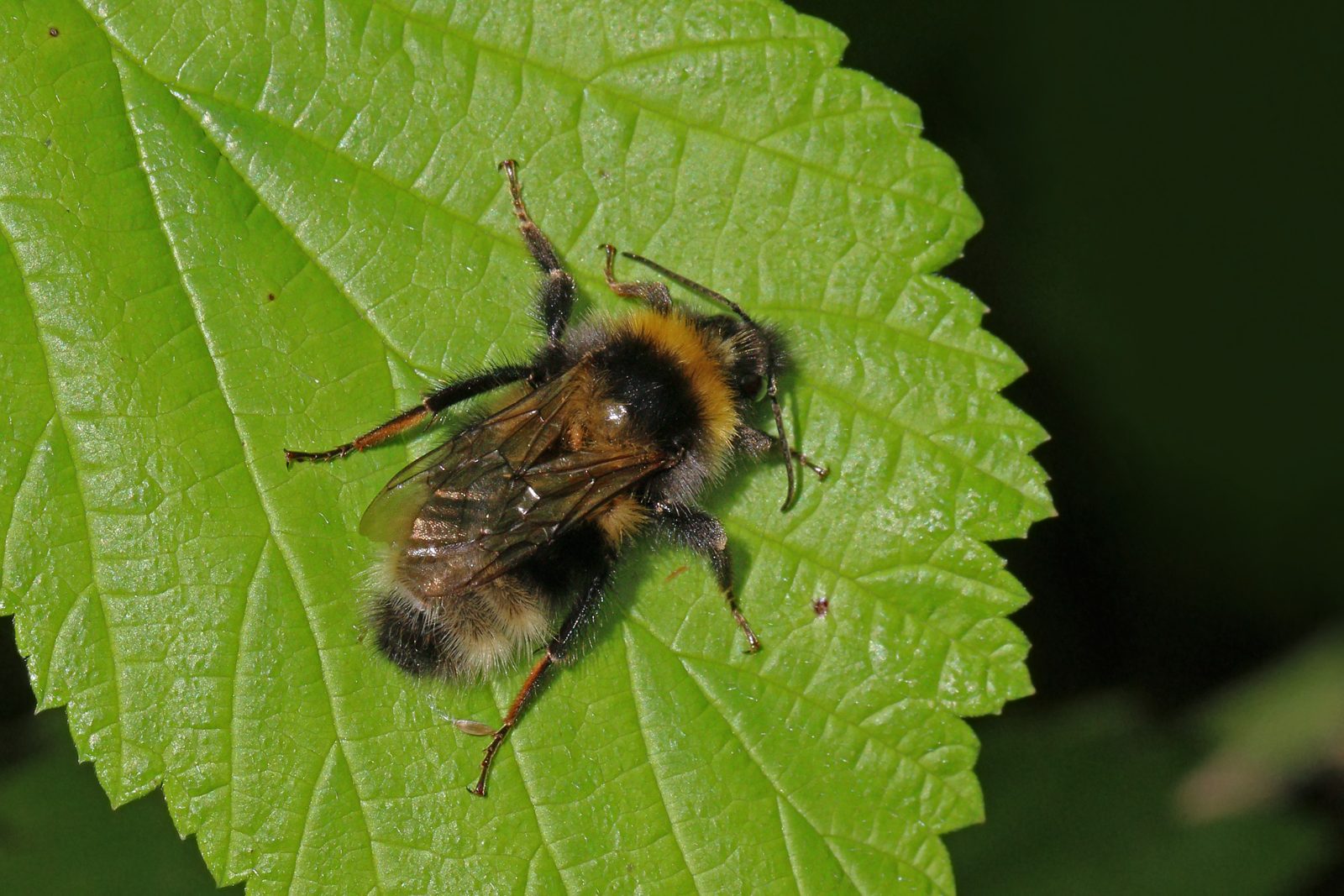
What does it look like?
Bumblebees are large, furry, and rounder-bodied than honeybees or solitary bees, which makes them the easiest bee group to recognise on sight, though telling one species from another is harder. Six species turn up most often in Scottish gardens: the common carder bee, fluffy brown-and-orange with darker bands, on the wing from early spring to November; the early bumblebee, small, with lemon-yellow bands and an orange tail, an important pollinator of soft fruit including raspberries and blackberries; the tree bumblebee, browny-orange on the thorax with a black abdomen and white tail, associated with open woodland-type gardens; the red-tailed bumblebee, the female a large black bee with a big red tail; the garden bumblebee, large and scruffy-looking with a long tongue and face, yellow bands and a white tail tip; and the buff-tailed bumblebee, the biggest of the group, with a buff-coloured queen's tail against the workers' white ones.
Life cycle
Only young mated queens survive winter, burrowing into soil to hibernate, unlike honeybees, which overwinter as a whole colony living off stored honey. Queens emerge on sunny days in spring, find a nest site, often an old mouse or rodent tunnel, and raise a first brood alone. Once those larvae mature into workers, they take over collecting nectar and pollen, freeing the queen to stay in the nest laying eggs. A nest reaches its peak strength, 50 to 400 workers, in summer. From mid to late summer the colony produces males and next year's queens; by late summer the old queen, workers and males have all died, leaving only the newly mated queens to overwinter and start the cycle again.
Not every bumblebee is what it looks like
About 4 of the roughly dozen bumblebee species seen in UK gardens are cuckoo bumblebees: parasites that don't collect pollen or raise their own workers, instead sneaking into an established nest of a specific host species, killing or subduing the queen, and having the host's own workers raise the cuckoo's young. Cuckoo bumblebees closely resemble the true bumblebee species they parasitise, an evolved likeness rather than coincidence. Several common true bumblebees resemble each other too, sometimes within a single species: a buff-tailed bumblebee queen has a buff-coloured tail, but her own workers have white tails, which puts them close enough to the white-tailed garden bumblebee that colour alone isn't a safe way to separate the two.
How to tell them apart: Precise species identification, including telling a cuckoo bumblebee from its host, genuinely needs a dedicated identification guide or app rather than a quick glance; colour and banding pattern are the starting point, but several common species overlap closely enough that they're routinely confused even by experienced observers.
How to encourage it
Fill a garden with nectar- and pollen-rich flowers through as much of the year as possible. Letting lawn 'weeds' like clover and dandelion flower by mowing less often, and providing a shallow water source, both add to what's on offer with very little extra effort.
Bumblebee queens nest in old mouse or rodent tunnels, long grass, compost heaps, or, for the tree bumblebee specifically, holes in trees and bird boxes. A nest found in an inconvenient spot, including a compost heap, is best left alone: colonies die out naturally by autumn, and disturbing one is more likely to provoke a sting than leaving it be.
Avoid pesticides wherever possible, and never spray a flower that's open, since that's exactly when a pollinator is likely to be on it.
Plant these to help:
- Crocus: the single most-recorded plant in February and March in RHS's own 2024 nationwide bumblebee survey, exactly when hungry newly-emerged queens need it most.
- Comfrey: its tubular flowers are shaped for long-tongued bees, but bumblebees also visit by 'nectar robbing': chewing a small hole in the side of the flower to reach the nectar without pollinating it in the usual way. Also one of the top-recorded plants in the same survey, in April and May.
- Chives: the top-recorded plant in May in the same survey, alongside comfrey.
The key window for a garden to be in flower for pollinators runs from March to October.
Why it matters
Most tree and soft fruit, including raspberries and blackberries, and vegetables including runner beans, broad beans, tomatoes, marrows and courgettes, need insect pollination to set fruit at all; the early bumblebee is specifically named as an important soft-fruit pollinator. Bumblebees are generalists, feeding from a wide range of flower shapes, which is thought to be why the common garden species are holding their numbers and range while more specialist bumblebees have declined severely. The main driver behind pollinator decline generally is loss of flower-rich habitat and nesting sites, worsened by climate change shifting where species can live and by insecticides, neonicotinoids in particular, reaching nectar and pollen through treated plants.
Why this matters in Scotland
The tree bumblebee, one of the six most common garden bumblebees, has spread from England and Wales and reached Southern Scotland.
Scotland's bumblebee picture isn't just about a common species arriving, though: the country is also the last stronghold of one of the UK's rarest bumblebees, the great yellow bumblebee, now largely restricted to flower-rich machair in Orkney, the Western Isles, and Caithness and Sutherland, its range having declined 80% in the last century. It's a genuine specialist, tied to that specific habitat and a narrow window of summer forage, not a garden visitor most Scottish gardeners will ever meet.
Frequently asked questions
Can I buy bumblebees?
Not usefully: bumblebees released into a garden with nothing to hold them there simply leave. Creating the right habitat and food source is what actually keeps a population around; see "How to encourage it" above.
Is every bumblebee I see the same?
No, see "Not every bumblebee is what it looks like" above. Not every insect that looks similar is the same species, and telling them apart matters.
When will I actually see bumblebees in the garden?
It depends on the stage in their life cycle — see "Life cycle" above for when they're active and what to expect through the year.
Sources
7 sources, recorded with what each was used for
- RHS: Identification, life cycle, nest sites, sting safety and how to encourage bumblebees and other bees, on RHS's own dedicated bees-in-your-garden page.
- Wildlife Trusts: Species-level identification for six common UK bumblebees, including the tree bumblebee's spread into Southern Scotland.
- NatureScot: The March-to-October flowering window for Scottish pollinators, and general pollinator-encouragement resources.
- FAS Scotland: The great yellow bumblebee's habitat, life cycle, decline and Scotland-specific distribution, restricted to machair in Orkney, the Western Isles, and Caithness and Sutherland.
- RHS: Comfrey's tubular flowers suit long-tongued bees, and bumblebees sometimes 'nectar rob' it by chewing a hole in the side of the flower rather than entering it normally.
- RHS: Why pollinators matter: most tree and soft fruits, and vegetables including runner beans, broad beans, tomatoes, marrows and courgettes, need pollinating insects to set fruit. Generalist bumblebee species able to use a wide range of plants are thought to be maintaining their numbers; specialist species have declined more severely.
- RHS: RHS's own 2024 nationwide public survey of bumblebee flower visits: crocus most-recorded in February and March, comfrey and dandelion in April, comfrey and chives in May.