
Social Wasps can't be bought. The way to get more in the garden is to create the right conditions, and here's how.
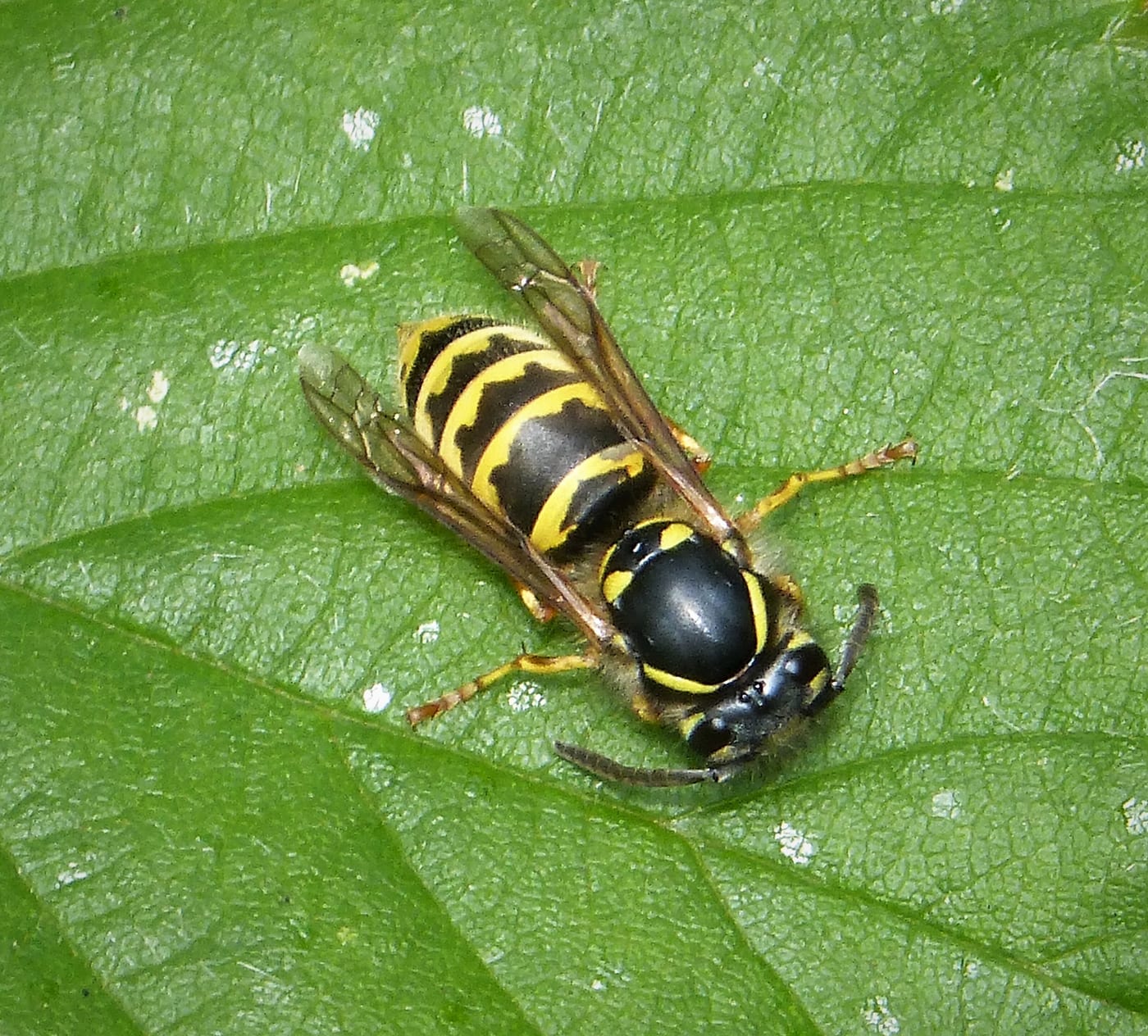
What does it look like?
Seven species of social wasp are common in British gardens, including the common wasp and the German wasp; British social wasps are typically yellow and reddish-brown or black. Worker wasps are about 15mm long, though smaller individuals occur; queens are larger, at 20 to 25mm.
Life cycle
A queen starts a nest alone in spring, initially about the size of a golf ball with a small number of cells. Worker wasps then take over building and foraging, and by late summer a nest can be larger than a football, holding 400 to 500 workers. Once a nest has passed its peak later in summer, the demand for the animal protein workers had been hunting for eases off, and wasps often turn to sugary food instead, which is why they show up around fruit and drinks at exactly the time of year they seem most unwelcome. Only young queens overwinter, leaving the nest to shelter elsewhere, such as in outbuildings or under loose bark; the rest of the colony, including the old queen, dies off at the end of the season.
How to encourage it
There's no plant or feature that draws social wasps in the way alyssum draws hoverflies: a queen finds her own nest site in spring, and the useful action for a gardener is leaving an established nest alone once it's there, provided it's safely away from the house.
What it helps control
Frequently asked questions
Can I buy social wasps?
Not usefully: social wasps released into a garden with nothing to hold them there simply leave. Creating the right habitat and food source is what actually keeps a population around; see "How to encourage it" above.
Could social wasps actually cause a problem in my garden?
Occasionally, depending on what you're growing: see the note near the bottom of this page.
How do I know if social wasps are actually helping?
Watch the pest population, not the predator count: fewer cabbage white caterpillars over a few weeks is the real sign, not how many social wasps you can spot on a given day.
When will I actually see social wasps in the garden?
It depends on the stage in their life cycle — see "Life cycle" above for when they're active and what to expect through the year.
The wasp everyone swats is a genuine brassica caterpillar predator.
Social wasps are widely disliked and routinely killed, yet RHS names them among the creatures that control cabbage caterpillars: worker wasps hunt caterpillars and other invertebrates to feed their larvae, chewing and partially digesting the prey before regurgitating it back at the nest. A gardener destroying a wasp nest near the veg patch may be removing their own caterpillar control.
A nest well away from the house is doing real pest control. One near living space is a different call: the sting risk there is real, and removing it is reasonable. RHS's own advice doesn't go further than that, though, and it stops short of DIY-versus-professional removal guidance, pointing instead to NHS guidance on stings for anything sting-related. Worth weighing against the calendar too: nests die out naturally by late summer or autumn, so a nest spotted late in the season may not need removing at all.
Social wasps are also a pest of ripe fruit, and it shows up at the same point in the season described above, once the colony has turned to sugary food. On tough-skinned fruit such as apple, they enlarge damage already started by something else, like a bird peck; on softer-skinned fruit such as grapes, plums and pears, wasps can start the damage themselves. Enclosing fruit trusses in muslin, nylon tights or another fine mesh reduces it.
Sources
2 sources, recorded with what each was used for
- RHS: For Cabbage White Caterpillars: Tolerate cabbage caterpillars where possible, since they are food for many other creatures including parasitoid and social wasps and birds.
- RHS: RHS's dedicated wasps and hornets page: identification (species count, size, colouring), life cycle (nest founding, worker takeover, overwintering queens, nests dying out by late summer or autumn), diet (worker wasps hunting for the larvae), the advice to leave nests alone where possible and its own pointer to NHS guidance on stings, and wasp damage to ripe fruit (enlarging existing damage on tough-skinned fruit like apple, and initiating it themselves on soft-skinned fruit like grapes, plums and pears), with muslin or fine-mesh bagging as a protection method.