
You've planted the buddleia, the lavender, maybe a patch of verbena, and the usual crowd shows up: whites, a red admiral, a peacock if you're lucky. But some butterflies never come near the garden at all, even when you live well within their known range. That's not bad luck or bad planting. For a handful of Scotland's rarer species, the reason is closer to biology than horticulture: what draws them isn't nectar, it's a specific plant their caterpillars can eat, and often a very specific type of ground it has to be growing in.
The Scotch Argus, the Chequered Skipper, and the Small Blue show this clearly. Each is tied to Scotland in a different way and to a different degree, and each has real limits on what a garden, however well planted, can do for it.
Why the usual butterfly-garden advice misses these three
The RHS's own species list for garden butterflies is entirely common ones: red admiral, peacock, brimstone, painted lady, comma, the whites, orange-tip, speckled wood, meadow brown, small copper, holly blue, common blue. Scotch Argus, Chequered Skipper and Small Blue appear nowhere on it, and its foodplant list for those common species, grasses, birds'-foot trefoil, nettle, buckthorn, docks, garlic mustard, thistles, holly and ivy, doesn't include the two plants that actually matter here: purple moor-grass and kidney vetch. Buddleia and lavender feed adult butterflies passing through; they don't feed a single caterpillar of any of the three species covered here.
Telling them apart
Scotch Argus is a mid-sized dark brown butterfly with orange-ringed black eyespots on both wings, on the wing later in summer than almost anything else you'll see, if you spot a dark brown "meadow brown-type" butterfly in a boggy upland field in August, in the west or north of Scotland, that's a reasonable candidate. Chequered Skipper is small, fast, and darts low over grass rather than gliding, its chequered orange-and-brown wing pattern is distinctive at rest, but its size and flight style mean it's easily mistaken for a moth in the first instant. Small Blue is genuinely tiny, the UK's smallest resident butterfly, at 2 to 3cm wingspan, and dull sooty-brown-blue rather than the bright blue of a common blue; scale and colour together are the giveaway. None of this is a substitute for a proper field guide, but it's worth knowing before assuming a fast-moving brown blur couldn't possibly be one of these three.
Two labels come up throughout, worth explaining once: the GB Red List is the official extinction-risk classification for Great Britain, categories like Vulnerable, Near Threatened, and Least Concern, the same style of ranking used for the IUCN's global Red List, just scoped to GB. Butterfly Conservation priority is the charity's own internal ranking, Low, Medium or High, of which species most need conservation attention and funding; a High priority species isn't necessarily rarer than a Low one, it reflects where Butterfly Conservation judges its efforts are most needed.
Scotch Argus
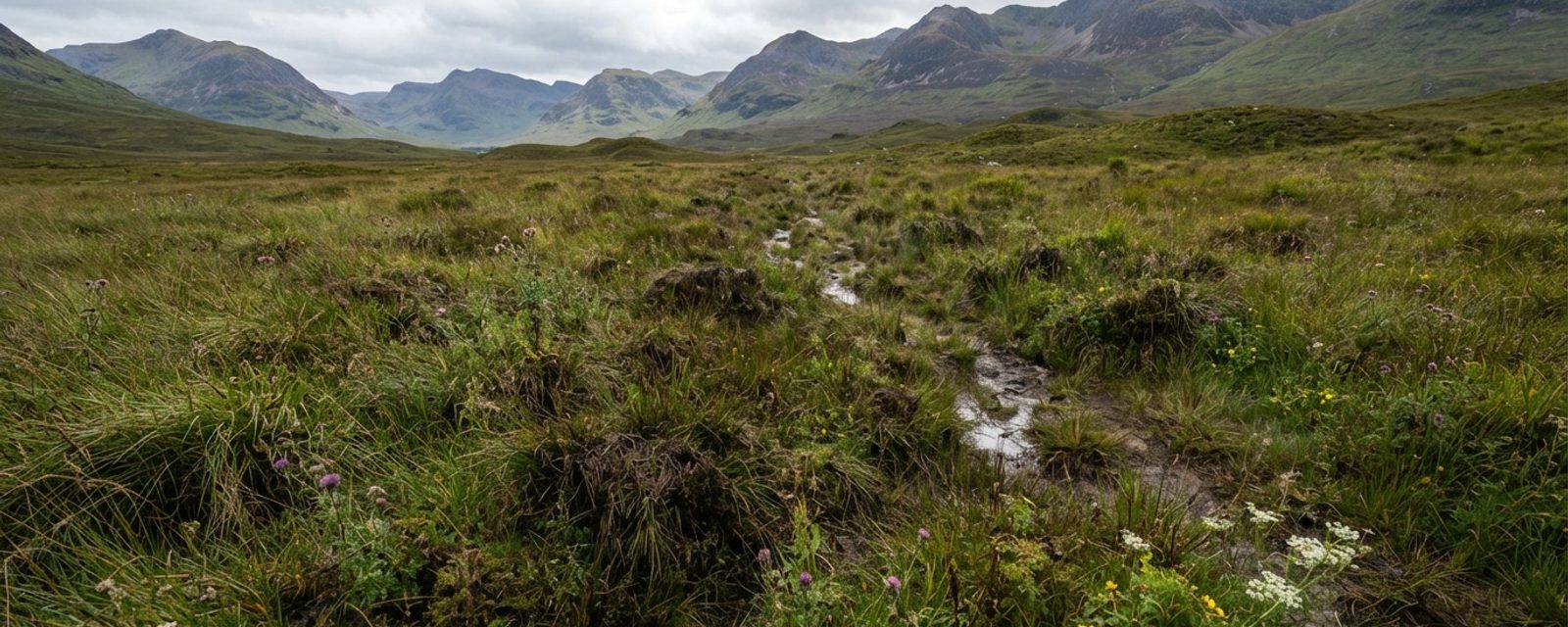
Butterfly Conservation describes it as common and widespread in much of western and northern Scotland, though it has declined in the southern part of its range, especially in England, where it's reduced to just two isolated sites. It favours damp, acid or neutral grassland up to 500m in montane regions of Scotland, and around the fringes of sheltered bogs, in woodland clearings, and young plantations, tall grassland, lightly grazed or ungrazed.
The main foodplant in Scotland is thought to be purple moor-grass, though there are few observations from Britain and other grasses may be used. Flight season runs later in summer than most UK butterflies, typically mid-July into August.
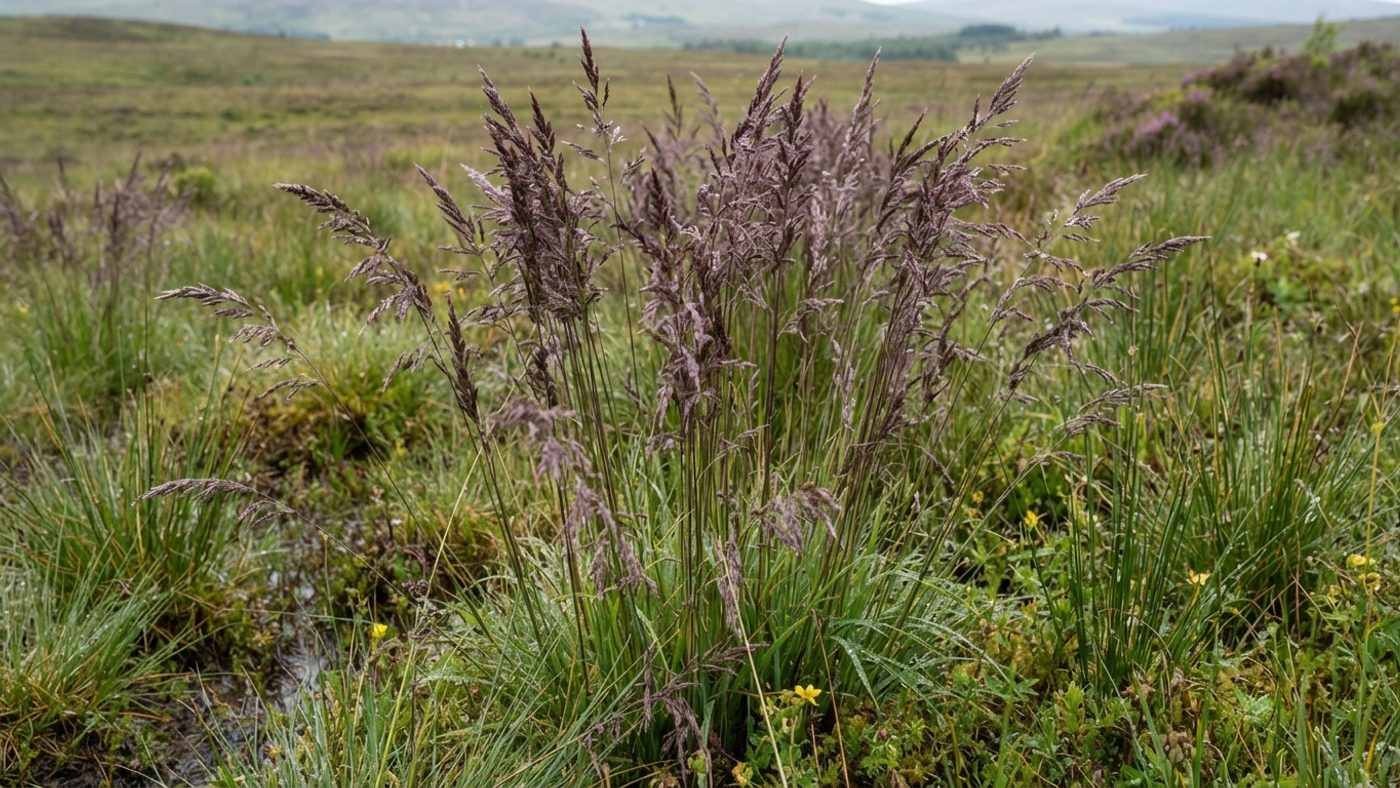
Its GB Red List status (2022) is Vulnerable, with a Butterfly Conservation priority of Low, and it's classed as Near Threatened across Europe. Abundance has actually risen 76% between 1979 and 2019, even as its distribution has shrunk 20% since 1991, more individuals where it persists, but retreating from some areas.
Butterfly Conservation publishes no garden-relevant advice for this species at all. It's a species of open hill and bog-edge grassland, often at altitude, not garden borders. If you already have the right damp, tall, lightly grazed or ungrazed grassland with purple moor-grass, and are in an area where it's established, leaving it uncut is the one action grounded in what's known, but nothing suggests a typical garden could support it from scratch.
Chequered Skipper
It's known to be found within roughly 30 miles of Fort William, with strongholds at Allt Mhuic, Glasdrum Wood, and Ariundle Oakwood. Its habitat is damp hollows, sheltered south-facing slopes, and tall purple moor-grass at the edge of open broadleaved woodland. England's Rockingham Forest population is a separate 2018-19 reintroduction from continental stock, following the species' 1976 English extinction; Scotland's is the original surviving stronghold.
Its foodplant is purple moor-grass, the same as Scotch Argus in Scotland, and its flight season runs mid-May to the end of June. It's legally protected under the Nature Conservation (Scotland) Act 2004. Its GB Red List status is Least Concern, but its Butterfly Conservation priority is High, and it's genuinely expanding: distribution is up 66% between 2000 and 2019, with new records on Skye and Mull attributed to climate-linked early warm springs.
That expansion is real, but it's happening at moorland and woodland-clearing scale across the west Highlands, not in garden beds. If you have genuinely suitable rough, damp, woodland-edge grassland within or near its range, growing purple moor-grass and leaving it uncut aligns with its needs; a lawn or border doesn't.
Small Blue
This one isn't a Scottish stronghold species the way the other two are; its main population core is south-central England, and Scotland holds scattered, declining coastal remnants instead. Its Scottish story is a rescue effort, not a stronghold. It's been lost from Scotland's west coast, holding on in the east, with current focus areas in Angus, Berwickshire, Moray, and Aberdeenshire, in sheltered, warm grassland with kidney vetch: coastal grassland, dunes, quarries, and disused railways.
Its sole foodplant is kidney vetch; the larvae live only in the flower heads. Flight season is typically May to June in Scotland, with an occasional second brood in exceptional years, not the norm. Its GB Red List status is Near Threatened, with a Medium Butterfly Conservation priority, and the numbers tell a harder story than the other two: national distribution is down 43% since 1983, and Scottish abundance is down 39% since 2005.
Butterfly Conservation is direct about the limits here: the Small Blue lives in wild, uncultivated places, is often reluctant to stray far from its origin, can easily be overlooked, and doesn't come into gardens, so people simply don't see it much. This isn't a plant-it-and-it-will-come species.
But 2025 brought a genuinely good story. A volunteer counted 523 Small Blues at Balnagown Estate near Invergordon, double the prior year's count, plus new colonies at Wick and Nairn Railway Station, and rising counts at several named sites, through Species on the Edge, a partnership between NatureScot and seven charities funded by the National Lottery Heritage Fund.
| Site | 2025 count | Previous year |
|---|---|---|
| Balnagown Estate, near Invergordon | 523 (in 90 minutes) | Roughly half this |
| Nairn Beach | 31 | 13 |
| Dunnet Dunes | 37 | 13 |
| Lossiemouth | 72 | 16 |
At Ardersier Primary School, pupils grew kidney vetch that volunteers then planted into new "butterfly banks" nearby, a rare example of an individual-scale action that actually worked, because it was coordinated with an established project rather than attempted alone.
| Species | Scotland range | Habitat | Larval foodplant | Flight season | Conservation status |
|---|---|---|---|---|---|
| Scotch Argus | Common and widespread in western and northern Scotland; declining at the southern UK edge | Damp, acid or neutral grassland to 500m, bog fringes, woodland clearings; tall, lightly grazed or ungrazed | Purple moor-grass (thought to be) | Mid-July–late August | GB Red List: Vulnerable; BC priority: Low; abundance +76%, distribution −20% |
| Chequered Skipper | Within roughly 30 miles of Fort William; Allt Mhuic, Glasdrum Wood, Ariundle Oakwood; expanding (Skye, Mull) | Open damp grassland, tall purple moor-grass, woodland edges | Purple moor-grass | Mid-May–end of June | Legally protected in Scotland; GB Red List: Least Concern; BC priority: High; distribution +66% |
| Small Blue | Scattered, declining coastal remnants: Angus, Berwickshire, Moray, Aberdeenshire; lost from the west coast | Sheltered, warm grassland with kidney vetch: coast, dunes, quarries, embankments | Kidney vetch (sole foodplant) | Typically May–June; rare second brood | GB Red List: Near Threatened; BC priority: Medium; national −43%, Scotland −39% |
What's realistically actionable for a gardener
Range and habitat type come before planting choice, outside the right range or habitat, no amount of the right plant substitutes for the right ground. Don't mow what you don't have to: there's no published safe cutting window for suspected habitat, so the cautious approach is to avoid cutting it at all rather than guess a timing. A garden alone rarely creates a colony even under close-to-ideal conditions, a documented Cumbria reintroduction of Small Blue saw only single-figure sightings for three years even with kidney vetch already established and an expert-led release, only breaking out in year four. Connecting with an existing project, Species on the Edge or a local Butterfly Conservation branch, achieves far more than acting alone, and recording any sightings through iRecord Butterflies or a local branch feeds directly into the same conservation effort. Patience here is measured in years, not one season.
Common questions
Can I attract the Chequered Skipper to my garden?
Not through planting choices, but a genuinely nearby garden isn’t irrelevant either: its range is expanding into new areas like Skye and Mull as springs warm earlier, so a garden bordering the right kind of damp, woodland-edge ground could plausibly end up adjacent to a new colony over time, even though nothing you plant will summon one directly.
What is kidney vetch and where would I plant it?
It’s the Small Blue’s sole larval foodplant, needing sheltered, warm, well-drained grassland, coastal turf, dunes, quarries or embankments are typical sites. It isn’t on the RHS’s standard garden-butterfly foodplant list, and is best grown in coordination with an established project rather than planted speculatively on the chance a colony finds it.
Why don’t I see these butterflies even though I live in the right part of Scotland?
Butterfly Conservation says plainly that the Small Blue “doesn’t come into gardens” and is easily overlooked even where it’s present, since it rarely strays far from where it already lives. Being in the right general area isn’t the same as being close enough to an existing colony or having the specific habitat it needs.
Are these butterflies protected by law?
The Chequered Skipper is legally protected in Scotland under the Nature Conservation (Scotland) Act 2004. Scotch Argus and Small Blue aren’t individually protected by name, but both are GB Red List species and Butterfly Conservation priority species, reflecting real conservation concern even without the same legal status.
Is it worth planting purple moor-grass or kidney vetch if I’m not sure I’m in range?
Check your specific location and habitat type first, ideally against a recent local sighting record rather than a general species range map, since both plants take real bed space and years to establish before they’d do a caterpillar any good. Contacting a local Butterfly Conservation branch or checking iRecord for nearby records is a better first step than planting speculatively and waiting to see what turns up.
Sources
10 sources, recorded with what each was used for
- Butterfly Conservation: Scotch Argus: Range, habitat, foodplant, and status/trend figures for Scotch Argus
- Butterfly Conservation, East Scotland Branch: Scottish Butterflies — Scotch Argus: Regional range phrasing for Scotch Argus
- Butterfly Conservation: Chequered Skipper: Range/history, habitat, foodplant, and status/trend figures for Chequered Skipper
- Butterfly Conservation, Scottish Office: Priority Species Updates — Chequered Skipper: Flight season, stronghold sites, and expansion evidence for Chequered Skipper
- NatureScot: Ariundle Oakwood National Nature Reserve: Confirmation of Ariundle Oakwood as a Chequered Skipper site
- Butterfly Conservation: Small Blue: UK range, habitat, foodplant, and status/trend figures for Small Blue
- Butterfly Conservation, East Scotland Branch: Small Blue Surveys: Scottish range history and the "doesn't come into gardens" quote
- Butterfly Conservation: Small blue butterfly numbers explode in Scotland with 523 at a single site: 2025 count data, Species on the Edge, and the Ardersier school example
- Butterfly Conservation: Helping the Small Blue: The Cumbria reintroduction case study
- RHS: Butterflies in Your Garden: The nectar-versus-foodplant distinction and common-species foodplant lists