
Ordered by post and released, not attracted with planting. Here's when to use encarsia formosa, what it needs, and how to tell if it worked.
What does it look like?
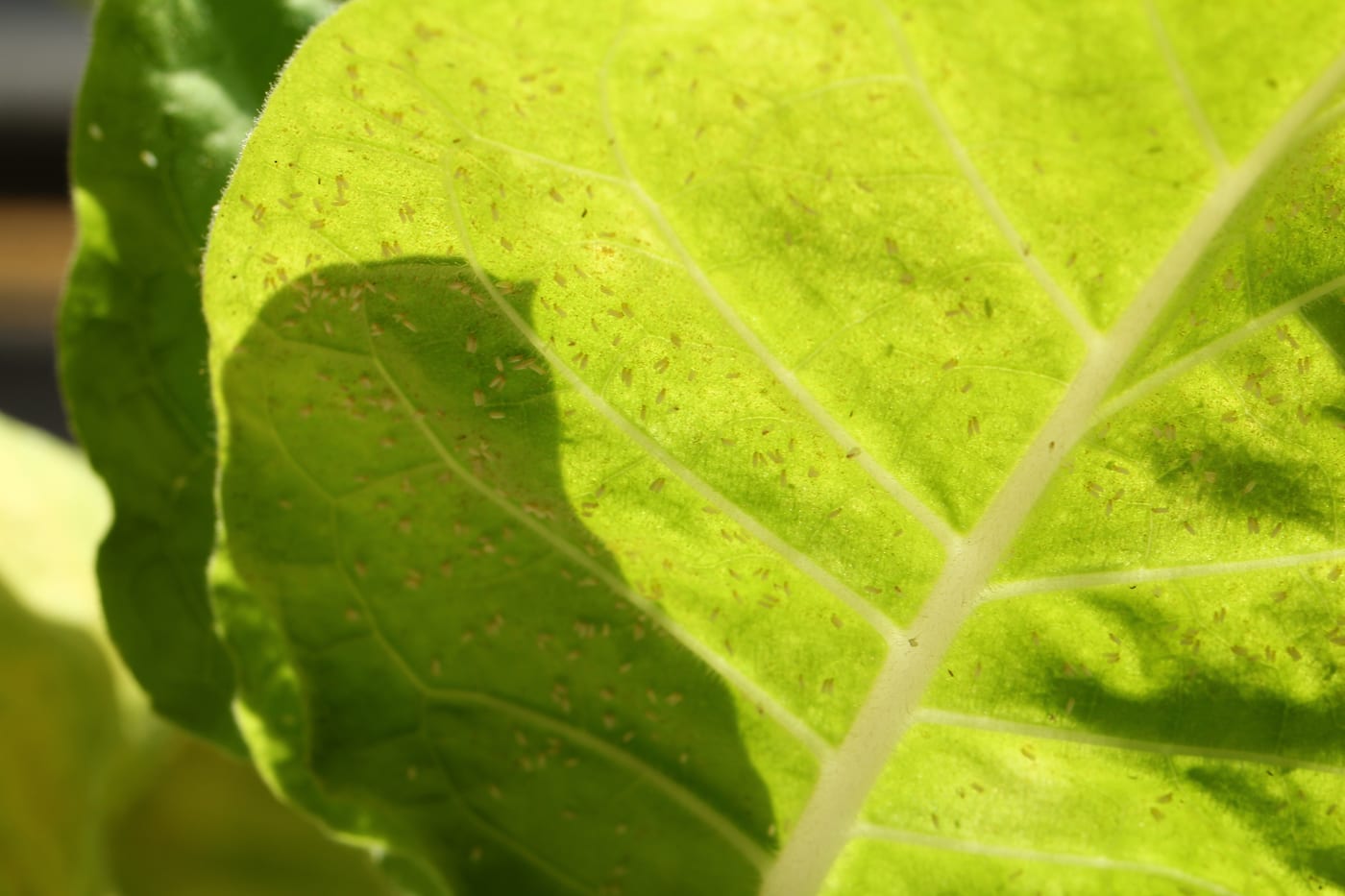
Adults are tiny, about 0.6mm long, and rarely seen directly: the practical sign is the blackened scale, not the wasp. Females have a dark head and thorax with a yellow abdomen; males, which are rarely seen, are entirely dark.
How to use it
Availability: Available by mail order, supplied as infected black whitefly scales fixed to pieces of leaf or card. Introduce it before plants are heavily affected, since it can't give instant control once whitefly numbers are already high.
Conditions: Females lay 50 to 100 eggs singly in whitefly scale nymphs. This species is specific to glasshouse whitefly and isn't effective against other whitefly species. RHS's general guidance for glasshouse predators and parasitoids, this one included, calls for daytime temperatures of at least 21C; they can survive down to about 13C, but tend to die out over winter and often need reintroducing the following year.
How to tell it's working: Parasitised nymphs turn black, while healthy scales stay whitish-green: a built-in way to tell whether it's working. After release, adult wasps emerge within a few days, and the first blackened scales should appear after about three weeks.
What it helps control
Frequently asked questions
Where do I get encarsia formosa?
Ordered by post from a biological control supplier, not bought off a shelf. See "How to use it" above for timing and conditions.
How do I know if encarsia formosa are actually helping?
You won't see encarsia formosa themselves working: they're too small to spot. Watch the pest population instead: fewer glasshouse whitefly over the following weeks is the real sign it's working.
Sources
2 sources, recorded with what each was used for
- RHS: For Glasshouse Whitefly: An established method of control for glasshouse whitefly is to introduce tiny parasitoid wasps, Encarsia formosa, which prey on the whitefly scale nymphs. Available by mail order. Parasitised nymphs turn black.
- RHS: RHS's dedicated biological control page: Encarsia formosa's identification (0.6mm, dark head and thorax with a yellow abdomen in females, entirely dark males), egg-laying rate, supply as infected scales on card, and timing of introduction before whitefly numbers get high.