
Flea Beetle is a minor pest that affects kale, broccoli and cabbage in Scotland. Here is what it looks like, how to spot the damage, and which controls have been tested.
What does it look like?
Small beetles, only 2-3mm long, black or metallic green or blue, some with a yellow stripe running the length of each wing case. The giveaway is how they move: enlarged hind legs let them leap away the moment they're disturbed, which is usually the first sign it's flea beetle rather than another leaf-eater.
🌱 Plants at risk
Flea Beetle also affects these crops:
Symptoms
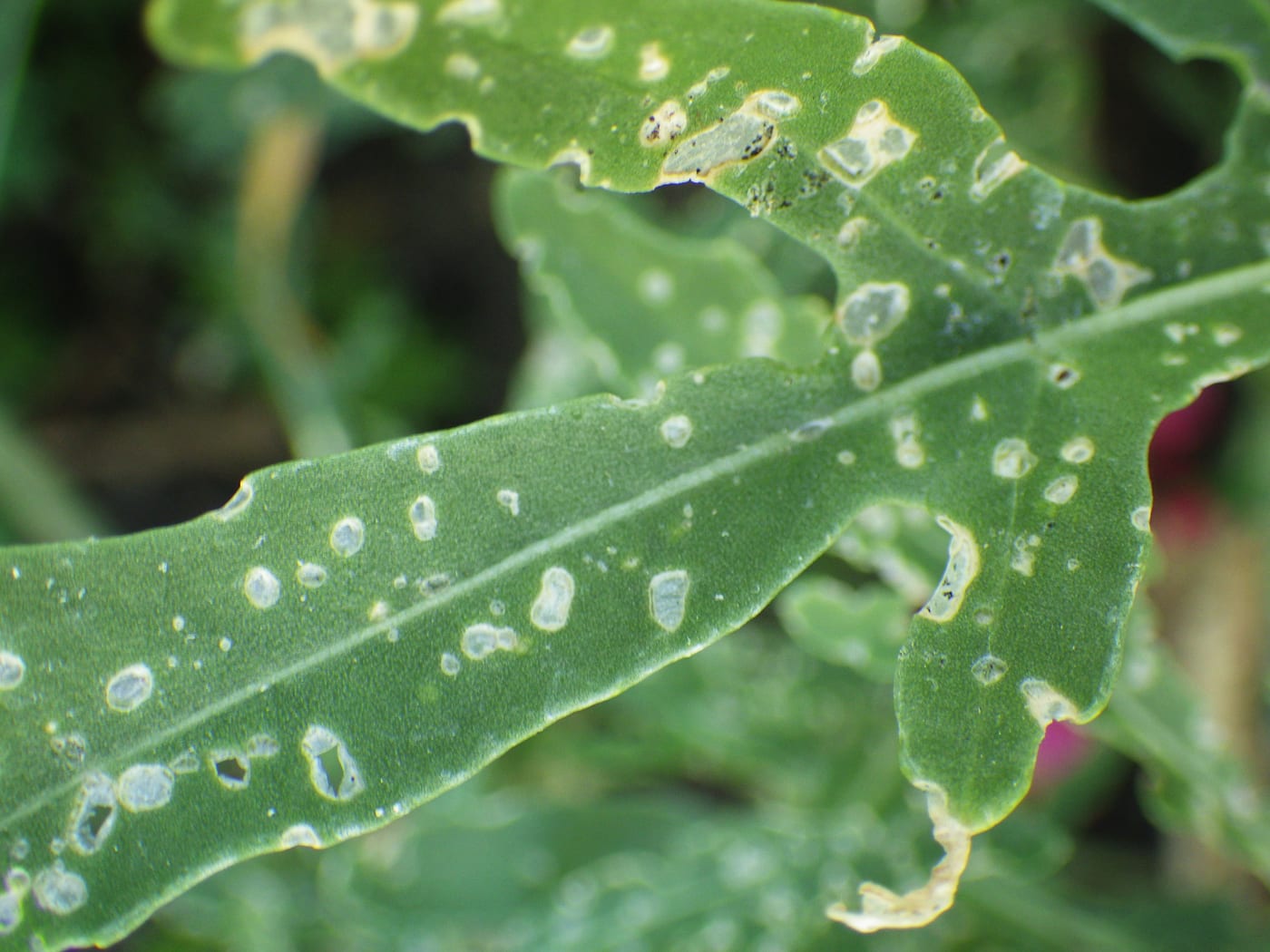
Small rounded holes in the foliage, especially on seedlings. Damaged areas dry up and turn pale brown. Seedlings are particularly susceptible.
Life cycle
Adults overwinterKeeping a plant alive and intact through the cold months, whether left outdoors, moved under cover, or stored dormant. Full definition → in leaf litter and emerge in mid-spring to feed on seedlings, exactly the vulnerable stage RHS flags. Whitish-brown larvae live in the soil feeding on roots, rarely a significant problem in a home garden, before pupating in the soil in midsummer. A second wave can show up later in the season too: adult beetles sometimes migrate into gardens from brassicaThe cabbage family: cabbage, kale, broccoli, cauliflower, Brussels sprouts, kohlrabi, swede, turnip and more, sharing the same pests, diseases and rotation rules. Full definition → crops nearby, oilseed rape fields especially, once those crops are harvested.
Controls: what actually works
All the methods below are backed by real evidence, not just repeated folklore.
Tolerate the damage on established plants
Populations can be tolerated, especially on larger brassicas where the outer leaves are discarded, since the beetles usually have a limited effect on the parts you eat.
Insect-proof mesh, ultrafine (0.3-0.6mm)
Growing susceptible crops under insect-proof mesh may keep the beetles out. Ultrafine mesh (0.3-0.6mm) gives good protection against flea beetles and other very small invertebrates. Standard mesh (1.3-1.4mm) cannot be relied on against them.
Encourage wildlife — birds, frogs and predatory ground beetles
Encourage birds, frogs and predatory ground beetles, which eat the larvae and sometimes the adult beetles.
Natural predators of flea beetle
These 3 creatures eat flea beetle, and each has its own page here on how to get more of them in your garden: what to plant, or what to order and when.
Scottish grower notes
Flea beetles are most active in warm, dry, still weather and are knocked back by rain, so Scotland's cool, wet springs give emerging seedlings some natural protection. The risk window is a dry, warm spell while brassica and salad seedlings are still small; cover those with fleeceA lightweight, breathable fabric laid or draped over plants to trap a little warmth and keep off frost, wind and some flying pests. Full definition → or fine mesh until they are growing strongly.
Farm Advisory Service (FAS) Scotland crop-health guidance (2020); the biology is general, but the wet-climate framing is directly relevant to Scotland.
Frequently asked questions
What should I do first if I find flea beetle in my garden?
Start with tolerate the damage on established plants. After that, insect-proof mesh, ultrafine (0.3-0.6mm). Work through the rest in order of how well-evidenced they are if the first two aren’t enough on their own.
Will flea beetle kill my plants?
They rarely kill established plants. The damage is usually cosmetic on outer leaves, and natural predators often bring numbers under control without you doing anything.
Should I just leave flea beetle alone?
In most gardens, yes. flea beetle are food for birds, wasps and predatory insects, and a healthy garden carries some without trouble. Tolerance is also RHS's official position now, for that same reason.
Sources
3 sources, recorded with what each was used for
- RHS1: tolerance advice and its reasoning, identification, life cycle, seedling susceptibility, small rounded holes and pale brown drying, mesh, birds/frogs/ground beetles
- RHS1: ultrafine 0.3-0.6mm for flea beetles; standard unreliable
- FAS Scotland14: flea beetle is suppressed by wet weather and most damaging in warm, dry spells