
Barbarea verna
Land cress is an unusually hardy, peppery winter salad leaf, and one with a real gap in published growing advice that's worth being upfront about rather than papering over.
No authoritative source publishes a sowing-depth or spacing figure for this crop, under any of its names. What we do have is real and worth using: a genuinely strong hardiness ratingThe RHS's H1a–H7 scale for how much cold a plant can survive outdoors, H1a being tender indoor-only and H7 hardy anywhere in the UK. Full definition →, and clear confirmation this is a crop meant for the darker half of the year.
Where it fits: a genuine winter salad crop
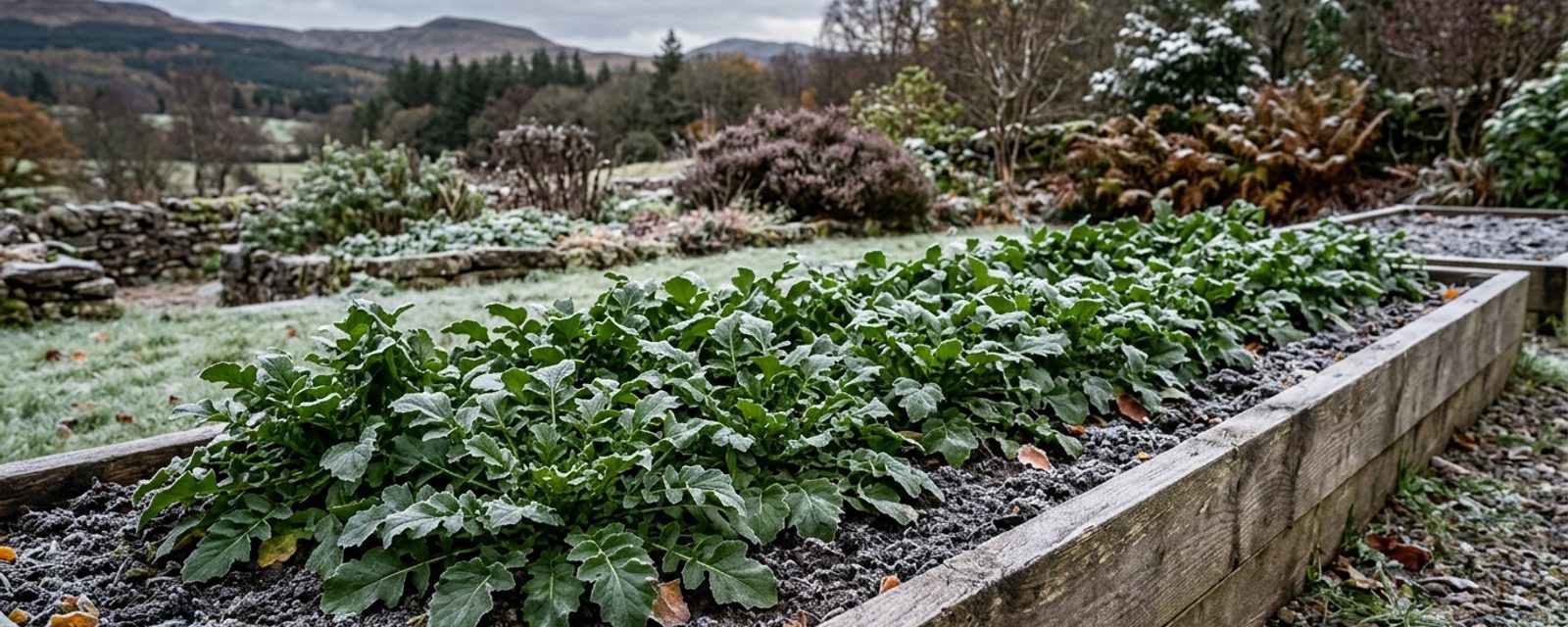
Land cress belongs among crops sown in early summer for an autumn harvest, and among the sowings that make up a proper winter salad. It also carries an unusually strong hardiness rating for a leaf crop, H7, meaning it survives well below -20°C without protection.
Site and soil
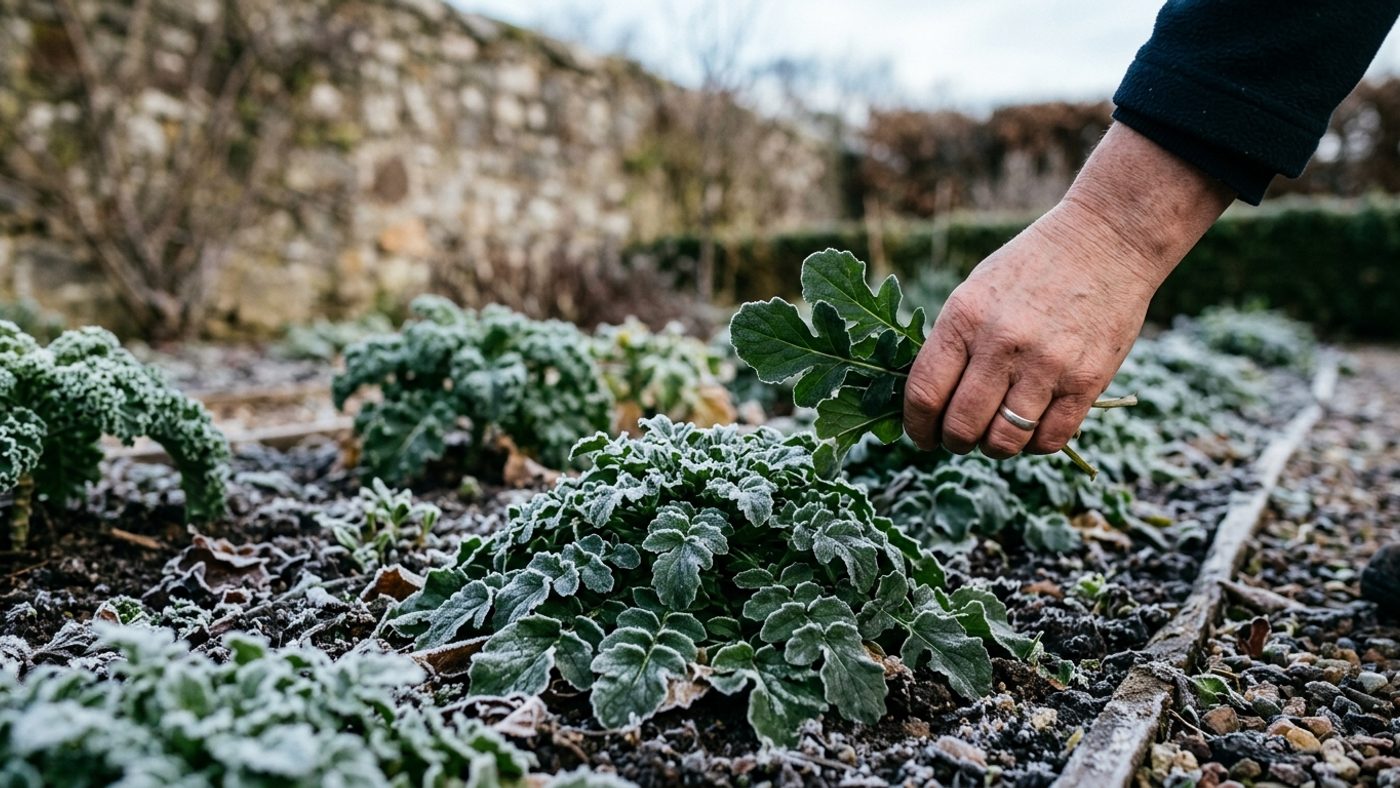
Grow in moist soil, clay or loam, in full sun or partial shade. It tolerates acid, alkaline or neutral soil about equally, so pH isn't a real constraint here the way it is on some crops. Nothing in its published cultivation notes calls for running water, a stream or a bog bed, despite the watercress-substitute reputation: ordinary garden soil kept consistently moist is what it actually needs.
Sowing and spacing: the honest gap
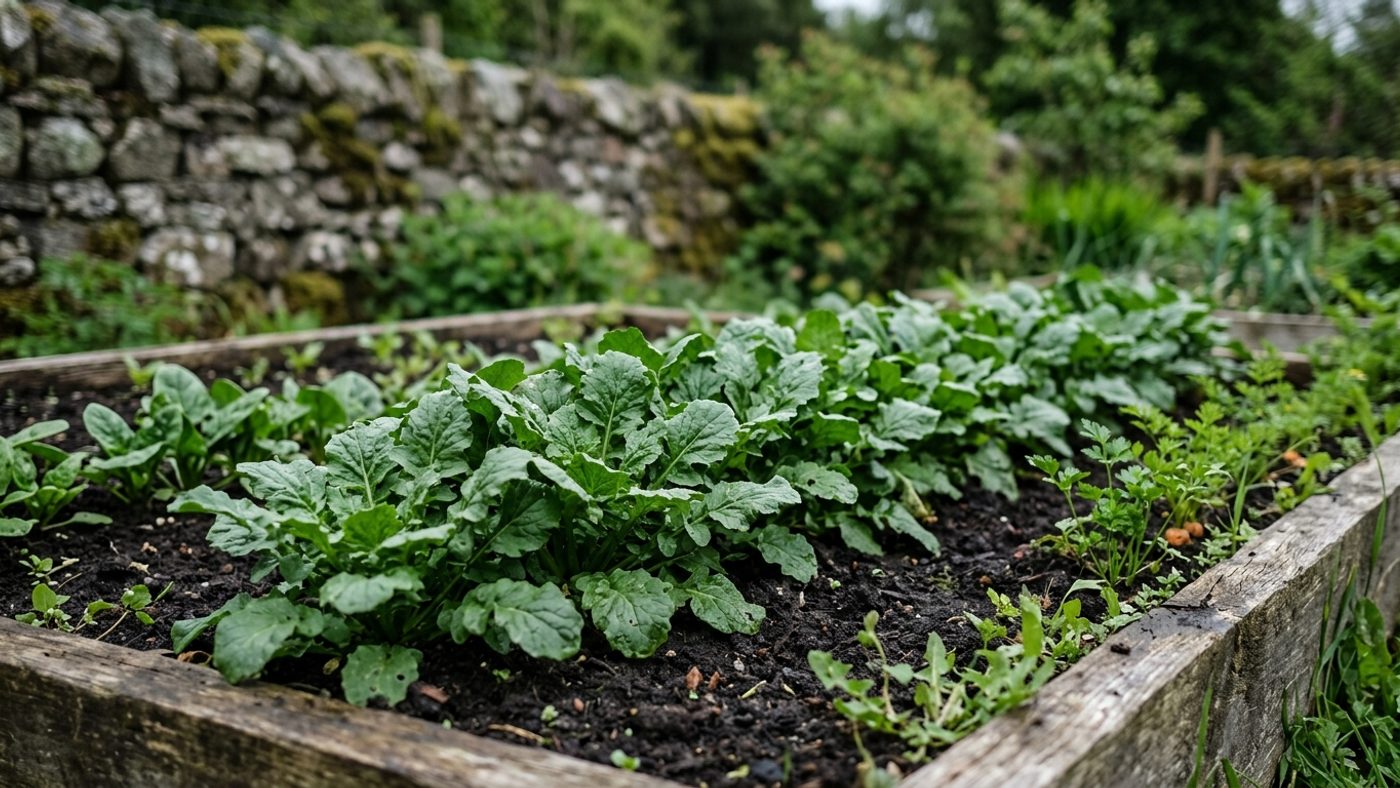
No sowing depth or salad-appropriate spacing figure is published by any authoritative source for this crop. What is published describes growing land cress on to its full, established size as a garden plant, not the earlier stage a salad crop is normally picked at: sow in trays, and plant out once it reaches around 25cm tall, in rows 30cm apart. Treat that as general cultivation guidance rather than salad-growing instruction, since nothing more specific exists to draw on yet.
Varieties
Common problems
- Flea beetles are a genuine risk on this crop, the same family of pest that troubles rocket and radish.
- Beyond that, land cress is described as generally disease-free, though with no dedicated growing guide for this crop, treat that as a lighter, less specific claim than a fully sourced disease list would give you.
Common questions
Does land cress need winter protection in Scotland?
No: it carries an H7 hardiness rating, surviving well below -20C without help; cover is worth adding for comfort while picking through the worst weather, not for survival. Full sourced breakdown: <a href='/tools/garden-myths/land-cress/'>Land Cress Myths →</a>
Is land cress an annual, like most quick salad leaves?
No: it's a biennialA plant that completes its life cycle over two years: growth in year one, then flowering, seeding and dying in year two. Full definition →, taking one to two years to reach maturity and flowering in its second year, even though it's grown and picked like a fast salad crop. Full sourced breakdown: <a href='/tools/garden-myths/land-cress/'>Land Cress Myths →</a>
Does land cress need running water or boggy ground, like true watercress?
No: ordinary moist garden soil, clay or loam in sun or partial shade, is all it needs; nothing about running water or a stream is required. Full sourced breakdown: <a href='/tools/garden-myths/land-cress/'>Land Cress Myths →</a>
Is land cress pest-free?
Mostly, but not entirely: it's generally disease-free, but flea beetle is a genuine risk worth watching for, the same as on rocket or radish. Full sourced breakdown: <a href='/tools/garden-myths/land-cress/'>Land Cress Myths →</a>
Sources
3 sources, and what each was used for
- RHS: position (full sun or partial shade), soil (moist, clay or loam, tolerant of acid/alkaline/neutral pH), H7 hardiness rating, height and spread, biennial lifecycle and flowering habit, flea beetle susceptibility, general propagation method
- RHS: names land cress specifically among crops sown in early summer for an autumn harvest, and among the group sown for a winter salad crop — no individual figures given
- RHS: names land cress specifically among suitable cut-and-come-again crops — no individual figures given