
Grey Mould (Botrytis) is a common disease that affects strawberries, raspberries and french beans in Scotland. Here is what it looks like, the conditions it needs, and the controls that actually work.
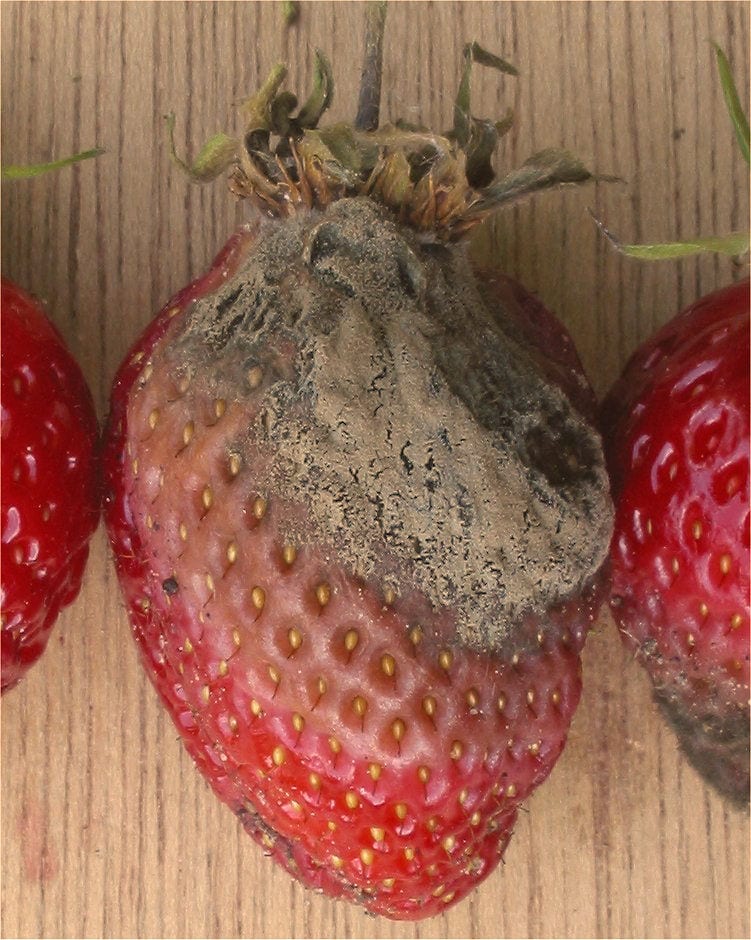
What does it look like?
Fuzzy grey-brown mould on decaying plant parts; shrivelled buds and flowers that die; small black seed-like structures (sclerotia) on infected material; soft brown decay on fruits such as strawberries; and branch death on cane fruits.
What causes it
High humidity and poor ventilation significantly promote the disease. It thrives as a saprophyte and can infect without wounds, particularly under humid conditions. Overcrowded plants increase risk.
The 'infects without wounds' point matters: it is why removing damaged fruit is not sufficient on its own.
This pest is active year-round under cover: there is no seasonal break.
🌱 Plants at risk
Grey Mould (Botrytis) also affects these crops:
Life cycle
Airborne spores are always present. The disease can occur year-round and may cause latent infections that do not show symptoms immediately.
Why this matters in Scotland
A wet-climate disease that Scottish growers meet twice — outdoors on soft fruit, and under cover where the polytunnel that protects tomatoes from blight creates the humidity botrytis wants.
High humidity and poor ventilation are the drivers. Scotland supplies humidity outdoors, and tomatoes, peppers and chillies are grown under cover almost by necessity in most Scottish gardens, for warmth rather than shelter from rain. Enclosure trades fewer arriving spores for better conditions for anything already inside, since a polytunnel or greenhouse holds humidity even more effectively than open ground does. Ventilation is the practical answer either way, indoors or out.
Controls: what actually works
All the methods below are backed by real evidence, not just repeated folklore.
Chemical control
No fungicides are currently approved for gardeners to use against grey mould.
What actually works: No fungicide will touch grey mould, so ventilation is the real control: improve airflow, avoid overcrowding, and clear dead or dying material promptly, before it becomes the next spore source.
Reduce humidity through improved ventilation; avoid overcrowding plants
Reduce humidity by improving ventilation, and avoid overcrowding plants.
Spacing isn't only about yield: giving plants enough room is itself a disease control, not a separate consideration from it.
Remove dead and dying plant material promptly; dispose of infected parts carefully to prevent spore dispersal
Frequently asked questions
What should I do first if I find grey mould (botrytis) in my garden?
Start with reduce humidity through improved ventilation; avoid overcrowding plants. After that, remove dead and dying plant material promptly; dispose of infected parts carefully to prevent spore dispersal. Work through the rest in order of how well-evidenced they are if the first two aren’t enough on their own.
Is there a spray that works?
No. There are no amateur chemical treatments available for grey mould (botrytis). The controls that work are cultural: the measures listed above.
How much of this advice is actually proven?
Every control listed above is evidence-based, not just repeated folklore. None of it is a guess.
Sources
1 source, recorded with what each was used for
- RHS1: organism and ubiquity, symptoms including sclerotia and soft brown fruit decay, humidity/ventilation/overcrowding drivers, infection without wounds, year-round occurrence and latent infection, no approved fungicides, cultural measures