
Pigeons strip brassicasThe cabbage family: cabbage, kale, broccoli, cauliflower, Brussels sprouts, kohlrabi, swede, turnip and more, sharing the same pests, diseases and rotation rules. Full definition → to bare stalks, and garden birds will clear a soft-fruit bed before you get a single berry. It sounds harsh next to the usual line that garden birds are welcome pest control, and both things are true at once: the same birds that eat caterpillars and aphids will just as happily eat your cabbage or your raspberries. This is the most preventable problem a Scottish grower will face, since a properly fitted net is close to a complete answer, which is exactly why leaving it too late is the only real mistake to make.
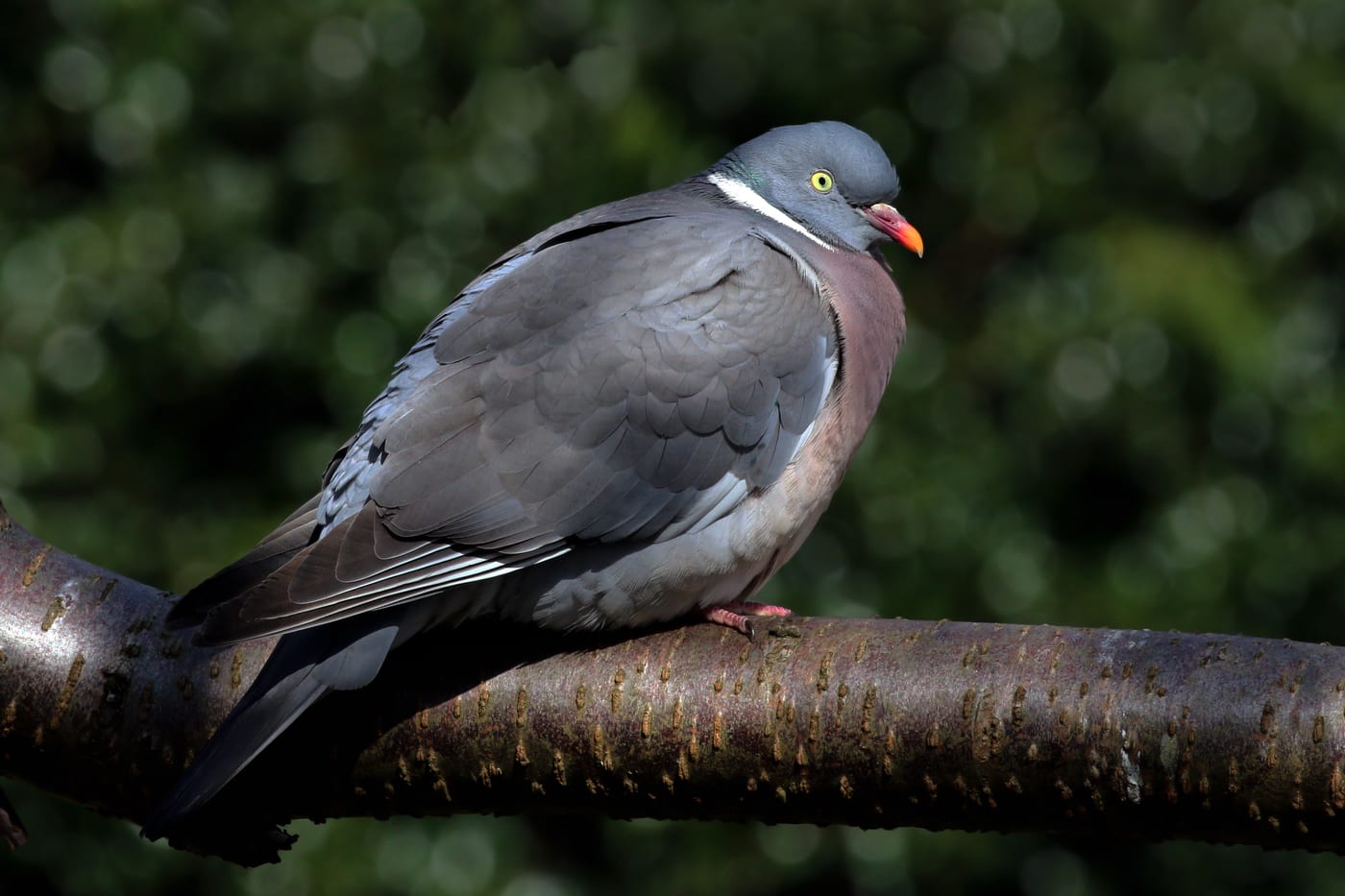
Three different feeding patterns, one page
Pigeons tear and rip brassica leaves rather than eating neatly, leaving ragged holes or, in severe cases, only the leaf stalks and midribs standing. On peas, they pull up and eat young seedlings outright.
Garden birds generally, not just pigeons, take whole ripe or ripening soft and tree fruit, sometimes stripping a plant in a single day. Bullfinches leave a more specific sign: leaf buds pecked off in winter, before any foliage has appeared, on redcurrants and gooseberries particularly.
Shallots see a third pattern again: birds pecking newly planted sets straight out of the ground before they've rooted, not eating foliage or fruit at all.
🌱 Plants at risk
Birds and Pigeons also affects these crops:
Why pigeons target what they do
Food availability and visibility drive it. Pigeons are drawn to brassicas as a reliable, exposed food source, and they specifically prefer landing on bare, open ground rather than dense planting, which is why an isolated row of brassicas in clear soil is more exposed than a densely interplanted bed. Fruit becomes a target the moment it starts to colour and signal ripeness, which is why netting has to go up before colouring starts, not after.
The bare-ground landing preference is the genuinely actionable, non-obvious finding here, and it's the reason dense or companion planting helps at all: pigeons aren't deterred by the plants themselves, only by having nowhere clear to land near them.
Why this matters in Scotland
The badge above reflects general severity rather than a distinct Scottish risk level: no source says pigeons or birds are more aggressive here than anywhere else. The genuine Scottish angle is narrower but real: which crops end up exposed, and for how long.
Kale strips bare in January precisely because it's the only green thing left standing in a Scottish winter garden, and growers who take winter netting off once cabbage white butterflies are gone often lose the crop to birds instead. That isn't about Scottish pigeons being more numerous or more aggressive. It's a consequence of leaning on winter-hardy, winter-cropping brassicas like kale, a Scottish growing strategy: a garden carrying standing winter greens for months needs winter-length netting discipline in a way a garden that clears its brassica bed in autumn does not.
Controls: what actually works
Not every method here works equally well: some are backed by real evidence, some are simply traditional, and one has been tested and shown not to help despite how often it's repeated.
Netting or fine mesh over the crop, fitted before the vulnerable point: at transplanting for brassicas and peas, before fruit starts to colour for soft and tree fruit
Fit netting or insect-proof mesh over the crop and keep it taut, secure and checked regularly for holes or gaps a bird could get trapped in. For brassicas grown through a Scottish winter, leave it on for the whole season rather than removing it once the summer insect risk has passed.
A permanent fruit cage for soft fruit grown in quantity
Where several soft fruit crops are grown together (currants, gooseberries, raspberries), a fruit cage covers the whole bed for both the winter bud-pecking risk (bullfinches) and the summer ripening-fruit risk in one structure, rather than netting each plant separately every season.
Dense or companion planting so pigeons have less open, bare ground to land on
Pigeons prefer landing on bare, open ground, so densely packing plants together, for example growing flowers between vegetables, gives them fewer places to land near the crop. Weaving physical obstacles such as off-cuts of pea sticks between plants works on the same principle.
Worth doing alongside netting, not instead of it. Nothing here is claimed to work as reliably as a physical barrier.
Fine string or wire strung across canes above the crop
Two canes with fine string stretched between them above a crop stops pigeons landing, since they need a clear approach to land on their feet. A simple string-and-wire grid across a vegetable patch works on the same principle; hanging something reflective from it, such as old CDs, is optional rather than essential to the method.
Scaring devices: scarecrows, ribbons, foil, wind chimes
RHS states scaring devices give only temporary protection. Garden Organic explains why: static scarers work briefly but birds habituate to anything that doesn't move or change, so the same scarecrow or strip of foil stops working within days once birds learn it poses no real threat.
Taste-deterrent repellent spray (calcium chloride-based)
RHS names a calcium chloride-based repellent as offering some protection, without trial evidence behind that claim. We don't name the specific product RHS names: describe the active ingredient, never a brand, so the advice doesn't go stale the day a product is reformulated or withdrawn.
Frequently asked questions
How do I stop birds and pigeons eating my crop?
Netting or fine mesh, fitted before the vulnerable point: at transplanting for brassicas and peas, before fruit starts to colour for soft and tree fruit. Keep it taut, secure and checked regularly for gaps a bird could get trapped in.
Will they really strip the whole crop?
Yes, if it's left unprotected. A pigeon can strip a brassica to bare stalks in a day, and birds can clear a soft-fruit bed before you get a single berry. It's also one of the most preventable garden problems there is: a properly fitted net or mesh, kept intact and checked regularly, works close to 100% of the time.
Do scarecrows and other scaring devices work?
Only briefly. RHS states scaring devices give only temporary protection, and Garden Organic explains why: birds habituate to anything that doesn't move or change, so the same scarecrow or strip of foil stops working within days once they learn it poses no real threat. Treat them as a short-term supplement to netting, never a substitute for it.
Isn't encouraging birds supposed to be good for the garden?
Yes, and that's not a contradiction. The same birds that eat caterpillars and aphids will just as happily eat your cabbage or your raspberries. Excluding them from a crop bed with netting doesn't stop them doing pest control everywhere else in the garden.
Sources
4 sources, recorded with what each was used for
- RHS: vulnerable plants (brassicas, peas, cherries, blackcurrants and other fruit bushes), damage description, netting/fruit cage as the certain protection, scaring devices as only temporary, the calcium chloride repellent, tolerance framing
- RHS: RHS's general framing of birds as beneficial garden predators, used for the RHS-stance box explaining why this page doesn't contradict that framing
- Garden Organic: why pigeons target brassicas, the bare-ground landing preference, dense planting, pea-stick barriers, fine string between canes
- Garden Organic: habituation as the reason static scarers lose effectiveness, the string-and-wire grid with optional reflective CDs