
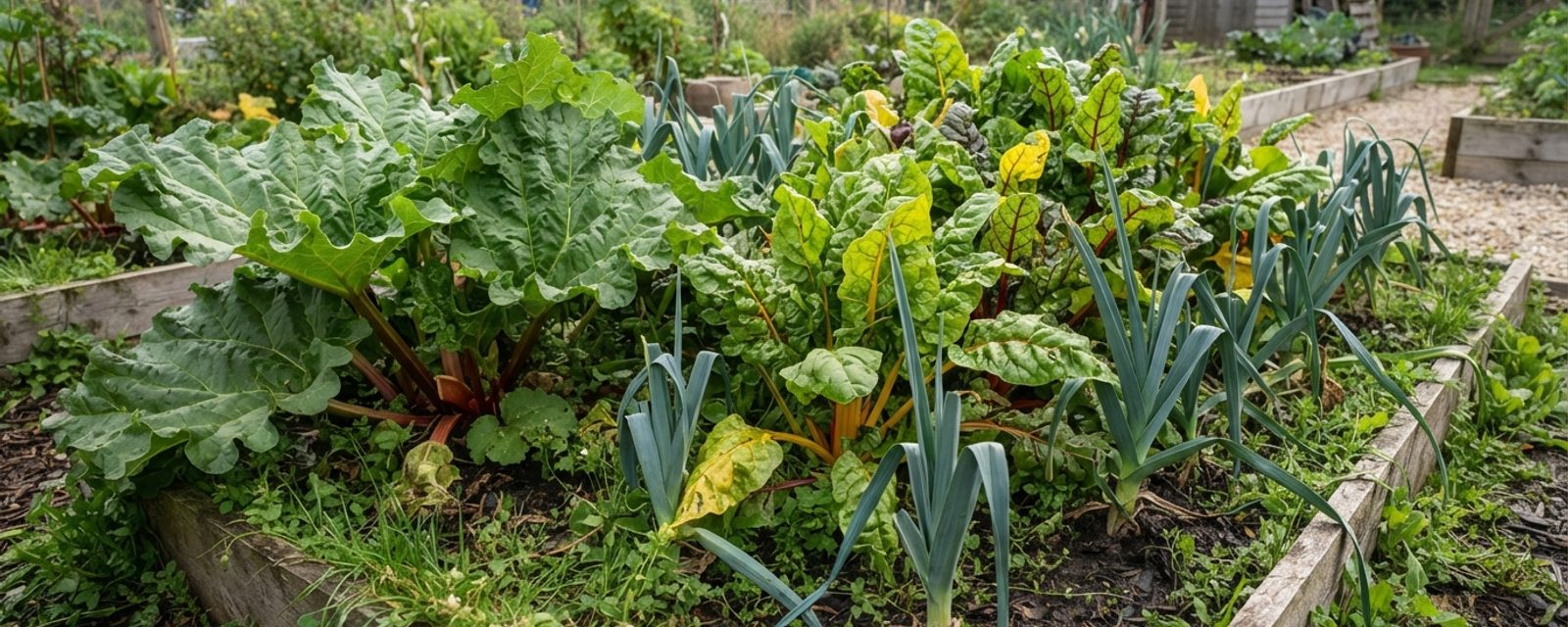
If you've ever come back from a fortnight away, or just a fortnight of work swallowing every evening, to find the courgettes have turned into marrows, the lettuce has boltedA plant switching early into flowering and seed production, usually triggered by stress, after which leaves, roots or bulbs turn bitter or unusable. Full page → into a bitter spike, and the beans have gone stringy on the plant, you already know the real problem with most "easy vegetable" advice. It tells you what grows fast. It doesn't tell you what survives you.
Those are two different questions. A crop that's ready in four weeks is no use if the one week you can't get to the plot happens to be the week it needs picking, watering, or feeding on schedule. What a genuinely busy or first-time gardener needs is the opposite trait: crops that tolerate being ignored. Five crops below shrug off exactly that kind of neglect, each for a different, specific reason.
What "low-maintenance" actually means here
"Easy" usually means one of two quite different things: fast to grow, or forgiving to grow. This list is only about the second one. A fast crop can still be a demanding one, radishes are ready in under a month, but leave them a few days past their peak in warm weather and they turn woody and hot. Speed tells you how long you'll wait for a reward; it says nothing about what happens if you're not there to collect it on time.
Genuine neglect-tolerance is a different set of properties, and each pick below has at least one:
- Drought tolerance once established, the plant keeps going through a dry spell without wilting, splitting, or stopping.
- A wide harvest window, being a few days or weeks late to pick doesn't ruin the crop.
- Genuine disease and pest resistance, not immunity, but a real track record of shrugging off common problems.
- Minimal feeding requirements, it doesn't need a fertiliser schedule to perform reasonably well.
- Reluctance to bolt, it doesn't rush to set seed the moment conditions turn dry, hot, or inconsistent.
The five picks
1. Jerusalem artichoke: the crop you genuinely cannot rush
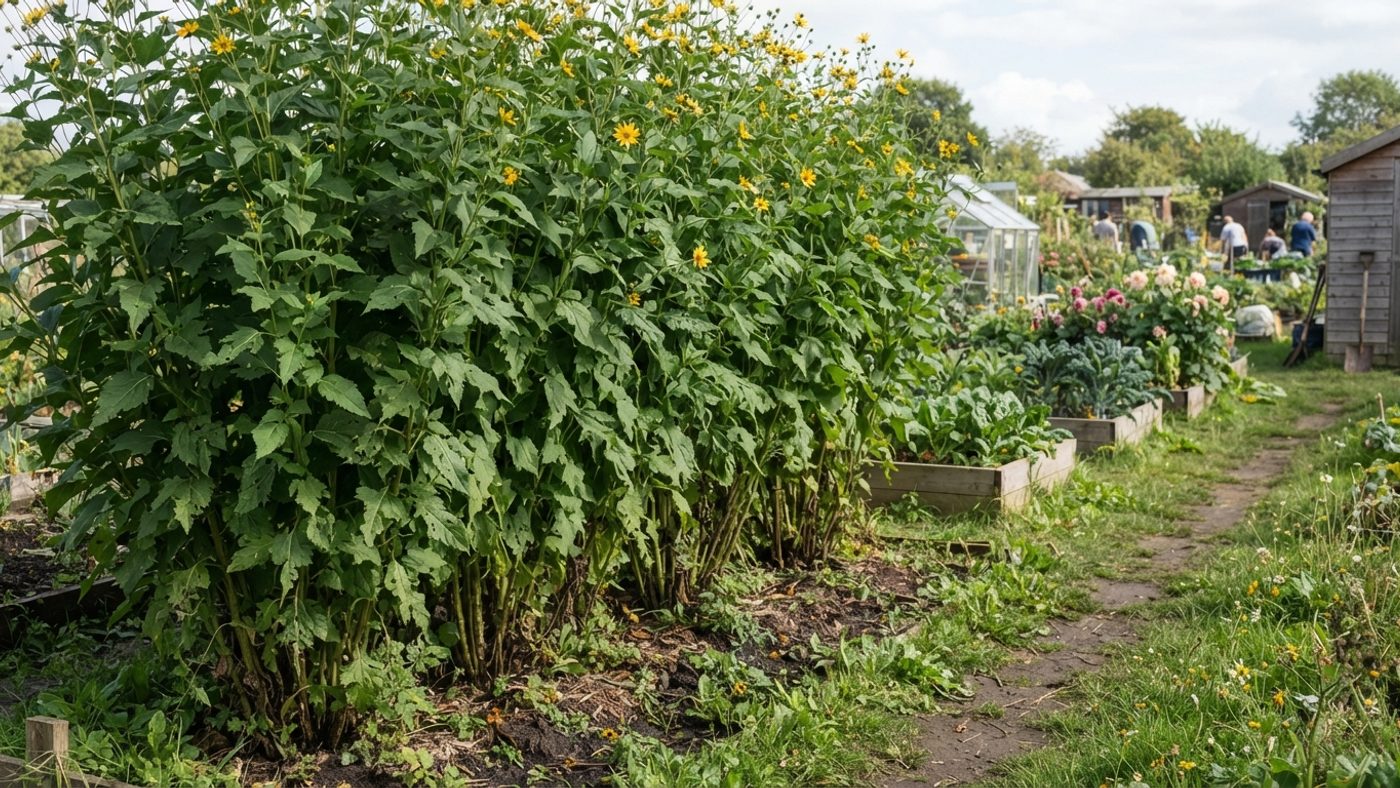
Planted as a tuber, not a seed, from late winter through mid-spring, 10-15cm deep and about 30cm apart, no seed tray or windowsill stage required. It's the closest thing on this list to a plant that refuses to fail, and the mechanism is unusually specific: the tubersA swollen underground stem or root a plant uses to store energy, which can also grow into a new plant, the classic example being a potato. Full definition → are hardy and can be left in the ground all winter, for harvesting whenever needed, and because they don't store well once harvested, the standard advice is to leave them in the ground until you actually want them. That converts what's normally a harvest deadline into something closer to a standing larder.
It backs that up on the growing side too: it's a strong, vigorous plant needing little maintenance, and while it prefers a sunny spot with moisture-retentive soil for the biggest crop, it will tolerate poor soils and partial shade, you'll just get a smaller crop of tubers, not a failed one. Slugs may nibble young shoots, but this doesn't cause significant damage once past that earliest stage. The tall growth, often 2-3m, is also a genuine asset on an exposed plot: a row doubles as a windbreak for anything grown in its shelter, see Top 5 Crops for Exposed, Windy Gardens.
The trade-off worth knowing before you plant: Jerusalem artichoke is famously difficult to get rid of again, since any tuber left in the ground will resprout the following spring. Plant it somewhere you're happy to have it permanently, not in a bed you rotate annually. Full detail is in the Jerusalem artichoke growing guide.
2. Leeks: a harvest window measured in months, not days
Started from seed, sown March-April, then transplanted outside once seedlings are pencil-thick and 20cm tall. Most root and stem vegetables have a narrow "just right" moment between undersized and past-it. Leeks essentially don't: hardy winter varieties can be left standing in the coldest weather without protection, ready to enjoy whenever you want them, and you can harvest leeks at any size, baby leeks take only a couple of months, while full-sized leeks can take six. Late varieties can remain in the ground through winter and into spring, just harvest whenever needed. A touch of frost improves the flavour rather than damaging the crop.
Watering demands ease off once established too, you should only need to water during prolonged dry spells after the early stage. Leeks aren't invulnerable: leek rust, allium leaf miner, leek moth, onion fly, and slugs are real risks, though the crop is still relatively trouble free overall. Scotland's generally damper climate works against leeks on two fronts at once, favouring both slugs and the damp conditions leek rust spreads in, so a young transplant is worth watching until it's past its most vulnerable stage. Full detail is in the leeks growing guide.
3. Chard: a leafy green that doesn't collapse the day you forget it
Grown from seed, sown direct outdoors April to July. Leafy greens are usually the least forgiving category on a beginner's plot, because most bolt or wilt fast under stress. Chard is the exception, for two separate reasons. First, more mature plants are fairly drought tolerant, the vulnerable stretch is early on, when young plants need regular watering, but once established chard copes with a dry spell that would finish off spinach or lettuce. Second, its cut-and-come-again habit means a missed picking isn't a spoiled one: leaves left unpicked simply grow quite large, at least 30cm tall, a much softer failure mode than bolting to seed. Chard also doesn't usually need feeding, growing well in most soils or fresh potting compost.
It isn't immune to bolting altogether, in hot weather chard plants may bolt. White-stemmed varieties are the hardiest, most productive choice for a colder site, worth choosing on a Scottish plot where hardiness matters most. Chard also tolerates a shaded site well, see Top 5 Crops for a Shaded Garden. Full detail is in the chard growing guide.
4. Rhubarb: plant once, and the maintenance mostly stops
The one perennial on this list, and its forgiveness comes largely from not being an annual: no seed to sow, no seedling stage, no yearly restart. Planted once as a dormant bare-rootA plant, usually a fruit tree or hedging, sold with its roots exposed rather than in a pot, and only available while dormant. Full definition → crownThe base of a perennial plant where roots and shoots meet, often sold and planted as a ready-made dormant plant rather than grown from seed. Full definition →, available November to March, it stays put, cropping again every year after. Once established, RHS states plainly that rhubarb rarely needs watering except in prolonged dry periods, when growth simply slows rather than the plant failing outright. Feeding is similarly minimal, an annual mulchA layer of material spread over the soil around plants to suppress weeds, retain moisture, and improve soil structure as it breaks down. Full definition → is generally enough. RHS also calls it extremely easy to grow, cropping reliably every year with little maintenance once past its first couple of seasons.
The harvest window is genuinely wide too: most varieties can be picked from around April through late June or early July, and RHS's own guidance is to take only a portion of the stems at any one time, which is built around spreading picking out rather than hitting a precise date. Do note that rhubarb takes real patience: it gives no harvest in its first year, and only a light one the following year. Its multi-year establishment is set out in Perennial Vegetables Worth Growing in Scotland. Full detail is in the rhubarb growing guide.
5. Garlic: nearly maintenance-free, with one date that matters
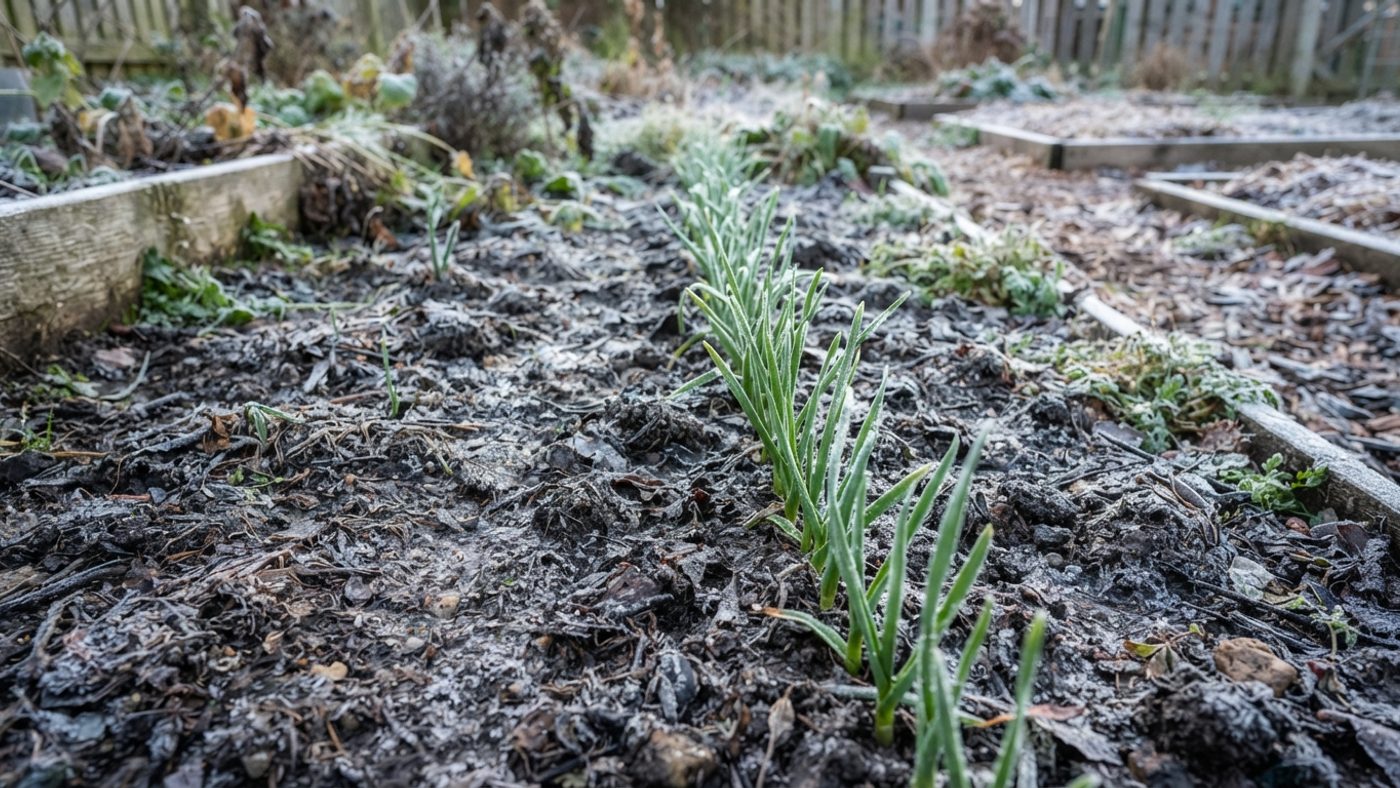
Planted as individual cloves, split from a bulb just before planting, pushed into the soil about 2.5cm deep and 15cm apart. Garlic earns its place with a direct endorsement from RHS: it needs minimal maintenance, takes up relatively little space and produces reliable harvests, and is generally trouble-free in good growing conditions. Planted in autumn, it sits through winter needing essentially nothing from you, and even through spring the watering demand is light, water during dry spells to help bulbs size up, then stop once bulbs are large and well formed, since continued watering at that stage risks rot.
Garlic is also one of the few crops where a Scottish winter works in its favour rather than against it: RHS states most varieties need one to two months at 0-10°C to form bulbs properly, and a cold Scottish winter is a reliable way to get it. The one soil condition worth checking before planting is pH, RHS is specific that garlic dislikes acid soil below pH 6.5.
Garlic has one genuine exception to its neglect-tolerance worth flagging honestly: harvest timing. RHS is specific that you shouldn't delay harvesting, as bulbs lifted late tend to open up and have a shorter storage life. Unlike leeks or Jerusalem artichokes, garlic doesn't reward leaving it in the ground once it's ready.
One risk worth knowing about honestly: white rot, a soil-borne fungal disease affecting garlic, leeks, and onions alike, has no chemical treatment available to UK gardeners, and its resting bodies can remain in soil for at least 15 years. It isn't common on every plot, but if it's shown up on yours before, growing garlic or leeks in the same ground again is a real risk this list's low-maintenance framing doesn't cover. Full detail is in the garlic growing guide.
The five picks compared
| Crop | Headline forgiving trait | What happens if neglected anyway | Feeding needs |
|---|---|---|---|
| Jerusalem artichoke | Tubers can be left in the ground all winter and lifted whenever needed | Little to nothing: a smaller crop in poor soil or shade, not a failed one | None beyond organic matter dug in before planting |
| Leeks | Can stand in the ground through the coldest weather, harvestable at any size for months | Minimal: flavour can improve with a touch of frost | No explicit requirement beyond soil preparation |
| Chard | Drought tolerant once mature; unpicked leaves just grow larger rather than spoiling | Leaves get larger; prolonged heat can still trigger bolting eventually | None: grows well in most soils unfed |
| Rhubarb | Rarely needs watering once established; wide multi-week harvest window | Growth pauses in a hot dry spell; a missed picking just means a bigger stalk | Annual mulch usually enough; extra feed only on poor soil |
| Garlic | Minimal care through autumn, winter and spring | Bulbs lifted late open up and store poorly: the one exception | None beyond soil preparation; stop watering once bulbs form |
What "low-maintenance" doesn't mean
None of this is a case for zero effort. Every crop above still benefits from reasonable soil preparation at planting. Young plants of chard, leeks, and rhubarb all need real attention for watering while establishing, the neglect-tolerance kicks in later, not from day one. And "forgiving" is relative, not absolute, a genuinely prolonged drought, a waterlogged winter, or a serious pest infestation will still set any of these back, just less severely than it would a thirsty lettuce.
Drainage is worth a specific mention: heavy, waterlogged Scottish clay works against several of these crops regardless of how forgiving they otherwise are, garlic and rhubarb in particular are prone to rot in ground that sits wet all winter. Checking drainage once, at planting, saves more trouble than any of the ongoing care these five crops ask for.
None of this applies identically everywhere in Scotland either. A sheltered west-coast garden and an exposed inland or upland plot with harder frosts and stronger winds aren't the same growing conditions, and slug and rust pressure both tend to run higher in a wetter west-coast climate than a drier east-coast one.
Common questions
Are these the fastest vegetables to grow in Scotland?
No, several of them are genuinely slow. Garlic and leeks both take the best part of a year in the ground, and rhubarb gives no harvest at all in its first year, so this isn’t the list to reach for if a quick first result matters most to you.
Can I grow all five of these in containers?
Chard and garlic both do reasonably well in containers, though containers dry out faster than open ground, which works against the drought-tolerance case for chard specifically. Leeks and rhubarb generally want more root room than a typical container gives long-term, and Jerusalem artichoke’s height and spreading habitA plant's characteristic shape and manner of growth, such as upright, spreading, creeping or bushy. Full definition → make it a poor container candidate.
Do any of these still need daily attention when they’re young?
Yes. Chard and leek seedlings both need consistent watering while they establish, and garlic and rhubarb both benefit from decent soil preparation at planting. The neglect-tolerance applies once a plant is past its early, vulnerable stage, none of them are hands-off from the day they go in.
Can I speed up any of these five if I do want a bit more attentiveness in exchange for a faster result?
Not really, for most of them, the forgiving traits here come from the plant’s own biology (a wide harvest window, drought tolerance once established), not from a maintenance routine you can dial up. The one partial exception is rhubarb: forcingCovering plants to exclude light and speed early, tender growth in the dark, most associated with rhubarb and sea kale in late winter. Full definition → an established clump under a pot in late winter brings the first stems on a few weeks earlier than leaving it uncovered, covered in the perennial vegetables guide.
Do any of these five make a good pairing with each other on the same plot?
Garlic and leeks are worth keeping apart rather than together, since they share the same white rot risk and planting them side by side doubles up the exposure if the disease ever turns up. Otherwise there’s no particular reason to plant any of the five near or away from each other, unlike a companion-planting pairing chosen for pest control.
What about slugs, are any of these five actually slug-proof?
No. Slugs will go for young Jerusalem artichoke shoots, leek transplants, and chard seedlings given the chance, and Scotland’s generally damp climate favours slugs more than a drier one would. It’s still worth checking vulnerable seedlings on a mild, damp evening until they’re through their earliest stage.
Sources
7 sources, recorded with what each was used for
- RHS: How to grow Jerusalem artichokes: Tuber winter-storage-in-ground claim, poor-soil/shade tolerance, pest/disease robustness, "little maintenance" characterisation
- RHS: How to grow garlic: Watering guidance, "trouble-free" and "minimal maintenance" characterisation, cold-period bulb-formation requirement, soil pH preference, harvest-timing caveat
- RHS: How to grow leeks: Extended in-ground harvest window, harvest-at-any-size flexibility, reduced watering needs once established, "relatively trouble free" characterisation
- RHS: Slugs and snails: Slug vulnerability of young shoots/transplants and general dampness as a risk factor
- RHS: Onion white rot: White rot's effect on garlic and leeks, lack of an available chemical treatment, persistence in soil for at least 15 years
- RHS: How to grow chard: Drought tolerance in mature plants, cut-and-come-again harvest forgiveness, no-feeding guidance, bolting behaviour in hot weather, white-stemmed hardiness
- RHS: How to grow rhubarb: Reduced watering once established, minimal feeding guidance, harvest window, "extremely easy to grow" characterisation