
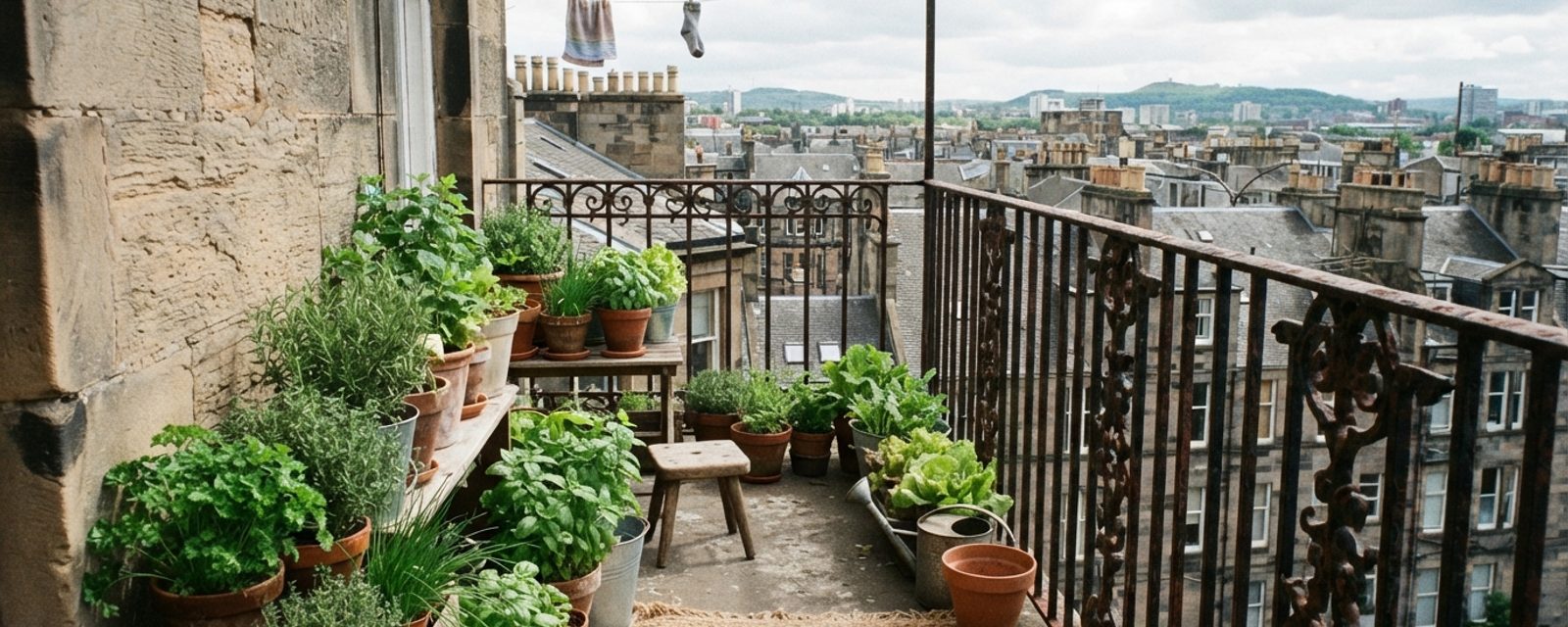
Wind does three distinct things to a plant in a pot, and none of them are what people usually picture when they think of "exposure."
First, it strips water out of both the plant and the compost far faster than still air does. A leaf normally holds a thin layer of still, damp air right against its surface, which slows how fast it loses water; moving air constantly sweeps that layer away and replaces it with drier air, so the plant loses water faster through its leaves, and the same moving air pulls moisture out of the compost surface too. A pot that would stay damp for two days in a sheltered garden can be bone dry in one on an exposed balcony. Second, wind is a direct mechanical stress. Tall or floppy growth gets whipped and flexed with every gust, a repeated flogging action that can snap stems outright, bruise and shred leaf tissue, and knock flowers and young fruit off before they've set. This is a physical wound, not a vague "stress," and it's why leggyDescribes a plant that's grown tall, thin and sparse rather than bushy, usually from too little light or not being pinched out. Full definition → tomatoes or unstaked climbing beans do so badly at height. Third, at height, wind acts directly on the container itself. A tall, narrow pot with a lightweight compost fill and a top-heavy plant has a high centre of gravity and a small footprint, exactly the shape most likely to topple in a gust.
Those three mechanisms, fast drying, physical flogging, and toppling, are the actual problem a windy balcony presents, and they point straight at the solution. A crop that copes here needs to be low and compact so it isn't caught and whipped by the wind, genuinely tolerant of drying out (or quick to establish a resilient root system so it recovers fast between waterings), and sturdy enough to stand on its own, because a balcony rarely has anywhere to sink a cane or a spare hand to tie one off.
Height and building shape make this worse in a lot of Scottish cities specifically. Many Scottish flats are tenements built around narrow closes and stairwells, and gaps between tall buildings funnel and accelerate wind rather than simply exposing a balcony to open air, a balcony on the corner of a tenement block can be windier than the open ground a few storeys below it. A coastal balcony adds a second factor: salt carried on the wind can scorch foliage independently of the drying and physical damage described above, worth knowing given how many Scottish towns and cities sit close to a coastline. And a balcony holds less heat overnight than a bed at ground level with the building's own thermal mass behind it, so frost can linger there later into spring than the regional last-frost dates for the area around it would suggest, worth building in a margin before sowing anything tender.
Quick answer
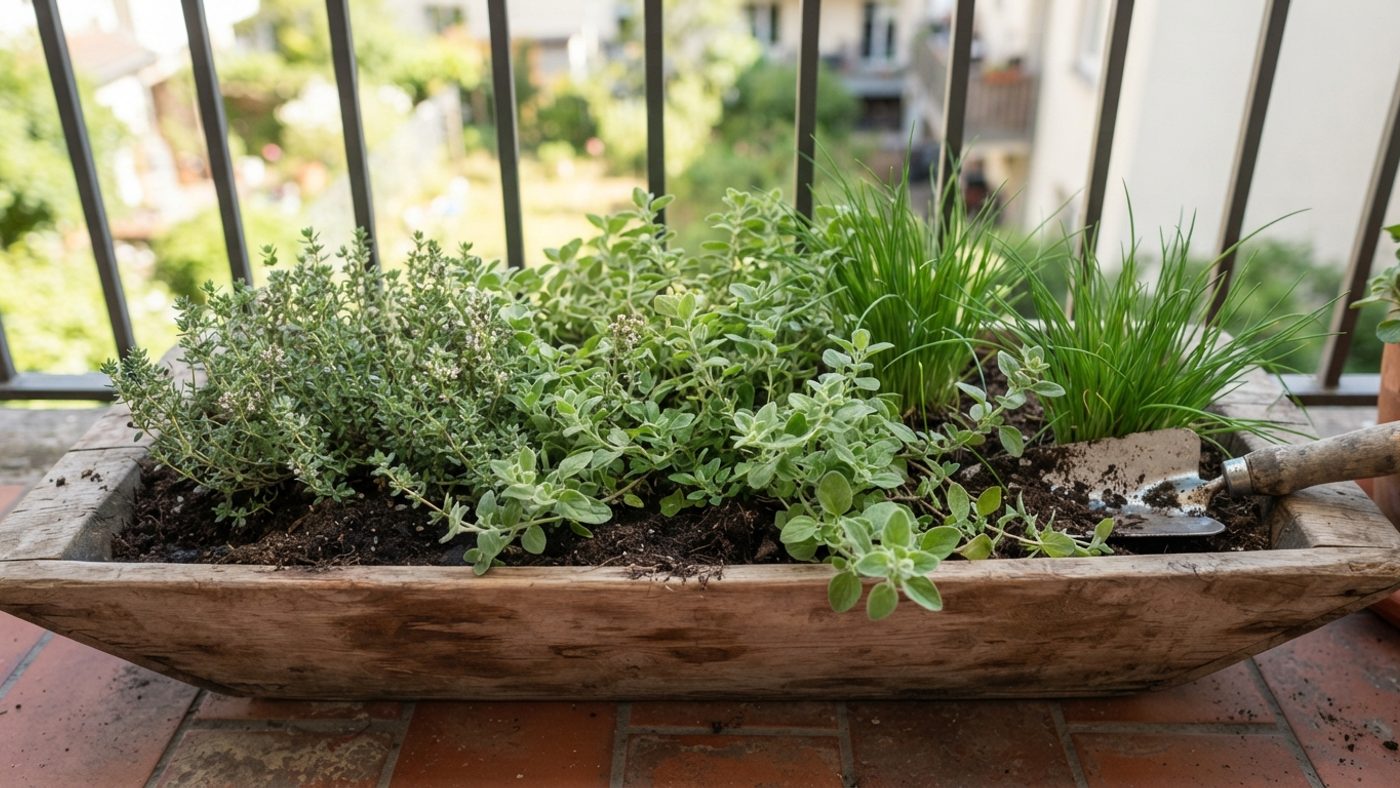
For most windy Scottish balconies, a trough of Mediterranean herbs, thyme, oregano and chives, is the safest first pick: all three are low, woody or tufted, and genuinely prefer the free-drainingSoil that lets water pass through quickly rather than pooling, so roots aren't sitting in wet ground after rain. Full definition → conditions wind creates, with zero staking. If you want an actual vegetable harvest rather than herbs, cut-and-come-again salad leaves in a wide, shallow container are the next-best choice, since that shape is also the most resistant to being blown over. Compact chillies are worth it only if you have a warm, sheltered corner to put them in, they cope with wind structurally, but they're heat-lovers first, so don't put them on the most exposed rail edge.
The 5 best crops for a windy balcony
1. Mediterranean herbs: thyme, oregano and chives
Thyme and oregano are two of the few edible crops that actively want the conditions wind creates. Thyme's ideal soil is well-drained, even stony poor soils in sun, and oregano grows best in well-drained to dry, neutral to alkaline soil in sun, both are naturally drought-adapted, low, woody or semi-woody plants that never need a cane. Chives are a little more moisture-tolerant (rich, well-drained soil in full sun, though tolerant of wet conditions and heavy soils) but share the same tufted, ankle-height habit that simply has nothing for the wind to catch.
Basil, by contrast, needs a warm, sunny, sheltered location outdoors, dislikes cold, damp conditions, and is best kept under glass in cooler regions, a description that fits an exposed Scottish balcony almost exactly. It's tender and exposure-sensitive in a way thyme, oregano and chives simply aren't. Skip basil on an exposed balcony; it will sulk regardless of how well you shelter it. Rosemary shares the same drought-hardy, woody habit and would suit a wind-exposed pot just as well, but it needs shelter in cold areas over winter, so it's a reasonable sixth choice rather than a top-five pick if your balcony also gets hard frosts.
Growing notes: Plant or sow from spring once the worst frosts are past. A single wide trough or several 20–25cm pots works well, group all three together so they mutually shield each other's compost from drying wind. Water only when the compost has dried out; err on the side of underwatering. Trim thyme lightly after flowering and cut chives to the ground after flowering to keep both bushy and productive. All three are perennial and can stay outside over a Scottish winter in their pots; move them somewhere more sheltered during a hard freeze rather than bringing them indoors.
2. Cut-and-come-again salad leaves and rocket
Loose-leaf salads and rocket stay low and floppy-leaved rather than boltingA plant switching early into flowering and seed production, usually triggered by stress, after which leaves, roots or bulbs turn bitter or unusable. Full page → upright, so wind damage is limited to occasional leaf bruising rather than snapped stems. A wide, shallow, low-profile container, of the kind RHS demonstrates in a large but quite shallow old tin bath, is genuinely harder to blow over than a tall narrow one, because it keeps the whole planting's centre of gravity close to the balcony floor.
Growing notes: Sow from spring through summer, a few weeks apart, for a continuous supply rather than one glut; this is an annual crop, resown fresh each time rather than overwinteredKeeping a plant alive and intact through the cold months, whether left outdoors, moved under cover, or stored dormant. Full definition →. Use a container at least 30cm (1ft) wide and deep, since larger containers dry out less quickly than small ones, worth taking seriously on a balcony where wind is already accelerating moisture loss. Check the compost daily in summer, since it can dry out rapidly, and containers may need watering daily in hot weather. No feeding is needed, salad leaves are a short-term crop that grows well in ordinary potting compost. Sow in a little shade in summer to slow bolting.
3. Compact, round-rooted carrots
Carrot foliage is fine, feathery and low, which means it flexes in wind rather than catching it, there's no broad leaf surface or floppy stem for gusts to work on, and no top growth heavy enough to threaten the pot's balance. Small, round-rooted varieties suit most containers, which also sidesteps the need for a deep pot.
Growing notes: Sow from spring, direct into the final container, since carrots dislike being transplanted; a second sowing in early summer extends the harvest. Use peat-freeCompost made without peat, which is harvested from a slow-forming, carbon-storing wetland habitat that peat extraction damages. Full definition → multi-purpose compost, sow thinly and cover with about 1cm of compost. Container-grown carrots dry out more quickly than ground-grown ones and need regular, consistent watering, inconsistent moisture causes roots to split, so this is one crop where you can't let the wind-driven drying go unchecked, even though the plant itself is structurally unbothered by wind. This is another annual, pulled at harvest rather than overwintered in its pot.
4. Compact chilli and pepper varieties
Compact chilli cultivarsA plant variety that arose or was bred under cultivation and is kept true by deliberate propagation, rather than a naturally occurring wild species. Full definition → are genuinely short, some varieties reach only 20–30cm (8–12in), including 'Loco' and 'Prairie Fire', both holders of the RHS Award of Garden Merit, compact, bushy and self-supporting at that height, with no cane required. That solves the mechanical side of wind exposure.
It doesn't solve the other side: chillies are heat-loving and want your warmest, sunniest spot, ideally against a south-facing wall, needing heat, humidity and lots of sunshine to fruit well. So this pick belongs in the most sheltered sunny corner of the balcony, not on the most exposed rail edge, wind-tolerant in stature, but not wind-loving in temperament.
Growing notes: Start indoors or under cover in spring, since chillies need warmth to germinateA seed sprouting: breaking dormancy and putting out its first root and shoot, given the right warmth and moisture. Full definition →, and only move plants outside once frosts are reliably over for the area, check the regional frost dates, remembering a balcony can still run colder than the ground-level figure suggests. One plant per 22cm (9in) pot of peat-free multi-purpose compost, or three plants to a standard growing bag. Keep the compost evenly moist, daily watering in hot weather, and feed weekly with a high-potassium liquid feed once flowering starts. Larger, floppier plants (and anything in a growing bag) may still want a cane; the compact varieties named above are the ones that genuinely don't. Treat as an annual outdoors; a plant can be brought inside to a bright windowsill before the first frost if you want to try overwintering it, but it isn't hardy enough to leave in a pot outside over a Scottish winter.
5. Dwarf peas
Full-height peas are a poor balcony choice, tall, climbing, and needing a proper support structure. Dwarf varieties change that equation, needing a few twiggy sticks rather than tall canes or netting, a fine difference on a balcony, since a handful of twigs pushed into a pot is achievable where a 1.5m cane structure isn't. 'Meteor', a dwarf variety reaching 0.5–1m, has some tolerance of windy sites.
Be realistic about this one: 'Meteor' still climbs by tendril and does better with something to grip, so it's the least "stake-free" of the five picks here. Include it only if you're willing to push in a few twigs, and position it away from the most exposed edge.
Growing notes: Sow from spring once the ground has warmed, or a little earlier under cover; peas tolerate a light frost once growing but not a hard freeze as seedlings. Use a container at least 45cm (18in) wide. Space plants around 7.5cm (3in) apart. The compost can dry out rapidly in containers, so water regularly, and once flowering begins, feed fortnightly with a high-potassium liquid feed such as tomato feed. This is an annual crop, cleared at the end of the season rather than overwintered.
Comparison at a glance
| Crop | Container | Height/habit | Sun | Staking | Wind-tolerance rationale |
|---|---|---|---|---|---|
| Thyme, oregano, chives | 20–25cm pots or a wide trough | 15–30cm, low woody/tufted | Full sun | None | Naturally drought-adapted; low habit has nothing for wind to catch |
| Cut-and-come-again salad leaves / rocket | At least 30cm wide and deep | Low, floppy-leaved rosettes | Full sun to light shade in summer | None | Low-profile, wide-shallow container shape resists toppling |
| Compact carrots (round-rooted) | Shallow-to-medium pot | Low, feathery foliage | Full sun | None | Fine foliage flexes rather than catching wind; needs consistent watering |
| Compact chillies ('Loco', 'Prairie Fire') | 22cm (9in) pot, or 3 per growing bag | 20–30cm, bushy | Warmest, sunniest, most sheltered spot | Not at this height | Compact bushy habit self-supports; but heat-loving, so shelter matters more than wind-hardiness |
| Dwarf peas ('Meteor') | At least 45cm (18in) wide | 0.5–1m, climbs by tendril | Full sun | A few twiggy sticks | Some tolerance of windy sites; needs minimal support, not a full cane |
Wind-specific technique: keeping pots upright and plants intact
Before choosing pots, it's worth actually gauging how exposed the balcony is rather than assuming: a top-floor balcony facing the prevailing wind, with nothing around it to break the airflow, is a different problem from a lower or more enclosed one, and the crops and precautions above matter more the higher that exposure runs.
The crop choice only solves half the problem. The other half is the container itself: tall, narrow containers are prone to being blown over, particularly if they contain tall plants. The fix is to add a layer of bricks or stones in the base to help stabilise them, and position in a sheltered spot. On a balcony, take that literally, a few bricks or large stones in the bottom of a pot lowers its centre of gravity and makes it dramatically harder to tip, and it costs nothing. Material matters here too: a heavy glazed or terracotta pot is harder to blow over than an equivalent plastic one, though it's also more likely to crack if it freezes while wet, so weigh that trade-off against how exposed the spot actually is rather than defaulting to one material everywhere.
A reservoir or self-watering container is also worth considering for any of the five, since it holds a buffer of water the plant can draw on between waterings, a direct countermeasure to wind's main effect, faster drying, on a balcony where daily watering isn't always realistic.
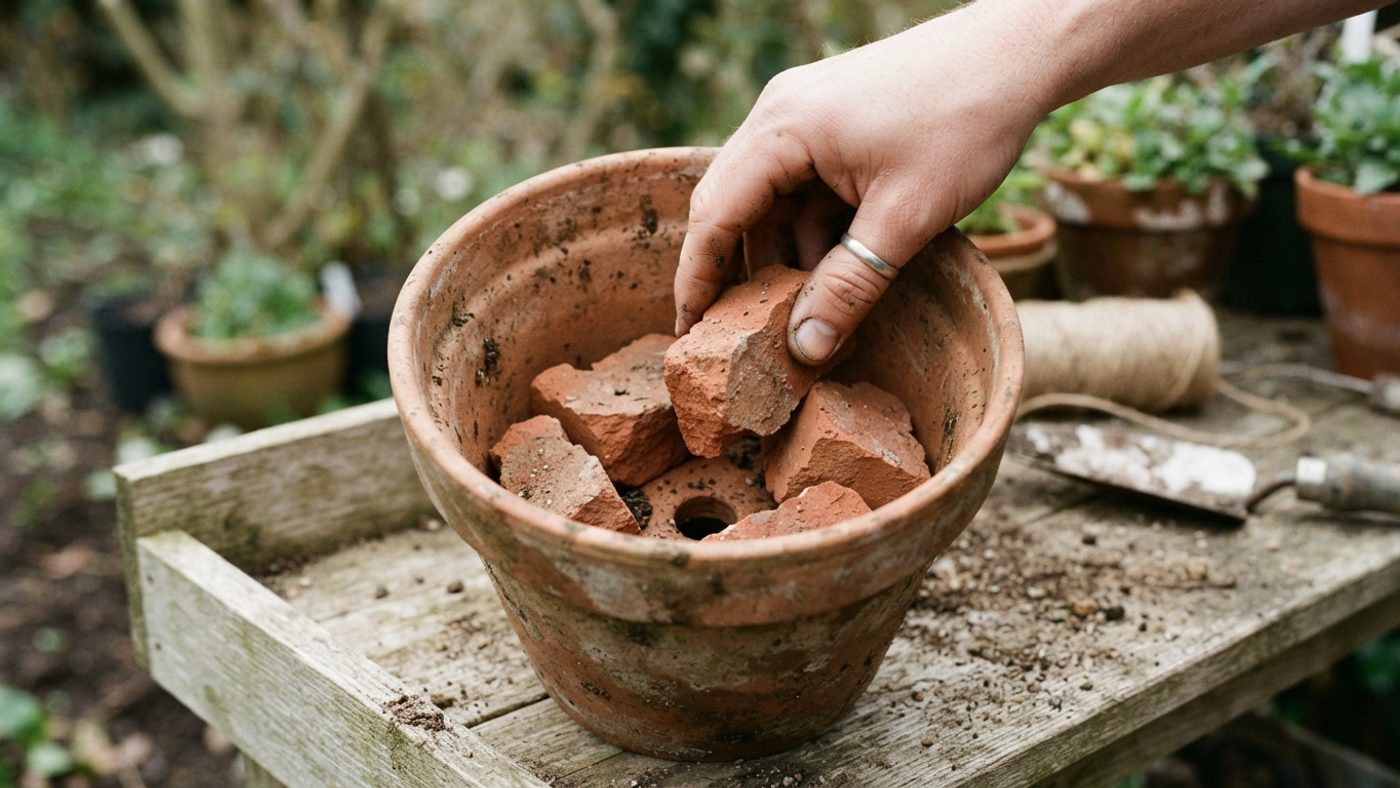
Beyond ballast:
- Favour wide and shallow over tall and narrow wherever the crop allows it, a salad trough is the clearest example, but the same logic applies to any pot you're free to choose the shape of.
- Group containers together. Pots clustered against each other and against a wall or balustrade shelter each other's compost from direct wind and slow the drying it causes, as well as reducing the surface area any single pot presents side-on to a gust.
- Tie tall or top-heavy pots to a fixed rail or balustrade where the structure allows it, rather than relying on weight alone in a genuinely exposed spot.
- Keep the most exposed edge for your lowest, sturdiest pots, reserve the sheltered corner, nearest a wall, for anything taller or top-heavy, such as the pea pot above.
- On a coastal balcony, rinse foliage occasionally with fresh water after a salt-laden gale, particularly on herbs left outdoors year-round, since salt deposited on leaves adds a separate source of damage on top of ordinary wind-drying.
- Keep drainage holes clear and stand pots on feet or bricks rather than flat on the floor. A balcony pot faces the opposite problem from wind-drying just as often after heavy rain: blocked drainage leaves it waterlogged, and a saturated pot is also heavier and more likely to crack a plastic base or, in freezing weather, split a terracotta one.
A pot at height that goes over the edge is a real hazard, not a theoretical one, it can land on a pavement, a car, or a neighbour's balcony below, so the stability advice above is worth taking seriously rather than treating as optional tidiness. If you're in a flat, it's also worth checking your building's own rules before assuming it's entirely up to you: many Scottish tenement flats are managed under title deeds or a property factor covering shared areas including balconies, and these sometimes restrict what can be placed there, for example a maximum weight on the balcony floor, a ban on anything fixed outside the railing rather than inside it, or a requirement that drainage water doesn't run onto the flat or balcony below. See tenement and balcony growing in Scotland for the fuller permission picture.
Common questions
Do I need a windbreak or screen on a windy balcony?
A solid, completely wind-proof barrier can actually make things worse just behind it, creating swirling, turbulent gusts on the sheltered side instead of calm air, a screen or trellis that lets some wind filter through works better than a solid one. For the crops on this list, though, positioning pots close to a wall and grouping them together achieves most of the same benefit without adding a structure at all.
Can I still grow tomatoes or beans on a windy balcony?
You can, but not unstaked, both need a cane or support structure to avoid stem damage, and a balcony often has nowhere secure to anchor one. If you can fix a cane or netting firmly to a wall or rail, either is workable in a more sheltered corner; without that, they're a poor match for the most exposed spots.
How often will I need to water compared to a sheltered garden?
Expect to water more often, potentially daily in summer for shallow containers, because wind increases both compost evaporation and the plant's own water loss through transpiration. Check compost moisture by touch rather than by the calendar.
My balcony is on a corner of a tenement block, is that windier than a similar balcony elsewhere?
Often yes, for the funnelling reason covered above. Treat a corner position as the most exposed spot you have, and put your sturdiest, lowest pots there rather than anything tall or top-heavy.
Does salt in the wind matter on a coastal balcony, separately from the wind itself?
Yes, it scorches foliage in its own right, on top of the ordinary drying and physical stress a gust causes. Rinsing leaves with fresh water after a salt-laden storm limits the damage; it isn't a reason to avoid growing any of these crops on a coastal balcony, just something worth doing after a bad blow.
What's the single easiest crop on this list for a first-time balcony grower?
Thyme, oregano or chives, they need no staking, tolerate being missed for a day or two of watering, and actively prefer the free-draining conditions a windy spot creates.
Sources
13 sources, recorded with what each was used for
- RHS: Growing plants in containers (Expert Guide): The tall/narrow-container toppling risk and the ballast/sheltering-position advice
- RHS: Vegetables in Containers: Minimum container size (45cm/18in) and the list of container-suitable vegetables
- RHS: Pisum sativum 'Meteor' plant profile: Height, climbing/tendril habit, support needs, and windy-site tolerance
- RHS: How to grow peas: Dwarf-variety support needs, container width, watering and feeding
- RHS: Herbs — Growing and Harvesting: Thyme, oregano and chives soil/sun requirements, and rosemary's need for winter shelter in cold areas
- RHS: How to grow basil: The contrast case (basil's need for shelter and warmth) to justify excluding it
- RHS: Cut and come again leaves: The shallow, wide container example
- RHS: How to grow salad leaves: Minimum container size, watering frequency, and feeding advice
- RHS: How to grow carrots: Round-rooted variety recommendation and watering/consistency advice
- RHS: How to grow chilli peppers: Container size, compact variety names ('Loco', 'Prairie Fire'), position/sun requirements, staking, and feeding
- RHS: Plants for coastal areas: Salt-spray damage to foliage as a distinct mechanism from wind-drying
- mygov.scot: Help with title deeds: Confirming title deeds set out responsibilities and conditions for common/shared areas of a tenement
- mygov.scot: Tenement repairs and common area maintenance: Confirming a property factor, where one is in place, manages shared areas of a tenement, which can include balconies