
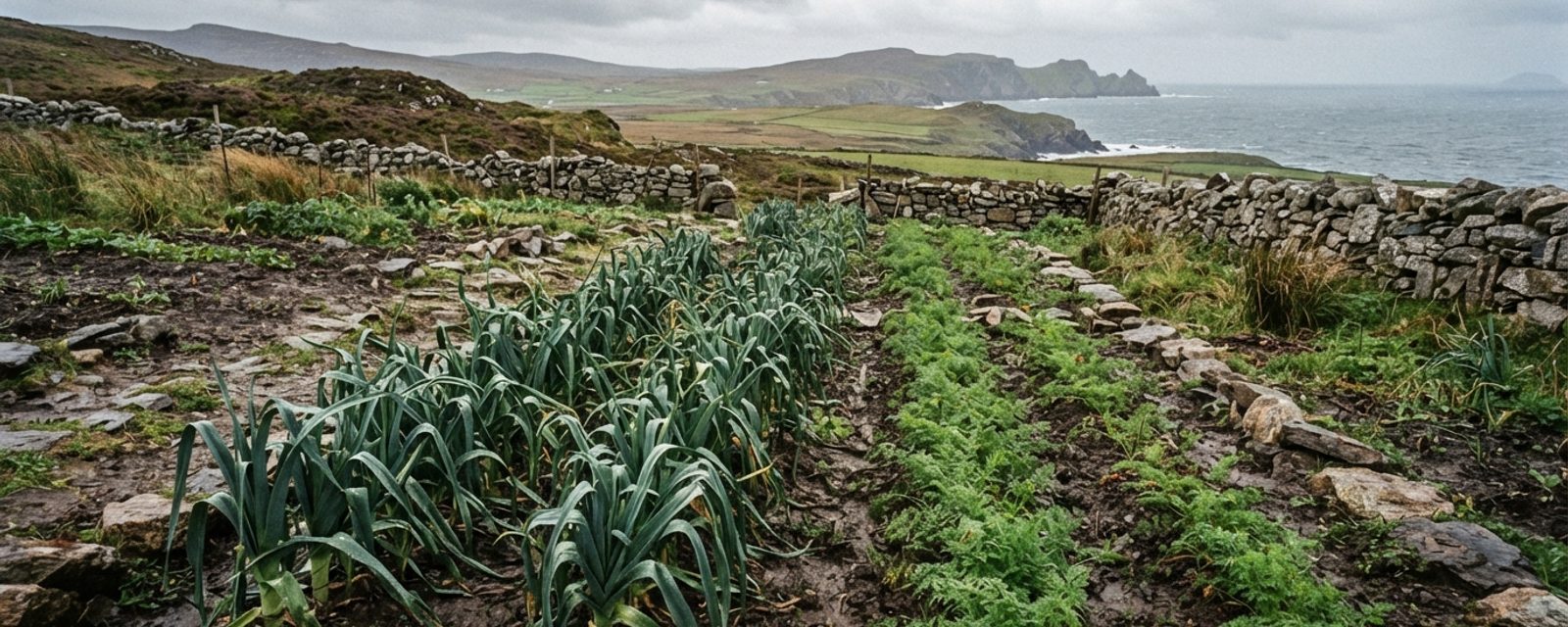
If your beans flowered and then just didn't pod, if a trellis went over in the first proper autumn gale, or if your runner beans came away looking shredded and grey by August, the problem probably isn't your gardening. It's your plot. Coastal gardens, hilltop allotments, anywhere without a hedge, wall or building doing the work of a windbreak, these sites don't just knock plants about physically. They also ground the insects some crops need to set fruit in the first place, a failure mode most windy-garden advice never mentions.
It's also a genuinely common Scottish plot problem rather than a rare one: much of the country sits open to Atlantic wind off the coast or across high, unsheltered ground, and how exposed a plot actually is varies a lot within Scotland too, a coastal or Northern Isles allotment typically takes a harder, more constant battering than a sheltered Central Belt garden a few miles inland.
Two kinds of wind damage, and why most advice only covers one
Thick leaves, low growth, sturdy stems, staying under the worst of the gusts: that's the physical side of wind damage, and it's the reason a runner bean wigwam or a trellis of climbing French beans struggles on an exposed site. Windbreak siting and permeability for the whole plot is covered in Allotment Layout Planning, and which support structures genuinely hold up to wind is covered in Vertical Growing and Trellising, both worth reading alongside this piece if you're also growing anything taller. What follows here is about crop choice specifically.
RHS's own advice on runner beans failing to set pods names a second, quieter mechanism directly: pod failure can come from a lack of pollinating insects, perhaps because of cold, wet or windy weather. Bees and other pollinators fly less, and less far, in wind. A plant can look perfectly undamaged, still standing, leaves intact, and still fail to crop because the wind kept its pollinators grounded during the narrow window when the flowers were open.
Wind also affects soil and young plants directly. An exposed bed dries out and can cap (form a hard surface crust) faster than a sheltered one, which matters most for a direct-sown crop like carrots or swede that needs the surface to stay workable for germinationA seed sprouting: breaking dormancy and putting out its first root and shoot, given the right warmth and moisture. Full definition →. Every crop, including the five here, is at its most exposed to wind damage before it's established, so covering a new sowing with fleeceA lightweight, breathable fabric laid or draped over plants to trap a little warmth and keep off frost, wind and some flying pests. Full definition → or mesh until established is worth doing regardless of which crop is in the ground. A newly transplanted leek is a particular case worth a specific mention: firm it in well at planting, since a loose one rocks in the wind and that rocking can damage the roots before they've properly gripped the soil.
That gives two separate questions worth asking about any crop before you commit a bed to it:
- Does the plant's body cope with wind, is it low, sturdy, self-supporting, or is the part you eat underground and out of the wind entirely?
- Does the edible part need insect pollination at all, a root, a bulb, or a self-fertileA plant that can set fruit using its own pollen, without needing a second, different variety nearby to cross-pollinate it. Full definition → flower is far less exposed to a windy pollination season than a crop that depends on bees finding its flowers.
A genuinely wind-suited crop scores well on at least one of these, ideally both. The five below do.
The five picks
Carrots
Carrots ask very little of the wind, because the part you're growing them for is never up in it. RHS describes carrots wanting an open, sunny site, and the foliage above ground is fine, feathery and low, there's no tall structure to blow over, though a gale can still batter the leaves themselves without touching the crop underneath. Because the edible root forms and matures entirely underground, pollination doesn't come into it, a windy pollination season simply doesn't touch a normal carrot harvest. Full sowing and spacing detail is in the carrots growing guide.
Onions (grown from sets)
Onion foliage is upright, narrow and low, and it sheds wind rather than resisting it the way a broad leaf does. RHS's onion growing guide gives no staking or support instructions at all, consistent with a crop whose structure needs no defending against wind. The bulb itself needs no pollination whatsoever to form, an onion set already contains the beginnings of the bulb, growing it on to full size is a matter of soil, spacing and time, not flowers and insects. Full detail is in the onions growing guide.
Swede
Swede's edible root sits below ground for the entire growing season, under a low rosette of leaves that never needs staking. RHS states plainly that swede wants an open, sunny site, with no caveat about shelter or exposure. As a root crop, swede needs no pollination to produce the part you eat. The closely related turnip shares the same underground-root, no-pollination profile and grows faster still, worth a look on the same exposed bed if you want a quicker turnaround. Full detail is in the swede growing guide.
Dwarf broad beans
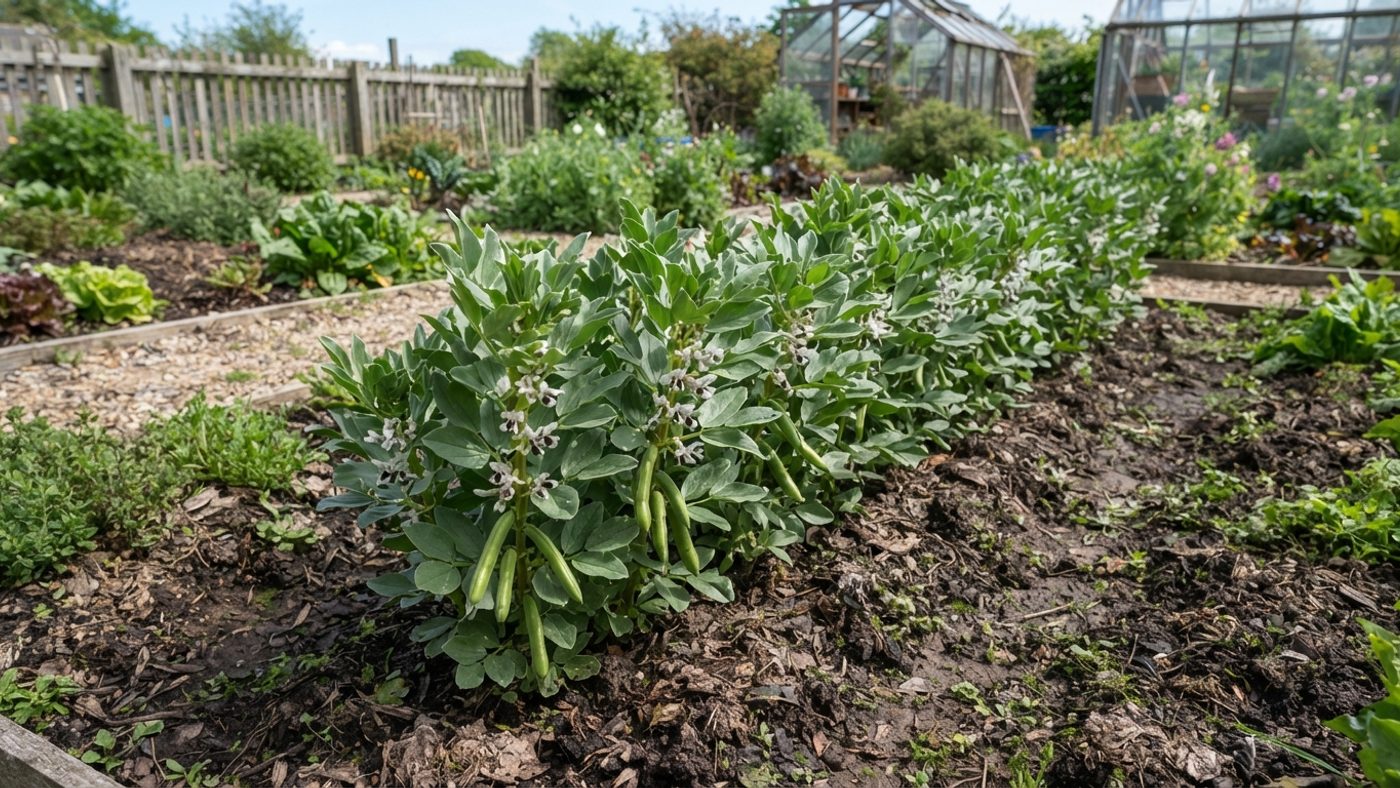
This is the one pick on this list that's genuinely a fruiting crop rather than a root or bulb, and it answers both questions directly instead of avoiding them. RHS names 'The Sutton' specifically: a dwarf variety only reaching 45cm tall, so ideal in containers and windy sites. Most broad bean varieties need staking, sturdy stakes at the corners and every 1.2m along the row, but RHS notes small or dwarf varieties usually support each other, especially in double rows, so there's no tall structure exposed to the wind in the first place.
The pollination side matters here specifically because broad beans are a flowering, pod-forming crop, the category most vulnerable to wind grounding pollinators. Broad bean flowers are self-fertile and don't need an insect visit to set a pod, unlike a climbing crop such as runner beans, where RHS's own advice links a lack of pollinating insects in cold, wet or windy weather directly to pods failing to form. Full growing detail is in the broad beans growing guide.
Leeks
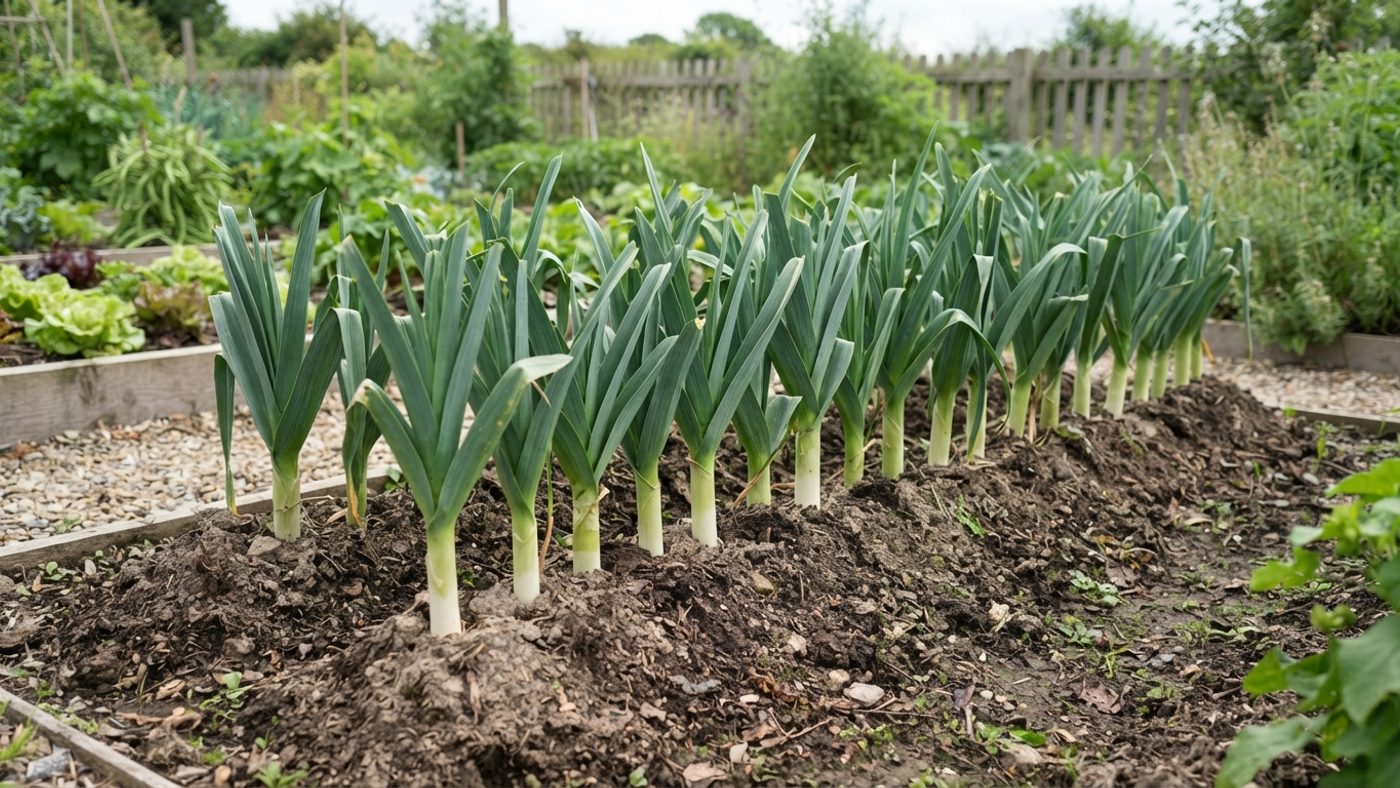
RHS's leek growing guide states that earthing upDrawing soil up around a plant's base as it grows, most often potatoes, to keep light off developing tubers and support tall stems. Full definition → also helps to keep the plants more stable during winter storms, ordinary cultivation, done anyway to lengthen and whiten the shank, gives the standing crop real wind stability with no staking or extra structure required. Leeks are harvested for the white stem, lifted before the plant ever runs to seed, so pollination plays no part in getting a crop from them. Leek rust is the genuine problem this crop faces here, more than wind, covered in full in the leeks growing guide.
The comparison
| Crop | Physical wind trait | Needs pollination? | Support needed | Typical sowing window |
|---|---|---|---|---|
| Carrots | Low, fine feathery foliage; edible part is underground | No, root harvested before flowering | None | March to July, direct-sown |
| Onions (sets) | Low, narrow, upright foliage that sheds wind | No, bulb forms with no pollination | None | March-April (spring); Oct-Nov (autumn) |
| Swede | Low rosette of leaves; edible root sits below ground | No, root is harvested, not the flower | None | May to June |
| Dwarf broad beans | Only 45cm tall; RHS names it “ideal in containers and windy sites” | No, self-fertile flowers, unlike a runner bean | Little to none, dwarf varieties in double rows usually support each other | February to April; hardy types also autumn-sown |
| Leeks | Strappy, flexible foliage; earthing up gives wind stability through storms | No, the shank is harvested before the plant runs to flower | None | February to April, sown under cover |
A few more crops worth naming, on both sides of the list
Kale copes with a Scottish winter about as well as any vegetable does, but tall varieties do need staking against winter gales on exposed sites, unlike the five above. Garlic and parsnip both fit the same profile as the five picks, garlic is a bulb needing no pollination, low-growing and typically autumn-planted; parsnip is a root crop harvested well before it would ever flower, either is a reasonable substitute for onions or carrots.
Blackcurrants and gooseberries run the other way and are worth naming specifically for it. RHS's blackcurrant guide advises against sites prone to cold winds, because wind at flowering time damages the blossom itself and reduces the crop, the opposite of a wind-tolerant pick. If your plot is genuinely exposed, these are a fruit bush to think twice about, or to give the most sheltered corner you have.
Common questions
Is there anything I can do to help pollination on a windy plot, short of ruling out fruiting crops altogether?
Some. A windbreak that calms the air around a bed of flowering crops gives pollinators a better chance to work it, a strong reason to site a runner bean or squash bed on the sheltered side of whatever windbreak the plot has. Hand-pollinating with a small brush is also a real option when insects aren’t reliably visiting, more practical for a few plants under cover than a whole open bed.
If I only have room for one crop on an exposed bed, which of these five should it be?
Onions or swede, for the simplest option: both are unstaked, low-growing, and never need an insect visit to crop. Pick dwarf broad beans instead if you specifically want a fruiting, protein crop from that bed, accepting a smaller yield than a full-height staked variety would give in a sheltered garden.
Can I still grow taller or fruiting crops like runner beans or peas on an exposed plot?
Yes, with the right windbreak and support choices. See Allotment Layout Planning for windbreak siting and Vertical Growing and Trellising for which support structures actually hold up in wind.
Is dwarf kale a sixth option, since standard kale needs staking but the tallness is the actual problem?
No source used here confirms this either way, so it’s not included as a sixth pick. A shorter, more compact kale variety would plausibly avoid the staking issue tall kale has, but that’s reasoning rather than a checked fact, worth trialling on a small scale rather than relying on before it’s confirmed.
Why isn’t potato on this list, when some sources recommend it for windy gardens?
RHS’s own growing advice for potatoes doesn’t make a wind-tolerance claim either way, and general growing advice disagrees on whether potatoes belong on a windy-garden list at all. The trait potatoes are genuinely known for is frost sensitivity in young foliage rather than wind tolerance specifically.
Should I time harvesting these crops around a forecast storm?
Worth doing where you can. Lifting swede, carrots or leeks a little early ahead of a forecast severe gale avoids standing water and wind-rock loosening the ground around the roots. None of the five need this as routine management, but it’s a sensible response to an unusually bad forecast.
Sources
7 sources, recorded with what each was used for
- RHS: Runner beans — failure to set pods: The "lack of pollinating insects, perhaps because of cold, wet or windy weather" quote establishing the wind-disrupts-pollinators mechanism
- RHS: Carrots — grow your own: Site requirements, no staking mentioned, root harvested before flowering
- RHS: Onions — grow your own: Site requirements, no staking mentioned, bulb formation from sets
- RHS: Swede — grow your own: "Open, sunny site" requirement, no staking/shelter requirement stated
- RHS: Broad beans — grow your own: "The Sutton" dwarf variety "ideal in containers and windy sites," staking requirement for standard varieties, dwarf varieties supporting each other in double rows
- RHS: Leeks — grow your own: "Earthing up also helps to keep the plants more stable during winter storms"
- NC State Extension Gardener Plant Toolbox: Vicia faba: Broad bean self-fertility