
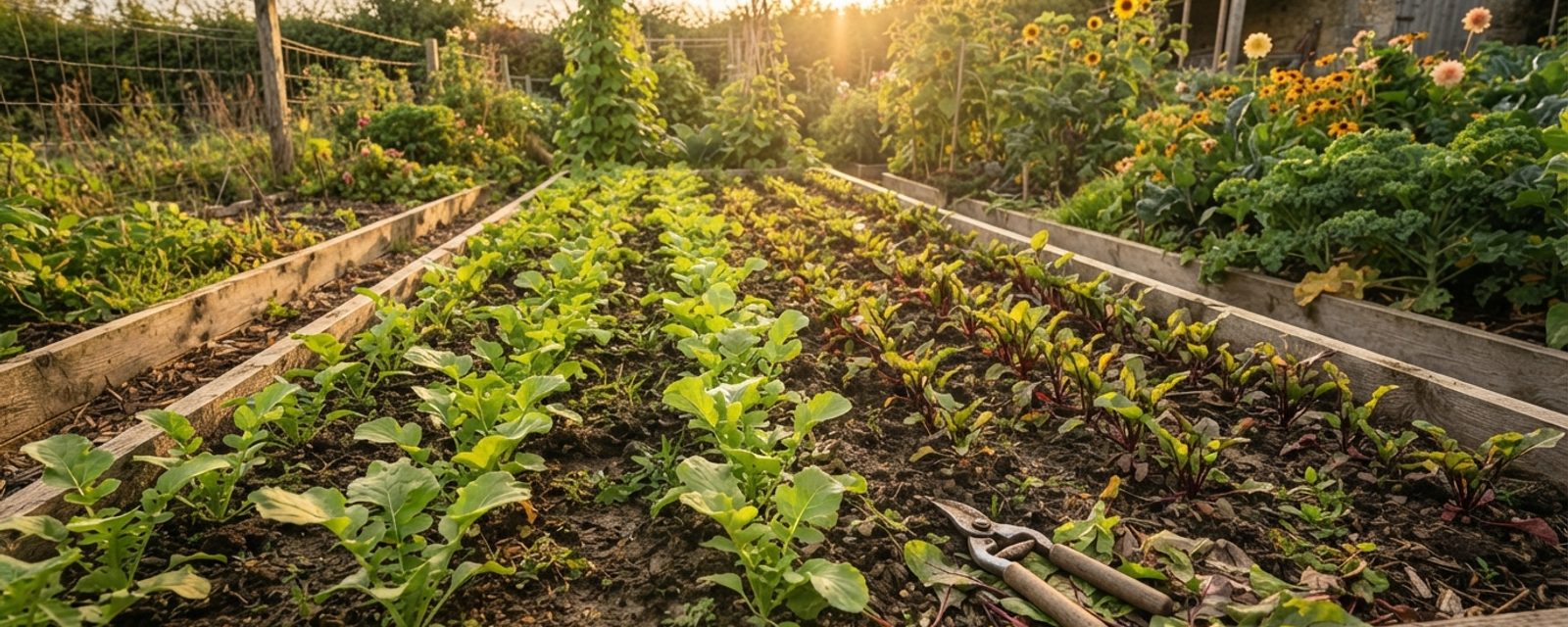
A seed packet's days-to-maturity figure isn't a fixed law of nature. It's a number generated under specific growing conditions, usually a spring or early-summer sowing, with lengthening days and soil warming up week by week. Sow the same variety in late July or August and you're working with the opposite budget: shortening days, soil that's already past its peak temperature and cooling, and less total light energy reaching the plant over the same number of calendar days. The packet doesn't know that. It just prints one number.
That mismatch is why so much generic sowing advice quietly falls apart once it's applied here. A crop that comfortably hits eight weeks to harvest when sown in May, with June and July's long days ahead of it, can take noticeably longer, or simply stall, when those same eight weeks have to be found in August, September and a fading October. None of this means late sowing is a bad idea, it isn't, and a second harvest from a bed that's already cleared is one of the better uses of a Scottish growing season. It means crop choice matters more than the calendar.
For the general technique of staggering sowings and working backward from your local frost date, see Succession Planting for Beginners; for when that frost is actually likely to arrive where you garden, see the Scottish frost dates reference. This article is about which crops to put in the ground once you've done that arithmetic.
1. Turnips (maincrop sowings)
Turnips are one of the few crops where RHS names a maincropThe main, usually latest-sown and longest-growing type of a crop, grown for bulk and storage rather than an early harvest. Full definition → sowing window covering July to mid-August specifically, alongside the earlier spring window for early varieties. Maincrop turnips take about 10 weeks to reach a usable size, harvested at golf-ball size for eating raw or tennis-ball size for cooking, you don't need to wait for a large root.
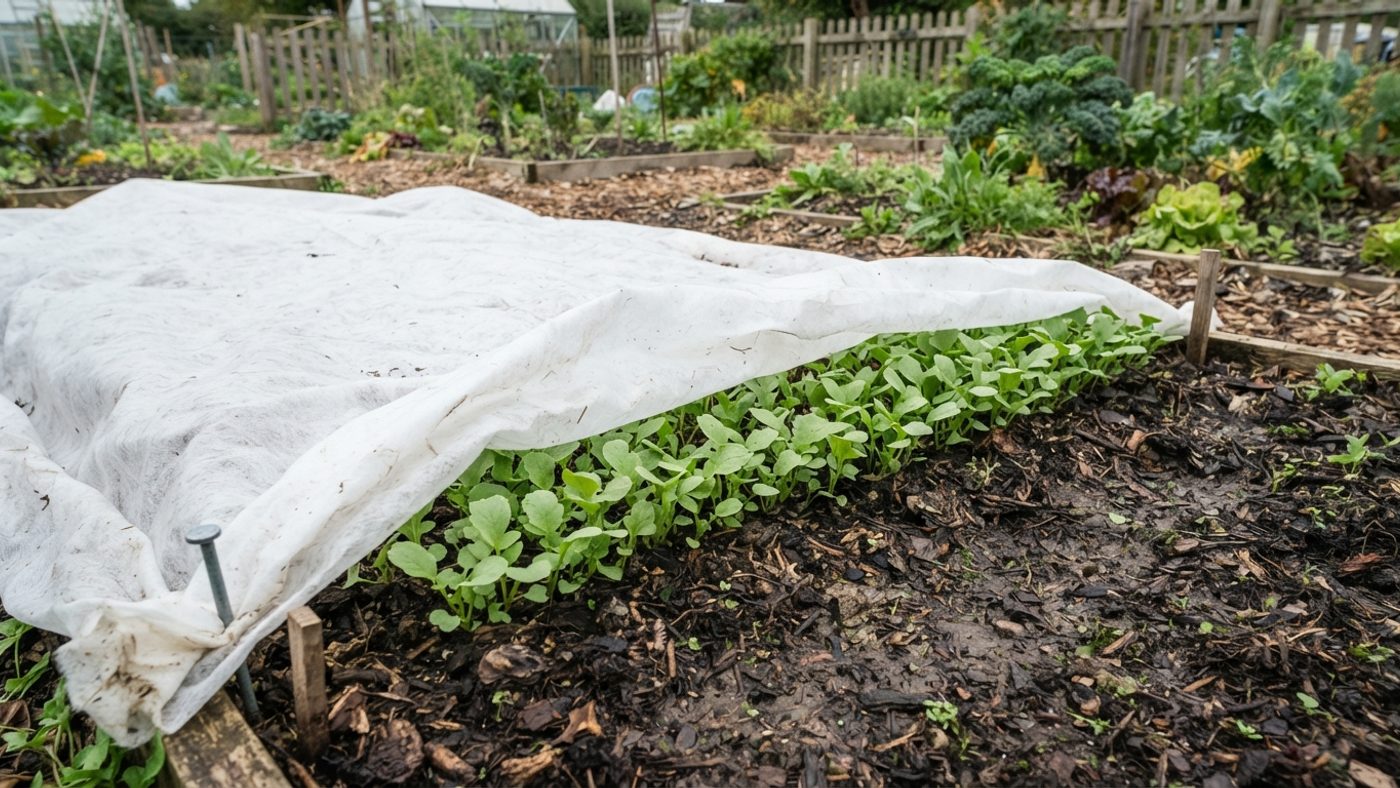
Turnip roots are not completely hardy, so a late sowing needs to be lifted before a severe frost rather than left to tough it out, though in milder areas roots can sit under clochesA small, portable clear cover placed over an individual plant or short row to trap warmth and keep off wind, rain and pests. Full definition → or fleeceA lightweight, breathable fabric laid or draped over plants to trap a little warmth and keep off frost, wind and some flying pests. Full definition → and be lifted as needed through early winter. Counting forward from a late-July sowing, the 10-week maturity figure lands in early October, check the frost dates reference for your own area to see how much margin that leaves before a hard frost is likely. Full sowing detail is in the turnip growing guide.
2. Radishes (salad and winter types)
Radish is the fastest crop on this list, and RHS describes it as a cool-season crop growing best in spring and late summer, one of the few crops here where the general advice already lines up with a late sowing. Salad radishes can be ready in as little as four weeks from germinationA seed sprouting: breaking dormancy and putting out its first root and shoot, given the right warmth and moisture. Full definition →, with early-season sowings taking six to eight weeks; RHS cautions against sowing in hot, dry conditions, which cause poor root development or premature flowering, but that's a hazard that mostly recedes by late July.
Winter radish varieties are sown specifically in July or August and are genuinely hardy, maturing through winter and needing only cloches, fleece or cardboard for protection in freezing weather. If you want a late sowing with real cold tolerance built in rather than a race against the first frost, winter radish is the safer option; salad radish is the faster one. A cloche or cold frame left sealed on a mild, sunny winter day can still overheat and encourage rot, so it's worth propping it open on anything but a genuinely cold day.
3. Beetroot
RHS recommends sowing beetroot regularly from spring through to mid-summer, with outdoor sowings running from late March or April through July once soil temperature reaches at least 7°C. That gives a narrower late-sowing window than turnip or radish, beetroot needs to go in by roughly the end of July, rather than being a true August crop.
Within that window it's a reasonably fast grower: RHS gives a maturity figure of as little as 40 days, though 50 to 60 days is more typical, with roots usable from golf-ball to cricket-ball size. In mild locations where soil doesn't freeze, late beetroot can be left in the ground until needed, and larger roots from later sowings store better than small ones. That "soil doesn't freeze" condition is worth taking seriously rather than assuming: ground frost is routine on plenty of Scottish ground, not just upland or inland sites, see the frost dates reference for how much this varies by region. Sown promptly in July, beetroot should size up before growth slows meaningfully. Full detail is in the beetroot growing guide.
4. Spinach
Spinach is one of the few crops on this list where RHS names a late-summer-to-early-autumn sowing as a distinct, intentional cropping window, not just an extension of a spring one, sown then, it produces an autumn or early-spring harvest rather than a summer one. Baby leaves can be cut in as little as a month, with mature leaves at around two months, and RHS is specific about pacing: delay sowing while it's still hot to help germination, but don't leave it too late, plants need to be well established before winter sets in.
Hardiness depends on variety, check seed packets and choose a genuinely hardy type if you want it to overwinterKeeping a plant alive and intact through the cold months, whether left outdoors, moved under cover, or stored dormant. Full definition →, since some spinach varieties tolerate cold far better than others. Hardy varieties can stand outdoors under cloches or fleece from October, or be moved under cover before the coldest weather, which makes spinach one of the more forgiving crops here if your first sowing runs slightly late. Full detail is in the spinach growing guide.
5. Kohlrabi (late-season / purple varieties)
Kohlrabi's outdoor sowing window runs from March to July, or as late as August in locations with mild autumns, one of the more direct acknowledgements that this crop can be pushed later where the season allows it. Whether your own garden counts as a mild autumn site is worth checking against the frost dates reference rather than assuming, since it varies significantly across the country. Baby-sized roots are ready in as little as six weeks, full-size roots around twelve weeks, and at least one named variety, 'Kolibri', is specifically described as ready eight weeks after sowing.
For a late sowing, RHS specifically recommends purple varieties, hardier and slower to mature, ideal for sowing in late summer, a case where slower is the right trade-off, since the extra hardiness matters more than shaving off a week or two. Small, regular batches sown at intervals are recommended to spread harvests potentially from May into November or December in milder areas. Full detail, including this crop's own honest storage limitations, is in the kohlrabi growing guide and How to Store Kohlrabi for Winter.
Comparison table
| Crop | Sowing window (late/second crop) | Weeks to maturity | Cold/frost tolerance |
|---|---|---|---|
| Turnip (maincrop) | July to mid-August | About 10 weeks | Roots “not completely hardy”, lift before severe frost or protect with cloche/fleece |
| Radish (salad) | Late July into August, avoiding hot/dry spells | 4-8 weeks | Cool-season crop; not frost-hardy long-term |
| Radish (winter type) | July or August | At least 8 weeks, matures through winter | Genuinely hardy; protect with cloche/fleece/cardboard in freezing weather |
| Beetroot | Through July (soil above 7°C) | ~40 days minimum, typically 50-60 | Not explicitly frost-hardy; survives light freezes in mild sites only |
| Spinach | Late summer to early autumn | Baby leaf ~4 weeks; mature leaf ~8 weeks | Variety-dependent; hardy types overwinter under cloche/fleece |
| Kohlrabi (purple, late) | Up to August in mild-autumn areas | 6-12 weeks (8 weeks for some named varieties) | Purple varieties bred hardier and slower, suited to late sowing |
Preparing the bed for a second sowing
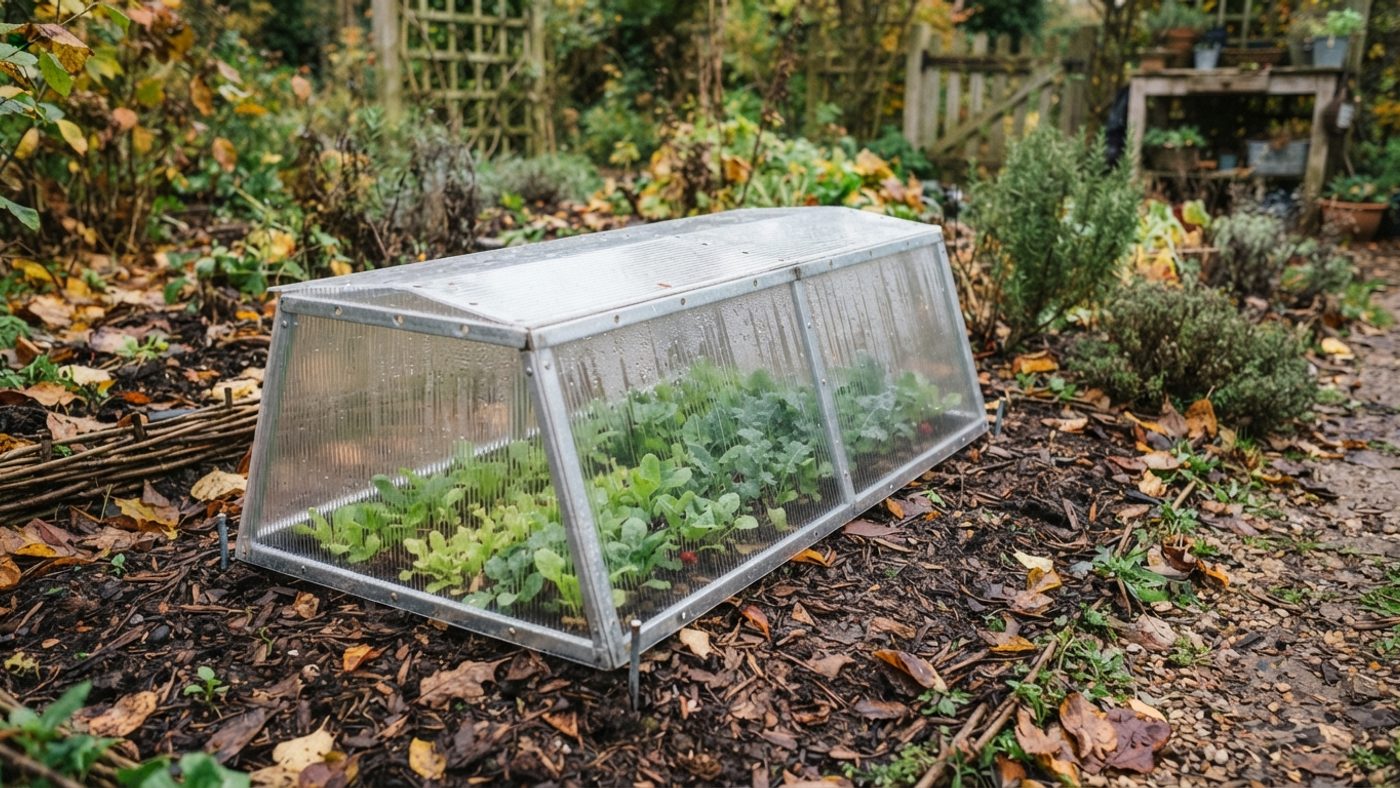
A late sowing usually goes into ground that's already fed one crop this season, and that matters as much as the timing arithmetic above. Fork over and refresh the bed with a general feed or a light dressing of compost before resowing rather than assuming the soil that grew your first crop has enough left for a second, a bed drawn down by an earlier hungry crop like potatoes or brassicasThe cabbage family: cabbage, kale, broccoli, cauliflower, Brussels sprouts, kohlrabi, swede, turnip and more, sharing the same pests, diseases and rotation rules. Full definition → gives a late sowing a weaker start exactly when it can least afford to lose time. Newly sown seed also needs consistently moist soil to germinate regardless of the season, so a dry spell right after sowing is worth watering through even in a normally damp Scottish summer. Since the whole premise here is a shrinking light budget, give a late sowing the sunniest ground you have free rather than whatever bed happens to be empty, and keep it weeded. A cloche, cold frame, polytunnel or greenhouse extends the growing conditions further still.
Three of the five picks here, turnip, radish, and kohlrabi, are brassicas, and if the bed you're clearing was growing another brassica this year, or a susceptible crop in recent years, that's worth checking against clubroot before resowing the same ground. Flea beetle is also a live risk for all three in warm, dry spells; a floating fleece or fine mesh cover over the row from sowing keeps adult beetles off without any spray, see flea beetle for the full picture. Slugs will go after seedlings of any of the five, and a check on a mild, damp evening while seedlings are small catches most of the damage before it's serious.
What to skip: crops that look tempting but don't have the numbers
RHS gives even first-early pea varieties 12 weeks to first harvest, rising to 14-16 weeks for maincrops, with the standard sowing advice running March to June. A late-July sowing pushed through those 12-plus weeks lands in October at the earliest, right as light and warmth are dropping fastest, so peas and mangetout don't leave enough margin for a Scottish autumn.
Bulb onions are governed differently again: RHS states plants must be growing strongly by late spring, as the lengthening days trigger the formation of bulbs, a day-length response, not just a matter of accumulated growing time. Sowing after midsummer works against that trigger rather than with it, which is why the only onion type RHS positions for a later start is the overwintering type sown in late summer for maturity the following year, not a same-season second crop.
Common questions
Can I still get a harvest sowing in August in Scotland?
Yes, for the right crops. Turnip (maincrop), radish (salad or winter), and kohlrabi (purple, late-sown) all have RHS-documented sowing windows that extend into August, see the comparison table above for each one’s window and maturity time. Further north, at altitude, or in a short-season garden, aim for the earlier end of that window.
Can I resow beetroot into the same ground it just came out of?
There’s no beetroot-specific rotationMoving each crop family to different ground each year, on a multi-year cycle, so pests and diseases that build up in soil don't get a repeat host. Full definition → rule against it the way there is for brassicas and clubrootA soil-borne fungal disease of the brassica family that swells and distorts roots, and survives in soil for years. Full definition →, but it’s still worth avoiding two hungry root crops back to back in the same spot without refreshing the bed, see the bed-preparation section above. A light feed or compost before resowing matters more here than which crop came before.
Do I need to protect these crops from frost?
It depends on the crop, not just the date. Winter radish and hardy spinach varieties are genuinely bred to tolerate cold and can stay out with cloche or fleece protection. Turnip and beetroot roots are more frost-sensitive and are better lifted before a hard freeze than left to test it.
Why didn’t you include peas or spring onions?
Standard pea varieties take far longer to reach harvest than any of the five picks above, leaving too little runway for a July/August sowing before a Scottish autumn sets in. Spring onions aren’t separately covered in RHS’s onion growing guide, and bulb onions are governed by day length rather than sowing date, so neither can reliably produce a genuine second harvest from a late sowing.
Is this the same as succession sowing?
Not quite. Succession sowing is the technique of staggering sowings over time to spread out harvests. This list answers a narrower question: once you’ve decided to sow late, which specific crops actually have the speed and cold tolerance to make it worthwhile.
How do I work out my last safe sowing date?
The full method (start from your frost date, subtract the crop’s weeks-to-maturity, then add a buffer) is set out in Succession Planting for Beginners; the frost dates reference supplies the frost date itself for wherever you garden.
Sources
7 sources, recorded with what each was used for
- RHS: Turnips — grow your own: Sowing windows, maturity times, and frost-hardiness notes for turnips
- RHS: Radishes — grow your own: Sowing windows, maturity times, and hardiness for salad and winter radish types
- RHS: Beetroot — grow your own: Sowing window, maturity time, and in-ground storage notes
- RHS: Spinach — grow your own: Late-summer/autumn sowing window, maturity times, overwintering hardiness notes
- RHS: Kohlrabi — grow your own: Late sowing window, maturity times, purple-variety hardiness notes
- RHS: Peas — grow your own: Maturity times used to assess why standard pea/mangetout varieties were excluded
- RHS: Onions — grow your own: Day-length bulb-formation trigger and lack of spring onion coverage, used to assess why onions were excluded